If you are trying to figure out the best anti-inflammatory diet for Hashimoto’s, you have probably already noticed how chaotic the advice can get. One article says cut gluten forever. Another says remove dairy, soy, grains, sugar, and joy itself. Another tells you food barely matters as long as you take thyroid medication.
Most people are left somewhere in the middle, tired, cold, puffy, constipated, foggy, and frustrated.
The truth is that food does matter. It affects inflammation, blood sugar, digestion, nutrient status, and how stable you feel day to day. But the best anti-inflammatory diet for Hashimoto’s is usually not the most extreme one. It is the one that lowers your inflammatory load, supports your thyroid, and is realistic enough to keep going.
At Duluth Metabolic, we try to make this simpler. We look at thyroid health as part of a bigger metabolic picture that includes stress, sleep, gut health, blood sugar, nutrient status, and food quality. If your thyroid symptoms still feel louder than your lab report suggests, thyroid health: why TSH alone is not enough is a good next read.
Why inflammation matters so much in Hashimoto’s
Hashimoto’s is an autoimmune thyroid condition. That means the immune system is involved, not just the thyroid gland itself.
When inflammation stays high, many people feel worse. Energy drops. Brain fog gets thicker. Digestion slows down. Joint aches get louder. Mood can slide. Blood sugar can get less stable. And for some people, the body starts feeling like it is working against them.
That is why an anti-inflammatory diet for Hashimoto’s can be helpful. The goal is not to “cure” Hashimoto’s with food. The goal is to reduce inputs that keep the body stirred up while increasing foods that support steadier energy, better digestion, and more consistent nourishment.
A lot of people with Hashimoto’s also deal with chronic inflammation, gut symptoms, or blood sugar swings at the same time. Addressing those overlaps can make a big difference in how you feel.
Start with food quality before you start eliminating everything
One of the biggest mistakes people make is jumping straight into restriction before improving the basics.
If most of your meals are built from takeout, protein bars, sweet coffee drinks, random snacks, and whatever you can grab between obligations, removing gluten alone is probably not the missing piece.
A better first step is often cleaning up the everyday pattern.
That usually means more:
- protein with meals
- vegetables and fruit across the day
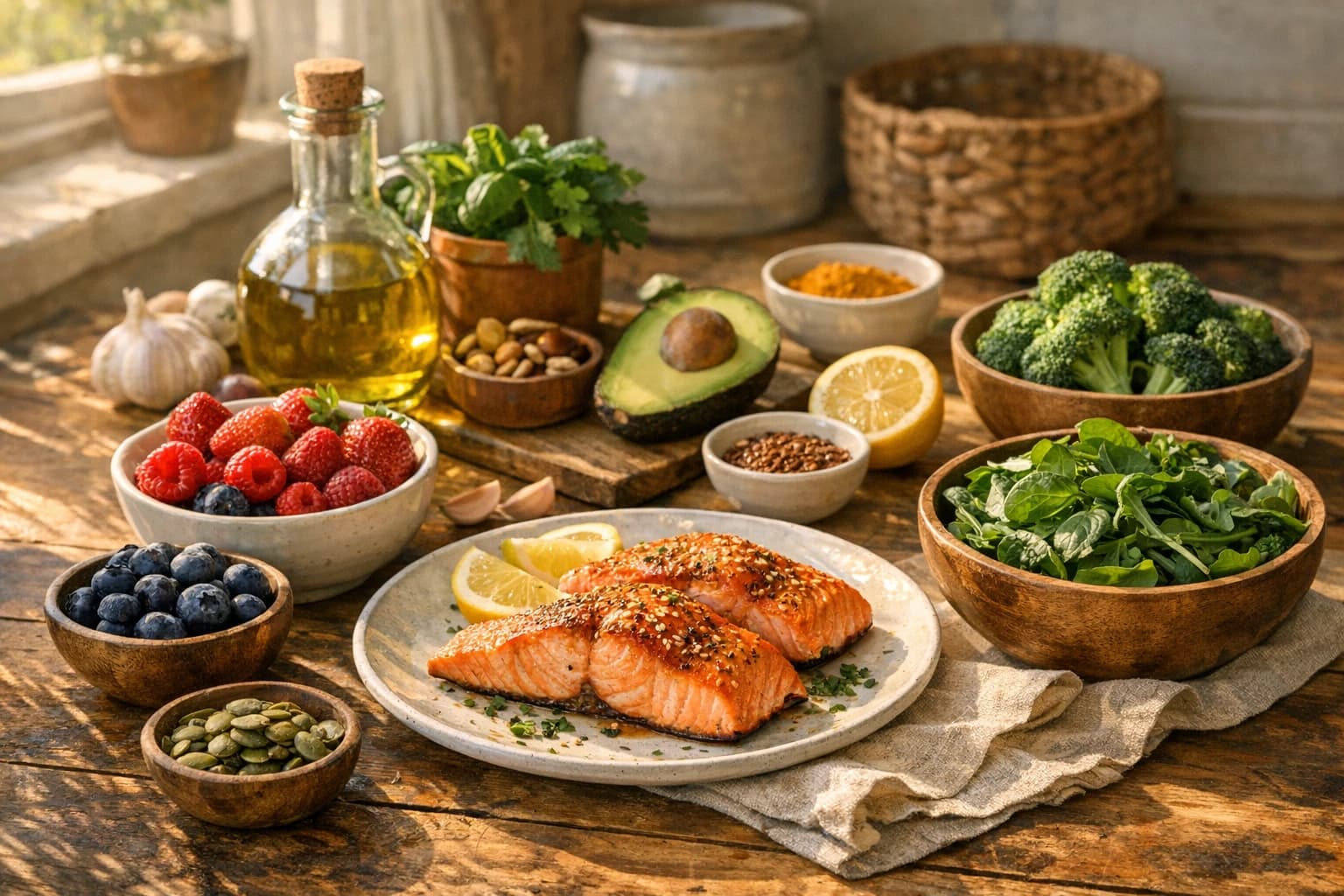
- olive oil, nuts, seeds, avocado, and other whole-food fats
- fish, eggs, Greek yogurt, beans, or other nutrient-dense protein sources when tolerated
- minimally processed carbs instead of constant refined flour and sugar
It also means less:
- ultra-processed snack food
- fried fast food
- liquid sugar
- constant grazing
- alcohol in amounts that make sleep, digestion, and inflammation worse
For many people, the anti-inflammatory shift starts there.
The best anti-inflammatory diet for Hashimoto’s supports blood sugar too
A lot of thyroid articles talk only about immune triggers. That matters, but blood sugar matters too.
If breakfast sends you into a spike-and-crash pattern, lunch is an afterthought, and you are exhausted enough to hunt sugar at 3 p.m., your thyroid is not the only system under stress. Blood sugar swings can worsen fatigue, cravings, mood changes, and inflammation.
This is one reason the best anti-inflammatory diet for Hashimoto’s usually includes steady meals built around protein, fiber, and enough calories to prevent rebound eating later.
That might look like eggs and fruit instead of toast alone. Greek yogurt with chia and berries instead of a pastry. Salmon, roasted vegetables, and potatoes instead of skipping dinner and snacking at night.
If this part hits home, blood sugar friendly breakfast ideas and high fasting insulin with a normal A1c may be helpful.
Foods that often fit well in an anti-inflammatory Hashimoto’s pattern
There is not one perfect Hashimoto’s menu, but there are foods that tend to give people a better foundation.
Helpful staples often include:
- salmon, sardines, trout, and other omega-3-rich fish
- eggs if tolerated
- berries, cherries, apples, citrus, and other colorful fruit
- leafy greens, cruciferous vegetables, cooked vegetables, and root vegetables
- beans or lentils if they work well for your digestion
- olive oil, avocado, walnuts, chia, flax, and pumpkin seeds
- fermented foods if tolerated, such as yogurt, kefir, sauerkraut, or kimchi
- herbs and spices like turmeric, ginger, rosemary, cinnamon, and garlic
This kind of pattern tends to support nutrient density, fiber intake, gut health, and blood sugar control at the same time.
For people who want practical food ideas instead of theory, foods for hormone balance over 40 and gut health foods in Duluth can help.
Gluten, dairy, soy, and other common trigger questions
This is where Hashimoto’s advice often gets messy.
Some people truly feel better without gluten. That is especially important if celiac disease is present or strongly suspected. Others feel better reducing dairy for a period of time, especially if they also deal with congestion, bloating, reflux, or skin issues.
But not everyone needs the same elimination plan.
An anti-inflammatory diet for Hashimoto’s can include a short-term trial without a common trigger if symptoms strongly suggest it. The key is being intentional instead of random.
Ask:
- Do you notice digestive symptoms after certain foods?
- Do you feel more inflamed, puffy, or tired after specific meals?
- Are you cutting foods because they clearly bother you, or because the internet made you nervous?
Sometimes a focused trial is useful. Sometimes the bigger win is just getting off the ultra-processed food treadmill and eating more consistently.
Gut health matters more than most thyroid articles admit
The thyroid does not exist in isolation. Digestion and thyroid health are connected in a lot of practical ways.
If your gut is inflamed, you may absorb nutrients poorly. If you are constipated, bloated, or living on convenience food, you may feel more toxic and sluggish. If the gut microbiome is off, inflammation and immune dysfunction can be harder to settle down.
That does not mean every person with Hashimoto’s needs a complicated stool test. It does mean gut symptoms deserve attention.
A gut-supportive anti-inflammatory pattern often includes:
- regular meals instead of chaotic all-day snacking
- enough fiber, but not an aggressive increase overnight
- enough water
- whole foods that support bowel regularity
- reducing alcohol and heavily processed food
- looking closer when reflux, constipation, diarrhea, or major bloating stay persistent
If you also have digestive symptoms, functional medicine for constipation, gut health over 40, and why am I bloated after every meal may help you connect a few more dots.
Nutrients that matter for Hashimoto’s
Food should come first, but some nutrient gaps matter enough to mention.
People with Hashimoto’s commonly ask about selenium, zinc, iron, vitamin D, magnesium, and B vitamins. Those are reasonable questions because low levels can worsen fatigue, thyroid conversion, mood, muscle function, and overall resilience.
But guessing is not the best strategy.
This is where biomarker testing can be useful. Before buying a cabinet full of supplements, it helps to know whether iron is actually low, whether vitamin D needs attention, or whether another issue is behind your symptoms.
A good plan usually combines food changes with targeted support, not endless supplement stacking.
What an anti-inflammatory day can actually look like
Here is a more grounded example than the typical internet cleanse.
Breakfast could be eggs with sautéed greens and berries, or Greek yogurt with chia, walnuts, and fruit.
Lunch could be a salmon salad, chicken bowl, or leftover protein with roasted vegetables and rice or potatoes.
Dinner could be turkey burgers with a big salad, olive oil dressing, and sweet potatoes, or trout with green beans and quinoa.
Snacks, if needed, might be an apple with almond butter, cottage cheese, beef sticks, plain yogurt, or a handful of nuts.
That is not flashy, but it works better than swinging between restriction and rebound.
You do not need a perfect diet to feel better
This part matters.
A lot of people with Hashimoto’s already feel like their body is high-maintenance. The last thing they need is a plan that makes every meal feel like a test.
Perfection is not required. Consistency matters more.
If your current diet is giving you frequent sugar crashes, poor protein intake, low fiber, bad sleep, and digestive chaos, then a calmer pattern can help a lot even if you never follow a trendy named protocol. Sometimes the most anti-inflammatory thing you can do is stop swinging between “all in” and “everything fell apart.”
FAQ about an anti-inflammatory diet for Hashimoto’s
Do I have to go gluten-free if I have Hashimoto’s?
Not automatically. Some people clearly feel better without gluten, and screening for celiac disease matters. But not everyone needs lifelong elimination. A focused trial can be useful if symptoms suggest it.
Is dairy bad for Hashimoto’s?
Not for everyone. Some people tolerate dairy well, especially fermented or higher-protein options. Others feel better reducing it for a period of time. The answer is personal, not universal.
Can diet replace thyroid medication?
No. Food can support symptoms, inflammation, digestion, and blood sugar, but it is not a replacement for medication when medication is needed.
What is the biggest food mistake people make with Hashimoto’s?
Going too extreme too fast. Many people cut a long list of foods before fixing protein intake, meal consistency, sleep, stress, and overall food quality.
Can an anti-inflammatory diet help fatigue and brain fog?
Often, yes. Better blood sugar stability, more nutrient-dense meals, less inflammatory food, and better gut support can all help reduce fatigue and mental fog.
A better Hashimoto’s nutrition plan should help you feel steadier
The right anti-inflammatory diet for Hashimoto’s should leave you feeling more nourished, not more scared of food.
If you are tired of conflicting advice and want help building a practical plan around your symptoms, labs, blood sugar, and day-to-day routine, contact Duluth Metabolic. We can help you create a more realistic thyroid-supportive plan through nutrition coaching and a broader metabolic lens.