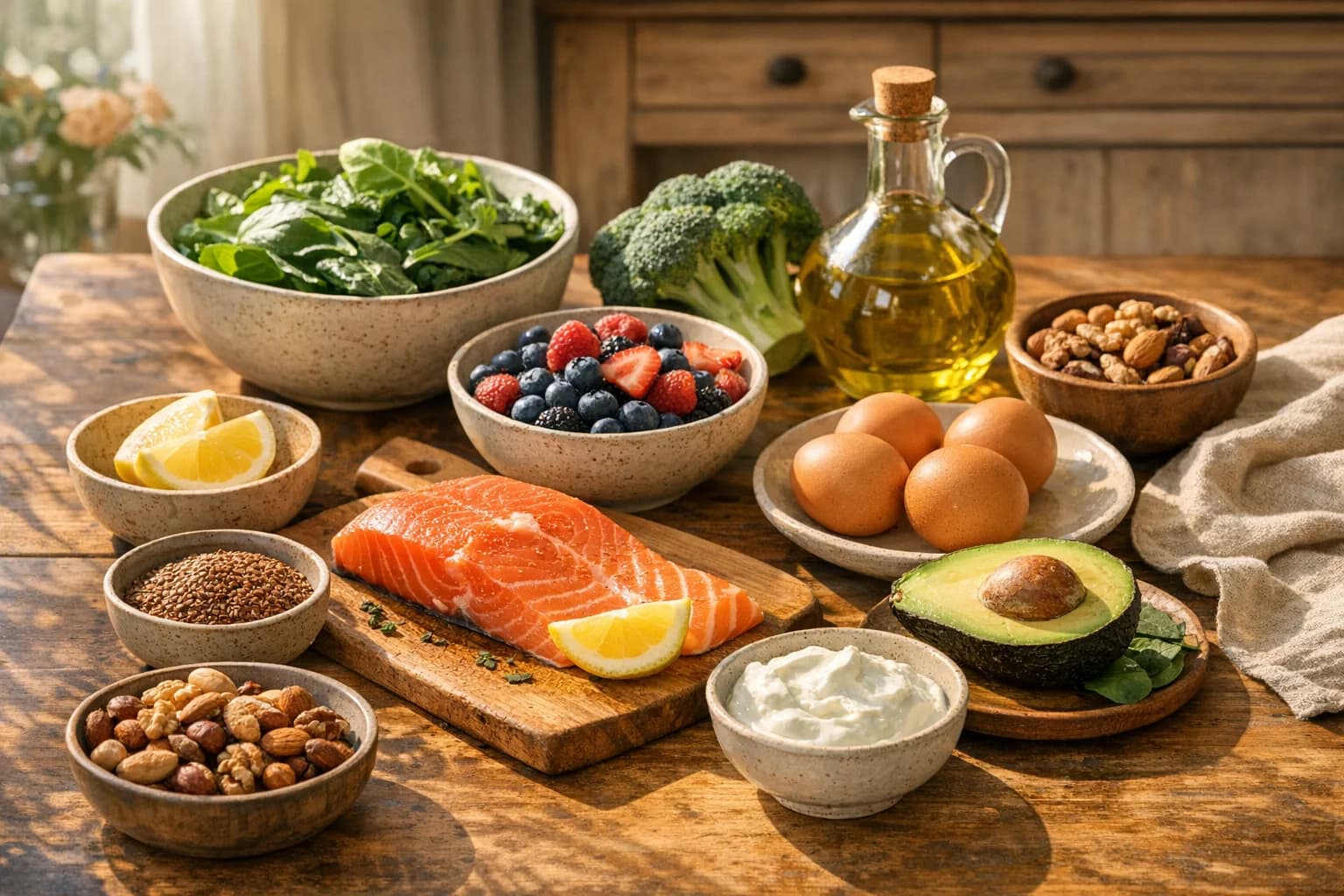
Searching for foods for hormone balance over 40 usually starts after a stretch of feeling off in ways that are hard to explain.
Maybe your sleep is worse. Maybe your patience is thinner. Maybe your weight has shifted even though your habits look pretty similar. Maybe your cycles are changing, your energy is unreliable, or you feel like your body became less predictable somewhere in your forties.
That experience is common. It is also easy to get pulled into really bad advice. One side tells you to buy a dozen supplements. The other tells you everything is normal and you just need to deal with it.
Food sits in the middle, and that is a good thing.
The right foods for hormone balance over 40 are not magic foods. They are foods that support blood sugar, provide enough protein, help your body process hormones well, reduce the nutritional chaos that makes symptoms worse, and give you a steadier foundation day to day.
If hormones have been showing up as fatigue, weight gain, mood changes, or cycle shifts, it may also help to read signs your hormones are off, perimenopause weight gain and insulin resistance, and menopause metabolic health and hormone optimization.
Food does not control every hormone problem, but it influences a lot
This part matters.
Food cannot fix every case of hormone imbalance. If thyroid function is off, if sleep is wrecked, if stress is constant, or if you are in the middle of a major perimenopausal transition, nutrition is not the whole answer.
But food still affects several things that shape how you feel:
- blood sugar stability
- cortisol patterns
- hunger and satiety hormones
- inflammation
- nutrient status
- gut health and bowel regularity
- estrogen processing and elimination
- muscle mass and body composition
That is why the best diet for hormone symptoms is usually less about chasing trendy hormone foods and more about creating meals that stop making the situation worse.
The most important foods for hormone balance over 40 start with protein
Protein is not glamorous, but it is one of the biggest upgrades many women over 40 can make.
When protein is too low, a lot of problems start stacking up. Hunger gets louder. Blood sugar gets less stable. Recovery from workouts is worse. Muscle mass drifts down. Cravings get stronger. That is a rough setup if you are already dealing with mood swings, fatigue, or midsection weight gain.
Good protein options include:
- eggs
- Greek yogurt or cottage cheese
- chicken or turkey
- salmon, sardines, trout, or tuna
- beef in sensible amounts
- tofu, tempeh, or edamame if tolerated
- protein smoothies built around real ingredients
This is one reason breakfast matters so much. A carb-heavy breakfast often sets up more hunger later. A protein-forward breakfast usually creates a steadier day. If that is an issue for you, blood sugar-friendly breakfast ideas and high-protein breakfast ideas in Duluth, MN are good next reads.
Fiber-rich foods help more than people realize
A lot of adults think of fiber as a digestive issue only. It is bigger than that.
Fiber helps with bowel regularity, satiety, cholesterol, blood sugar, and gut health. It also supports the way your body processes and eliminates hormones. When fiber is low and digestion is sluggish, some people feel that downstream in their energy, bloating, appetite, and estrogen-related symptoms.
Useful fiber-rich foods include:
- berries
- apples and pears
- beans and lentils
- chia and flax
- oats
- leafy greens
- broccoli, Brussels sprouts, and cauliflower
- carrots and cabbage
- nuts and seeds
This is also why all-protein, no-produce diets often fall short over time. Protein matters, but your body still needs plant foods that help with hormone metabolism and gut support.
For more on that overlap, see gut health foods in Duluth, MN and anti-inflammatory diet in Duluth, MN.
Cruciferous vegetables are useful, but they are not a cure-all
When people talk about hormone-balancing foods, cruciferous vegetables come up fast. Broccoli, cauliflower, cabbage, Brussels sprouts, kale, bok choy. There is a reason for that.
These vegetables contain compounds that support estrogen metabolism and detoxification pathways in the liver. That can be helpful, especially for people who feel worse around cycle changes, breast tenderness, heavy periods, or general estrogen-dominant patterns.
But there is no need to turn this into a supplement ad or a stress project.
You do not need pounds of raw broccoli sprouts every day. You just need some regular exposure.
A practical goal is including cruciferous vegetables a few times a week in ways you will actually repeat. Roasted Brussels sprouts. Stir-fried cabbage. A side of broccoli with dinner. Slaw on a bowl. Soup with cauliflower.
Healthy fats support hormone production and meal satisfaction
Hormones are not built well on a steady diet of low-fat snack food.
Healthy fats help meals feel finished, support absorption of fat-soluble vitamins, and can make blood sugar friendlier when paired with carbs and protein.
Useful options include:
- olive oil
- avocados
- nuts and seeds
- fatty fish
- olives
- nut butters
This is not a green light to pour butter on everything and call it hormone support. It is a reminder that balanced meals usually work better than carb-heavy, fat-free ones that leave you hungry two hours later.
Blood sugar-friendly carbs are some of the best foods for hormone balance over 40
This surprises people, especially if they assume hormone balance means avoiding carbs completely.
The goal is not zero carbs. The goal is better carbs and better context.
Blood sugar swings can worsen irritability, cravings, energy crashes, and weight gain patterns that are already common in perimenopause and midlife. That means a more thoughtful carb approach often helps hormones indirectly by calming the metabolic noise around them.
Carb sources that often work better include:
- berries and whole fruit
- beans and lentils
- oats
- quinoa
- potatoes in moderate portions with protein
- wild rice
- squash
If your usual carb pattern is sweet coffee, toast, crackers, granola bars, and random bites all day, then yes, changing carbs matters. If you are eating fruit, potatoes, or oats alongside protein and feeling good, that is a different story.
If this has been a struggle, low-carb eating in Duluth, MN, blood sugar-friendly lunch ideas, and blood sugar-friendly dinner ideas in Duluth, MN can help make the shift more practical.
Flax, chia, and seeds can be helpful, but they are support players
Flax and chia get mentioned a lot in conversations about foods for hormone balance over 40, and for good reason.
They bring fiber, healthy fats, and helpful plant compounds to the table. Ground flax in particular is often used to support estrogen balance because of its lignans. Chia can help with fullness, regularity, and blood sugar-friendly breakfasts.
That said, they are not enough on their own.
A tablespoon of flax in a breakfast that is otherwise coffee and chaos will not do much. Add them into a stronger meal pattern and they make more sense.
Good ways to use them include:
- ground flax in yogurt or smoothies
- chia in overnight oats or pudding
- pumpkin seeds on salads
- hemp seeds on cottage cheese bowls
The liver and gut both matter more than social media suggests
Your body processes hormones through systems, not slogans.
That means liver support and gut regularity matter. This is one reason alcohol overload, chronically low fiber, poor sleep, and ultra-processed diets can all show up as hormone symptoms, even when the issue is not purely hormonal.
Supportive habits include:
- eating enough fiber
- staying hydrated
- keeping bowel movements regular
- limiting alcohol if symptoms flare with it
- reducing ultra-processed foods that crowd out real nutrition
- getting enough sleep so cortisol does not stay elevated all the time
If mood has been tied into the picture, gut-brain connection and mood and stress, weight gain, and cortisol are useful companion reads.
What foods for hormone balance over 40 can look like across a normal day
A lot of women do not need a special hormone meal plan. They need a more stable ordinary day.
That might look like this.
Breakfast could be eggs, sautéed greens, and berries.
Lunch could be salmon over greens with quinoa, cabbage slaw, pumpkin seeds, and olive oil.
Dinner could be chicken thighs, roasted broccoli, and potatoes.
A snack, if needed, could be Greek yogurt with flax or apple slices with almond butter.
That day is not fancy, but it checks most of the boxes. Protein is present. Fiber is present. Cruciferous vegetables show up. Healthy fats show up. Carbs are there without taking over. Hunger usually feels more predictable.
Foods for hormone balance over 40 are most helpful when paired with muscle-building habits
This is where food and exercise connect.
Women over 40 often lose muscle more easily if they are not intentionally keeping it. That matters because muscle affects insulin sensitivity, resting metabolism, bone health, energy, and resilience.
So yes, food matters. But food works better when paired with strength training, walking, and recovery.
If you are in that stage of life where your body composition feels different even though your habits have not changed much, strength training for women over 40 in Duluth, MN, creatine for women over 40, and 20-minute workouts for busy adults over 40 are worth your time.
When food is not enough by itself
If symptoms are significant, stubborn, or changing fast, do not stop at food.
You may need better labs. You may need a fuller thyroid panel. You may need to look at insulin, cortisol patterns, inflammation, iron status, vitamin D, or sex hormones. You may need help sorting out whether this is perimenopause, thyroid dysfunction, chronic stress, insulin resistance, poor sleep, or several of those at once.
That is where biomarker testing and a broader functional evaluation can help. Our articles on thyroid health, why TSH alone isn't enough and labs normal but feel terrible go deeper on that point.
FAQ
What are the best foods for hormone balance over 40?
Usually the most helpful foods are protein-rich foods, fiber-rich plant foods, healthy fats, and blood-sugar-friendly carbs. Think eggs, fish, Greek yogurt, berries, beans, flax, leafy greens, cruciferous vegetables, olive oil, and nuts.
Do I need to avoid carbs for hormone balance?
No. Most people do better with smarter carb choices and better meal balance, not zero carbs. The bigger problem is often refined carbs without enough protein or fiber.
Are seeds really helpful for hormones?
They can be. Flax, chia, pumpkin seeds, and hemp add fiber, fats, and useful nutrients, but they work best as part of an overall solid eating pattern.
Can food help with perimenopause symptoms?
It can help support steadier energy, appetite, blood sugar, and inflammation, which may reduce how intense symptoms feel. Food is helpful, but sometimes it needs to be paired with deeper medical evaluation.
What if my hormones feel off even though I eat well?
That is when it makes sense to look beyond food. Sleep, stress, thyroid function, insulin resistance, iron status, inflammation, and menopause transition can all play a role.
The bottom line
The best foods for hormone balance over 40 are not exotic and they are not expensive.
They are the foods that help your body feel steadier. More protein. More fiber. Better carbs. Enough healthy fats. Enough consistency that your energy, mood, cravings, and metabolism are not getting shoved around all day.
If you want help connecting your symptoms, food, labs, and hormone picture, contact Duluth Metabolic. We can help you sort out what is driving the problem and build a plan that feels practical enough to follow in real life.