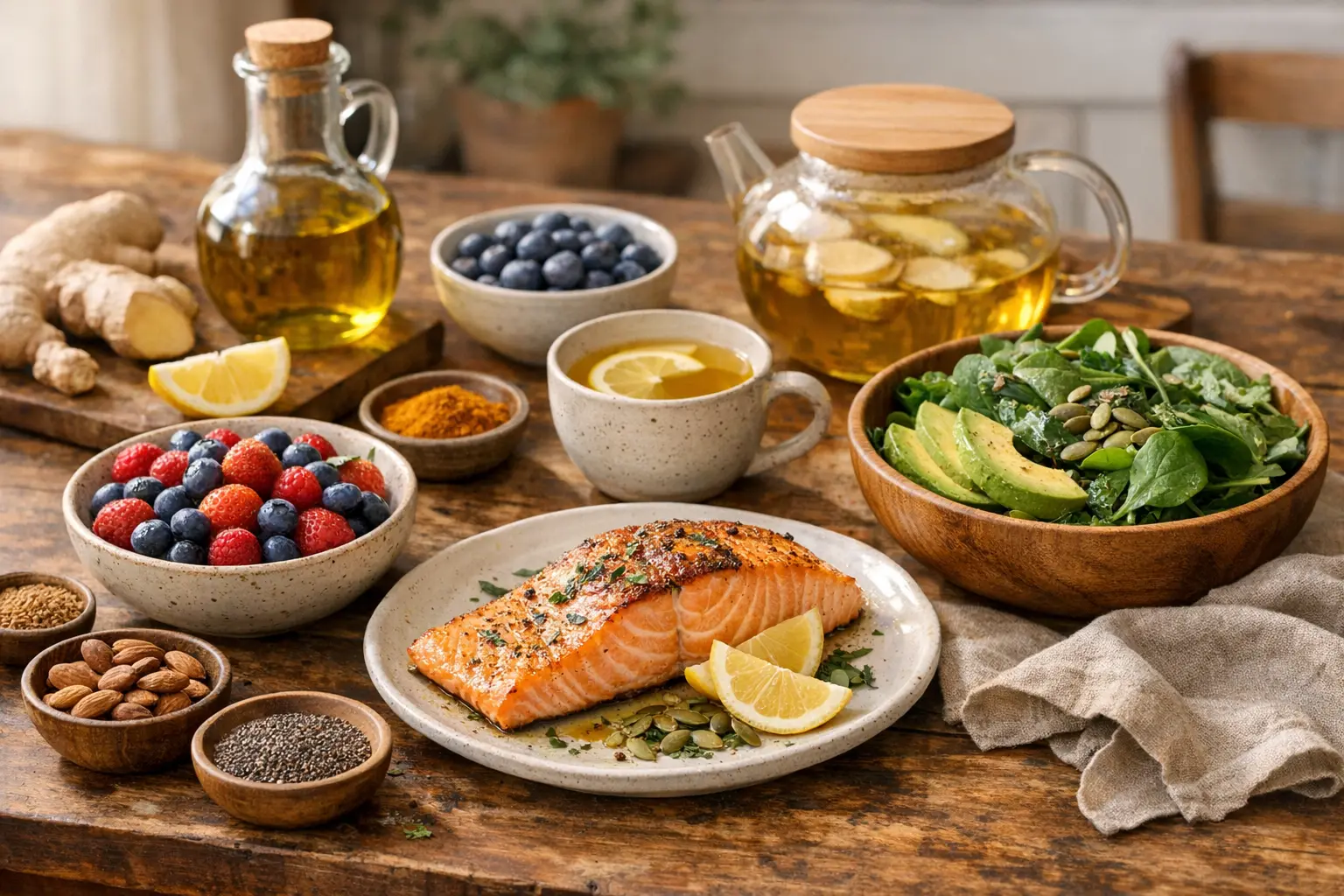
If you are looking for anti-inflammatory foods for migraines, you probably want something more useful than a random list of “superfoods.” You want to know what may actually help, what tends to backfire, and how to eat in a way that supports your head instead of setting it off.
That is a smart question, because migraine nutrition is rarely about one miracle food. It is usually about patterns. Inflammation matters. Blood sugar stability matters. Hydration matters. Meal timing matters. Gut tolerance matters. Hormones can matter too. And if you are eating in a way that leaves you hungry, dehydrated, over-caffeinated, or bouncing between sugar spikes and crashes, your brain may not love that.
At Duluth Metabolic, we think about migraines through a broader metabolic lens. Food is not the only factor behind migraine attacks, but it is often one of the most modifiable ones. If this topic hits home, it may also help to read gut brain connection mood, chronic inflammation, and food noise and blood sugar.
Why anti-inflammatory foods for migraines can help
Migraine is a neurological condition, not a character flaw and not just a bad headache. Inflammation appears to be part of the picture for many people, which is one reason food choices can matter.
A more anti-inflammatory eating pattern may help by:
- lowering overall inflammatory load
- supporting steadier blood sugar
- reducing dehydration risk
- improving magnesium and omega-3 intake
- lowering the chance of missing meals or relying on highly processed foods
That does not mean every person with migraines needs the same diet. Some people are triggered by specific foods. Others do worse with long gaps between meals. Others notice that alcohol, poor sleep, and stress are bigger drivers than any one ingredient.
Still, a lower-inflammation food pattern is a solid place to start.
The most helpful anti-inflammatory foods for migraines
Instead of chasing trendy ingredients, think in categories.
Fatty fish and omega-3-rich meals
Salmon, sardines, trout, and mackerel provide omega-3 fats that may help calm inflammatory signaling. They also give you protein, which helps with satiety and steadier blood sugar.
For people who tend to skip meals or piece together snack-based lunches, a more substantial protein-centered meal can make a real difference.
Magnesium-rich foods
Magnesium gets a lot of attention in migraine conversations for a reason. Low magnesium status can overlap with headaches, muscle tension, poor sleep, and stress sensitivity.
Helpful food sources include:
- pumpkin seeds
- almonds and cashews
- black beans and lentils
- spinach and other leafy greens
- dark chocolate for people who tolerate it well
Colorful produce
Berries, leafy greens, citrus, cruciferous vegetables, peppers, and other whole produce bring antioxidants and polyphenols that help support a lower-inflammatory eating pattern.
You do not need to eat a rainbow in a perfectly Instagrammable way. You just want more plants showing up regularly.
Beans, lentils, and fiber-rich whole foods
Fiber supports blood sugar control and gut health, both of which can matter for migraine patterns. For some people, fiber also improves satiety enough to reduce the accidental under-eating that can trigger headaches later in the day.
If your digestion tolerates them well, beans and lentils can be useful. If they do not, there are other paths. Migraine nutrition does not need to turn into a food morality contest.
Ginger and turmeric
These are often discussed for their anti-inflammatory properties. Ginger may also be useful for people whose migraines come with nausea. They are not magic, but they are easy ways to build flavor into meals without relying on sugary sauces or ultra-processed additions.
Blood sugar may be one of the biggest overlooked migraine triggers
This is a gap a lot of mainstream articles miss.
For some people, the issue is not only inflammation. It is the way unstable blood sugar stresses the nervous system.
If you regularly do any of the following, your head may be paying for it:
- skipping breakfast, then overdoing caffeine
- grabbing a pastry or sweet drink and crashing later
- going too long between meals
- eating mostly carbs with very little protein
- under-eating during the day and overeating at night
That roller coaster can leave you shaky, foggy, irritable, and more headache-prone.
This is where a metabolic approach adds something practical. A migraine-supportive meal is often just a blood-sugar-supportive meal too: protein, fiber, fluid, and enough actual food to keep your brain supplied.
It may help to read blood sugar friendly lunch ideas, how to stop sugar cravings at night, and best protein snacks for blood sugar control.
Meal timing matters more than people think
A lot of migraine sufferers focus on what they ate but forget when they ate.
If you wait too long between meals, especially when life is busy, your system can get pushed into a less stable state. That matters even more if stress is high or sleep was poor the night before.
A few practical migraine-friendly meal timing ideas:
- eat within a reasonable window after waking if you tend to feel shaky or headachy
- include protein with breakfast and lunch
- do not rely on caffeine as a meal replacement
- carry a real snack if you know your day runs long
- hydrate before you feel desperate
That kind of structure is boring in the best way. It is simple, repeatable, and often more effective than hunting for one perfect supplement.
Foods that may trigger migraines for some people
This part needs nuance.
No universal trigger list fits everyone, and overly restrictive eating can become its own problem. Still, some foods and habits commonly show up in migraine conversations:
- alcohol, especially red wine for some people
- processed meats with nitrates
- heavily processed snack foods
- MSG in sensitive individuals
- large amounts of caffeine or caffeine withdrawal
- aged cheeses for some people
- artificial sweeteners in some cases
- chocolate for some people, though others tolerate it fine
The best move is usually not to eliminate ten foods at once. It is to track patterns calmly and look for repeats.
Gut health can matter too
The gut and brain talk to each other constantly. For some people, migraines overlap with bloating, reflux, constipation, or food tolerance issues. That does not mean the gut is always the cause, but it can be part of the picture.
If your migraines tend to flare alongside digestive symptoms, the more useful question may be whether your overall food pattern is working for your body.
That is one reason gut health foods in Duluth MN, functional medicine for acid reflux, and why am I bloated after every meal are worth exploring too.
A practical anti-inflammatory migraine plate
If you want something simple, think of meals like this:
- a clear protein source
- a produce source
- a fiber-rich carb or legume if tolerated
- water or an unsweetened drink
- enough food to actually satisfy you
A few examples:
- eggs with sautéed greens and berries
- Greek yogurt with chia seeds, walnuts, and fruit
- salmon with roasted vegetables and potatoes
- lentil soup with chicken or turkey on the side
- a snack plate with turkey, cucumber, nuts, and fruit
If you live in Duluth and eat on the go a lot, articles like healthy lunch in Duluth MN, blood sugar friendly restaurants in Duluth MN, and healthy coffee shops in Duluth MN can make this easier in real life.
When food is helpful but not enough
It is worth saying this plainly. If migraines are frequent, severe, new, or changing, food should not be your only plan.
A nutrition approach can support migraine management, but it does not replace appropriate medical evaluation. If attacks are common, disruptive, or connected with other concerning symptoms, a deeper workup may make sense.
That is especially true if you also deal with fatigue, hormone changes, blood sugar symptoms, or unexplained inflammation. In those cases, biomarker testing or even CGM monitoring can help reveal patterns you cannot see from memory alone.
FAQ about anti-inflammatory foods for migraines
Do anti-inflammatory foods cure migraines?
No. Migraines are complex. But a lower-inflammatory, more blood-sugar-stable food pattern may reduce triggers and help some people feel more consistent.
What are the best foods to start with?
A good starting point is protein-rich meals, fatty fish, leafy greens, berries, nuts and seeds, beans or lentils if tolerated, and better hydration.
Should I cut out all common trigger foods right away?
Usually not. A calmer approach works better. Track symptoms, notice patterns, and avoid creating an overly restrictive diet unless there is a clear reason.
Can blood sugar swings trigger migraines?
For some people, yes. Long gaps between meals, sugary breakfasts, under-eating, and too much caffeine can all make headaches more likely.
What if I also have bloating or reflux?
That may suggest a gut connection worth paying attention to. Food tolerance, meal size, and overall gut health can all play a role.
If migraines keep interrupting your work, sleep, workouts, or quality of life, you do not have to keep guessing your way through it.
If you want help building a more personalized plan around inflammation, nutrition, blood sugar, and real-life habits, contact Duluth Metabolic. We can help you make sense of the bigger picture and create a plan that feels doable.