If you are trying to figure out the best anti-inflammatory foods for blood sugar control, you are probably not looking for another food lecture.
You want meals that help you feel better.
Steadier energy. Fewer crashes. Less brain fog. Less afternoon hunger that turns into evening overeating. Maybe less puffiness, less joint stiffness, and less of that “I’m doing my best and still feel off” feeling.
That is where this conversation gets useful. Blood sugar and inflammation are closely connected. When blood sugar is running high, swinging hard, or crashing often, inflammation tends to rise with it. When inflammation stays high, insulin sensitivity often gets worse. It becomes a loop.
The good news is that you do not need a perfect diet to start interrupting that cycle. A handful of better food choices, repeated often, can go a long way.
At Duluth Metabolic, we usually look at this through a practical lens. What can you buy, cook, and repeat in real life? What meals leave you feeling steady instead of wrecked? What habits help support your diabetes, blood pressure, energy, and long-term metabolic health without turning food into a full-time job?
Why anti-inflammatory foods for blood sugar control matter
Inflammation is not always bad. It is part of how the body heals and responds.
The problem is chronic low-grade inflammation.
That pattern is linked with insulin resistance, higher fasting insulin, more visceral fat, higher cardiovascular risk, and a harder time bouncing back from meals, poor sleep, or stress. If your body is already running hot, a steady stream of refined carbs, ultra-processed foods, sugary drinks, and low-protein meals tends to pour gas on the fire.
Anti-inflammatory foods help because they usually do several things at once.
They tend to bring more fiber, more protein, more micronutrients, more healthy fats, and fewer rapid blood sugar spikes. They also tend to crowd out the foods that keep people stuck.
This is one reason meal quality matters so much for people dealing with high fasting insulin with a normal A1c, prediabetes diet planning, or the feeling that they are always hungry again an hour after eating.
What makes a food helpful for both inflammation and blood sugar
A food does not need a wellness halo to be useful.
Usually, the most helpful foods have some combination of these traits:
- fiber that slows digestion
- protein that improves satiety
- healthy fat that helps meals feel more stable
- polyphenols and antioxidants that support a calmer inflammatory response
- minimal refining, so the food acts more like food and less like a glucose delivery system
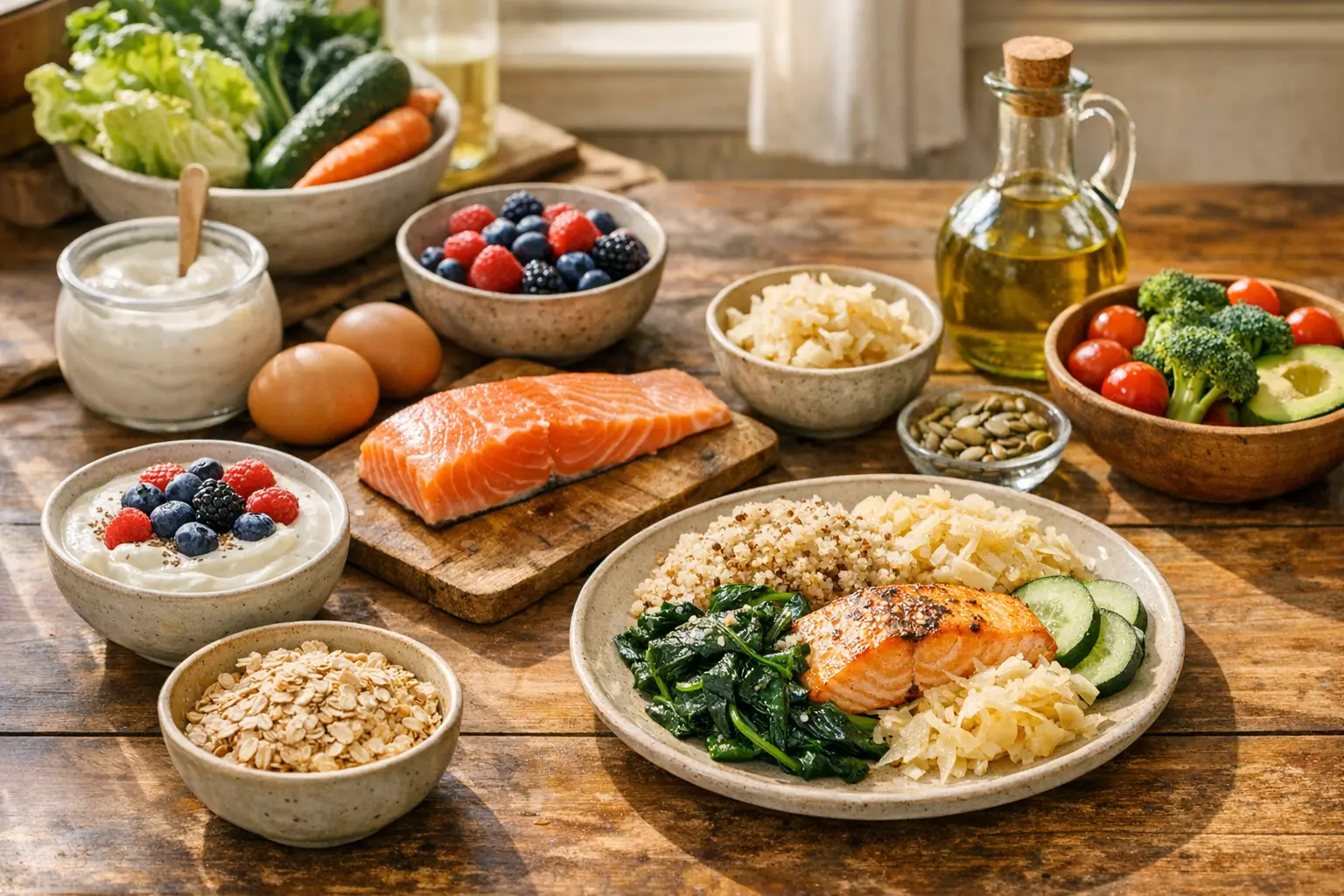
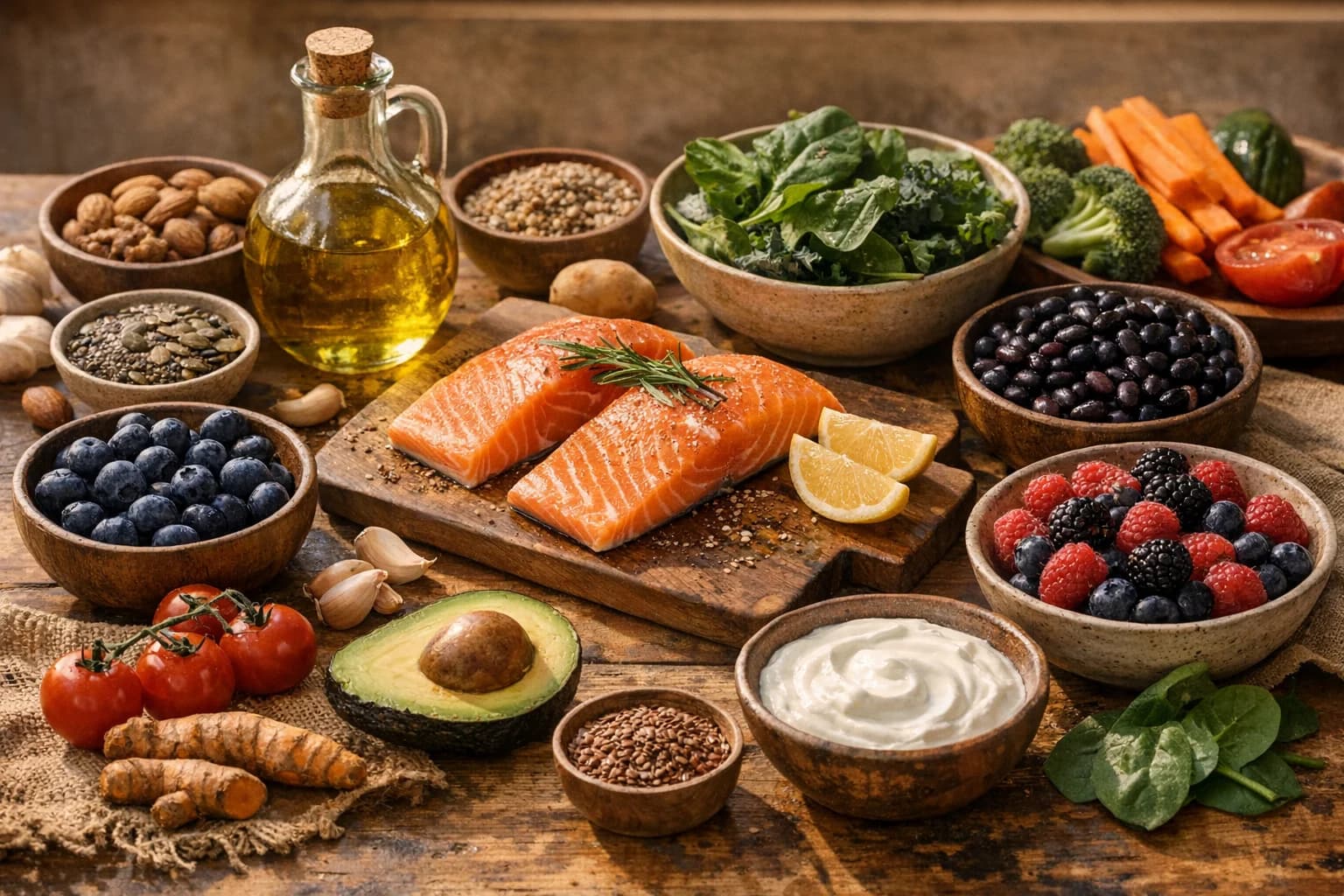
That is why a bowl of berries with Greek yogurt tends to land differently than a muffin. It is why salmon with vegetables and potatoes usually works better than takeout noodles with no protein. It is why nuts, eggs, beans, olive oil, chia, lentils, leafy greens, and plain yogurt keep showing up in this conversation.
The best anti-inflammatory foods for blood sugar control
Extra virgin olive oil
Olive oil is one of the simplest upgrades you can make. It adds flavor, helps with satiety, and fits naturally into a lower-inflammatory eating pattern.
Use it on roasted vegetables, salads, cooked greens, or simple protein bowls. The goal is not to drink it like medicine. It is to make real meals more satisfying and less dependent on sugary sauces or ultra-processed dressings.
Fatty fish
Salmon, sardines, trout, and mackerel bring protein and omega-3 fats, which are strongly associated with a healthier inflammatory response.
For many adults, fish is one of the easiest swaps for blood sugar-friendly dinners because it pairs well with vegetables, potatoes, beans, or rice without requiring much prep. In Duluth, it is also a realistic fit for people who enjoy seasonal, simple meals instead of complicated meal plans.
Berries
Berries are one of the most useful carbs for people trying to support blood sugar. They bring fiber, color, and polyphenols without the same glucose hit as many processed snacks or desserts.
If you do better with structure, pair berries with protein. Cottage cheese, Greek yogurt, chia pudding, or a protein-forward breakfast works better than eating fruit alone if you tend to spike and crash.
Leafy greens and non-starchy vegetables
This advice can sound boring until it clicks.
Vegetables help by adding volume, fiber, potassium, and micronutrients without making meals carb-heavy. They also help dilute the glucose impact of the rest of the plate.
That does not mean every meal needs a giant salad. Soups, roasted vegetables, sautéed greens, chopped cucumbers, slaw, frozen vegetables, and simple sheet-pan meals all count.
Beans and lentils
A lot of people assume these are off limits if they are thinking about blood sugar. In practice, many people do very well with beans and lentils because the fiber and protein help slow the response.
Portion and context matter. Beans added to a meal with protein and vegetables are usually a better fit than a massive bowl of refined carbs on its own.
Nuts and seeds
Walnuts, almonds, pumpkin seeds, chia, flax, and hemp seeds are small foods that can do a lot of work.
They add texture, healthy fat, minerals, and better staying power to meals and snacks. Chia and flax are especially helpful if you are also working on gut health, digestion, or better breakfast structure.
Fermented foods
Gut health and blood sugar are more connected than most people realize. Foods like plain Greek yogurt, kefir, sauerkraut, kimchi, and fermented vegetables may support a healthier gut environment, which can matter for inflammation and cravings.
If this is an area you are trying to improve, our guides on fermented foods for gut health in Duluth MN and gut health habits for busy adults are worth reading too.
Herbs, spices, tea, and cocoa
These are not magic, but they are useful.
Turmeric, ginger, cinnamon, garlic, rosemary, green tea, and unsweetened cocoa all add polyphenols or antioxidant compounds with very little downside. They also make healthy meals taste better, which matters if you want your plan to last longer than a week.
Foods that tend to push things the wrong way
Sometimes the easiest way to improve a diet is not adding superfoods. It is reducing the stuff that keeps setting you back.
Common troublemakers include:
- sugary drinks
- pastries and dessert-like breakfasts
- refined snack foods that disappear in five minutes
- meals that are mostly starch with very little protein
- ultra-processed foods that are easy to overeat
- alcohol habits that wreck sleep and next-day appetite
That does not mean you can never eat these foods. It means they should not be the foundation if you are trying to get blood sugar and inflammation under better control.
What anti-inflammatory eating looks like in real life
This is where many articles fall apart. They list foods, but they do not show you how to use them.
A practical day might look like this.
Breakfast could be Greek yogurt, berries, chia, and walnuts. Or eggs with sautéed vegetables and avocado. Lunch might be a salmon salad with olive oil dressing, or a grain bowl with chicken, greens, beans, and crunchy vegetables. Dinner could be turkey burgers with roasted broccoli and sweet potatoes, or a simple stir-fry with protein first instead of a pile of noodles.
Snacks can be simple too. Try nuts and berries, cottage cheese, a protein-rich leftover meal, or one of these best protein snacks for blood sugar control.
If you want more local ideas, pair this article with anti-inflammatory grocery shopping in Duluth MN, low-carb grocery shopping in Duluth MN, and blood sugar-friendly dinner ideas in Duluth MN.
You do not have to choose between anti-inflammatory and satisfying
A lot of people quietly believe healthy food means small, disappointing portions and constant discipline.
That is usually why the plan falls apart.
The better approach is to make meals more satisfying while also making them more metabolically useful. More protein. More texture. More volume from produce. More meals that keep you full for four hours instead of ninety minutes.
This matters a lot for people who feel stuck in the cycle of cravings, afternoon fatigue, late-night snacking, or constant mental effort around food. If your meals are not satisfying, your biology will keep fighting back.
When food changes are not enough on their own
Food matters, but it is not the entire picture.
If you are doing a lot of the right things and still feeling off, it may be worth looking deeper at sleep, stress, strength training, hormones, gut health, and lab work. People often need more than a better grocery list.
That is where tools like CGM monitoring, biomarker testing, and accountability coaching can help. Instead of guessing which foods work for your body, you can look at real patterns and adjust from there.
FAQ about anti-inflammatory foods for blood sugar control
What are the best anti-inflammatory foods for blood sugar control?
Some of the most helpful options are fatty fish, extra virgin olive oil, berries, leafy greens, beans, lentils, nuts, seeds, plain Greek yogurt, and herbs and spices like cinnamon and ginger. The biggest win usually comes from how these foods fit into complete meals.
Do I need to cut all carbs?
No. Many people do better when they choose higher-fiber, less processed carbs and pair them with protein and healthy fat. The question is usually carb quality, portion, and context, not whether carbs are evil.
Are anti-inflammatory foods good for prediabetes?
Yes. They can help support steadier glucose, lower insulin demand, and better satiety. They also tend to support other goals like lower blood pressure, better energy, and improved digestion.
Can I follow this if I am trying to lose weight?
Absolutely. In many cases, anti-inflammatory, blood sugar-friendly meals make weight loss easier because they reduce crashes, cravings, and the urge to keep snacking.
What if I already eat pretty well but still feel off?
That usually means it is worth looking at the bigger picture. Lab work, CGM data, meal timing, sleep, stress, and exercise can all change how food lands.
You do not need a trendy diet to start feeling better. You need meals that work with your body more often than they work against it.
If you want help building that plan, contact Duluth Metabolic. We can help you turn good intentions into a practical routine that supports steadier blood sugar and better long-term health.