If you are searching for a gut health meal plan for beginners, you probably do not need another dramatic reset. You need food that helps you feel less bloated, less foggy, and less all-over-the-place without turning your kitchen into a full-time job.
That is especially true if your digestion has been off for a while. A lot of people start paying attention to gut health after months or years of bloating, constipation, reflux, loose stools, heavy meals, random food reactions, or the feeling that their energy crashes every afternoon no matter what they eat. Others notice the connection through mood, skin, cravings, or blood sugar swings.
The good news is that a beginner-friendly gut plan does not have to be complicated. In most cases, it starts with steadier meals, less ultra-processed food, more fiber, enough protein, and a better rhythm to the day.
At Duluth Metabolic, we like to keep this grounded in real life. You do not need a stack of powders and you do not need to fear every ingredient. You need meals you can repeat. If you want more background first, read gut health habits for busy adults, gut brain connection mood, and anti-inflammatory diet in Duluth MN.
What a gut health meal plan for beginners should actually do
A lot of gut content online makes the same mistake. It treats gut health like a cleanse.
For most people, a better plan is simpler. It should:
- calm digestion down instead of irritating it more
- support a healthier gut microbiome over time
- keep blood sugar steadier so you are not riding spikes and crashes
- include enough protein and total calories so you do not feel weak or ravenous
- feel realistic enough to repeat during workweeks
That matters because digestion and metabolism are connected. When meals are heavy in refined carbs, low in protein, low in fiber, and scattered all over the day, people often feel both digestive symptoms and metabolic symptoms. They get bloated, tired, snacky, and hungry again too fast.
That is one reason gut work often overlaps with nutrition coaching, CGM monitoring, and early support for diabetes or high blood pressure.
The beginner rules that make the biggest difference
Before we get into a sample plan, it helps to narrow the focus.
Start with these ideas.
Eat meals, not random grazing. Give your body some rhythm.
Build each meal around protein first. Eggs, Greek yogurt, chicken, turkey, salmon, tuna, cottage cheese, tofu, tempeh, lentils, and higher-protein leftovers all work.
Add fiber gradually instead of going from five grams a day to forty overnight. Too much too fast can make people feel worse before they feel better.
Use fermented foods in realistic amounts. A few spoonfuls of sauerkraut, kimchi, or plain kefir may be plenty to start.
Lower the amount of ultra-processed food coming in. That one shift alone can help both digestion and inflammation.
If a specific food clearly bothers you, pay attention. But do not assume every symptom means you need to cut out whole food groups forever.
Foods that usually support gut health
There is no one perfect gut menu, but some patterns help most people.
Protein matters because it helps meals feel satisfying and keeps you from chasing quick carbs all day. Fiber matters because it feeds beneficial gut bacteria and improves stool quality, satiety, and blood sugar response. Colorful plants matter because different fibers and polyphenols support different parts of the microbiome.
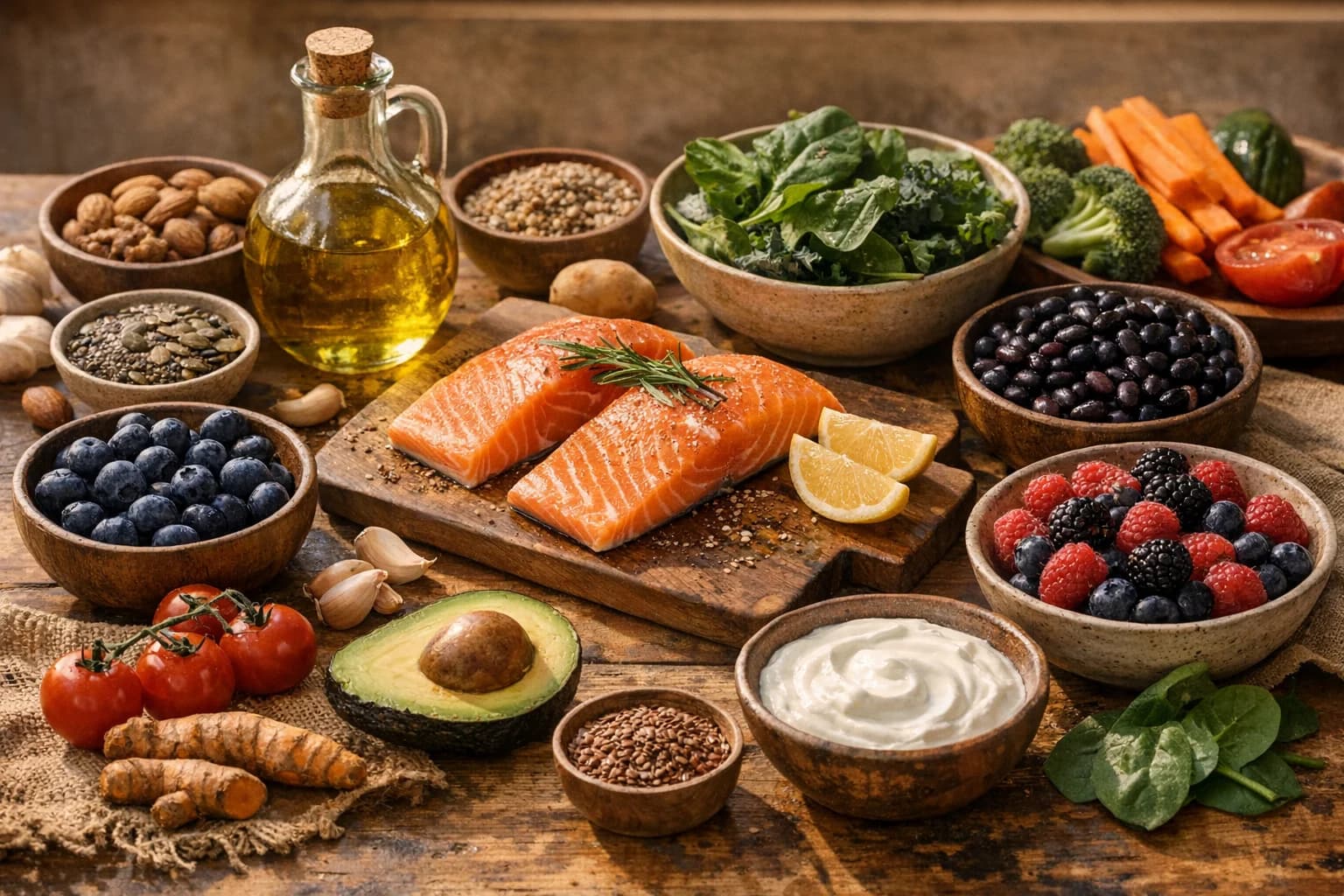
A solid gut-health grocery basket usually includes:
- eggs, plain Greek yogurt, cottage cheese, fish, chicken, tofu, or beans
- berries, apples, kiwi, citrus, and bananas
- cooked vegetables like carrots, zucchini, green beans, mushrooms, spinach, and roasted squash
- higher-fiber carbs like oats, potatoes, beans, lentils, quinoa, and rice in portions that work for you
- fermented foods like sauerkraut, kimchi, kefir, or plain yogurt
- healthy fats such as olive oil, nuts, seeds, avocado, and fatty fish
- simple flavor boosters like ginger, cinnamon, turmeric, garlic, and fresh herbs
If you are also working on inflammation, anti-inflammatory foods for joint pain and functional foods for metabolic health and longevity are helpful next reads.
Foods that often make beginners feel worse
This is not about demonizing food. It is about noticing common patterns.
A lot of adults feel worse when most of their intake comes from drive-thru meals, sugary coffee drinks, protein bars that are basically candy, giant restaurant portions, alcohol-heavy evenings, or “healthy” snacks that are still very processed.
Some people also run into trouble when they jump too fast into raw vegetables, huge salads, large amounts of beans, or lots of fermented foods all at once. Those foods can be helpful, but your gut may need a slower ramp.
If you are bloated after eating, it can also help to read bloated after eating in Duluth MN.
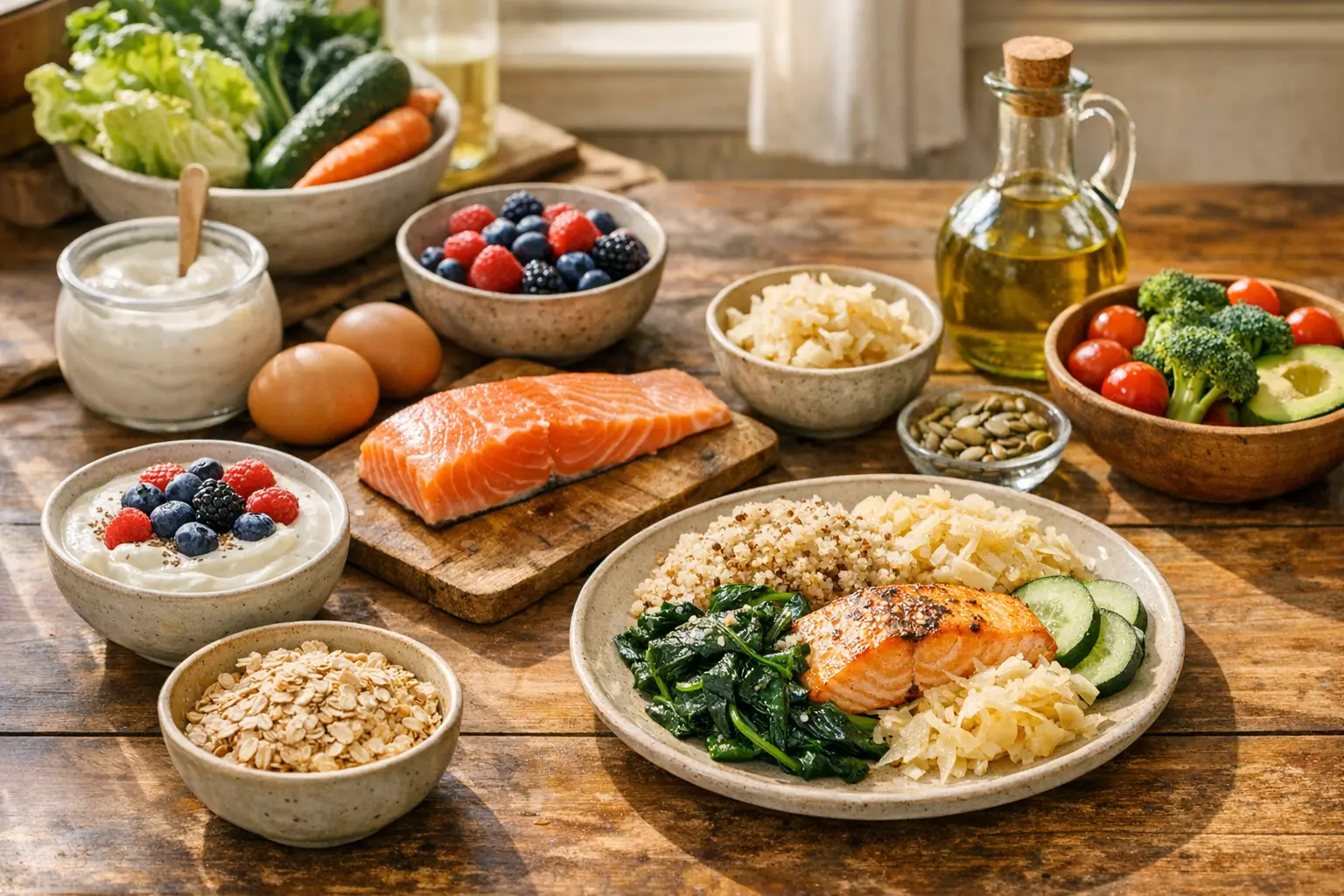
A simple 7-day gut health meal plan for beginners
This plan is not meant to be perfect. It is meant to be useful.
Day 1
Breakfast: Greek yogurt with berries, chia seeds, walnuts, and cinnamon.
Lunch: Turkey lettuce wraps with cucumber, carrots, hummus, and fruit.
Dinner: Salmon, roasted potatoes, green beans, and a small spoonful of sauerkraut.
Snack: Apple with peanut butter.
This first day works well because it keeps things familiar. You get protein at every meal, cooked vegetables at dinner, and just a small amount of fermented food instead of overdoing it.
Day 2
Breakfast: Two eggs with sautéed spinach and mushrooms, plus half an avocado.
Lunch: Leftover salmon over rice with cucumber and olive oil.
Dinner: Chicken taco bowl with lettuce, tomatoes, a scoop of black beans, salsa, and plain Greek yogurt instead of sour cream.
Snack: Cottage cheese with kiwi.
Day 3
Breakfast: Overnight oats with plain kefir or yogurt, flaxseed, blueberries, and pumpkin seeds.
Lunch: Lentil soup with shredded chicken or a side of hard-boiled eggs.
Dinner: Stir-fry with ground turkey, zucchini, carrots, ginger, and rice.
Snack: Handful of almonds and a clementine.
Day 4
Breakfast: Smoothie with protein powder or Greek yogurt, berries, spinach, chia, and unsweetened milk.
Lunch: Tuna salad over mixed greens with cucumber, olives, and roasted potatoes.
Dinner: Burger bowl with seasoned beef, lettuce, tomato, pickles, avocado, and roasted carrots.
Snack: Plain yogurt with cinnamon.
Day 5
Breakfast: Cottage cheese bowl with strawberries, hemp seeds, and a few pecans.
Lunch: Quinoa bowl with chicken, roasted vegetables, and tahini-lemon dressing.
Dinner: Baked cod, rice, sautéed spinach, and a spoonful of kimchi if it agrees with you.
Snack: Carrots and hummus.
Day 6
Breakfast: Scrambled eggs, leftover potatoes, and fruit.
Lunch: Turkey burger patties with slaw and sliced avocado.
Dinner: Chicken and vegetable soup with a side salad.
Snack: Kefir smoothie with berries.
Day 7
Breakfast: Protein oatmeal with chia, cinnamon, and almond butter.
Lunch: Leftover soup or a simple plate of turkey, fruit, cucumbers, and nuts.
Dinner: Sheet-pan chicken thighs with broccoli, carrots, and small roasted potatoes.
Snack: Dark chocolate and walnuts, or plain yogurt if you want something more filling.
How to make this plan work in a busy week
The biggest mistake beginners make is building a plan that only works on a relaxed Sunday.
A better move is to prep a few anchors:
- cook one or two proteins
- wash fruit and cut a few vegetables
- roast a tray of potatoes or sweet potatoes
- keep plain yogurt, eggs, and canned fish around
- choose one or two repeat breakfasts so mornings feel easy
This is where consistency beats creativity. Repeating a handful of meals is usually better than chasing novelty and ending up back at convenience food.
If blood sugar is part of the picture, meal prep for blood sugar control, blood sugar-friendly breakfast ideas, and blood sugar-friendly lunch ideas can help you build from here.
What if you feel worse when you start eating more fiber
That can happen, especially if your starting point was low fiber and high processed food.
Go slower.
Cook vegetables instead of forcing giant raw salads. Add beans in smaller portions. Start with one fermented food instead of several. Drink more water. Chew more slowly. Avoid stacking every gut trick into the same week.
Gut health is not about winning a challenge. It is about building tolerance and consistency.
The gut and blood sugar connection matters more than people think
Many people think gut health only means digestion. It often reaches farther than that.
When meals are more balanced, people often notice less bloating, but they also notice better energy, fewer cravings, a steadier mood, and less of the urgent hunger that hits midafternoon or late at night. That is part gut function and part blood sugar control.
This is a useful frame if you are dealing with reactive hypoglycemia after meals, high fasting insulin with normal A1C, or why is my blood sugar high in the morning.
FAQ about a gut health meal plan for beginners
Do I need to cut out gluten or dairy to improve gut health?
Not always. Some people do better removing a problem food temporarily, but plenty of people tolerate quality dairy or gluten-containing foods just fine. Start with the bigger wins first.
How long does it take to notice improvement?
Some people feel better in a week or two, especially if processed food was a big part of the issue. Deeper changes usually take longer and depend on consistency.
Are probiotics necessary?
Not always. Food, meal structure, fiber diversity, sleep, and stress often matter more at the beginning. Probiotics can help some people, but they are not the first answer for everyone.
What if I am trying to improve gut health and lose weight?
That is common. The goal is not to undereat. It is to build meals that keep you full, support your microbiome, and help you avoid the constant cycle of cravings and overeating.
Can this help with mood and brain fog too?
Sometimes yes. The gut-brain connection is real, and many people feel mentally better when digestion, blood sugar, and inflammation improve.
Start simpler than you think
A good gut health meal plan for beginners is not complicated. It is a week of steadier meals, enough protein, better fiber, less processed food, and small improvements you can actually keep going.
If you want help building a gut-friendly plan that also supports blood sugar, energy, and long-term metabolic health, contact Duluth Metabolic. We can help you make it personal and practical.