If you're considering a CGM for prediabetes, you're probably looking for more than another lecture about eating less sugar. You want to know what is happening in your body in real time. You want to know why one breakfast leaves you energized while another makes you shaky and hungry by 10:30. You want something more useful than waiting six months for another lab test.
That is exactly where continuous glucose monitoring can help.
A CGM does not diagnose prediabetes on its own. It does something different, and for many patients, more practical. It shows you your day-to-day glucose patterns as you live your real life. You can see what happens after your usual coffee order, your favorite protein bar, a bad night of sleep, a walk around the block, or dinner out in Canal Park.
At Duluth Metabolic, we use CGM monitoring because real data helps people make better decisions than vague advice ever will. When the numbers are paired with context, symptoms, and good coaching, a CGM can turn prediabetes from an abstract warning into something you can actually change.
Why a CGM for prediabetes is getting so much attention
Prediabetes is common, but it often feels invisible. Many people have no obvious symptoms. Others notice subtle clues, like fatigue after meals, intense cravings, stubborn weight gain, brain fog, or waking up in the middle of the night hungry.
The problem is that standard labs only give snapshots.
A fasting glucose is one moment in time. An A1C is an average. Averages can hide a lot.
You might have a decent-looking A1C while still having big post-meal spikes. You might look "fine" in the morning but run high after certain foods, stressful afternoons, or poor sleep. A CGM for prediabetes helps uncover those patterns.
This matters because early glucose dysregulation is often still very responsive to lifestyle changes. The sooner you see the pattern, the more likely you are to reverse it before it becomes diabetes.
What a CGM actually shows you
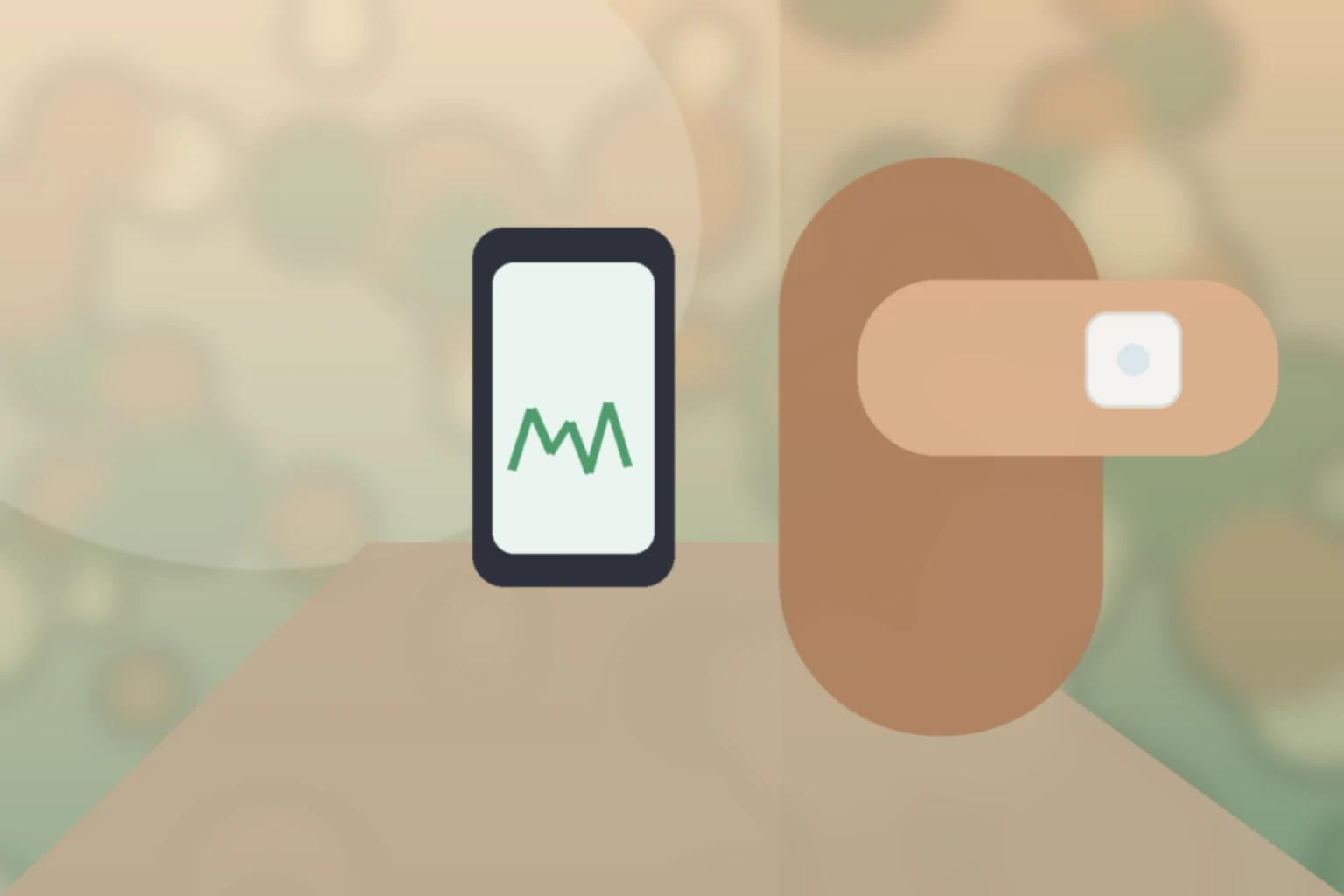
A continuous glucose monitor is a small wearable sensor, usually worn on the back of the arm, that tracks glucose levels throughout the day and night.
Instead of guessing, you get a moving graph.
That graph can help you answer questions like:
- Which breakfasts keep me steady?
- Do I spike more from oats, smoothies, sushi rice, or "healthy" granola?
- Does walking after dinner help?
- What happens to my glucose after poor sleep?
- Am I crashing in the afternoon because of lunch, stress, or both?
- Does late-night snacking affect my overnight numbers?
This is why people often learn more from two weeks of CGM data than from years of trying random diets.
Who should consider a CGM for prediabetes
A CGM is not necessary for every person with mild blood sugar issues. It is most helpful when the data is likely to change behavior or clarify what is not obvious from routine labs.
You may be a good candidate if:
- your A1C is in the prediabetes range
- your fasting insulin is elevated even if glucose is still normal
- you have a strong family history of diabetes
- you had gestational diabetes
- you have PCOS, menopause-related weight gain, or central obesity
- you feel tired, shaky, or ravenous after meals
- you have tried to improve your diet but still feel confused about what works
- you want feedback that is more personalized than a generic meal plan
It can also be helpful for people who read our article on CGM for weight loss and realize the same glucose swings making weight loss harder may also be pushing them toward prediabetes.
What we look for on a CGM for prediabetes
People often assume there is one magic number that matters. In reality, we care about patterns.
Post-meal spikes
Do you jump sharply after certain meals? Do you stay elevated longer than expected? This can suggest reduced insulin sensitivity or a meal structure that needs work.
Glucose variability
Even if your average looks okay, a roller coaster pattern can be a clue that your meals, sleep, stress, or activity are working against you.
Overnight trends
Late-night eating, alcohol, poor sleep, and stress can all affect overnight glucose. A stable overnight line usually feels better the next day too.
Response to lifestyle changes
Does a protein-heavy breakfast help? Does a walk after dinner flatten the curve? Does strength training improve your next-day numbers? This is where CGM becomes empowering instead of scary.
The biggest mistakes people make with CGM data
A CGM can be incredibly helpful, but only if you use it well.
Mistake 1: Treating every bump like a crisis
Glucose naturally moves. You are alive, not a lab specimen. A CGM is not about chasing a perfectly flat line all day.
Mistake 2: Obsessing over single foods without context
The same meal can produce different results depending on stress, sleep, hydration, menstrual cycle timing, workout timing, and portion size.
Mistake 3: Cutting out everything that raises glucose
That approach usually backfires. The goal is not food fear. The goal is learning how to build meals and routines that improve your response. Sometimes that means adding protein, fiber, or a short walk, not banning fruit forever.
Mistake 4: Using the device without support
Numbers are more useful when somebody helps interpret them. This is why pairing a monitor with nutrition coaching or accountability coaching often gets better results than buying a sensor and hoping for the best.
What the research and real-world experience suggest
Recent clinical and consumer interest in CGM for prediabetes has grown for a reason. Research suggests continuous glucose monitoring can help people connect food choices with glucose responses, and early pilot programs show it may improve motivation and dietary change. In real-world clinic settings, that's the part that matters most.
People change faster when they can see their own data.
A generic handout might say, "avoid refined carbs." A CGM shows that your deli sandwich on white bread pushes you high, while the same lunch in a bowl with chicken, greens, beans, and olive oil keeps you steady. That lesson sticks.
We've seen people finally understand why they feel terrible after a breakfast they thought was healthy. We've also seen people stop over-restricting because they learned certain foods were not the problem after all.
How we use a CGM for prediabetes at Duluth Metabolic
We do not use CGM as a gimmick.
We use it as part of a bigger metabolic picture. That may include biomarker testing, weight history, symptoms, blood pressure, sleep habits, exercise, stress load, and a review of what you are actually eating.
Then we translate the data into a plan.
That usually focuses on a few practical moves:
- protein-forward breakfasts
- fewer liquid calories and random snacks
- better meal timing
- short walks after meals
- strength training to improve insulin sensitivity
- better sleep consistency
- less all-or-nothing dieting
For some patients, CGM also reveals that glucose is only part of the problem. If fasting insulin is high or cravings are severe, we may also talk through broader strategies around weight management, hormones, or medication options.
Is an over-the-counter CGM enough?
For some people, yes. Over-the-counter options have made this technology easier to access, and that is a good thing.
The bigger question is whether you know what to do with the data.
A sensor can show you the graph. It cannot always explain why the graph looks the way it does or which changes matter most for your goals. That interpretation is the difference between feeling informed and feeling overwhelmed.
If you want a place to start, pair the monitor with a short experiment:
- eat your usual breakfast for two days
- switch to a higher-protein breakfast for two days
- walk 10 to 15 minutes after dinner for three days
- compare a high-stress workday with a lower-stress weekend day
- notice what late eating does to overnight glucose
That kind of structured curiosity gets better results than staring at the app all day.
FAQ: CGM for prediabetes
Can a CGM diagnose prediabetes?
No. Prediabetes is diagnosed with standard criteria like fasting glucose, A1C, or an oral glucose tolerance test. A CGM is best used as a behavior and pattern tool, not a stand-alone diagnostic device.
Is a CGM worth it if I only have mild prediabetes?
Often, yes, especially if you feel confused about food or want to act early. Mild changes are usually easier to reverse than advanced ones.
What should I do if certain foods spike me?
First, do not panic. Look at the full picture. Try adjusting the portion, adding protein or fiber, changing meal order, or walking after the meal. One spike is a clue, not a moral failure.
Can a CGM help with weight loss too?
Yes. Many of the same habits that improve glucose stability also help with appetite control, energy, and fat loss. That is why there is so much overlap between prediabetes care and reverse insulin resistance naturally.
How long do I need to wear a CGM?
Many people learn a lot in 10 to 14 days. Others benefit from longer use, especially if they are testing different routines or working through medication, sleep, or hormone changes.
Seeing the pattern can change the outcome
Prediabetes is not a sentence. For many people, it is a turning point.
A CGM for prediabetes can help you spot the pattern earlier, understand your own physiology, and stop relying on trial and error. It takes something invisible and makes it visible. That alone can be powerful.
If you want help interpreting your numbers and turning them into a realistic plan, contact Duluth Metabolic. We can help you use CGM data in a way that feels clear, grounded, and useful, not obsessive.