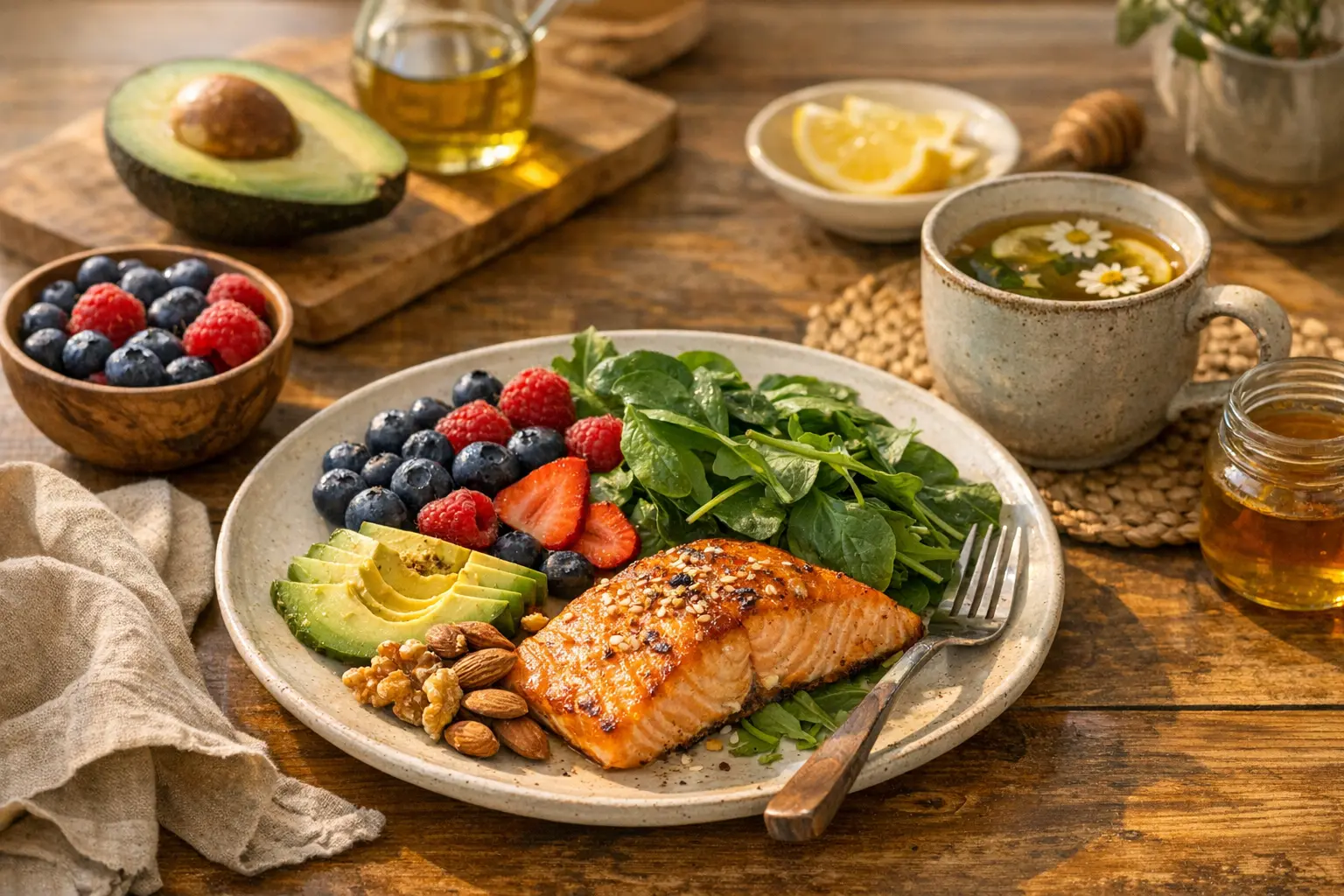
If you have been searching for foods that lower cortisol, you are probably not looking for a trendy “cortisol diet.” You are looking for relief.
Maybe stress has been hitting your sleep, your cravings, your belly fat, your patience, or your energy. Maybe you feel wired late at night and drained in the morning. Maybe your eating gets weird when life gets overwhelming. You skip meals, then crash. Or you start the day with coffee, run on fumes, and end up in the pantry at 9 p.m. wondering what happened.
Food will not remove every source of stress. It can still make a real difference. The right meals can help steady blood sugar, reduce the intensity of stress-driven hunger, support recovery, and give your body better raw material to handle a hard season.
At Duluth Metabolic, we like this conversation because it moves beyond willpower. If stress has you feeling stuck, it also helps to read stress and weight gain: the cortisol connection, how to stop sugar cravings at night, and sleep and metabolic health.
What cortisol actually does
Cortisol is often called the stress hormone, but it is not the enemy.
You need cortisol. It helps regulate blood sugar, blood pressure, wakefulness, inflammation, and your response to physical or emotional stress. The issue is not that cortisol exists. The issue is when stress becomes so frequent that your whole body starts living on alert.
That can look like:
- poor sleep
- afternoon crashes
- sugar or salt cravings
- feeling hungry and unsatisfied
- more belly fat over time
- feeling tired but unable to fully relax
- worsening blood sugar swings
That is why a conversation about foods that lower cortisol is really a conversation about resilience. The best foods do not magically shut cortisol off. They help create steadier conditions so your body does not keep getting pushed into survival mode.
Why blood sugar stability matters so much
One of the fastest ways to make stress feel worse is to keep riding a blood sugar roller coaster.
If breakfast is coffee and a pastry, or lunch is something tiny followed by a long gap without food, your body has to compensate. That can raise stress hormones, increase cravings, and make you feel shaky, foggy, or irritable later.
This is why nutrition for stress is not only about individual superfoods. It is also about meal structure.
A lot of people feel better when they build meals around:
- enough protein
- fiber-rich carbohydrates they tolerate well
- healthy fats
- consistent meal timing
If that sounds familiar, blood sugar friendly breakfast ideas, meal timing for blood sugar control, and best fruits for blood sugar control are useful next reads.
The foods that lower cortisol best tend to do a few things well
The most helpful foods usually support one or more of these areas:
- they help keep blood sugar steadier
- they bring in magnesium, potassium, omega-3 fats, or vitamin C
- they support gut health and inflammation balance
- they are satisfying enough to reduce rebound cravings
That means the answer is less about one miracle ingredient and more about a pattern you can repeat.
Protein helps your body feel safer and steadier
When stress is high, many people under-eat protein early in the day.
Then they wonder why they are starving by midafternoon, why coffee makes them shaky, or why they cannot stop snacking at night.
Protein helps by slowing digestion, supporting steadier blood sugar, and improving satiety. It also gives your body amino acids it needs for repair, recovery, and neurotransmitter production.
Helpful options include eggs, Greek yogurt, cottage cheese, chicken, turkey, salmon, tuna, tofu, edamame, lentils, and quality protein smoothies.
A strong first step is often building breakfast around protein instead of starting with sugar alone. You can borrow ideas from high protein breakfast for blood sugar control, high protein breakfast ideas in Duluth, MN, and protein requirements over 40.
Magnesium-rich foods can support the stress response
Magnesium is involved in hundreds of body processes, including muscle function, nerve signaling, sleep quality, and stress regulation. A lot of adults are not eating enough of it.
Foods that bring more magnesium to the table include:
- pumpkin seeds
- almonds and cashews
- black beans
- spinach
- dark chocolate with a high cocoa content
- avocado
- edamame
That does not mean you need to force giant salads during stressful weeks. It may be more realistic to add pumpkin seeds to yogurt, eat beans with lunch, blend spinach into a smoothie, or keep almonds around for an afternoon snack.
Omega-3 foods can help calm the inflammatory side of stress
Chronic stress and inflammation often feed each other.
Omega-3 fats may help support a healthier inflammatory response, which matters for people dealing with fatigue, joint pain, mood strain, or stubborn metabolic symptoms.
Good choices include:
- salmon
- sardines
- trout
- chia seeds
- flax seeds
- walnuts
For a northern Minnesota angle, this can be pretty practical. A salmon bowl, smoked fish with eggs, or a simple chia pudding is more realistic than trying to overhaul your life overnight.
If inflammation is part of the picture, anti inflammatory diet in Duluth, MN and chronic inflammation are worth reading next.
Vitamin C foods may help when stress is running high
Vitamin C plays a role in adrenal function and overall resilience. It is not a cure-all, but it is one more reason to include colorful produce regularly.
Helpful foods include:
- berries
- oranges and grapefruit
- kiwi
- bell peppers
- broccoli
- tomatoes
This is where people often overcomplicate things. You do not need a perfect meal plan. A side of berries with breakfast, sliced peppers with lunch, or frozen fruit in a smoothie can be enough to shift the pattern.
Fermented foods and gut-friendly meals can matter more than people expect
Your gut and stress response talk to each other all day.
When stress is high, digestion often gets weird. You may feel bloated, constipated, nauseated, or reactive to foods you usually handle fine. At the same time, poor gut health can make mood and energy feel worse.
Some people do well with small amounts of fermented foods like yogurt, kefir, sauerkraut, kimchi, or kombucha. Others need a gentler approach depending on symptoms. The point is not to force gut foods you hate. The point is to support digestion with consistent meals, enough protein, enough fluids, and foods you tolerate.
If your stress also shows up as bloating or digestive frustration, gut health habits for busy adults, gut health after antibiotics, and anti-inflammatory foods for gut health can help.
Foods that lower cortisol are often boring in the best way
This is where people get disappointed.
The answer is rarely some exotic powder. It is usually a pattern of ordinary meals that keep your body from swinging between chaos and depletion.
Think:
- eggs with fruit instead of coffee only
- salmon, rice, and vegetables instead of skipping lunch
- Greek yogurt with berries instead of candy when the afternoon crash hits
- a real dinner with protein and fiber instead of random grazing
- a snack with protein before you get desperate
Boring is underrated when you are trying to calm stress physiology.
Foods and habits that can make cortisol-related symptoms worse
Most people do not need a scary forbidden list. Still, some patterns tend to backfire.
These include:
- too much caffeine, especially on an empty stomach
- drinking to “wind down” every night
- highly sugary meals that spike and crash blood sugar
- going long stretches without eating, then overeating late
- living on convenience foods with very little protein or fiber
That does not mean you can never have coffee, dessert, or a drink. It means context matters. Coffee after a protein-rich breakfast hits differently than coffee on an empty stomach after five bad nights of sleep.
If mornings feel rough, why is my blood sugar high in the morning may help you connect some dots.
A practical day of eating for stress support
A realistic day might look like this.
Breakfast could be Greek yogurt with berries, chia seeds, and walnuts, or eggs with sourdough and fruit.
Lunch could be a chicken grain bowl with greens, roasted vegetables, olive oil, and something crunchy.
An afternoon snack could be cottage cheese and fruit, jerky with an apple, or nuts with a cheese stick.
Dinner could be salmon, potatoes, and green beans, or taco bowls with ground turkey, black beans, avocado, and salsa.
Nothing here is fancy. That is the point. A supportive stress-eating pattern should survive workdays, kid schedules, travel, and winter.
When high cortisol may need a deeper look
Sometimes people blame everything on cortisol when the real picture is broader.
Ongoing fatigue, sleep trouble, cravings, unexplained weight changes, high blood pressure, mood shifts, or insulin resistance can involve more than stress alone. They may also reflect thyroid issues, blood sugar dysregulation, under-recovery, medication effects, or other metabolic factors.
That is where biomarker testing can be useful. If your symptoms feel bigger than food alone, zooming out often helps more than chasing one hormone label.
FAQ about foods that lower cortisol
What foods lower cortisol fastest?
There is usually not one food that works fast in a dramatic way. Most people do better by eating regular meals with protein, fiber, healthy fats, and nutrient-rich whole foods that support steadier blood sugar and recovery.
Is there a real cortisol diet?
There is no magic cortisol diet that fixes stress on its own. What helps most is a sustainable eating pattern that reduces blood sugar swings, supports sleep, and brings in enough protein and micronutrients.
Can caffeine make cortisol-related symptoms worse?
It can, especially if you are drinking a lot of it, using it to replace food, or already feel anxious, wired, or sleep-deprived.
Do I need supplements to lower cortisol?
Not necessarily. Some people may benefit from targeted support, but many feel noticeably better by improving meal timing, protein intake, sleep habits, and overall nutrition first.
Can stress eating be a blood sugar problem too?
Very often, yes. Stress and blood sugar swings can amplify each other. That is one reason consistent meals can make such a big difference.
Start with steadier meals, not perfection
When people ask about foods that lower cortisol, what they usually need is not a trendy hack. They need a body that feels more stable.
That starts with eating enough, building meals around protein, reducing blood sugar chaos, and choosing foods that help your nervous system and metabolism feel less pushed around. If stress, cravings, energy crashes, or weight changes have been hard to sort out on your own, contact Duluth Metabolic. We can help you build a practical plan that fits real life.