If your stomach feels swollen after normal meals, your digestion is unpredictable, or food seems to leave you tired instead of fueled, it makes sense to start searching for anti-inflammatory foods for gut health. A lot of people are not looking for a perfect diet. They are looking for a way to eat that leaves them less puffy, less uncomfortable, and less confused.
That is a reasonable goal.
At Duluth Metabolic, we see this all the time. People know something feels off, but the advice they find online is all over the place. One article says cut dairy. Another says eat more fermented foods. Another says your gut needs a reset, a cleanse, and six powders. Most people do not need that level of chaos. They need a calmer food pattern that supports digestion and lowers the day-to-day irritation their body is dealing with.
If this is your lane, it also helps to read gut health habits for busy adults, why am I bloated after every meal, and chronic inflammation.
What anti-inflammatory foods for gut health actually means
This phrase gets used loosely, so it helps to make it practical.
Anti-inflammatory foods for gut health are foods that tend to support the gut lining, feed beneficial bacteria, reduce irritation from ultra-processed eating patterns, and make digestion more predictable. In real life, that often means whole foods with fiber, polyphenols, omega-3 fats, and fewer ingredients that leave you inflamed, overfed, or constantly uncomfortable.
It does not mean every “healthy” food works for every gut.
Some people do well with lots of raw vegetables. Some do better with cooked vegetables for a while. Some tolerate yogurt beautifully. Others feel worse with dairy. The goal is not following a purity script. The goal is eating in a way that helps your own body calm down.
The best anti-inflammatory foods for gut health usually show up in simple meals
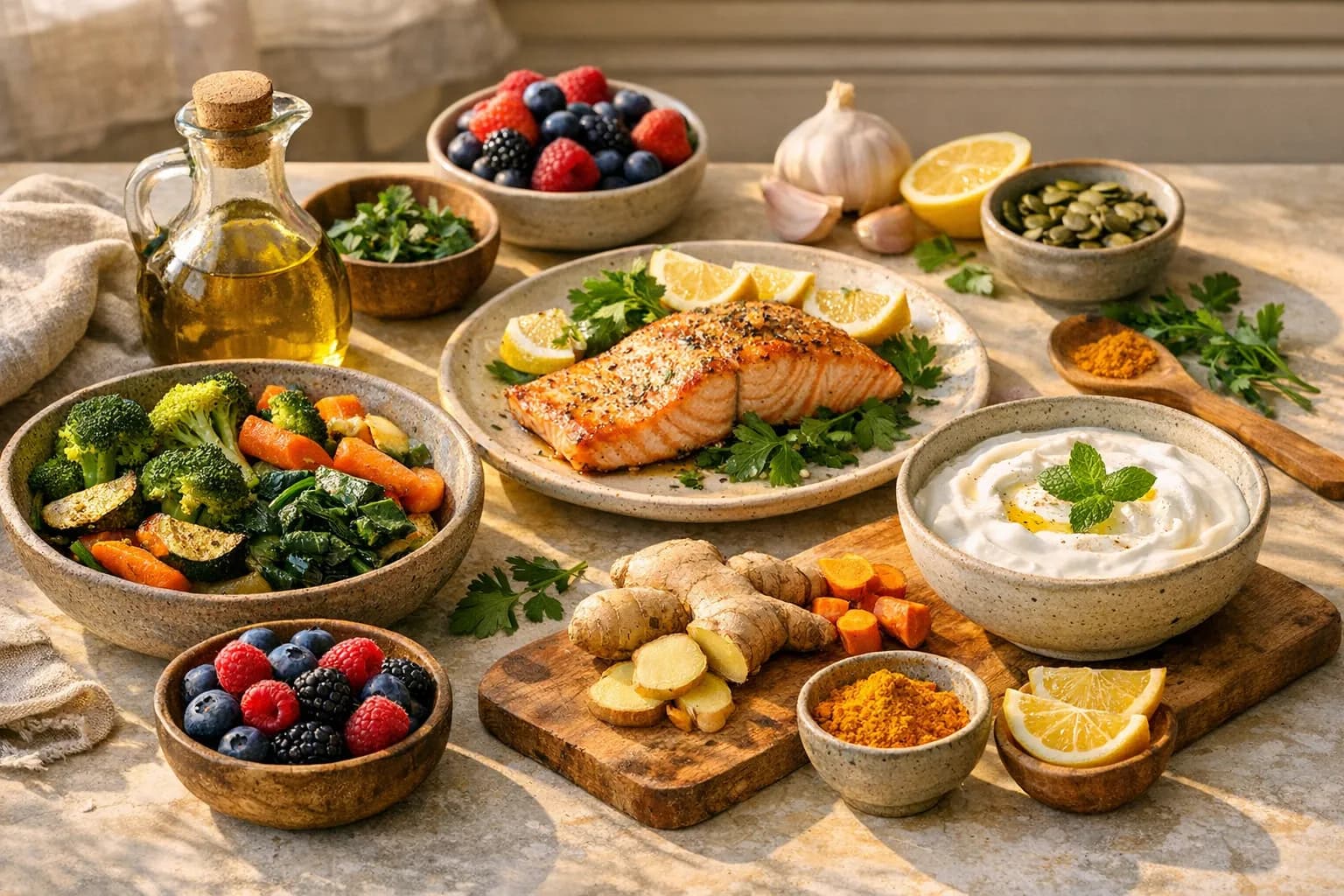
You do not need exotic ingredients. Most of the best anti-inflammatory foods for gut health are basic foods you can work into normal breakfasts, lunches, and dinners.
Fatty fish
Salmon, sardines, trout, and mackerel bring omega-3 fats that can support a lower-inflammatory pattern overall. For many adults, fish once or twice a week is a strong start.
This also fits well for people working on high blood pressure, metabolic health, and energy.
Berries and colorful fruit
Blueberries, raspberries, strawberries, cherries, and citrus bring fiber and polyphenols. They tend to be easier on the system than a lot of ultra-sweet snack foods and can help you build breakfasts and desserts that feel better afterward.
Cooked vegetables
Cooked carrots, zucchini, spinach, green beans, squash, roasted broccoli, and other vegetables can be easier on a stressed digestive system than giant raw salads. If you are bloated all the time, gentler textures may matter more than internet rules.
Extra virgin olive oil
Olive oil is simple, practical, and usually easy to use. It works in dressings, roasted vegetables, bowls, and basic skillet meals. It is one of the easiest upgrades for people trying to move away from fried food and highly processed convenience meals.
Fermented foods when tolerated
Plain yogurt with live cultures, kefir, sauerkraut, kimchi, and fermented vegetables can help some people. The key phrase there is some people.
If your gut is already very reactive, too much fermented food too quickly can backfire. You do not need to force it.
Oats, beans, lentils, and other fiber-rich foods
Fiber supports beneficial gut bacteria and often helps with bowel regularity too. But your starting point matters. Going from almost no fiber to a giant bean-heavy meal can be rough.
That is why articles like high-fiber foods for blood sugar control and gut health meal plan for beginners can help you increase the right things at a pace your body can handle.
Ginger, turmeric, garlic, and herbs
These are not miracle cures, but they are useful ways to build a less inflammatory food pattern without overthinking it. They add flavor, can make simple meals feel better, and often replace the heavy sauces and ultra-processed extras that leave people feeling worse.
Foods that often keep gut inflammation going
The bigger problem for many adults is not the absence of one superfood. It is the pileup of foods and habits that keep the gut irritated.
That can include:
- frequent alcohol
- ultra-processed snacks
- fried foods
- giant sugar-heavy coffee drinks
- eating too fast
- constant grazing
- very low fiber intake
- not enough protein with meals
When people clean up those patterns even a little, digestion often improves faster than they expected.
Anti-inflammatory foods for gut health work better when meal rhythm improves too
A lot of digestive distress is not only about ingredients. It is also about the way people eat.
Skipping meals all day and then eating a huge dinner can make bloating worse. Eating while stressed, rushing lunch in the car, and drinking most of your calories also tends to push things in the wrong direction.
A steadier pattern usually looks better. That means meals spaced in a way your body can handle, enough protein to stay satisfied, enough fiber to support digestion, and less random snacking that keeps your gut working nonstop.
If your appetite is all over the place, food noise and blood sugar and late dinner blood sugar are worth your time.
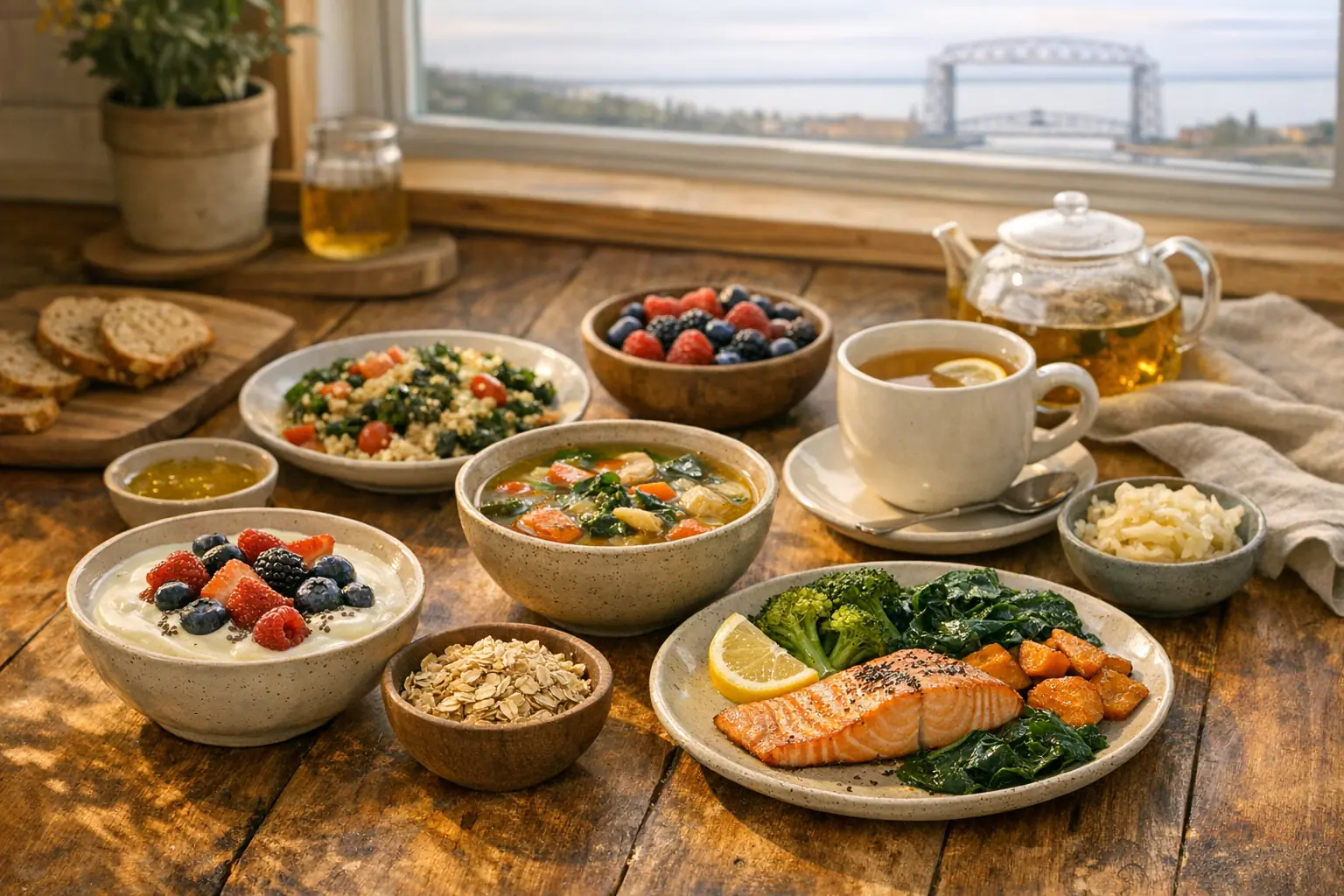
A day of anti-inflammatory eating for gut health can be very normal
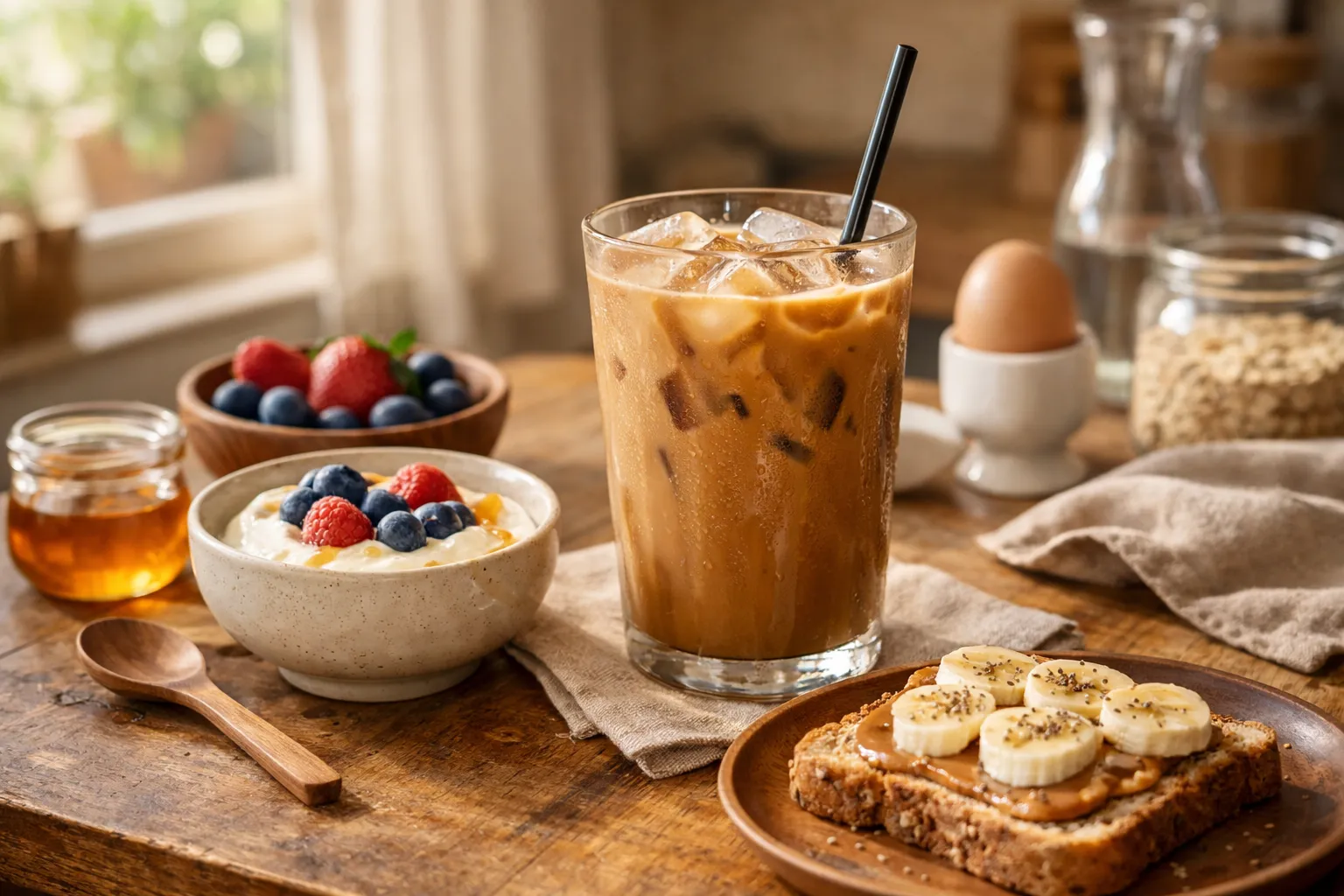
Breakfast might be plain Greek yogurt with berries, chia, and walnuts.
Lunch could be salmon over greens with olive oil, cucumber, and roasted vegetables.
Dinner might be ground turkey or chicken with sautéed zucchini, cooked greens, and a side of lentils or a simple roasted sweet potato if that works well for you.
A snack could be cottage cheese with berries, a boiled egg and fruit, or leftover soup instead of packaged snack food.
Nothing there is trendy. That is part of why it works.
The gut and blood sugar conversation overlap more than people think
People often split gut health and metabolic health into two separate buckets. In real life, they overlap a lot.
A diet full of refined carbs and low in protein and fiber can worsen blood sugar swings and leave the gut under-supported. Poor sleep and chronic stress can affect both appetite and digestion. Constipation, bloating, and post-meal crashes often show up together.
That is why some adults improve when they stop chasing gut hacks and start building a more complete plan around nutrition coaching, cgm monitoring, movement, and sleep.
What if healthy foods still make you feel worse?
This is common, and it matters.
Some adults feel worse with beans, onions, garlic, cruciferous vegetables, or large amounts of fermented foods, especially when their gut has been irritated for a while. That does not automatically mean those foods are bad forever. It may mean your system needs a gentler entry point.
Cooked vegetables may work better than raw ones for a season. Smaller portions may work better than giant salads. Yogurt might sit better than kombucha. Or you may need to look into IBS patterns, food intolerance patterns, constipation, or other root issues.
If symptoms are persistent, it may help to read functional medicine for constipation, functional medicine for IBS, and labs normal but feel terrible.
Anti-inflammatory foods for gut health in a Duluth routine
Living in Duluth changes the way people eat through the year. Winter can push people toward heavier comfort food and less movement. Summer makes it easier to grill, shop local, and use lighter meals. Neither season requires perfection.
You can keep this simple with frozen berries, cooked vegetables, soup, salmon, eggs, olive oil, plain yogurt, canned fish, and basic staples from local grocery stores. If you enjoy seasonal produce, summer is a great time to build meals around berries, greens, herbs, and easier outdoor meals without turning everything into restaurant food.
The useful question is not whether your food looks impressive. It is whether your digestion feels calmer afterward.
When gut symptoms point to a deeper issue
Food matters, but it is not always the whole story.
If you deal with ongoing bloating, constipation, diarrhea, reflux, fatigue, skin changes, anxiety, or brain fog, your gut symptoms may be tied to broader metabolic or inflammatory patterns. Hormones, stress load, medication history, sleep, blood sugar instability, and under-eating protein can all affect what the gut is doing.
That is why some patients need a more complete look through biomarker testing, symptom review, and a realistic plan instead of another elimination diet.
FAQ about anti-inflammatory foods for gut health
What are the top anti-inflammatory foods for gut health?
A practical shortlist includes fatty fish, berries, cooked vegetables, olive oil, beans or lentils if tolerated, plain yogurt or kefir if tolerated, nuts, seeds, and herbs like ginger and turmeric.
Are fermented foods always good for the gut?
No. They can help some people, but others feel worse if they start with too much or if their digestion is already irritated. Start small and pay attention.
Should I eat more fiber if I am bloated?
Sometimes yes, but go slowly. Some people need more fiber. Others need to change the type of fiber, the portion, or the way food is prepared before their gut feels better.
Are anti-inflammatory foods enough to fix IBS or chronic bloating?
Not always. They help, but persistent symptoms may need a deeper evaluation of meal pattern, stress, constipation, food tolerance, blood sugar, or other root issues.
What should I remove first if my gut feels inflamed?
For many adults, the most useful place to start is reducing alcohol, ultra-processed snacks, fried foods, and sugary drinks while building more structured meals with protein and fiber.
If you are tired of guessing which foods help and which foods are making things worse, contact Duluth Metabolic. We can help you build a plan that supports digestion, energy, and the bigger picture of your health.