A Mediterranean diet for insulin resistance can be one of the most realistic ways to improve blood sugar without living on diet food.
A lot of people hear “Mediterranean diet” and picture giant pasta bowls, endless bread, or a lifestyle that sounds healthy but somehow still leaves them tired after lunch. Others hear “insulin resistance” and assume they have to cut every carb forever. Most people get stuck between those two extremes.
The better answer is usually more practical than that.
At Duluth Metabolic, we think a Mediterranean diet for insulin resistance works best when it focuses on protein, fiber, healthy fats, and meals that help you feel steady instead of spiking and crashing all day. That can support diabetes, weight management, and the bigger goal behind all of this, which is improving your metabolic health in a way you can actually stick with. If you want more background first, start with what is metabolic health, meal plan for insulin resistance, and prediabetes diet plan.
Why the Mediterranean diet works so well for insulin resistance
Insulin resistance means your cells are not responding to insulin as well as they should. Your body has to push out more insulin to keep blood sugar under control, and over time that can show up as fatigue, stubborn weight gain, cravings, rising triglycerides, or an A1c that keeps drifting up.
A good Mediterranean diet for insulin resistance can help because it shifts your meals toward foods that are more filling, less processed, and easier on blood sugar.
That usually means:
- vegetables showing up often
- protein at most meals
- olive oil, nuts, seeds, avocado, and fatty fish instead of ultra-processed fats
- beans, lentils, fruit, potatoes, or whole grains in portions your body handles well
- fewer sugary drinks, pastries, chips, and random snack foods pretending to be meals
This is one reason the pattern keeps showing up in research and in real life. It is not magic. It simply tends to lower the amount of blood sugar chaos people are living with.
A Mediterranean diet for insulin resistance is not the same as eating whatever is sold as Mediterranean
This part matters.
A lot of restaurant food gets labeled Mediterranean even when it is really a pile of rice, pita, fries, sweet sauces, and very little protein. That may still sound healthier than fast food, but your blood sugar may not care about the label.
The version that usually works better is built around a few simple ideas.
Put protein at the center of the meal
Chicken, salmon, tuna, sardines, eggs, Greek yogurt, cottage cheese, lentils, beans, turkey, or tofu can all fit. Protein helps with fullness and usually makes blood sugar response more predictable.
Use carbs more intentionally
You do not need to fear carbs, but you also do not need a giant serving at every meal. The most useful question is not “Is this allowed?” It is “How does my body respond to this amount in this context?”
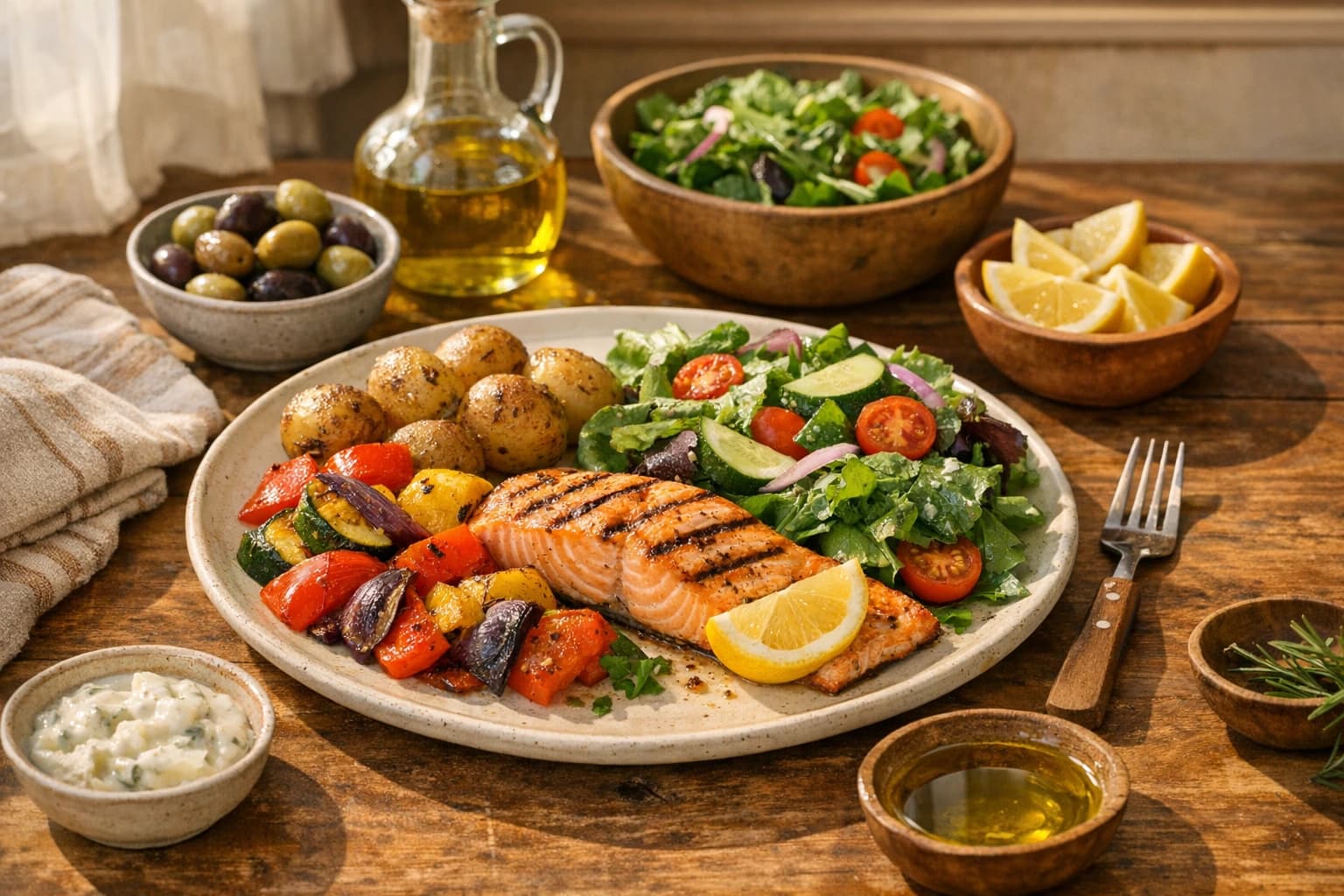
A small serving of roasted potatoes with salmon and vegetables lands very differently than a pastry and sweet coffee on an empty stomach.
Keep healthy fats in the plan
Olive oil, olives, nuts, seeds, and avocado slow meals down and make them more satisfying. That matters if you are dealing with cravings or the constant feeling that you are hungry again an hour after eating.
Build meals from actual food
The best Mediterranean pattern is not a flavor profile. It is a food quality pattern. That means meals built from ingredients, not just products.
What to eat on a Mediterranean diet for insulin resistance
You do not need a perfect pantry. You need a repeatable one.
Foods that usually work well include:
- leafy greens, broccoli, cauliflower, peppers, cucumbers, tomatoes, zucchini, onions
- berries, apples, citrus, pears
- salmon, sardines, chicken, turkey, eggs, Greek yogurt, cottage cheese
- chickpeas, lentils, black beans, white beans
- olive oil, olives, avocado, walnuts, almonds, pumpkin seeds
- feta, plain yogurt sauces, hummus
- potatoes, oats, quinoa, farro, or beans in moderate portions if they work for you
- herbs, lemon, garlic, vinegar, tahini, salsa, and spices for flavor
If you notice that certain carbs still hit you hard, that is useful information, not failure. Some people need a lower-carb Mediterranean approach. That is where CGM monitoring can be especially helpful. Instead of guessing, you can see exactly what happens after meals.
What to limit if you are using a Mediterranean diet for insulin resistance
People often know what to add, but the limiting side matters too.
Try cutting back on:
- sweet drinks and juice
- pastries, cookies, and breakfast sweets
- big portions of white rice, white bread, and refined pasta
- frequent takeout meals with hidden sugar and seed-oil-heavy sauces
- grazing on crackers, granola bars, or chips all afternoon
- foods marketed as healthy that still leave you hungry and craving more
This does not mean never. It means these foods are usually doing the opposite of what your blood sugar needs.
A simple Mediterranean plate for insulin resistance
A lot of people do better when they stop thinking in meal rules and start thinking in templates.
A practical plate often looks like this:
- half the plate non-starchy vegetables
- a solid serving of protein
- healthy fat for flavor and staying power
- a smart carb portion based on your activity, blood sugar, and goals
Examples:
Mediterranean breakfast
Plain Greek yogurt with berries, walnuts, chia seeds, and cinnamon.
Or eggs with spinach, tomatoes, feta, and a side of fruit.
That is a much different morning than cereal, toast, and a coffee drink that turns into a 10 a.m. crash. If breakfast is a weak point, blood-sugar-friendly breakfast ideas and high-protein breakfast ideas in Duluth, MN are worth reading.
Mediterranean lunch
Big salad with greens, grilled chicken, cucumbers, tomatoes, olives, feta, chickpeas, and olive oil vinaigrette.
Or a bowl with salmon, roasted vegetables, hummus, and a smaller scoop of quinoa.
Mediterranean dinner
Baked cod or chicken thighs with roasted broccoli, salad, olive oil, and a small serving of potatoes or lentils.
Or turkey meatballs with zucchini, tomato sauce, herbs, and a side salad.
Can a Mediterranean diet for insulin resistance still be lower carb?
Yes, and for many people that is the sweet spot.
This is one of the biggest gaps in a lot of top-ranking Mediterranean content. Many articles explain why the diet is healthy, then show sample meals that are still too carb-heavy for people already dealing with prediabetes, high fasting insulin, or big post-meal spikes.
A better real-world approach is Mediterranean in food quality and lower carb in execution.
That could mean:
- using beans as a small part of a meal instead of the whole meal
- swapping a big grain bowl for a large salad plus protein
- choosing berries more often than dried fruit
- keeping pita or pasta as an occasional side, not the foundation
- pairing every carb with protein and fat
If you are unsure whether carbs are part of the problem, read high fasting insulin with normal A1c, why do carbs make me tired, and reactive hypoglycemia after meals.
Why this pattern can help with weight loss too
A Mediterranean diet for insulin resistance is not only about glucose. It also helps a lot of people eat in a way that is more satisfying.
That matters because appetite is not just about willpower. If your meals are low in protein, low in fiber, and easy to overeat, the day usually gets harder as it goes on.
When meals are built around protein, produce, and healthy fats, people often notice:
- fewer cravings in the afternoon
- less nighttime overeating
- better energy after meals
- easier adherence than with very rigid diets
- steadier progress with weight management
That is a much better place to work from than trying to white-knuckle your way through hunger.
A one-day example of a Mediterranean diet for insulin resistance
Here is a simple day that feels realistic for a busy adult.
Breakfast could be eggs cooked in olive oil with spinach and feta, plus a few berries.
Lunch could be leftover grilled chicken over greens with cucumber, olives, peppers, feta, and olive oil vinaigrette.
Snack could be an apple with almond butter or plain Greek yogurt with cinnamon.
Dinner could be salmon, roasted asparagus, salad, and a moderate serving of baby potatoes.
That is not extreme. It is just stable.
Common mistakes people make
Eating Mediterranean but under-protein
A hummus plate and some pita might sound healthy, but it may not hold you for long. Protein is usually the missing piece.
Adding too many healthy carbs at once
Beans, fruit, whole grains, and potatoes can all be good foods. The problem is when one meal includes all of them.
Treating olive oil like a free-for-all
Healthy fat is helpful, but calories still count. The goal is satisfying meals, not pouring oil on everything and wondering why progress stalled.
Skipping meals, then overeating at night
Some people do well with a structured fasting protocol. Others think they should skip meals, then end up starving later. The right approach depends on your body and schedule.
Copying generic internet meal plans
The internet loves one-size-fits-all plans. Your blood sugar, hunger, sleep, stress, and activity level still matter.
FAQ
Is a Mediterranean diet good for insulin resistance?
Yes, for many people it is one of the best overall eating patterns because it emphasizes whole foods, fiber, healthy fats, and balanced meals that support better insulin sensitivity.
Do I need to avoid carbs completely?
No. Many people do better with a more intentional carb intake, not zero carbs. The amount you tolerate well may vary based on your blood sugar response and activity level.
What is the best breakfast on a Mediterranean diet for insulin resistance?
A protein-forward breakfast usually works best, like eggs with vegetables or plain Greek yogurt with berries, nuts, and seeds.
Can a Mediterranean diet help prediabetes?
It often can. A Mediterranean-style pattern can support weight loss, better blood sugar control, and improved insulin sensitivity, especially when meals are built well.
Is the Mediterranean diet better than low carb?
It depends on the person. Some people do best with a Mediterranean pattern that is also moderately lower carb. Sustainability and blood sugar response matter more than labels.
You do not need a perfect diet, you need a useful one
The best Mediterranean diet for insulin resistance is not the prettiest one online. It is the one that makes your energy more stable, your meals more satisfying, and your next decision easier.
If you want help figuring out how to build meals around your labs, symptoms, blood sugar patterns, and goals, Duluth Metabolic can help through nutrition coaching, biomarker testing, CGM monitoring, and practical accountability.
If you are ready for that kind of support, contact us.