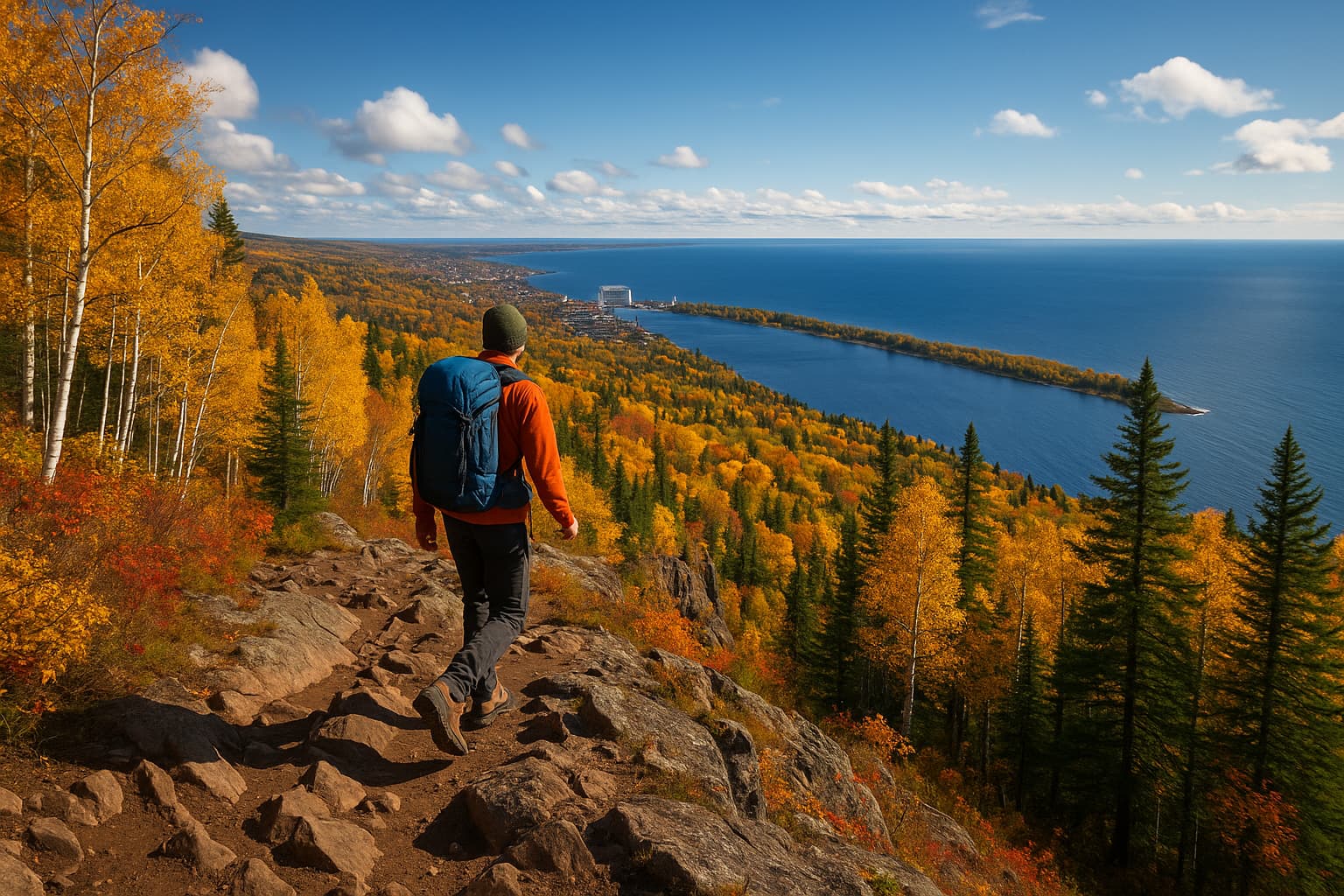
You Live in One of the Best Outdoor Cities in America
Duluth consistently shows up on "best outdoor cities" lists, and it's not marketing hype. The city sits on a hillside overlooking Lake Superior with hundreds of miles of trails threading through forests, along creek beds, and up to ridgeline views. You can hike, bike, ski, paddle, run, snowshoe, and climb without driving more than 15 minutes from downtown. In most cases, the trailhead is in your neighborhood.
What doesn't get talked about enough is how this outdoor access connects to metabolic health. We tend to think of outdoor recreation as fitness or fun, which it is. But the metabolic benefits go deeper than calories burned. Outdoor activity in natural settings affects blood sugar regulation, cortisol levels, vitamin D synthesis, circadian rhythm, inflammatory markers, and cardiovascular function in ways that a treadmill in a gym simply doesn't replicate.
This guide maps out what's available by season, with specific trails and locations, and connects each activity back to the metabolic health benefits that make outdoor living in Duluth a genuine health advantage.
Hiking
Duluth offers over 200 miles of trails open to hiking, according to the city's parks department. The standout is the Superior Hiking Trail (SHT), which runs 42 miles within city limits alone (the full trail stretches over 300 miles along the North Shore from Jay Cooke State Park to the Canadian border).
Superior Hiking Trail (Duluth Sections)
The SHT through Duluth isn't a single out-and-back. It passes through multiple parks and trail systems with numerous access points, so you can choose sections that match your time and fitness level.
Popular Duluth sections include:
Spirit Mountain to Magney-Snively Park. A roughly two-mile climb from the Spirit Mountain chalet up to Magney-Snively, passing through forest and rocky terrain with views of the St. Louis River. The trail crosses the mountain bike trails on Spirit Mountain, so keep your head up for cyclists during summer months.
Chester Park. Chester Creek cuts through a gorge lined with old-growth cedars and rock walls. The trails here are shorter but varied, ranging from paved paths to rocky creek-side routes. It's close to the UMD campus and accessible from Skyline Parkway.
Enger Park to Twin Ponds. This section offers views of the harbor and the Aerial Lift Bridge from the Enger Tower area, then descends through forest and along the Duluth Traverse to Twin Ponds. It's moderately hilly with good trail surfaces.
Hartley Nature Center. Hartley Park has a network of trails through 660 acres of forest, wetlands, and ponds. The Hartley Nature Center runs programming and the trails are well-maintained. This is a good option for families, beginners, or anyone wanting a more gentle hiking experience close to neighborhoods.
Metabolic Benefits of Hiking
Hiking is essentially zone 2 cardio, which is the exercise intensity level that provides the highest metabolic benefit per minute of effort. Zone 2 means you're working hard enough to elevate your heart rate but can still hold a conversation. At this intensity, your body preferentially burns fat for fuel, which improves mitochondrial function and fat oxidation capacity over time.
The uneven terrain of trail hiking also provides proprioceptive challenge that flat-surface walking doesn't. This engages stabilizer muscles, improves balance, and strengthens joints. For people dealing with musculoskeletal weakness or osteoporosis risk, weight-bearing activity on varied terrain is particularly valuable.
And then there's the nature exposure piece. Research on "forest bathing" (shinrin-yoku) has documented measurable reductions in cortisol, blood pressure, and heart rate from time spent in natural settings. These aren't small effects. The Japanese studies showed cortisol reductions of 12 to 16% from forest walks compared to urban walks.
Mountain Biking
Duluth is, without exaggeration, one of the premier mountain biking destinations in the Midwest.
The Duluth Traverse
The Duluth Traverse is a single-track, natural-surface trail purpose-built for mountain bikes that stretches over 40 miles along the entire ridgeline of Duluth, from Lester Park in the east to Chambers Grove Park in the west. It connects five main trail centers and numerous neighborhood routes, maintained by COGGS (Cyclists of Gitchee Gumee Shores), the local volunteer trail organization.
The trail showcases Duluth's glacial bedrock with technical features, rock faces, and forest singletrack that ranges from beginner-friendly to expert-level depending on the section. The Piedmont, Lincoln Park, and Spirit Mountain sections tend to be more technical. Lester-Amity and Hartley sections offer more moderate riding.
Other Trail Systems
Beyond the Traverse, individual trail centers like Mission Creek, Brewer Park, and Hawk Ridge have their own networks. The riding is year-round if you add studded tires (fat biking on groomed winter trails is growing fast).
Metabolic Benefits of Cycling
Mountain biking is a hybrid of cardiovascular and muscular demand. Climbs provide sustained high-intensity effort that improves VO2 max and insulin sensitivity. Technical descents require focus and reflexes that keep your nervous system engaged. The stop-start nature of trail riding mimics high-intensity interval training, which research shows is particularly effective for improving glucose metabolism and reducing insulin resistance.
For people who find running hard on their joints, cycling is a lower-impact alternative that can deliver equal or greater cardiovascular training benefits. And the fun factor of mountain biking tends to produce longer sessions than people would voluntarily spend on a stationary bike.
Cross-Country Skiing and Snowshoeing
Winter in Duluth lasts roughly five months, and the temptation to hibernate is real. But this is where outdoor activity becomes most important for metabolic health. The combination of reduced daylight, cold temperatures, and sedentary indoor habits creates a perfect storm for metabolic decline during winter.
Cross-Country Ski Trails
The city of Duluth maintains extensive groomed cross-country ski trails.
Lester-Amity: 15 kilometers of groomed trail off East Superior Street at 61st Avenue. Four kilometers are lighted for early morning and evening skiing. The adjoining Lester Park Golf Course loop is good for beginners and skijoring (skiing with dogs). The Lester/Amity Chalet, operated by the Duluth Cross-Country Ski Club, is open daily throughout the ski season.
Spirit Mountain (Upper Trails): The Grand Avenue Nordic trails at Spirit Mountain connect to the Magney-Snively trail system and the Superior Hiking Trail. The terrain here is more varied and challenging than Lester-Amity, with some good climbs and descents.
Snowflake Nordic Center: Located in Duluth, Snowflake hosts competitive events and has well-groomed trails for all ability levels.
Chester Bowl: Shorter trails suitable for beginners, close to downtown.
Downhill Skiing and Snowboarding
Spirit Mountain Recreation Area offers alpine skiing and snowboarding just minutes from downtown Duluth. While the vertical isn't huge by western standards, Spirit Mountain provides accessible downhill recreation for the whole family and a good workout, especially if you're lapping runs rather than hanging out in the lodge.
Metabolic Benefits of Winter Outdoor Activity
Cross-country skiing is one of the highest calorie-burning activities in existence because it engages virtually every major muscle group simultaneously. Classic technique involves full-body coordination of arms and legs. Skate skiing adds lateral power. Both demand significant cardiovascular output.
But beyond the calorie burn, winter outdoor exercise provides something critical in Duluth: cold exposure. Training outdoors in cold temperatures activates brown fat, increases metabolic rate, and provides some of the same thermoregulation benefits as structured cold plunge protocols. Your body works harder to maintain core temperature, which drives metabolic adaptation.
Winter outdoor activity also combats the sedentary patterns and seasonal mood decline that hit the Northland hard. Getting outside in winter, even when it's cold and dark, maintains circadian rhythm entrainment (daylight exposure matters even on cloudy days) and prevents the metabolic stagnation that comes with months of inactivity.
Water Sports
Kayaking and Paddleboarding
Lake Superior and the St. Louis River provide paddling opportunities from spring through fall. The harbor area, Park Point, and the St. Louis River estuary are popular launch points. Several outfitters in the area offer rentals and guided trips.
Paddling is a solid upper-body and core workout that also provides the mental health benefits of being on the water. For metabolic health, the sustained low-to-moderate intensity of paddling is effective zone 2 exercise.
Open Water Swimming
For the adventurous, open water swimming in Lake Superior is available in summer months, though the water temperature keeps it a brief activity for most people. Park Point Beach and Brighton Beach are common access points. Even short swims in cold water provide significant cold exposure benefits.
Running
Duluth's trail network doubles as a running network. The SHT, Chester Park, Hartley, and the Lakewalk all serve trail runners and road runners.
The Lakewalk, which stretches along the shore from Canal Park through the Congdon neighborhood, is the most popular running route in Duluth. It's paved, relatively flat, and offers views of Lake Superior that make it one of the more scenic urban runs in the country.
For trail running, the SHT and Chester Park trails provide technical, hilly terrain that's more challenging (and more metabolically demanding) than road running. Trail running requires greater muscular engagement, proprioceptive work, and variable intensity, all of which enhance metabolic fitness.
Duluth also hosts running events including Grandma's Marathon (one of the most popular marathons in the country) in June.
Seasonal Guide: What to Do When
Spring (April-May): Hiking as snow melts, early-season biking on drier trails, running on the Lakewalk. Daylight is increasing rapidly, making this the best time to re-establish outdoor habits and get vitamin D production started.
Summer (June-August): Everything is open. Hiking, mountain biking, paddling, swimming, running, climbing. Farmers markets are running. This is the time to maximize outdoor exposure and build fitness reserves for winter.
Fall (September-November): Peak hiking season as leaves change and temperatures cool. Mountain biking on trails with fall colors is spectacular. Running conditions are ideal. This is a great time to build aerobic base before winter.
Winter (December-March): Cross-country skiing, snowshoeing, fat biking, downhill skiing. Don't retreat indoors. Even 20 minutes of outdoor activity on a cold day provides cold exposure benefits, daylight exposure for circadian health, and prevents winter metabolic decline.
Making Outdoor Activity Part of Your Metabolic Health Plan
At Duluth Metabolic, exercise therapy is a core component of every client's program. But we don't hand people a generic workout plan. We build exercise recommendations around their metabolic data, including CGM readings that show how their body responds to different types and intensities of activity.
Some people need more zone 2 aerobic work (hiking, skiing, easy biking). Others need more resistance training or higher-intensity intervals. The data tells us what your metabolism needs, and Duluth's outdoor environment provides dozens of ways to deliver it.
If you're interested in integrating outdoor activity with a structured metabolic health program, reach out to us. We can help you understand what kind of exercise your metabolism actually needs and build a program that takes advantage of everything Duluth offers.