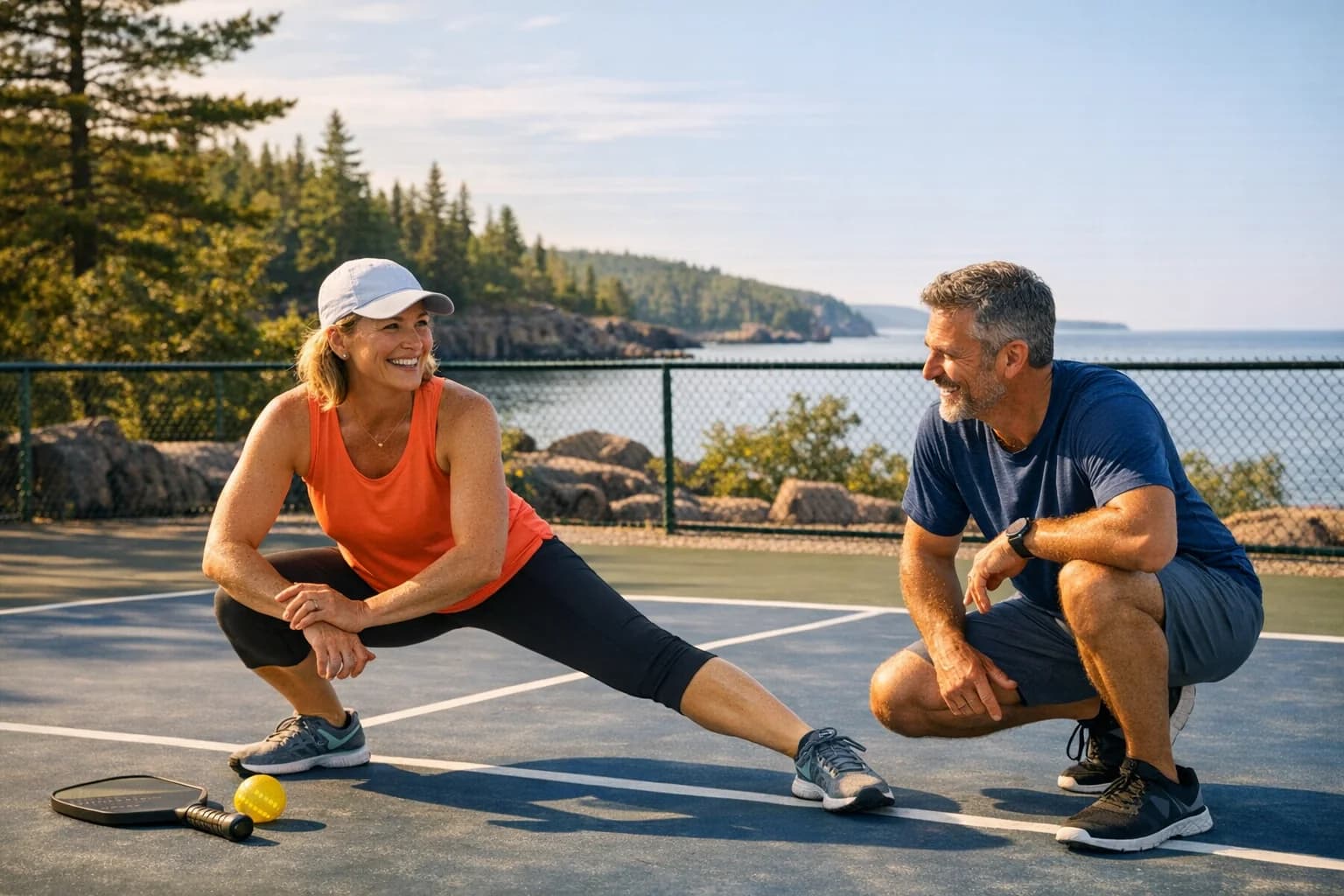
If you have gotten hooked on court time lately, you are not alone. Pickleball is everywhere, and for a lot of adults in northern Minnesota, it scratches the perfect itch. It is social, competitive, fun, and easier to start than a lot of other sports. But pickleball strength training over 40 matters more than many people expect. Once the games pile up, so do the sore knees, tight calves, cranky backs, and shoulder irritation.
That does not mean pickleball is the problem. It usually means your body needs better preparation for the speed, rotation, and repeated stops that the game demands.
At Duluth Metabolic, we like this conversation because it gets people away from the old idea that exercise only counts if it looks like punishment. Recreational sports are real movement. They are worth supporting. If you want the broader why behind that, our guides on exercise as medicine, functional training for beginners over 40, and functional training for metabolic health are a good place to start.
Why pickleball gets harder on the body after 40
Pickleball looks gentle from the outside. Then you play two or three games in a row and remember that your body has been lunging, twisting, bracing, shuffling, reaching, and decelerating the whole time.
After 40, those repeated demands can feel louder for a few reasons.
Muscle mass is easier to lose if you are not training. Tendons tend to like gradual loading, not random weekend intensity. Recovery is usually more sensitive to sleep, stress, and under-fueling. If you sit most of the day, then ask your hips and ankles to move like an athlete at 6 p.m., they may have notes.
This is one reason adults dealing with musculoskeletal weakness, low energy, or early bone loss often feel like recreational sports suddenly got harder. The answer is not always to stop playing. A lot of the time, the answer is to get stronger on purpose.
What pickleball strength training over 40 should actually do
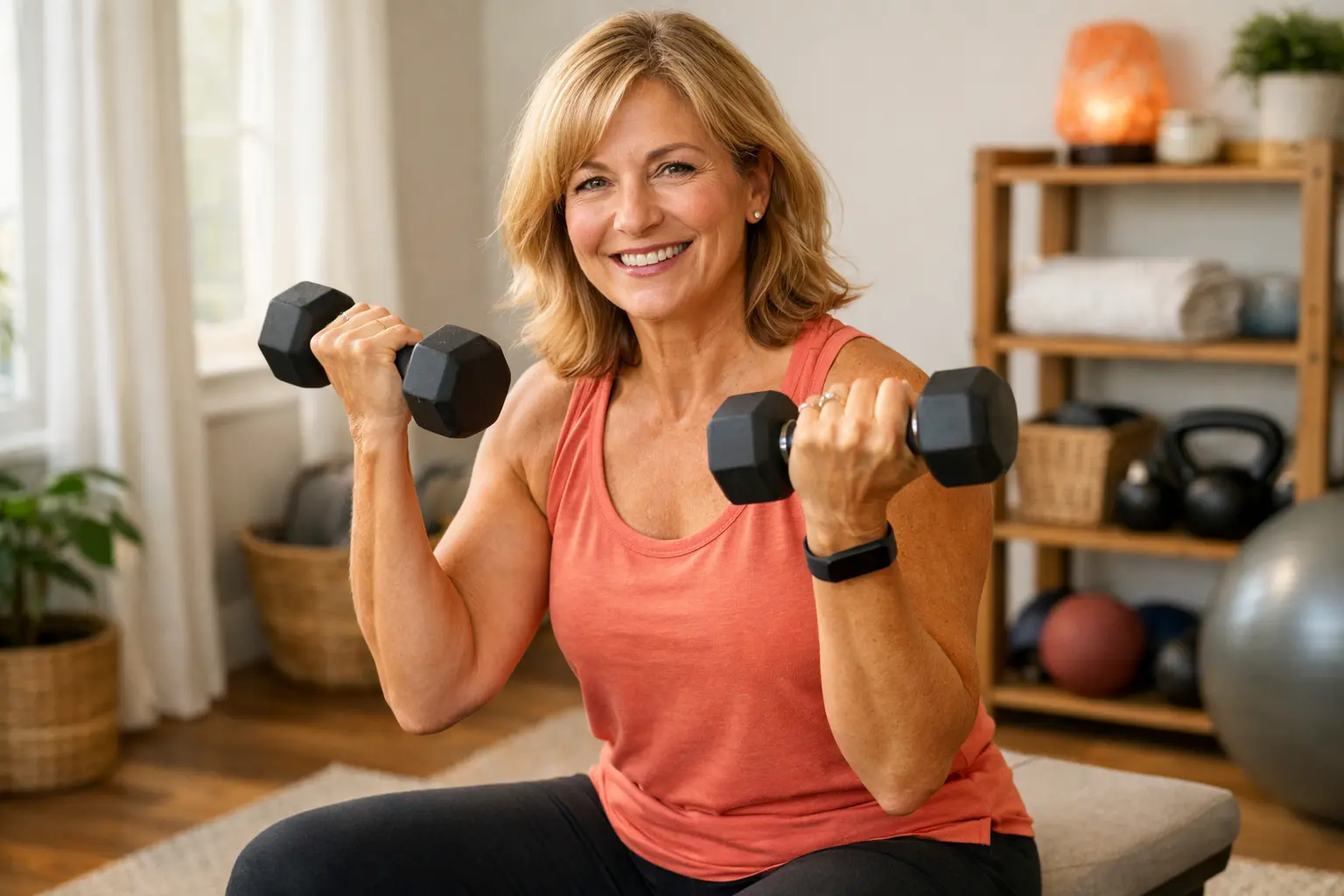
Good pickleball strength training over 40 is not bodybuilding for its own sake, and it is not random internet drills with a resistance band around your knees.
It should help you do a few practical things better:
- push off quickly without straining your calf or Achilles
- decelerate and change direction without your knee collapsing inward
- rotate through your hips and torso without dumping stress into your low back
- stay balanced when you reach wide or lunge low
- recover well enough to play again without feeling wrecked for three days
That means your plan should train strength, balance, power, mobility, and recovery together.
The body parts pickleball asks the most from
Hips and glutes
Your hips and glutes help you drive laterally, stay stable, and absorb force. When they are weak, your knees and low back often pick up the slack.
Calves and feet
Pickleball includes a lot of short acceleration and quick reaction. Your calves and feet are working every point. If they are underprepared, your lower legs get cranky fast.
Core and rotation
Your trunk is supposed to transfer force, not leak it. Better core control can help with balance, reaching, and rotational power without asking your spine to do everything alone.
Upper back and shoulders
You do not need a giant upper body to play well, but you do need enough pulling strength and shoulder control to handle repetitive swings.
The biggest mistake pickleball players make
A lot of adults assume playing pickleball is their training.
Playing is helpful, but it is not the same thing as preparation.
Games tend to repeat the patterns you already own. They do not always strengthen your weak spots, improve tissue tolerance, or give you enough loading in the right places. That is why someone can play often and still feel unstable when lunging, weak when getting low, or sore after every session.
This is where exercise therapy can help. A better plan fills in what the sport misses.
A simple pickleball strength training over 40 template
You do not need six training days a week. Most busy adults do well with two or three strength sessions plus their normal court time.
A useful weekly template might look like this.
- two full-body strength sessions
- one short mobility and recovery session
- two to four pickleball sessions depending on your schedule and recovery
- one easy walk or zone 2 cardio day
That is enough for a lot of people to feel stronger, more stable, and less beat up.
Best exercises for pickleball players over 40
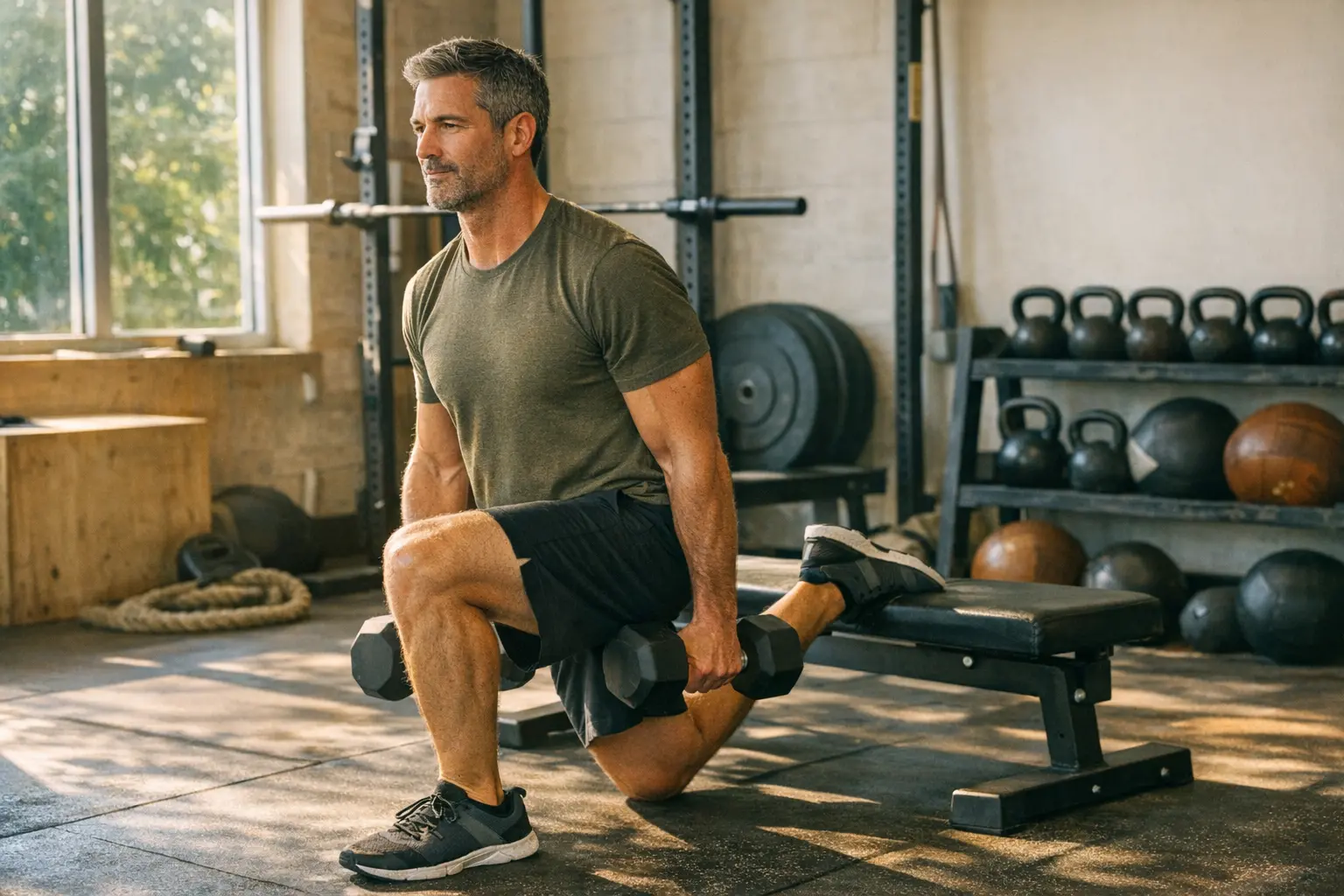
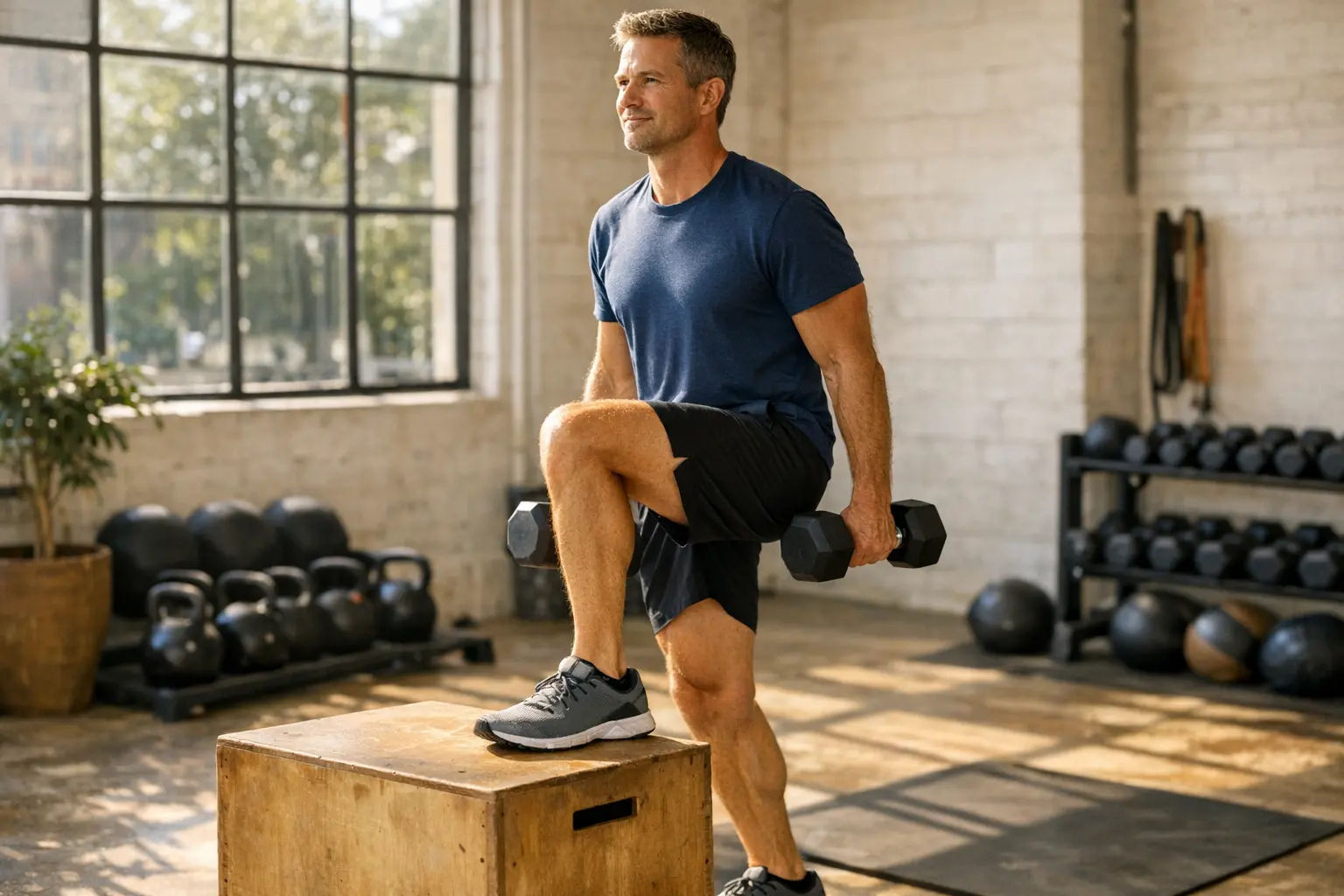
Split squats and step-ups
These build single-leg strength and control, which matters every time you plant, reach, and push back to center.
Lateral lunges
Pickleball is a side-to-side sport. Lateral lunges help prepare your adductors, glutes, and hips for that reality.
Deadlifts or kettlebell hinges
A strong hinge helps with posterior-chain strength, better power transfer, and less low-back compensation.
Rows and carries
Rows help support posture and upper-body balance. Carries train grip, trunk stability, and real-life resilience.
Anti-rotation core work
Pallof presses, suitcase carries, and controlled plank variations teach your trunk to brace and transfer force better.
Calf raises and tibialis work
These small pieces matter. Lower-leg strength is one of the most overlooked parts of pickleball prep.
A 10-minute warm-up before you play
A lot of injuries happen because people go from sitting to sprinting sideways in about four minutes.
A smarter warm-up does not need to be long.
Try this before you play:
- brisk walk or easy march for 1 to 2 minutes
- ankle rocks and calf raises for 1 minute
- bodyweight squats for 10 reps
- lateral lunges for 6 reps each side
- walking lunges or split squat rocks for 6 reps each side
- arm circles and band pull-aparts for 30 to 45 seconds
- quick side shuffles or low skater steps for 2 short rounds
That is enough to raise temperature, wake up your nervous system, and remind your hips, feet, and trunk that they are about to work.
What recovery should look like after court time
This part gets skipped all the time.
If you play hard, then drive home starving, dehydrated, and stiff, recovery gets a lot harder than it needs to be.
After longer sessions, most adults do well with:
- water and electrolytes if they have been sweating a lot
- a meal with protein and some smart carbs within a couple of hours
- a short walk later in the day instead of collapsing for the rest of the evening
- gentle calf, hip, and thoracic mobility if those areas tighten up on you
- enough sleep to actually adapt
Nutrition matters here more than people think. If you routinely under-eat after playing, it gets harder to maintain muscle, protect recovery, and support weight management in a sustainable way.
How strength training supports metabolic health too
Here is the good news. The same strength work that helps your court game usually helps the rest of your health too.
More muscle improves insulin sensitivity. It gives your body a bigger place to store glucose. It supports bone density, which matters more with age and matters even more if you are concerned about osteoporosis. It can also improve confidence and energy for people who feel like they have gotten physically smaller over the last decade.
That is why we do not separate movement from the bigger metabolic picture. A stronger body is often a more resilient body.
If fatigue, soreness, or poor recovery seem out of proportion to what you are doing, it may be worth digging deeper. Sometimes low protein intake, poor sleep, inflammation, or missing nutrient issues are making training feel harder than it should. In those cases, biomarker testing and nutrition coaching can help connect the dots.
When pain means you should change course
Some soreness is normal when you start training. Sharp pain, swelling, repeated joint instability, or symptoms that keep getting worse are not things to push through blindly.
Pay attention if you notice:
- knee pain with every lunge or squat
- Achilles pain that is worse the next morning
- elbow or shoulder pain that builds every session
- back pain with rotation or reaching
- fatigue that lingers for days after moderate activity
Sometimes you only need load management and a better plan. Sometimes you need a full reset in how you are training. Either way, ignoring it rarely helps.
A realistic plan for busy Duluth adults
A lot of adults in Duluth are squeezing activity in around work, kids, summer lake plans, cabin weekends, and whatever weather decides to do next. Your plan has to fit your real week.
That usually means shorter sessions, repeatable exercises, and enough flexibility to train at home or in a gym. It also means accepting that a boring plan you can keep doing will beat an exciting plan you follow for nine days.
If you are newer to training, you do not need sport-specific perfection. You need a base. Build leg strength. Build balance. Build better rotation. Build work capacity. Then pickleball feels more fun again.
FAQ
How often should I do pickleball strength training over 40?
Two strength sessions per week is a strong starting point for most adults. If you recover well and have room for it, a third shorter session can help.
Can pickleball itself count as exercise?
Yes. It absolutely counts. The issue is that it does not always cover everything your body needs to stay resilient, especially if you are playing more often or dealing with pain.
Should I lift heavy if I am over 40 and new to this?
You do not need to start heavy. Start controlled. Learn the movements, then add load gradually. Most people do better with patience than with bravado.
What if I already have knee or shoulder pain?
That is usually a sign to modify your plan, not quit all movement. Exercise selection, volume, and recovery may need to change.
Is strength training good for blood sugar and weight loss too?
Yes. More muscle and regular resistance training can improve insulin sensitivity, appetite regulation, and long-term body composition. Our article on strength training for insulin resistance is a good next read if that is part of your goal.
The bottom line
Pickleball strength training over 40 is really about earning the right to keep doing what you enjoy. The goal is not to turn recreation into a second job. The goal is to build enough strength, balance, and recovery capacity that your body can handle the sport without constant setbacks.
If you want help building a plan that supports your joints, energy, and long-term metabolic health, contact Duluth Metabolic. We can help you connect movement, recovery, and real-life health in a way that actually fits your week.