If you have been told you have prediabetes, or you suspect your blood sugar is heading that way, an anti-inflammatory diet for prediabetes can be one of the most useful places to start.
That phrase sounds technical, but the idea is simple. You want a way of eating that helps keep blood sugar steadier, lowers the daily stress on your body, and gives you meals you can keep repeating in real life. That usually means more protein, more fiber, more whole foods, fewer blood sugar spikes, and less dependence on the ultra-processed foods that leave you tired and hungry again an hour later.
At Duluth Metabolic, we like this approach because prediabetes is not just about one lab value. It is often connected to insulin resistance, sleep, inflammation, stress, muscle mass, meal timing, and how your body handles everyday life. If you want more context, it may help to read prediabetes diet plan, meal plan for insulin resistance, and reverse insulin resistance naturally.
Why an anti-inflammatory diet for prediabetes matters
Prediabetes usually means your body is having a harder time handling glucose efficiently.
That can show up as a higher A1c, rising fasting glucose, high fasting insulin, post-meal crashes, stubborn weight gain, or the weird mix of hunger and fatigue that makes your day feel harder than it should. Inflammation is often part of that picture.
When meals are built around refined carbs, sugary drinks, snack foods, poor protein intake, and low fiber, blood sugar tends to rise fast and fall hard. Over time, that pattern can feed insulin resistance. It can also make cravings, fatigue, poor focus, and abdominal weight gain more likely.
An anti-inflammatory approach helps by reducing that repeated stress.
It does not need to be extreme. It does not require perfect food purity. It does call for meals that support your metabolism instead of working against it.
An anti-inflammatory diet for prediabetes is not the same as a crash diet
A lot of people hear “prediabetes diet” and immediately assume they are about to live on dry chicken and sadness.
That is not the goal.
A useful food plan should leave you feeling more stable, more satisfied, and less at war with your appetite. If a plan makes you obsess about food all day or sets off a binge-restrict cycle, it is probably not a good long-term answer.
That is one reason the anti-inflammatory angle matters. It shifts the focus away from white-knuckling calories and toward food quality, blood sugar response, and recovery.
A good anti-inflammatory diet for prediabetes usually does a few things at once:
- lowers the glycemic load of meals
- increases protein and fiber
- includes healthy fats that improve meal staying power
- cuts back on foods that drive easy overeating
- supports weight management without making you miserable
If you have ever felt shaky, tired, or ravenous after a carb-heavy meal, you have already felt why meal composition matters.
What foods fit best in an anti-inflammatory diet for prediabetes
Most people do well when they build meals around foods that are filling, minimally processed, and blood sugar-friendly.
That includes:
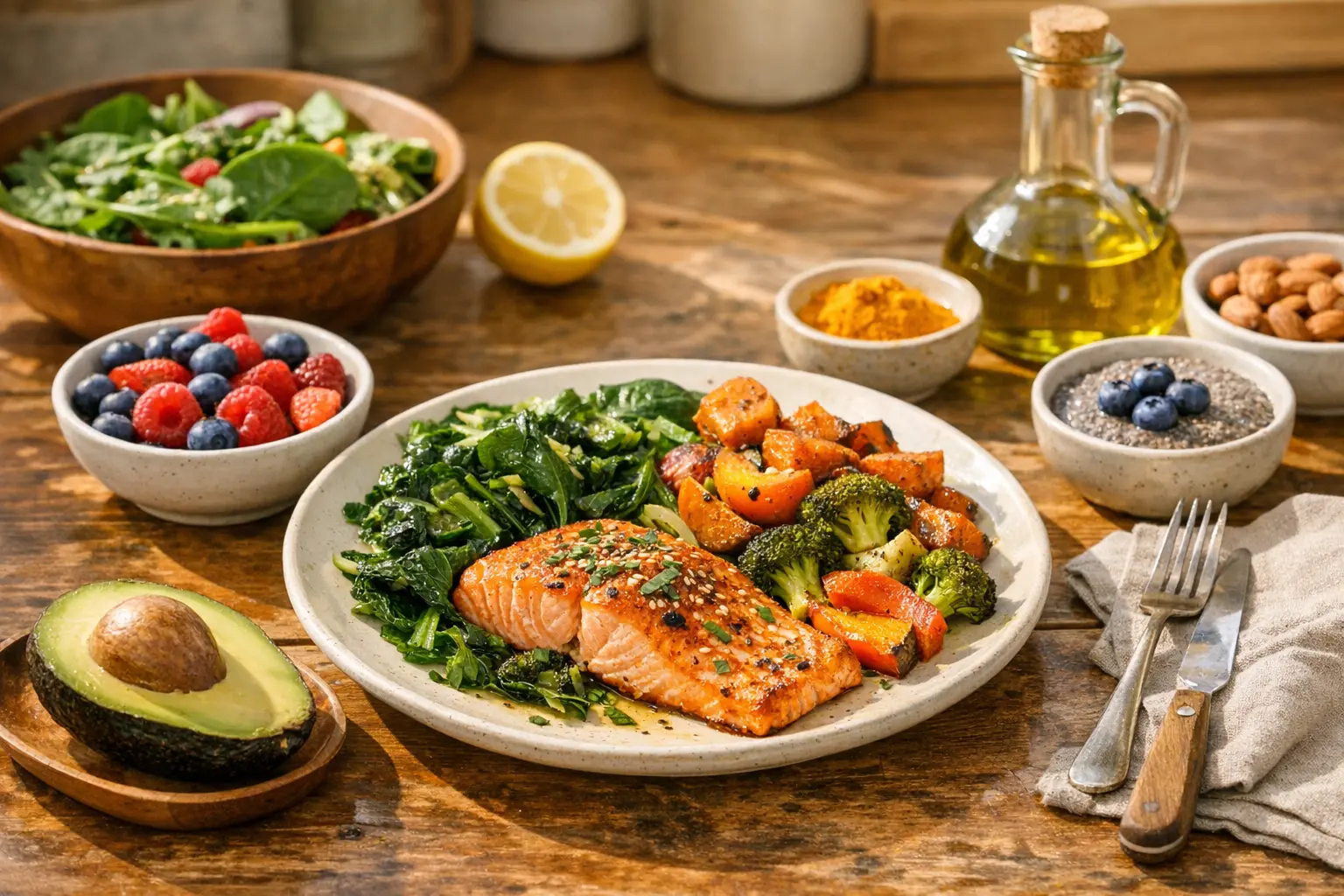
- protein like eggs, Greek yogurt, cottage cheese, chicken, turkey, fish, tofu, tempeh, and lean beef
- non-starchy vegetables like greens, broccoli, peppers, cucumbers, cauliflower, mushrooms, zucchini, and cabbage
- higher-fiber carbs like beans, lentils, berries, oats, quinoa, and potatoes in sensible portions
- healthy fats like olive oil, avocado, nuts, seeds, and olives
- anti-inflammatory flavor boosters like herbs, spices, lemon, vinegar, garlic, ginger, and turmeric
The goal is not to eat these foods in isolation. The goal is to combine them in a way that keeps you fuller and helps your blood sugar rise more gradually.
For example, fruit lands differently when it is paired with protein. Oats land differently when they are not a giant sugar bomb. Rice lands differently when it shares the plate with salmon, vegetables, and olive oil instead of being the main event.
If you want more meal ideas, blood sugar friendly lunch ideas, high-protein breakfast for blood sugar control, and post-workout meals for blood sugar control are good next stops.
Foods that often make prediabetes harder to manage
This is where nuance matters.
You do not need to fear every carb. You do need to be honest about the foods that make it easy to overeat and hard to stay steady.
For many people, the biggest troublemakers are:
- sugary drinks and coffee drinks
- pastries, cereal, and low-protein breakfasts
- chips, crackers, and “snacky” refined carbs that do not fill you up
- frequent desserts that become part of the daily routine
- restaurant meals loaded with refined starch plus added fat
- late-night eating that turns into grazing
These foods are not evil. They are just easy to overdo, especially when you are tired or stressed. They tend to create the exact cycle most people with prediabetes are trying to escape.
That is why an anti-inflammatory plan usually works better when it is built around what to add and structure first, not just what to ban.
Protein is one of the biggest levers you can pull
If your breakfast is mostly carbs, there is a decent chance the rest of the day gets harder.
Protein helps with fullness, supports muscle, and can slow how quickly a meal affects blood sugar. That matters because muscle is one of the best places for glucose to go.
A lot of adults with prediabetes are under-eating protein early in the day. Then they wonder why they are starving by late afternoon.
Better options might include eggs with vegetables, Greek yogurt with berries and seeds, cottage cheese with fruit, leftovers from dinner, or a smoothie that actually contains enough protein to count as a meal.
This is one reason we often pair nutrition work with exercise therapy or a broader metabolic plan. Better protein intake plus strength training is a powerful combination for insulin resistance.
Fiber helps lower the speed of the meal
Fiber does not only help digestion. It also helps slow how quickly food moves through your system and how quickly glucose hits the bloodstream.
That is one reason people usually feel better when they move from low-fiber convenience foods to meals with vegetables, beans, berries, chia, flax, nuts, seeds, and other whole-food fiber sources.
This does not mean you need to jump from ten grams a day to forty overnight. If your current intake is low, increase gradually and drink enough water.
A simple target is to make your meals harder to inhale and easier to digest slowly.
That might look like:
- adding berries and chia to yogurt
- swapping a giant bagel for eggs and fruit
- building lunch around a salad plus protein instead of a sandwich and chips
- adding beans to soups, bowls, or chili
- keeping vegetables visible and easy to use
If grocery planning is the weak spot, blood sugar friendly grocery list duluth mn and low-carb grocery shopping duluth mn can help.
Healthy fats can make meals more satisfying
People sometimes swing too hard in one direction and try to go very low-fat while also cutting calories and carbs.
That usually backfires.
Healthy fats do not need to dominate the plate, but they can help meals feel more satisfying and less punishing. Olive oil on vegetables, avocado with eggs, nuts on a salad, salmon at dinner, or seeds stirred into yogurt can all help increase staying power.
That matters because a meal that actually holds you is often a meal that keeps you out of the pantry an hour later.
Meal timing matters more than people think
A solid anti-inflammatory plan for prediabetes is not only about what you eat. It is also about when and how you eat.
Some common patterns that make blood sugar control harder include skipping meals all day, eating most calories at night, grazing continuously, and letting stress decide your food schedule.
Most people do better with some structure.
That might mean a protein-rich breakfast, a real lunch instead of random snacks, and a dinner that is satisfying without being a giant carb-heavy reward meal. Some people also do well with a consistent eating window or a guided plan around fasting protocols, but that needs to fit the person. Fasting is not automatically the answer for everyone.
If your energy crashes at certain times, meal timing for blood sugar control and late dinner blood sugar are worth reading.
A sample day on an anti-inflammatory diet for prediabetes
This does not need to be fancy.
Breakfast could be Greek yogurt with berries, walnuts, chia, and cinnamon.
Lunch could be grilled chicken over greens with vegetables, pumpkin seeds, olive oil, and a side of fruit.
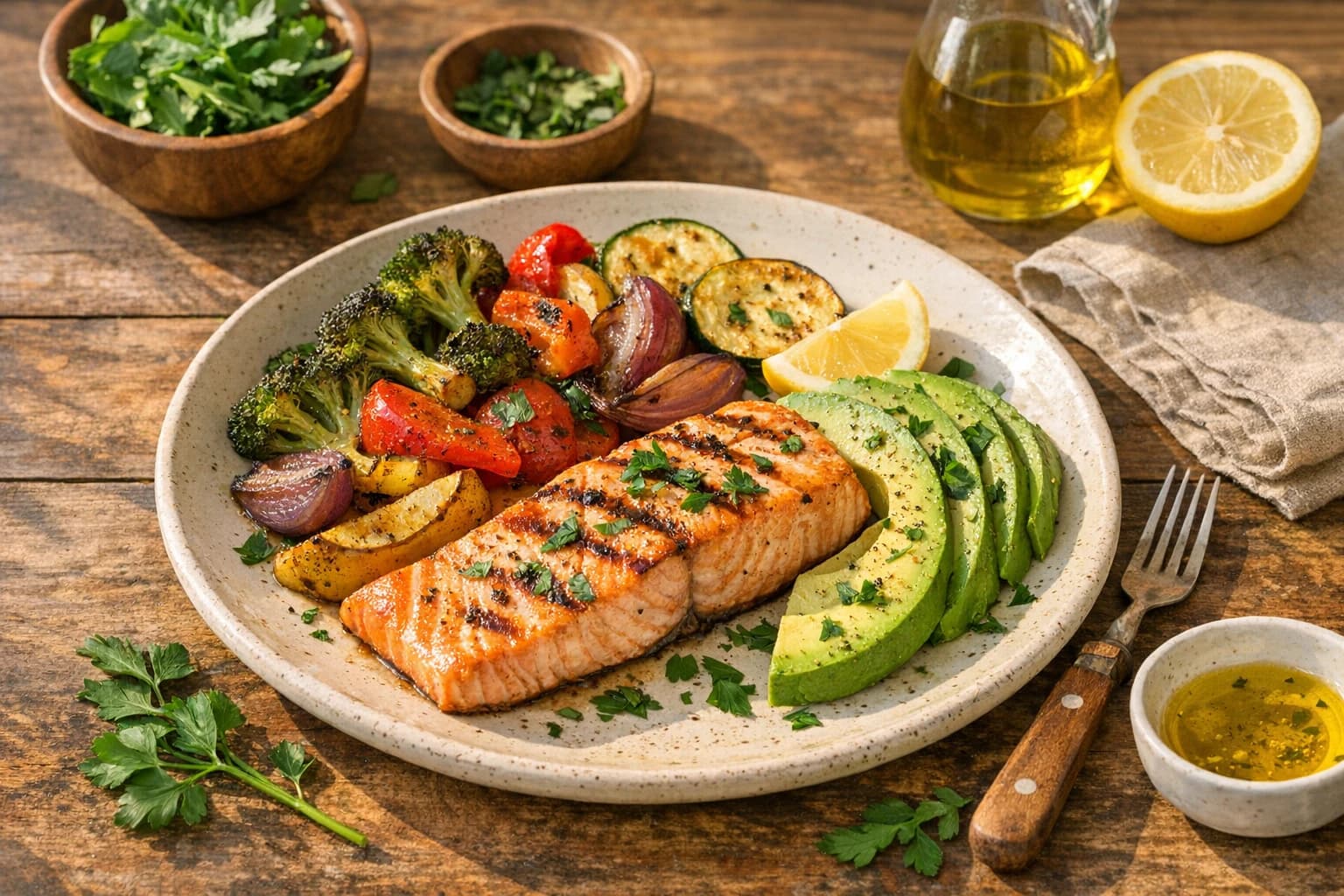
Dinner could be salmon, roasted broccoli, and a smaller portion of potatoes or quinoa with olive oil and herbs.
A snack, if needed, could be apple slices with peanut butter, cottage cheese with berries, or a handful of nuts with a cheese stick.
The pattern matters more than the specific menu. Each meal includes protein. Fiber shows up. The carbs are not absent, but they are not running the whole show either.
What if you still feel hungry all the time?
That is an important clue.
Constant hunger can come from under-eating protein, poor sleep, chronic stress, blood sugar swings, low activity, very low calories, or a pattern of meals that never really satisfies you. It does not always mean you need more willpower.
If hunger feels chaotic, why am I hungry all the time, food noise and blood sugar, and high fasting insulin normal A1c may help connect the dots.
FAQ about an anti-inflammatory diet for prediabetes
Can an anti-inflammatory diet help lower A1c?
It can help support lower A1c by improving meal quality, reducing blood sugar spikes, and making weight loss or weight stability easier for some people. Results depend on the whole picture, including sleep, activity, muscle mass, stress, and consistency.
Do I need to cut out all carbs if I have prediabetes?
No. Many people do better with smarter carbs, better portions, and better food pairing rather than trying to eliminate every carb. The goal is steadier blood sugar, not food fear.
What is the best breakfast for prediabetes?
Usually one with meaningful protein and less sugar than a typical cereal or pastry breakfast. Eggs, Greek yogurt, cottage cheese, protein smoothies, or leftovers from dinner often work better than quick refined carbs.
Is the Mediterranean diet anti-inflammatory enough for prediabetes?
For many people, yes. A Mediterranean-style pattern with enough protein, plenty of vegetables, legumes, olive oil, fish, and sensible carb portions can fit very well.
What if my labs are only “a little high”?
That still matters. Prediabetes is often the stage where lifestyle changes can have the most impact. You do not need to wait until things are much worse to take it seriously.
This is a good place to intervene early
Prediabetes can feel scary, but it is also a chance to change direction before more damage builds.
You do not need a perfect food plan. You need a repeatable one. A strong anti-inflammatory diet for prediabetes can support steadier energy, better appetite control, and a healthier metabolic trajectory when it is built around real life.
If you want help building a plan that fits your schedule, labs, and symptoms, contact Duluth Metabolic. We can help you connect the food, blood sugar, and root-cause side of the story.