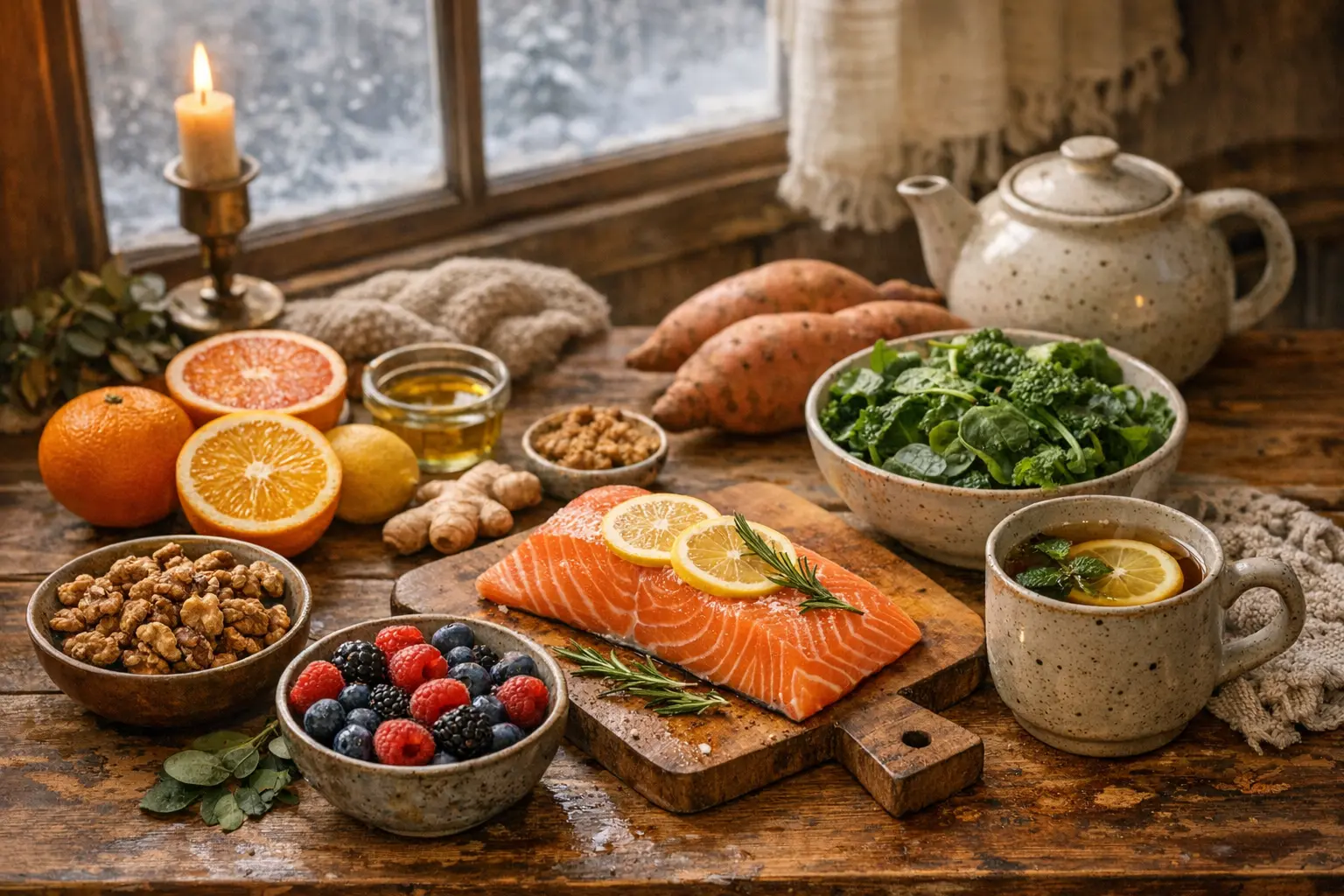
When people search for anti-inflammatory foods for seasonal depression, they are usually not looking for a miracle berry or a trendy powder. They are looking for a way to feel a little more like themselves when darker months hit hard.
Seasonal depression can bring low mood, low motivation, sleep changes, carb cravings, brain fog, and that heavy flat feeling that makes basic routines harder than they should be. Food is not the only answer, and it should never replace mental health care when depression is significant. But what you eat can influence blood sugar, inflammation, energy, and even how steady your mood feels from one part of the day to the next.
At Duluth Metabolic, we think nutrition works best when it is practical. You do not need a perfect diet. You need meals that help your body feel more stable. If this topic hits home, it may also help to read seasonal depression in Duluth, MN, vitamin D, light therapy and seasonal wellness, and mental health and metabolic wellness in Duluth.
Why anti-inflammatory foods for seasonal depression matter
Seasonal depression is often talked about as a light problem, and light is a big part of it. Shorter days can affect circadian rhythm, melatonin, serotonin, sleep timing, and energy.
But that is not the whole story.
For many people, winter also changes how they eat, move, sleep, and regulate stress. Cravings increase. Convenience foods creep in. Activity drops. Blood sugar gets more chaotic. Sleep gets less refreshing. Inflammation can rise right alongside all of that.
That is why anti-inflammatory foods for seasonal depression can be helpful. They support the body systems that often feel less resilient in darker months.
This is especially relevant if your winter mood shifts come with chronic fatigue, anxiety and depression, hormone changes, or a tendency toward blood sugar crashes.
Food cannot fix everything, but it can make winter easier or harder
A lot of people notice they crave sugar and starch more when daylight shrinks.
That makes sense. Quick carbs can create a short-term lift. The problem is what often comes next. A high-sugar breakfast or snack can lead to a spike, then a drop. That drop can feel like irritability, sleepiness, brain fog, shakiness, or the sudden urge to keep eating.
If you repeat that cycle all winter, it can amplify the exact symptoms you are trying to get away from.
This does not mean carbs are bad. It means your body tends to feel better when meals have more structure. Protein, fiber, healthy fats, colorful plants, and steady meal timing can all help create a more even emotional and physical baseline.
Start with blood sugar-friendly meals
One of the smartest ways to use food for winter mood support is to reduce the roller coaster.
That usually means building meals around:
- protein that helps you stay full and steady
- fiber-rich foods that slow digestion
- fats that add staying power and flavor
- carbohydrates that come with more structure than a pastry or sugary drink
This matters because mood and glucose are closely linked. If you are swinging from spike to crash, your brain feels it.
For practical help, protein for blood sugar control, blood sugar friendly breakfast ideas, and meal timing for blood sugar control are good places to start.
Fatty fish and omega-3 foods deserve a spot in the conversation
When people talk about anti-inflammatory eating and mood, omega-3 fats usually come up for a reason.
Foods like salmon, sardines, trout, herring, walnuts, chia seeds, and flax can support a healthier inflammatory balance and may help support brain health too. You do not need them at every meal, but getting them in regularly can be part of a winter-friendly pattern.
In northern climates, this can be a useful shift because many winter comfort foods lean heavy on refined flour, sugar, and low-quality fats. Swapping in a salmon dinner, chia pudding, or Greek yogurt with walnuts will not solve seasonal depression overnight, but it can move your baseline in a better direction.
Colorful produce helps more than people think
Winter eating often gets beige.
That is understandable. Hearty comfort food has a place. But colorful produce brings in fiber, polyphenols, vitamin C, folate, potassium, and other compounds that support inflammation balance and overall resilience.
Think berries, leafy greens, citrus, red cabbage, beets, broccoli, carrots, winter squash, herbs, and frozen vegetables if fresh options feel expensive or inconvenient.
Frozen produce is especially underrated in winter. It is easy, affordable, and often just as useful nutritionally as fresh.
If you want more ideas, anti-inflammatory foods for blood sugar control, anti-inflammatory foods for gut health, and budget anti-inflammatory meals can help.
Gut-friendly foods may help the mood picture too
The gut and brain talk to each other all day.
That does not mean every mood issue is a gut issue, but it does mean digestion can affect how you feel. If winter tends to bring bloating, constipation, sluggish digestion, or more processed food, that can add stress to the system.
Anti-inflammatory foods that also support gut health include:
- fermented foods like plain yogurt, kefir, sauerkraut, and kimchi if you tolerate them
- fiber-rich plants such as oats, beans, berries, lentils, vegetables, and seeds
- polyphenol-rich foods like berries, cocoa, olive oil, green tea, and herbs
- easy proteins that are not heavily processed
You may want to pair this article with gut health habits for busy adults, gut health morning routine, and functional medicine for constipation.
Anti-inflammatory foods for seasonal depression should still feel comforting
This part matters.
A lot of people think supportive winter eating means salads and sadness. It does not.
Warm, satisfying meals can still be anti-inflammatory and mood-supportive. Think chili with beans and ground turkey, roasted salmon with potatoes and broccoli, lentil soup with olive oil, eggs with sautéed greens, Greek yogurt bowls with berries and seeds, oatmeal with protein mixed in, or a sheet-pan dinner with chicken, squash, onions, and Brussels sprouts.
Comfort matters because if your plan feels joyless, you will not stick with it.
What foods tend to make winter mood and energy worse
This is where honesty helps.
Many people notice they feel worse when winter eating turns into a pattern of:
- pastries or sugary coffee drinks for breakfast
- long stretches without protein
- constant grazing on chips or sweets
- heavy takeout meals followed by sitting the rest of the night
- alcohol as a nightly wind-down strategy
None of these foods need to be forbidden forever. The issue is the pattern. If your nervous system, sleep, and blood sugar are already under pressure, these habits often add more chaos.
That is part of why seasonal depression can come with fatigue during the day and poor sleep at night. The inputs are fighting each other.
Vitamin D matters, but food alone usually is not enough
Vitamin D is part of the winter conversation for good reason.
Low vitamin D can overlap with low mood, low energy, immune issues, and poor resilience. But it is hard to correct a true deficiency with food alone. Fatty fish, egg yolks, and fortified foods can help, but many people in northern climates need a more intentional plan.
That is where biomarker testing can be useful. Rather than guessing, you can look at whether low vitamin D, low iron, blood sugar issues, inflammation, or thyroid patterns may be contributing to how you feel. For more on that piece, read vitamin D deficiency in Duluth, MN.
A simple winter plate can work surprisingly well
If you want a practical formula, keep it simple.
Try building meals with:
- a palm-sized source of protein
- a generous serving of vegetables or fruit
- a structured carb like potatoes, oats, beans, fruit, or rice
- a healthy fat like olive oil, avocado, nuts, seeds, or salmon
That framework is boring in the best way. It is repeatable. It helps reduce decision fatigue. It supports steadier energy. And it leaves room for real life.
Do not underestimate meal timing
Some people focus so much on food quality that they forget when they eat matters too.
Skipping meals all day, then overeating at night can leave you feeling awful emotionally and physically. So can under-eating protein early in the day and trying to survive on caffeine.
A more stable pattern often looks like eating enough during the day, especially at breakfast and lunch, so nighttime cravings are less intense. That can be huge for people whose winter routine becomes coffee, stress, hunger, giant dinner, couch, poor sleep, repeat.
If this pattern sounds familiar, why do I crash after lunch, how to stop sugar cravings at night, and best foods for fatigue are worth a read.
Anti-inflammatory foods work better when movement and light are part of the plan
Food helps. So do light and movement.
Even a strong nutrition plan has a harder time doing its job if you are getting almost no daylight, barely moving, and sleeping at random times. This is one reason winter support usually works best as a package.
Morning light when possible, regular indoor or outdoor walking, a little strength work, and meals that keep blood sugar steadier can create a much better winter experience than trying to out-supplement a chaotic routine.
That is why people often do well combining food changes with exercise as medicine, indoor walking in Duluth, MN, and winter wellness routine in Duluth, MN.
FAQ about anti-inflammatory foods for seasonal depression
Can food alone treat seasonal depression?
No. Food can help support mood, blood sugar, inflammation, and energy, but it is not a replacement for therapy, medication, light therapy, or medical care when those are needed.
Which foods are best to start with?
A good place to start is protein-rich breakfasts, omega-3 foods, colorful produce, fiber-rich meals, and fewer ultra-processed foods that leave you crashing.
Are carbs bad for seasonal depression?
Not at all. The goal is not to avoid carbs. The goal is to choose carbs with more structure and pair them with protein and fiber so mood and energy feel steadier.
What if I crave sugar more in winter?
That is common. It often helps to eat more consistently during the day, increase protein at breakfast, and build satisfying meals so you are not white-knuckling hunger by evening.
When should I get extra help?
If winter mood changes affect your work, relationships, sleep, motivation, or safety, it is time to get support. You do not need to push through it alone.
If winter leaves you feeling flat, hungry, tired, and unlike yourself, Duluth Metabolic can help you build a more supportive plan. If you want help connecting mood, food, and metabolic health, reach out through our contact page.