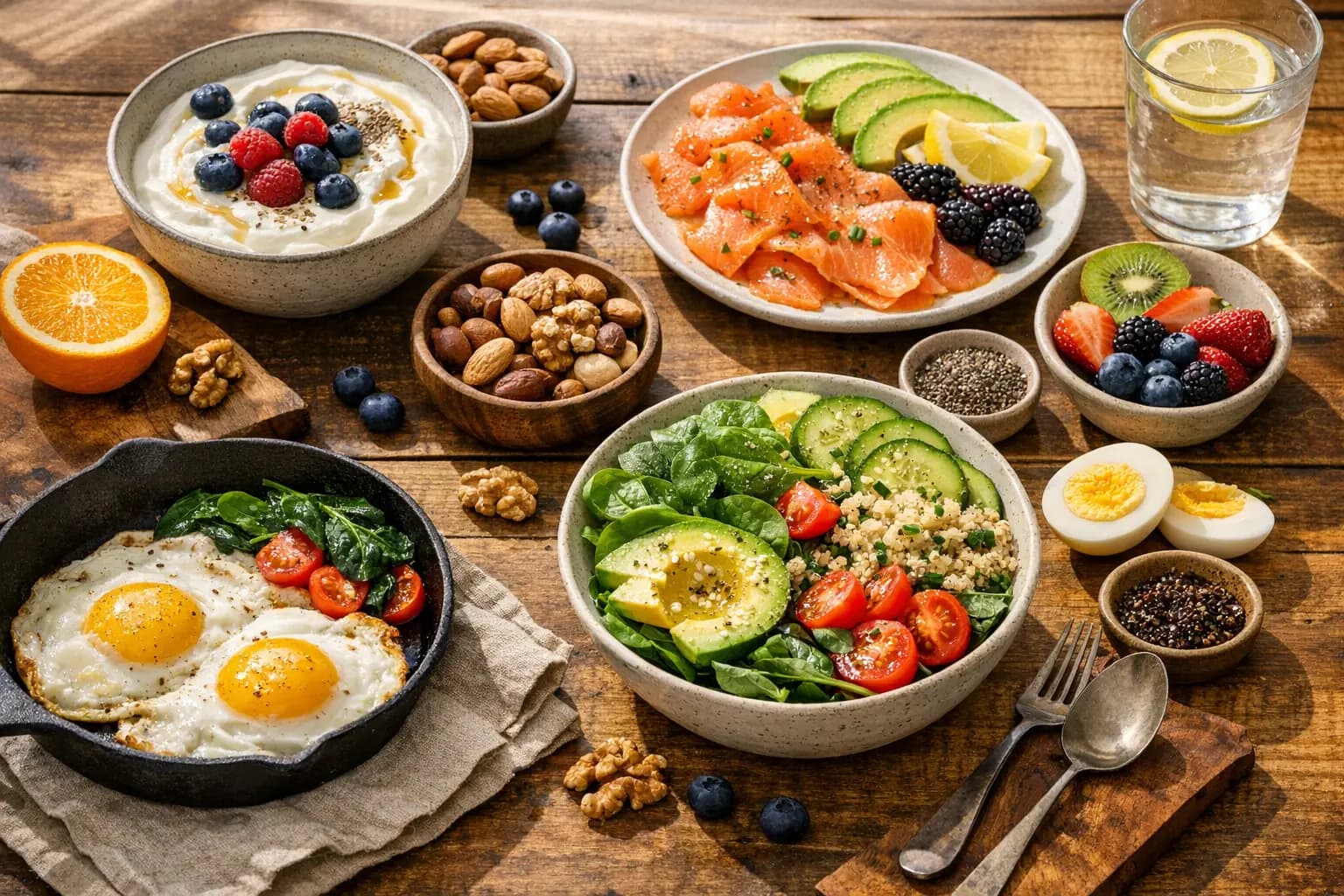
If you are searching for the best foods for fatigue, you are probably tired of being told to just sleep more or drink more water.
Those things matter. They are also rarely the full answer.
Fatigue is often a food problem in a bigger sense than people realize. Not because there is one magic ingredient that turns energy back on, but because what you eat changes blood sugar, mineral status, inflammation, gut function, recovery, and how steady you feel from one part of the day to the next.
At Duluth Metabolic, we see this all the time. Someone says they are exhausted, but when you zoom out, they are under-eating protein, overdoing refined carbs, skipping meals, living on caffeine, or eating in a way that keeps them on a spike-and-crash cycle all day long. If that sounds familiar, it also helps to read why am I always tired, high fasting insulin normal A1C, and meal timing for blood sugar control.
The best foods for fatigue are the ones that create stable energy
When people think about energy foods, they often think fast.
Fruit juice. Granola bars. Coffee drinks. Energy chews. Something sweet that kicks in quickly.
The problem is that quick energy often creates quick fatigue too.
The best foods for fatigue usually do the opposite. They slow things down. They create a steadier rise in blood sugar, give your body raw materials for actual energy production, and make it less likely that you will feel wrecked an hour later.
That usually means meals and snacks built around:
- protein
- fiber
- minerals
- anti-inflammatory whole foods
- carbohydrates in amounts and forms your body handles well
Why blood sugar is one of the biggest fatigue drivers
A lot of tired people are not low on effort. They are stuck on a glucose roller coaster.
They start the day with toast, cereal, a muffin, or just coffee. Then they feel shaky, foggy, or intensely hungry by late morning. Lunch brings another crash. Afternoon caffeine follows. Night cravings show up later because the body has been chasing stability all day.
It feels like low energy, but the pattern is often unstable energy.
That is why the best foods for fatigue are rarely the ones marketed as energy foods. They are usually the ones that keep your body from overreacting in the first place.
For some people, cgm monitoring makes this obvious very quickly.
Protein is the first place to look
If you want steadier energy, start with protein.
Protein helps slow digestion, improve satiety, support muscle mass, and reduce the odds that a meal turns into a blood sugar spike followed by a crash. It also gives your body amino acids that matter for neurotransmitters, recovery, immune function, and tissue repair.
Many tired adults are eating far less protein than they think.
A breakfast of toast and fruit is not much protein. A salad with little actual substance is not much protein. Coffee with creamer is not breakfast.
Some of the best foods for fatigue because of their protein content include:
- eggs
- Greek yogurt
- cottage cheese
- salmon
- tuna
- chicken
- turkey
- lean beef
- tofu
- tempeh
- edamame
- protein-forward soups or leftovers
If this is an area you struggle with, protein requirements over 40 and high-protein breakfast for blood sugar control are good next reads.
Eggs are underrated for tired people
Eggs are simple, portable, and useful.
They provide protein, choline, selenium, B vitamins, and enough staying power to make breakfast feel like a real meal instead of a placeholder. Pairing eggs with vegetables, fruit, or potatoes often lands much better than starting the day with refined flour and sugar.
That does not mean eggs are the only answer. They are just one of the easiest upgrades for people whose morning routine is making fatigue worse.
Greek yogurt can be a strong fatigue food when you build it right
Greek yogurt is one of the best foods for fatigue when it is not turned into dessert.
It offers protein, calcium, and a convenient base for a balanced meal or snack. The trick is what you pair it with. If it is loaded with sweetened granola and honey, you may still get the crash. If you pair it with berries, chia seeds, walnuts, or pumpkin seeds, the meal usually holds better.
That same principle applies to smoothies. A smoothie can help, but only if it has enough protein and enough substance to count.
Beans and lentils help more than people expect
Beans and lentils give you a rare combination of fiber, minerals, and slower-digesting carbohydrates.
They can support steadier blood sugar, gut health, and better fullness after meals. For people whose fatigue is tied to a very processed diet or frequent snack crashes, adding beans or lentils regularly can be a meaningful shift.
They also overlap with the foods often used in anti-inflammatory and gut-supportive eating plans. If digestion is part of your story, anti-inflammatory foods for gut health and gut health habits busy adults are worth reading.
Salmon and other fatty fish support energy differently
Fatigue is not always about calories.
Sometimes it is about inflammation and recovery.
Salmon, sardines, trout, and other fatty fish provide protein plus omega-3 fats that can support recovery and a healthier inflammatory balance. They are not stimulants, and that is exactly the point. They help create a system that is less inflamed and more resilient over time.
For someone who feels run down, moody, sore, and mentally flat, that matters.
Leafy greens matter, but not for the reason people think
Leafy greens get included on every healthy foods list, often in a vague way.
Here is the practical reason they matter for fatigue.
They provide folate, magnesium, potassium, vitamin K, and other micronutrients that support energy metabolism, muscle function, and recovery. They also add volume and fiber without making meals heavier than they need to be.
That said, a handful of spinach in a smoothie does not cancel out a low-protein, low-calorie day. Greens help most when they are part of actual meals built well.
Pumpkin seeds and nuts can fill easy mineral gaps
Magnesium is one of the most common weak spots we see in tired adults.
Stress burns through it. Poor food quality lowers intake. Some people also sweat a lot, sleep poorly, or drink enough caffeine and alcohol that the gap gets wider.
Pumpkin seeds, almonds, cashews, and other nuts can help add magnesium, some protein, and useful fats to your day. They are not magic, but they are easy, portable, and a lot more helpful than the vending machine snack that looked like a quick fix.
Berries are usually a better fatigue carb than pastries
When people hear blood sugar-friendly eating, they sometimes assume fruit is the problem.
Usually it is the form and the company that matter.
Berries tend to be easier on blood sugar than pastries, cereal bars, sweet coffee drinks, or giant juices. They also bring fiber and antioxidants. Pair them with protein and they often work very well for tired people.
This is why a bowl of Greek yogurt, berries, and seeds usually lands better than a muffin and latte.
Potatoes can be a fatigue-friendly food when the meal is balanced
Potatoes scare some people because they think every carb is bad for energy.
That is not how it works.
A balanced meal with potatoes, protein, and vegetables can support stable energy much better than a low-protein meal built around refined snacks. Potatoes also provide potassium and are often easier to digest than many processed grain products.
The lesson is not that potatoes are perfect. It is that context matters more than food fear.
Fermented foods can help when gut health is part of the problem
Some fatigue has a digestion story attached to it.
People feel bloated, inflamed, constipated, or wiped out after meals. In that context, gut health may be part of what is draining energy.
Fermented foods like kefir, plain yogurt, sauerkraut, kimchi, or other cultured foods can support a healthier gut environment for some people. They are not a cure-all, and they do not work the same way for everyone, but they can be one useful part of a better pattern.
If that sounds like you, gut health after antibiotics, functional medicine for bloating Duluth MN, and why am I bloated after every meal may help connect more dots.
The best foods for fatigue at breakfast
Breakfast is where a lot of energy problems start.
Some better options include:
- eggs with fruit and potatoes
- Greek yogurt with berries and seeds
- cottage cheese with fruit and nuts
- a protein smoothie with real protein, not just fruit
- leftover salmon, chicken, or beef with a simple side
- oatmeal paired with protein instead of eaten alone
The point is not to eat a perfect breakfast every day. The point is to stop beginning your day with a setup for a crash.
The best foods for fatigue at lunch
Lunch needs to keep the afternoon from falling apart.
That usually means protein first, then vegetables or fiber, then carbohydrates in an amount you handle well.
Examples:
- grilled chicken salad with enough substance to satisfy you
- salmon and rice bowl with vegetables
- turkey wrap plus fruit and a crunchy vegetable side
- lentil soup with added protein on the side
- taco bowl with meat, beans, salsa, and greens
If lunch tends to wreck your afternoon, see why do I crash after lunch.
The best foods for fatigue at snack time
A good snack prevents desperation.
A bad snack creates more of it.
Better fatigue-friendly snacks include:
- Greek yogurt
- cottage cheese
- jerky plus fruit
- apple with peanut butter
- protein shake
- hard-boiled eggs
- nuts and berries
- hummus with vegetables
These work because they buy time and stability. They do not just hit your system and disappear.
What to avoid if fatigue is your main complaint
This does not need to become a forbidden-food conversation, but some patterns tend to make fatigue worse.
Common troublemakers include:
- sugary coffee drinks used as breakfast
- pastries and muffins on an empty stomach
- cereal with little protein on the side
- energy bars that are basically candy
- skipping meals and overcaffeinating
- late-night overeating after under-eating all day
- alcohol used to unwind from a system that is already depleted
Again, the issue is usually not one food. It is the pattern.
Fatigue can also mean you need deeper answers
Food matters a lot, but it is not the only factor.
If you are eating reasonably well and still dragging all the time, it may be worth looking deeper at thyroid function, iron status, sleep apnea, inflammation, chronic stress, medication side effects, or blood sugar dysregulation that is not obvious on basic screening.
That is when biomarker testing and more complete evaluation can be helpful.
The goal is not fake energy
A lot of products promise more energy.
Most people do not need more stimulation. They need fewer crashes.
The best foods for fatigue help your body produce steadier energy in a way that feels boring at first and life-changing later. Enough protein. Better meal structure. Fewer sugar swings. More minerals. Less chaos.
That is what starts to make a tired body feel safer again.
Frequently Asked Questions
Q: What are the best foods for fatigue in the morning?
A: Protein-forward breakfasts usually work best. Eggs, Greek yogurt, cottage cheese, or a balanced smoothie tend to support steadier energy better than toast, cereal, or pastries by themselves.
Q: Can low protein make you feel tired?
A: Yes. Low protein can contribute to poor satiety, unstable blood sugar, lower muscle mass, and weaker recovery. All of that can make you feel more tired.
Q: Are carbs bad if I feel fatigued?
A: Not automatically. The issue is often the type of carb, the amount, and whether it is paired with protein and fiber. Balanced meals usually land much better than refined carbs eaten alone.
Q: When should I get checked instead of just changing my diet?
A: If fatigue is constant, severe, getting worse, or happening along with symptoms like hair loss, shortness of breath, heavy periods, unexplained weight change, or major sleep problems, it is worth getting a fuller evaluation.
If you are exhausted and want help turning scattered food advice into a practical plan, contact us. We can help you figure out whether your fatigue is mostly a meal-structure problem, a blood sugar problem, or a sign that it is time to look deeper.