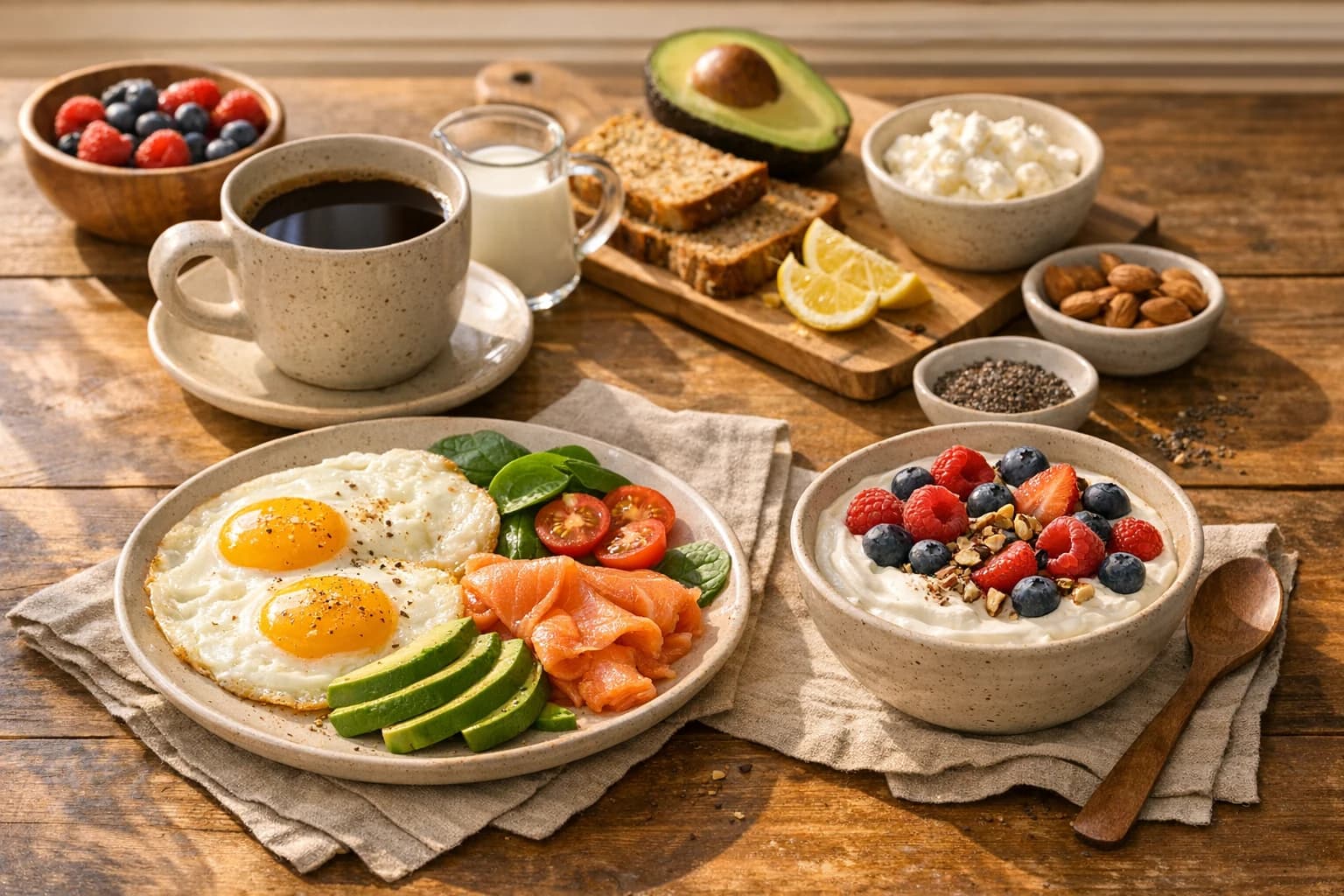
A high protein breakfast for menopause can do a lot more than help you feel full. For many women, it helps steady energy, reduce midmorning cravings, support blood sugar, and make the rest of the day feel less chaotic.
That matters because menopause and perimenopause often change the rules. A breakfast that used to hold you over may now leave you hungry an hour later. Coffee and toast may suddenly turn into shakiness, brain fog, or late-night overeating. You may also notice that maintaining muscle, mood, and body composition takes more intention than it used to.
At Duluth Metabolic, we talk about breakfast this way because hormones do not exist in a vacuum. The first meal of the day can influence hunger, blood sugar, energy, and stress resilience for hours afterward. If this sounds familiar, it also helps to read foods for hormone balance over 40, menopause metabolic health and hormone optimization, and blood sugar friendly breakfast ideas.
Why a high protein breakfast for menopause matters so much
Menopause brings real metabolic changes.
Estrogen shifts can affect insulin sensitivity, body composition, sleep quality, and appetite signals. That does not mean your body is broken. It means the old low-protein, grab-and-go breakfast might not be serving you anymore.
A high protein breakfast for menopause helps because protein slows digestion, supports steadier blood sugar, and gives your muscles raw material they need. That matters for women trying to protect strength, reduce cravings, and feel less wiped out by noon.
If you are also dealing with hormone imbalance, weight management, or rising blood sugar concerns, breakfast can become one of the easiest daily levers to pull.
What goes wrong with a low-protein breakfast
A lot of common breakfast foods are fast, convenient, and not very helpful.
Think muffins, cereal, granola bars, toast, fruit-only smoothies, sugary yogurt, or coffee with a pastry. Even foods that sound healthy can be too light on protein and too quick to digest.
That can lead to:
- an early blood sugar spike
- a crash a couple hours later
- stronger cravings for sugar or caffeine
- more snacking before lunch
- overeating later in the day
- worse mood and focus
You can see similar patterns in why do I crash after lunch, food noise and blood sugar, and how to stop sugar cravings at night.
How much protein should breakfast include?
There is not one perfect number for everyone, but most women do better when breakfast includes a real protein anchor rather than a token amount.
For many women in perimenopause and menopause, aiming for roughly 25 to 35 grams of protein at breakfast is a strong starting point.
That is usually enough to make the meal feel different.
You are more likely to stay full. Energy tends to be steadier. The urge to keep grazing often drops. If you are trying to preserve muscle while losing fat, this range also helps support that goal.
If you are new to protein-forward meals, you do not need to jump there overnight. Start by moving from a 6-gram breakfast to a 20-gram breakfast. That alone can make a noticeable difference.
A high protein breakfast for menopause also needs a little balance
Protein matters most, but it is not the only thing that matters.
The best breakfasts usually combine:
- protein
- fiber
- enough healthy fat to keep the meal satisfying
- carbohydrates that your body handles well
This is where people get stuck. They think the answer has to be dry eggs and discipline. It does not.
A solid breakfast can be enjoyable and practical. It can include eggs, Greek yogurt, cottage cheese, smoked salmon, tofu, chicken sausage, leftovers, protein smoothies, or savory bowls. The goal is not perfection. The goal is a meal that works better for your metabolism than coffee and carbs alone.
Good high-protein breakfast options for menopause
Here are several breakfast ideas that work well in real life.
Eggs plus something else
Eggs are a great start, but two eggs alone only give you around 12 grams of protein. That is better than nothing, but many women do better when eggs are paired with Greek yogurt, cottage cheese, turkey sausage, chicken sausage, or a side of leftover meat.
Greek yogurt bowls that are actually filling
Plain Greek yogurt with berries, chia seeds, and nuts can work well. Add more protein if needed with collagen or a side of hard-boiled eggs.
Cottage cheese with fruit and seeds
Cottage cheese is underrated. It is easy, portable, and rich in protein. Add berries, flax, or pumpkin seeds for more staying power.
Protein smoothies that are not sugar bombs
A smoothie can help on rushed mornings, but it needs structure. Use a real protein powder, unsweetened milk, fiber-rich add-ins like chia or flax, and a modest amount of fruit. Nut butter or Greek yogurt can help too.
Savory leftovers
This sounds boring until you try it. Leftover turkey burgers, taco meat, grilled chicken, or salmon with fruit or roasted vegetables can make a much stronger breakfast than cereal ever will.
High-protein Duluth options when you are out
If you are eating out, prioritize eggs, meat, Greek yogurt, or cottage cheese when available. Some of our local guides can help with that, including healthy breakfast Duluth, MN, high protein breakfast ideas in Duluth, MN, and blood sugar friendly breakfast restaurants in Duluth, MN.
Why protein helps with cravings and body composition
One reason women notice such a difference is that protein changes the whole day, not just breakfast.
A strong breakfast can reduce that constant hunt for something sweet or crunchy by midmorning. It can also make lunch easier to manage and reduce the rebound hunger that shows up at night.
That matters for weight management, but it also matters for how you feel mentally. A day that starts with steadier blood sugar often feels less reactive.
Protein also supports muscle retention, which becomes more important in menopause. Muscle helps with insulin sensitivity, physical function, and resting metabolic health. If you want more context there, protein requirements over 40 and strength training menopause beginners are worth reading next.
What if you are not hungry in the morning?
That is common.
Sometimes it is because your dinner was too late or too heavy. Sometimes sleep is off. Sometimes stress blunts hunger early and then drives cravings later.
You do not have to force a giant breakfast if that feels awful. Start smaller.
You could try:
- a protein shake and a boiled egg
- Greek yogurt with berries
- cottage cheese with fruit
- two egg bites and a side of turkey sausage
The point is to stop calling coffee a meal.
What if you are fasting?
Some women feel better with a later first meal. Others feel much worse, especially if fasting increases stress, cravings, overeating at night, or poor workout recovery.
Menopause is often a season where aggressive fasting stops working the way it used to. If you are skipping breakfast and then feeling wired, ravenous, or moody later, that is useful information.
A cgm-monitoring approach can help show whether your pattern is actually helping your blood sugar or quietly making things harder.
The easiest breakfast mistakes to fix
You do not need a perfect plan. Most women get a lot of mileage out of fixing a few common issues.
Too little protein
A healthy-looking breakfast can still be too low in protein to stabilize you.
Too much liquid sugar
Juice, sweet coffee drinks, and fruit-heavy smoothies can hit hard and wear off fast.
Waiting too long, then overeating later
If the morning is chaotic, plan for a breakfast you can grab, not one that only works in your fantasy routine.
Trying to white-knuckle hunger
Cravings are not always a discipline problem. Sometimes they are your body responding to weak fueling.
A simple high-protein breakfast formula for menopause
If you want something easy to remember, build breakfast around this:
- Pick a protein anchor
- Add fiber
- Add enough fat for satisfaction
- Keep carbs intentional, not accidental
That might look like:
- Greek yogurt, berries, chia, walnuts
- eggs, chicken sausage, avocado, fruit
- cottage cheese, flax, berries, almonds
- protein smoothie with chia, spinach, nut butter, and protein powder
- leftover salmon, eggs, and roasted vegetables
This is also where nutrition coaching and accountability coaching can help. The right breakfast is the one you will actually repeat.
FAQ about high protein breakfast for menopause
What is a good high protein breakfast for menopause?
A good starting point is a breakfast with around 25 to 35 grams of protein, plus fiber and enough healthy fat to keep you satisfied. Eggs with extra protein on the side, Greek yogurt bowls, cottage cheese, or a well-built smoothie can all work.
Can a high protein breakfast help with menopause weight gain?
It can help by improving satiety, supporting muscle retention, and reducing blood sugar swings that drive cravings and overeating later in the day.
Is oatmeal enough for breakfast in menopause?
Usually not on its own. Oatmeal can fit, but most women do better when it is paired with a meaningful protein source like Greek yogurt, eggs, or protein powder.
What if I do not like breakfast foods?
That is fine. Savory leftovers, soup, turkey burgers, or other simple protein-forward meals can be great breakfast options.
Do I need to eat breakfast immediately after waking up?
Not necessarily. Timing can vary, but if waiting too long leaves you shaky, foggy, or ravenous later, an earlier protein-rich meal may help.
If your mornings feel harder than they should, your cravings are louder than you want, or your blood sugar has become less predictable in perimenopause or menopause, contact Duluth Metabolic. We can help you build a plan that fits your hormones, your metabolism, and your real schedule.