If you are searching for how to start working out when you're overweight, there is a good chance you are carrying more than body weight into the conversation.
You may also be carrying old gym experiences, knee pain, embarrassment, bad advice, or the feeling that every time you try to get healthier, somebody hands you a plan made for a twenty-two-year-old with unlimited free time.
That is why a lot of exercise advice misses the mark. It assumes motivation is the problem. Usually it is not. Usually the problem is that the plan hurts, feels humiliating, or asks for way too much too soon.
The right way to start is simpler than that. If you want to know how to start working out when you're overweight, the goal is not to prove how hard you can push. The goal is to build a routine your body can tolerate and your life can repeat.
At Duluth Metabolic, we care about this because movement is a major part of long-term metabolic health. It improves blood sugar, blood pressure, energy, muscle mass, joint confidence, and body composition. It also helps people stop viewing exercise as punishment and start using it as support. For more on that bigger picture, read exercise as medicine.
Start with one rule: do less than your motivation tells you to do
This sounds backwards, but it is one of the most useful rules in early training.
Many people wait until they finally feel motivated, then use that motivation to launch into a plan that is too aggressive. They do long walks with angry feet, hard classes that wreck their knees, or strength workouts that leave them sore for four days. Then they miss a week, feel like they failed, and start the cycle over.
A better first month is intentionally conservative.
That means:
- lower impact
- shorter sessions
- slower progress
- more attention to recovery
- fewer workouts you dread
You are not trying to win fitness in ten days. You are trying to become someone who can keep moving next month too.
Why exercise can feel harder in a larger body
It is not in your head.
Extra body weight changes how movement feels. Joints take more load. Balance can feel different. Heat builds faster. You may get winded earlier. If you also have high blood pressure, poor sleep, insulin resistance, or chronic stress, workouts can feel even less forgiving.
That does not mean exercise is a bad fit for you. It means your starting point deserves respect.
This is also why shame-based coaching is so useless. People do not need to be told to "just push through" when the real issue is that their body needs a smarter entry point.
How to start working out when you're overweight without wrecking your joints
If you are figuring out how to start working out when you're overweight, choose movement that feels sustainable before you worry about calorie burn.
Usually that means starting with one or more of these:
- walking at a comfortable pace
- recumbent bike or upright bike
- pool walking or water aerobics
- chair-based or seated cardio
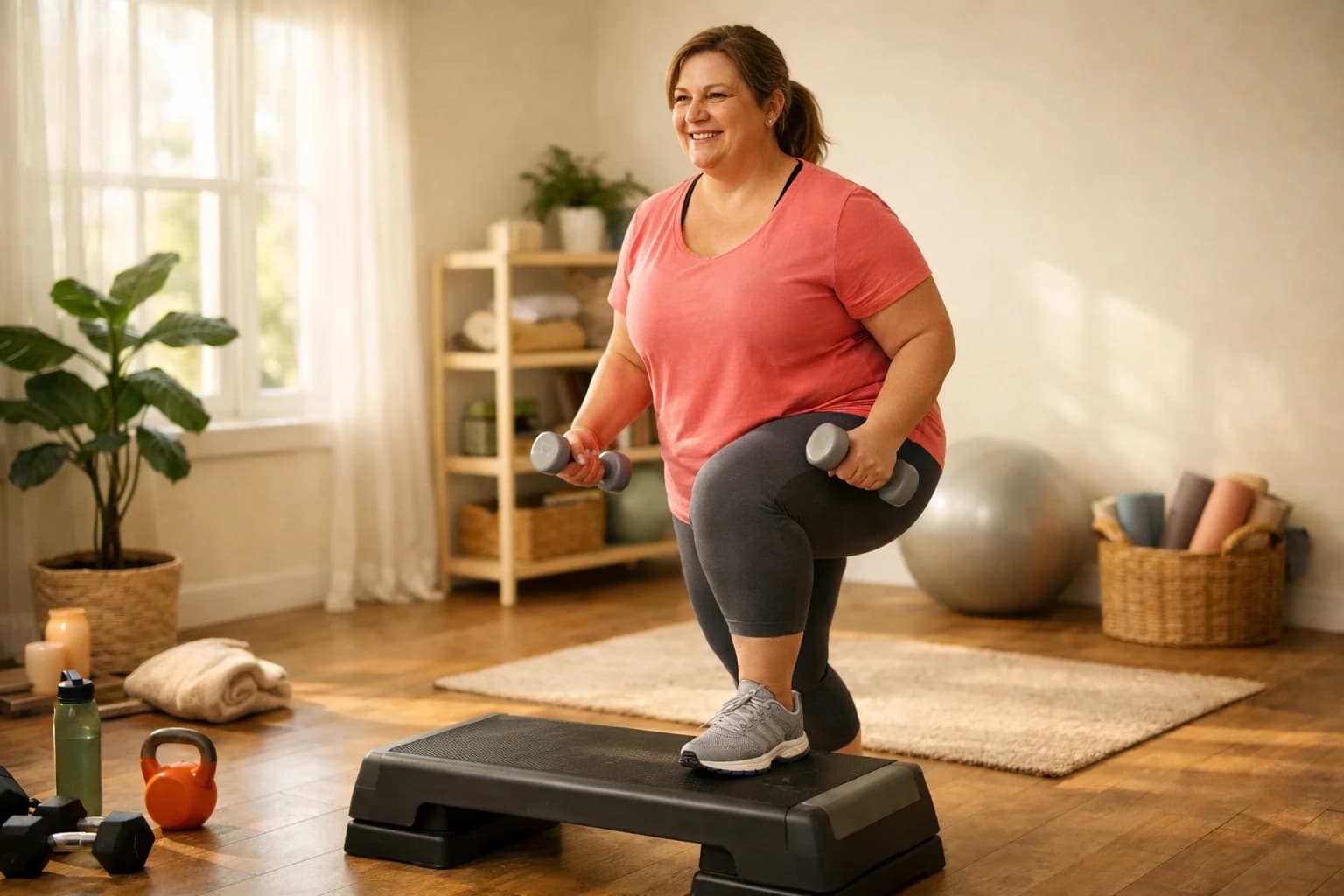
- basic strength training with body weight, bands, or light dumbbells
- short mobility sessions that make walking feel better, not harder
High-impact workouts are not morally superior. If your ankles, knees, hips, or low back hate them right now, they are the wrong starting point.
For some Duluth adults, walking indoors in winter is the easiest first step. If that is you, indoor walking in Duluth, MN is a helpful next read.
Strength training matters earlier than most people think
A lot of people assume they need to lose weight first and lift weights later. In reality, strength training is one of the best tools you can use from the beginning.
It helps because it:
- builds muscle, which supports blood sugar control
- improves joint stability
- makes daily movement easier
- protects bone density
- helps preserve lean mass during weight loss
- often improves confidence faster than cardio alone
You do not need a barbell program on day one. You need a few manageable movements done consistently.
If this is new territory, functional training for beginners over 40, low-impact workouts for beginners over 40, and mobility exercises over 40 in Duluth, MN can help.
A realistic first-month plan for how to start working out when you're overweight
This is where many people finally relax. You do not need six days a week. You do not need to "earn" food. You do not need to collapse on the floor to count it.
Here is a very workable first month.
Week 1
Aim for three days of intentional movement.
Two days can be 10 to 20 minutes of walking, biking, or another low-impact cardio option.
One day can be a simple strength session:
- sit-to-stand from a chair, 2 sets of 6 to 8
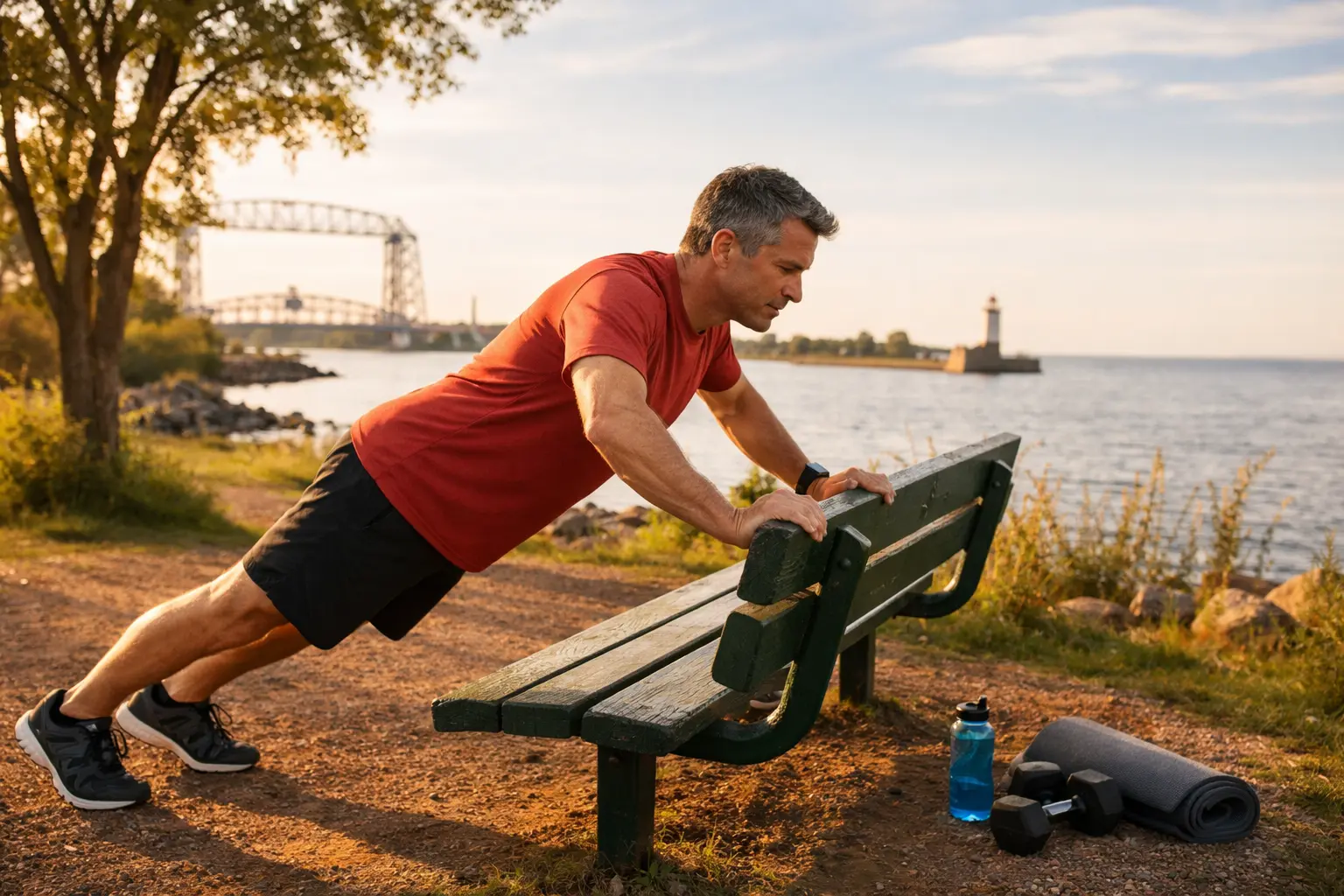
- wall push-ups or incline push-ups, 2 sets of 6 to 8
- band row or seated row, 2 sets of 8 to 10
- farmer carry with light dumbbells, 2 rounds of 20 to 30 seconds
- easy stretching or breathing at the end
That is enough for week one.
Week 2
Keep the same structure, but add a little time if you feel good.
Two cardio days can become 15 to 25 minutes.
One or two strength days can include the same exercises with slightly better range, one extra set, or one or two more reps.
If your joints are talking back loudly, do not "win" by ignoring them. Adjust.
Week 3
Move toward four active days total.
This might mean:
- two low-impact cardio sessions
- two short strength sessions
- walking after meals on one or two days if energy allows
This is often the point when people start to notice ordinary life feeling easier. Stairs feel less dramatic. Getting out of the car feels less clunky. Energy improves a little. That matters.
Week 4
Keep building, but still leave some room in the tank.
You might progress to:
- 20 to 30 minutes of walking or cycling most cardio days
- two strength sessions using slightly more resistance
- one extra short walk for recovery or stress relief
If week four goes well, your next step is not to blow the plan up. It is to keep doing what is working.
How to start working out when you're overweight without obsessing over calorie burn
When people ask how to start working out when you're overweight, they are often secretly asking how to make the scale move fast enough to stay motivated.
That is understandable, but it can sabotage good decisions.
If your whole relationship with exercise is "this only counts if it burns a lot," you will often skip the exact workouts that help most in the beginning. Short walks, beginner strength sessions, mobility work, and low-impact cardio all matter, even when they do not feel dramatic.
What should you look for instead?
Look for signs like:
- less joint stiffness
- easier stairs
- improved mood after workouts
- better sleep
- steadier blood sugar or fewer crashes
- less fear around movement
- more willingness to do it again tomorrow
Those are real outcomes.
What to do if walking hurts
Walking is often presented like a universal answer. It is useful, but it is not automatically comfortable for everyone.
If walking hurts, try asking why.
Is it footwear?
Is it pace?
Is it the surface?
Is it the distance?
Is it that you went from very little movement to too much at once?
Often the fix is not quitting. It is scaling.
You may do better with:
- shorter walking intervals
- softer surfaces
- a recumbent bike on alternate days
- water exercise
- more strength work for hips and legs
- mobility work before and after
This is one reason guided exercise therapy can be so helpful. The right plan can reduce pain while helping you get stronger.
Your workouts should support blood sugar, not just calories out
Exercise is often sold as a way to burn off food. That is a pretty discouraging way to look at it.
A better lens is metabolic support.
Even a moderate walk after meals can help move glucose into muscle. Strength training can improve insulin sensitivity. Building more muscle helps your body handle carbohydrates better over time. That matters if you are dealing with diabetes, weight management, or metabolic syndrome early detection and reversal.
Some patients find this more motivating when they can actually see it. CGM monitoring can show how different workouts affect glucose patterns, which often turns exercise into something more concrete than "supposed to."
Do not try to out-exercise poor recovery
Recovery is part of the plan, especially if you are heavier, more deconditioned, under-slept, or under-muscled.
That means:
- get enough protein
- sleep like it matters
- take soreness as feedback
- do not chase exhaustion
- eat enough to support recovery
- avoid the all-or-nothing weekend warrior trap
If protein intake has been low for a while, protein requirements over 40 is worth reading. If energy is poor across the board, why am I always tired may help connect the dots.
What if you feel embarrassed in gyms?
That is common, and you are not weak for feeling it.
A lot of people do better starting at home, walking outdoors, using a small training space, or working with a coach who understands larger bodies and beginners. The goal is not to force yourself into the most intimidating environment available. The goal is to remove enough friction that you can keep showing up.
Eventually you may want a gym. Or you may not. Either way, the most important thing is that the plan feels usable.
FAQ
What is the best exercise to start with if you're overweight?
Usually low-impact movement plus beginner strength training works best. Walking, cycling, pool exercise, and simple resistance work are common starting points.
How often should I work out as a beginner?
Most beginners do well starting with three days of intentional movement per week, then building gradually from there.
Should I lose weight before lifting weights?
No. Strength training is often one of the best things to start early because it improves muscle mass, stability, bone health, and blood sugar control.
What if my knees hurt when I exercise?
Scale the movement. Shorter walks, different surfaces, lower-impact cardio, and targeted strength work can all help. Joint pain does not always mean you should stop moving entirely.
How long should beginner workouts be?
Ten to twenty minutes is enough to start. Consistent short sessions beat ambitious plans you cannot recover from.
The bottom line
If you are wondering how to start working out when you're overweight, start by dropping the idea that your first month needs to be heroic.
It does not.
It needs to be doable. It needs to protect your joints, support your energy, build some strength, and leave you willing to come back. That is what creates real momentum.
If you want help building a movement plan around your body, your symptoms, and your schedule, contact Duluth Metabolic. We can help you pair exercise, recovery, nutrition, and accountability in a way that feels realistic and actually lasts.