If you are searching for anti-inflammatory foods for plantar fasciitis, you are probably looking for anything that might take the edge off that sharp heel pain. Fair enough. Plantar fasciitis can make the first steps in the morning miserable. It can also turn walking, workouts, yard work, and normal daily errands into a constant reminder that something is not right.
Food is not the only answer, but it can be part of the answer. What you eat affects inflammation, recovery, body weight, blood sugar, and tissue healing. Those things matter when your foot is irritated and slow to calm down.
If heel pain has made movement harder, it can also help to read strength training with bad knees over 50, workout recovery over 40, and why do my joints ache all the time.
Can food really help plantar fasciitis?
Yes, but it helps to keep the claim honest.
Food will not replace supportive shoes, smart activity changes, calf mobility, foot strength, or a good rehab plan. Still, nutrition can lower the background inflammation that keeps recovery slow. It can also support healthy tissue repair and make it easier to manage one big aggravating factor for plantar fasciitis, extra load on the foot.
If your meals are heavy on refined carbs, sugary drinks, fried food, and low-quality snacks, your body has a harder time calming inflammation. If your meals are built around protein, produce, healthy fats, and steady blood sugar, recovery tends to get more support.
Why plantar fasciitis tends to linger
The plantar fascia is a strong band of tissue that helps support the arch of the foot. When it gets irritated, the pain often feels worst with those first few steps after getting out of bed or standing up after rest.
It can flare from overuse, sudden training increases, poor footwear, long hours on your feet, tight calves, weak feet and hips, or extra body weight. Sometimes the problem is not one big injury. It is a lot of small stress stacked on top of not enough recovery.
That is where anti-inflammatory eating becomes useful. It helps the body recover better between those repeated daily stressors.
The best anti-inflammatory foods for plantar fasciitis
The best plan is not a miracle food. It is a pattern.
Fatty fish
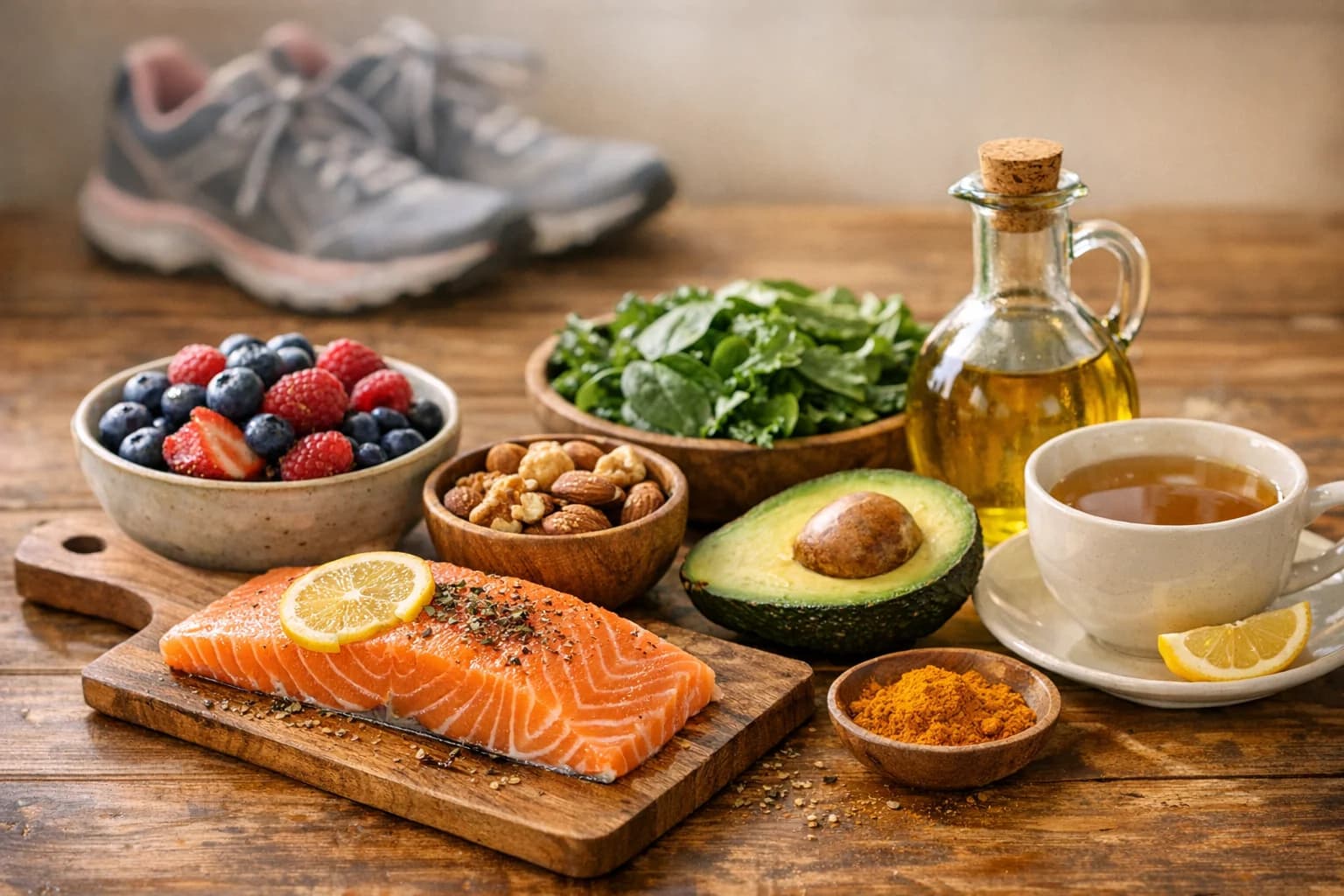
Salmon, sardines, trout, and mackerel bring omega-3 fats that can help support a healthier inflammatory response. If you like local fish meals, keep preparation simple. Grilled, baked, or pan-seared works better than breaded and fried.
Berries and deeply colored fruit
Blueberries, cherries, raspberries, and blackberries bring antioxidants that help support tissue repair. Cherries can be especially useful for active adults who also deal with workout soreness.
Leafy greens and colorful vegetables
Spinach, kale, arugula, broccoli, red cabbage, bell peppers, and carrots support recovery because they bring vitamins, minerals, and plant compounds the body uses during healing.
This is one reason articles like anti-inflammatory foods for joint pain, anti-inflammatory foods for back pain, and anti-inflammatory foods for blood sugar control overlap so much.
Extra-virgin olive oil, avocado, nuts, and seeds
These foods bring healthy fats that fit well into an anti-inflammatory pattern. Walnuts, chia seeds, pumpkin seeds, and almonds also add magnesium, which can support muscle function and recovery.
Protein-rich foods
Protein is easy to overlook in pain and injury conversations, but it matters. Your body needs enough protein to repair stressed tissue and support strength. Eggs, Greek yogurt, chicken, turkey, fish, cottage cheese, tofu, and protein smoothies can all help.
If protein intake has been low, protein requirements over 40 and post-workout meals for women over 40 are useful next reads.
Herbs and spices that make meals better, not weirder
Turmeric, ginger, cinnamon, garlic, and rosemary can all fit into a solid anti-inflammatory eating pattern. You do not need to turn every meal into a supplement experiment. Just use them consistently in normal cooking.
Foods that can keep heel pain more flared up
No food is morally bad, but some foods make recovery harder when they become your baseline.
Sugary drinks and heavy dessert habits
Frequent soda, sweet coffee drinks, energy drinks, and dessert-heavy evenings can drive more blood sugar instability and inflammation.
Ultra-processed snack foods
Chips, pastries, packaged sweets, and fast-food sides are easy to overeat and usually bring very little recovery value.
Refined carb overload
White bread, crackers, snack bars, and low-protein grab-and-go foods can leave people undernourished while still feeling inflamed and hungry.
Fried foods as a routine
An occasional order of fries is not the whole problem. The issue is when fried food becomes a regular part of the weekly pattern and crowds out better recovery foods.
A simple day of anti-inflammatory foods for plantar fasciitis
This does not need to be complicated.
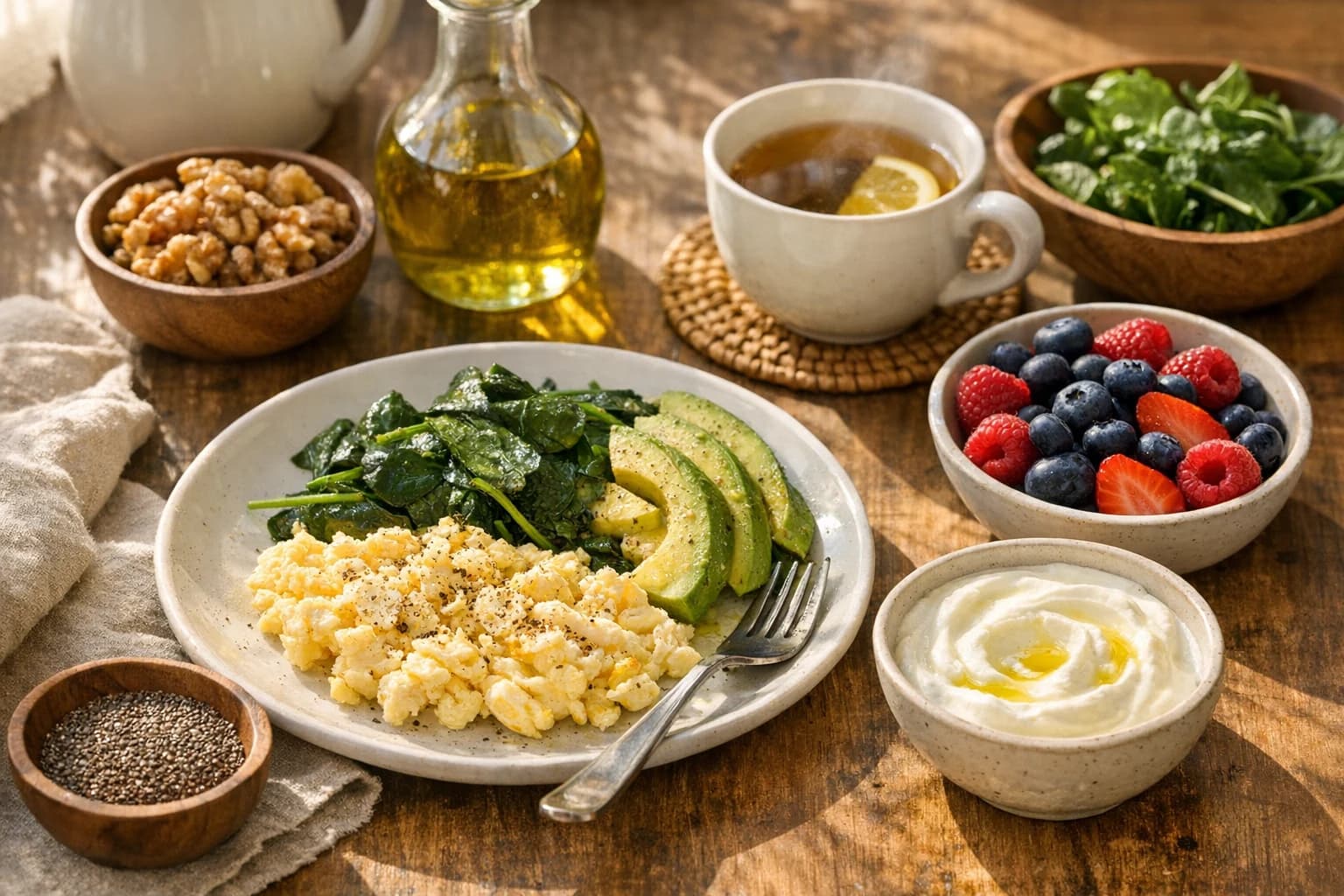
Breakfast could be Greek yogurt with berries, chia seeds, and walnuts, or eggs with spinach and a side of fruit. Lunch might be a salmon salad, leftover chicken bowl, or a turkey wrap with plenty of vegetables. Dinner could be grilled fish or chicken, roasted vegetables, and a potato or rice portion that fits your activity level. Snacks could be cottage cheese, a protein shake, apple slices with almond butter, or a handful of nuts.
That kind of day supports recovery a lot better than coffee for breakfast, random snacks all afternoon, and takeout at night.
What about weight and plantar fasciitis?
This topic deserves honesty and a little compassion.
Extra body weight can increase strain on the plantar fascia. That is mechanically true. It also does not mean you caused your pain or should shame yourself into a crash diet.
The better move is to improve meal quality, stabilize blood sugar, and build an eating pattern that helps recovery while making weight loss easier over time if that is one of your goals. Weight loss in Duluth, MN, meal prep for blood sugar control, and best workout for prediabetes can help from that angle.
Does low-carb eating help plantar fasciitis?
For some people, yes.
A lower-carb or more blood-sugar-friendly pattern can reduce cravings, help with weight management, and improve inflammation when the previous diet was heavy in refined carbs and sugar. That does not mean everyone with plantar fasciitis needs strict keto. It means many people feel better when they build meals around protein, vegetables, healthy fats, and smarter carbs.
If you want practical ideas, low-carb eating in Duluth, MN, low-carb meal prep for busy adults, and blood-sugar-friendly breakfast ideas are a good place to start.
Easy anti-inflammatory shopping ideas in real life
A lot of people do better when they stop thinking in perfect meal plans and start thinking in easy grocery wins.
Keep a few reliable staples around. Frozen berries, bagged greens, rotisserie chicken, Greek yogurt, canned salmon, cottage cheese, baby carrots, apples, olive oil, nuts, and microwaveable rice can go a long way. If your week gets busy, those foods make it easier to put together meals that still support recovery.
This same practical approach shows up in anti-inflammatory grocery shopping in Duluth, MN, low-carb grocery shopping in Duluth, MN, and healthy grocery stores in Duluth, MN.
Nutrition is only one part of the plan
This matters, because people often search food advice when they are desperate and want the fix to be simple.
The strongest recovery plans usually combine several things:
- supportive footwear
- calf and foot mobility
- gradual strength work
- smarter activity choices during a flare
- nutrition that supports healing
- enough sleep and recovery
If pain has kept you less active, exercise therapy and functional training for metabolic health can help you rebuild without making things worse.
When heel pain may need a deeper look
If your pain is severe, keeps getting worse, changes the way you walk, or is not improving after a reasonable stretch of self-care, it is worth getting evaluated. Long-running heel pain can change how the knees, hips, and back move too.
That bigger-body effect is one reason some people with plantar fasciitis also end up dealing with musculoskeletal weakness, poor workout tolerance, or weight gain from moving less.
FAQ: Anti-inflammatory foods for plantar fasciitis
What are the best anti-inflammatory foods for plantar fasciitis?
A good place to start is fatty fish, berries, leafy greens, colorful vegetables, olive oil, avocado, nuts, seeds, and enough protein across the day.
Are there foods I should avoid with plantar fasciitis?
It helps to cut back on sugary drinks, frequent desserts, fried foods, and ultra-processed snack foods if those show up often in your routine.
Can losing weight help plantar fasciitis?
For many people, yes. Less load on the foot can make a real difference. The best approach is a steady, sustainable nutrition plan, not a crash diet.
Should I go low carb for plantar fasciitis?
Not necessarily strict low carb, but many people feel better with fewer refined carbs and more protein, produce, and healthy fats.
Can food alone cure plantar fasciitis?
Usually no. Nutrition helps support healing, but most people also need better footwear, mobility work, strength, and smarter training decisions.
If plantar fasciitis is keeping you from walking, working out, or just getting through the day comfortably, Duluth Metabolic can help you connect the dots between pain, recovery, inflammation, and nutrition. When you are ready for a practical plan, reach out at /contact.