If your joints feel stiff when you get out of bed, sore after a normal day, or cranky every time your activity picks up, it makes sense to wonder whether food could help. A lot of people start looking for anti-inflammatory foods for joint pain after they have already tried to push through it for months. They are tired of feeling older than they should, and they want something practical they can do at home.
That is a reasonable question.
Food will not fix every source of joint pain. Some pain comes from injuries, some from osteoarthritis, some from autoimmune issues, some from low muscle mass, and some from carrying more stress and weight than the body handles well. But what you eat can absolutely affect inflammation, recovery, blood sugar, body composition, and how easy it feels to move through the day.
At Duluth Metabolic, we look at joint pain through a wider lens. Stiff, achy joints are often tied to bigger metabolic patterns like chronic inflammation, poor recovery, low protein intake, insulin resistance, low muscle support, and disrupted sleep. That is why nutrition matters so much. It is not about chasing one miracle food. It is about building a way of eating that gives your body fewer reasons to stay inflamed.
If you want more background, start with chronic inflammation, exercise as medicine, and building bone density after 50.
Why food matters when your joints hurt
When people hear inflammation, they usually picture swelling or redness. But low-grade chronic inflammation can be quieter than that. It can show up as aching, stiffness, slow recovery, puffy hands, sore knees, and the sense that your body is always a little irritated.
Food influences that in a few ways.
First, highly processed foods can make it easier to overeat, harder to control blood sugar, and more likely that inflammatory pathways stay turned up. Second, nutrient-dense foods help support tissue repair, gut health, stable energy, and a healthier immune response. Third, food choices affect body weight, and extra load across the knees, hips, feet, and back matters more than people think.
That does not mean you need a perfect diet. It means your daily pattern matters.
For many adults, joint pain improves when they build meals around protein, fiber, healthy fats, and less processed carbohydrates. That same shift often helps with weight management, high blood pressure, and blood sugar issues that tend to travel with chronic inflammation.
The best anti-inflammatory foods for joint pain
The strongest approach is not a trendy detox. It is a steady pattern built around whole foods that are easier on your system.
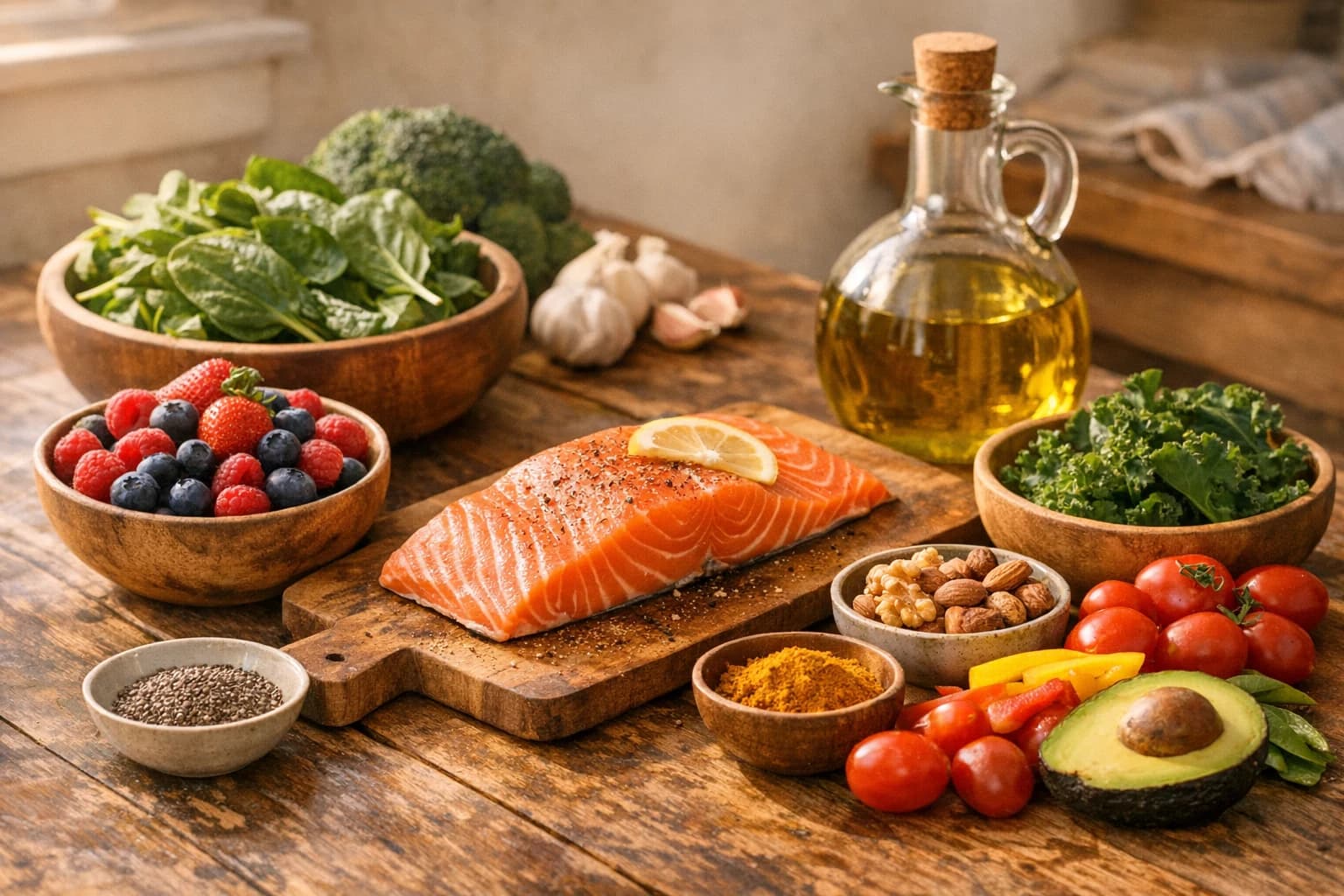
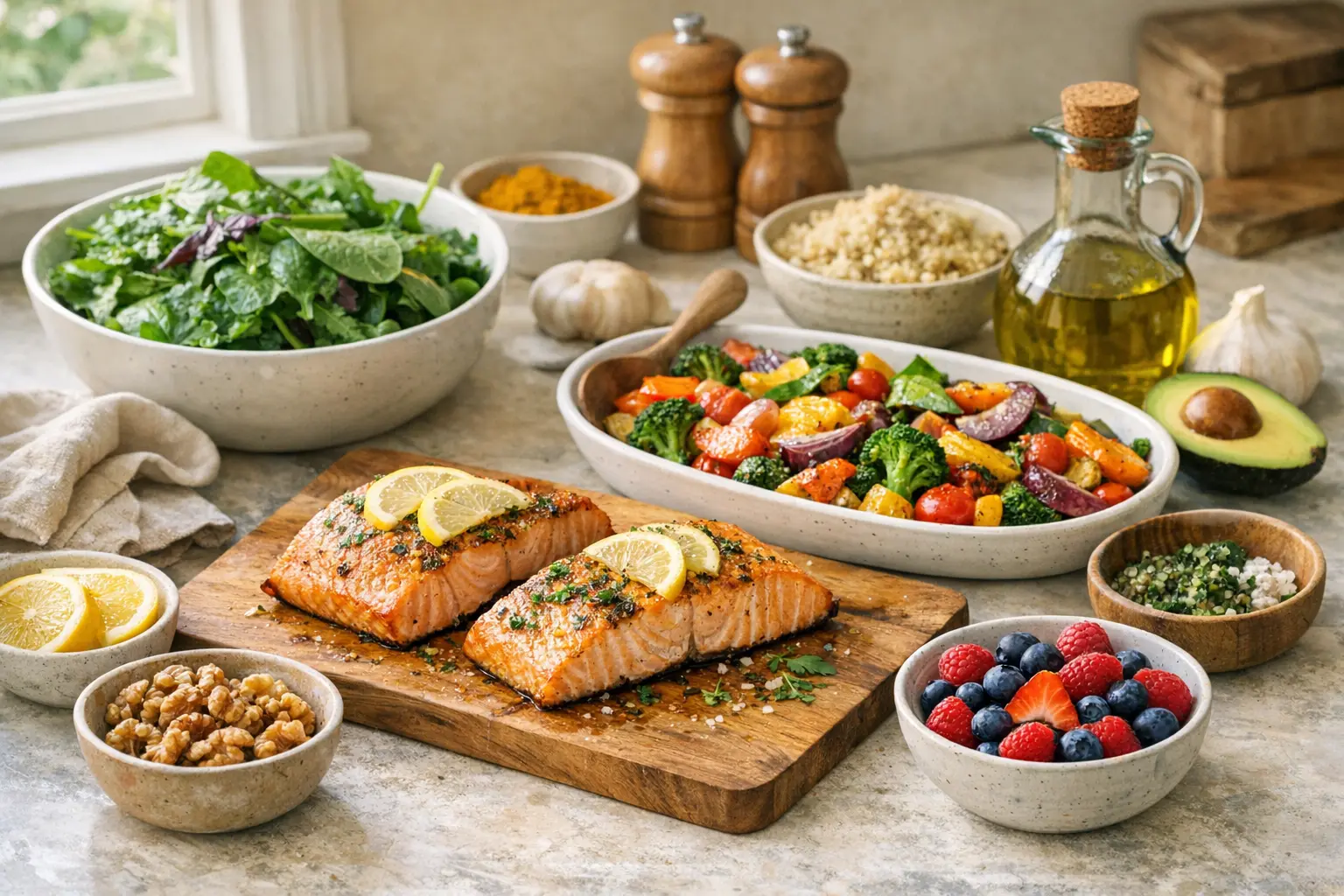
Fatty fish
Salmon, sardines, trout, herring, and mackerel are rich in omega-3 fats, which have been linked with lower inflammation. They can be especially helpful for people who eat very little seafood and get most of their fats from packaged foods.
If fresh fish is not realistic every week, frozen fillets and canned salmon are still solid options. In northern Minnesota, convenience matters. A food does not have to be fancy to be useful.
Colorful vegetables
Leafy greens, broccoli, Brussels sprouts, carrots, bell peppers, cabbage, and cauliflower give you fiber and a wide range of plant compounds that support a healthier inflammatory response. They also help displace the ultra-processed foods that tend to crowd out better options.
If you already know salads are not your thing, do not force a version you hate. Roasted vegetables, soups, sheet-pan meals, and frozen vegetable mixes count.
Berries and cherries
Blueberries, raspberries, strawberries, and tart cherries come up often in anti-inflammatory eating because they are rich in polyphenols and easy to add to real life. They work in yogurt, smoothies, cottage cheese, or alongside breakfast. They are also usually easier to keep around than more delicate fruit.
Olive oil, avocado, nuts, and seeds
These foods provide fats that fit well in an anti-inflammatory eating pattern. Extra virgin olive oil is a good everyday cooking and dressing option. Walnuts, chia seeds, flax, almonds, and pumpkin seeds can round out meals without much effort.
They also help with satiety. When meals are satisfying, you are less likely to end up chasing snack foods that leave you feeling worse.
Beans and lentils, if they work for you
Some people do well with legumes. They provide fiber, minerals, and steady energy. Others feel bloated or uncomfortable with them, especially if gut health is already off. If that is you, it may help to work on your digestive foundation instead of forcing foods that do not sit well right now.
Our articles on gut health foods in Duluth and bloated after eating can help you sort through that.
Herbs and spices
Turmeric, ginger, cinnamon, garlic, rosemary, and oregano will not transform joint pain by themselves, but they are a useful part of the bigger picture. They add flavor without relying on sugary sauces or heavily processed condiments.
Foods that often keep joint pain worse
This is the part people usually know in the abstract but struggle with in real life.
Inflammation-friendly eating is less about a list of forbidden foods and more about noticing which patterns keep your body angry.
The common troublemakers are:
- sugary drinks and coffee-shop calories that spike blood sugar fast
- dessert-as-a-nightly-habit patterns
- ultra-processed snack foods that are easy to overeat
- frequent fast food and fried foods
- refined carbs that dominate meals without enough protein or fiber
- heavy alcohol intake, especially when sleep and recovery are already poor
A lot of people do not need to eliminate these foods forever. They do need to stop letting them be the backbone of the week.
If you already suspect blood sugar swings are part of the issue, CGM monitoring can be eye-opening. Many people notice that the same eating pattern that worsens cravings and energy crashes also seems to leave them more inflamed and achy.
A better way to build meals when you have joint pain
The easiest way to use anti-inflammatory foods for joint pain is to stop thinking in random ingredients and start thinking in meal structure.
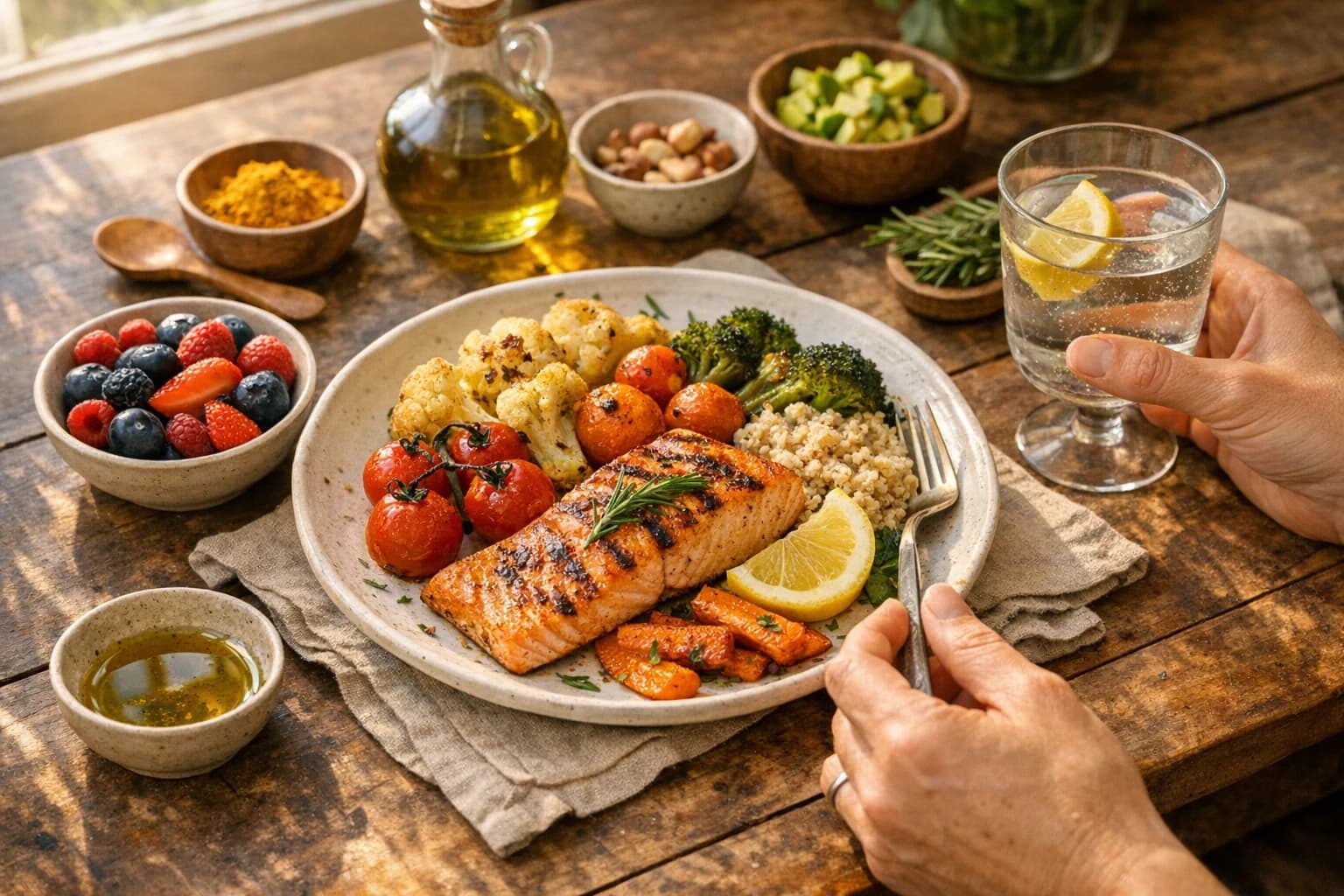
A good basic meal usually includes:
- a solid protein source
- one or two high-fiber plant foods
- a healthy fat
- a carbohydrate portion that fits your body and activity level
That might look like salmon with roasted vegetables and potatoes, Greek yogurt with berries and chia seeds, eggs with sautéed spinach and avocado, or a taco bowl with ground turkey, cabbage slaw, black beans, salsa, and olive oil.
This kind of structure tends to support steadier energy and makes it easier to eat enough protein. That matters because under-muscled bodies often feel more fragile, and stronger bodies usually tolerate life better.
If muscle support is part of the story, protein requirements over 40 and strength training for women over 40 in Duluth are worth reading next.
Joint pain is not only about food
This matters.
A better diet can help, but if your joints hurt because your body is deconditioned, sleep deprived, stressed, inflamed, and under-recovered, you need more than a grocery list.
Joint pain is often worse when:
- you sit most of the day
- your muscles are weak
- your sleep is poor
- your stress stays high
- your blood sugar is all over the place
- you keep doing weekend-warrior exercise after inactive weekdays
That is why a root-cause approach usually works better than trying to out-supplement the problem.
For some people, smart movement is the missing piece. If you are avoiding activity because you feel stiff, weak, or worried about making things worse, exercise therapy can help you rebuild in a way that feels safe and realistic.
What anti-inflammatory eating can look like in Duluth
You do not need California produce and a personal chef.
A realistic Duluth version might include frozen berries, salmon or canned fish, eggs, plain Greek yogurt, rotisserie chicken, olive oil, potatoes, oats, carrots, apples, cabbage, leafy greens, nuts, and whatever vegetables you will actually cook. In colder months, soups, stews, sheet-pan dinners, and higher-protein breakfasts tend to work better than forcing cold meals all day.
If eating well feels harder in winter, you are not alone. Darkness, stress, lower activity, and comfort-food habits all stack up. That is one reason a plan matters more than motivation.
Our guides to anti-inflammatory grocery shopping in Duluth, healthy restaurants in Duluth, and recovery in Duluth can make this easier in real life.
When to look deeper
Sometimes joint pain is a food-and-lifestyle issue. Sometimes it is a clue that you need a more complete workup.
It is worth looking deeper if you also deal with:
- unexplained fatigue
- swelling that seems out of proportion
- morning stiffness that drags on
- recurring digestive symptoms
- low mood or poor sleep
- sudden changes in weight
- brittle nails, hair changes, or feeling cold all the time
Those patterns can overlap with nutrient deficiencies, autoimmune activity, hormone issues, poor blood sugar control, or other metabolic problems.
That is where biomarker testing can help. If you have ever been told your labs are fine but your body keeps saying otherwise, articles like labs normal but feel terrible and why am I always tired may sound familiar.
FAQ
What are the best anti-inflammatory foods for joint pain?
The best starting points are fatty fish, colorful vegetables, berries, olive oil, nuts, seeds, and minimally processed protein sources. Most people do best when they focus on an overall eating pattern instead of searching for one miracle ingredient.
How long does it take for diet changes to help joint pain?
Some people notice less stiffness and better energy within a few weeks. Bigger changes usually come from consistent habits over a longer stretch, especially when nutrition is paired with better sleep, movement, and recovery.
Should I cut out gluten or dairy for joint pain?
Maybe, but not automatically. Some people feel better with targeted changes. Others get no benefit and just end up with a harder diet to sustain. It usually makes more sense to improve the overall quality of the diet first, then test specific changes if symptoms suggest they are worth exploring.
Can sugar make joint pain worse?
For some people, yes. A high-sugar pattern can worsen blood sugar swings, increase inflammation, and make weight gain more likely, all of which can affect how joints feel.
Is weight loss the main answer for joint pain?
Not always. Weight can matter, especially for load-bearing joints, but stronger muscles, better food quality, improved sleep, and steadier blood sugar often matter too. The best plan is the one that addresses the whole picture.
Eat in a way that gives your body a better chance
The goal with anti-inflammatory foods for joint pain is not to eat perfectly. It is to eat in a way that gives your joints, muscles, and metabolism a better chance to recover.
If you are tired of feeling stiff, achy, or inflamed and you want a more personal plan, contact Duluth Metabolic. We can help you connect nutrition, testing, movement, and accountability so your body feels more supported and daily life feels easier again.