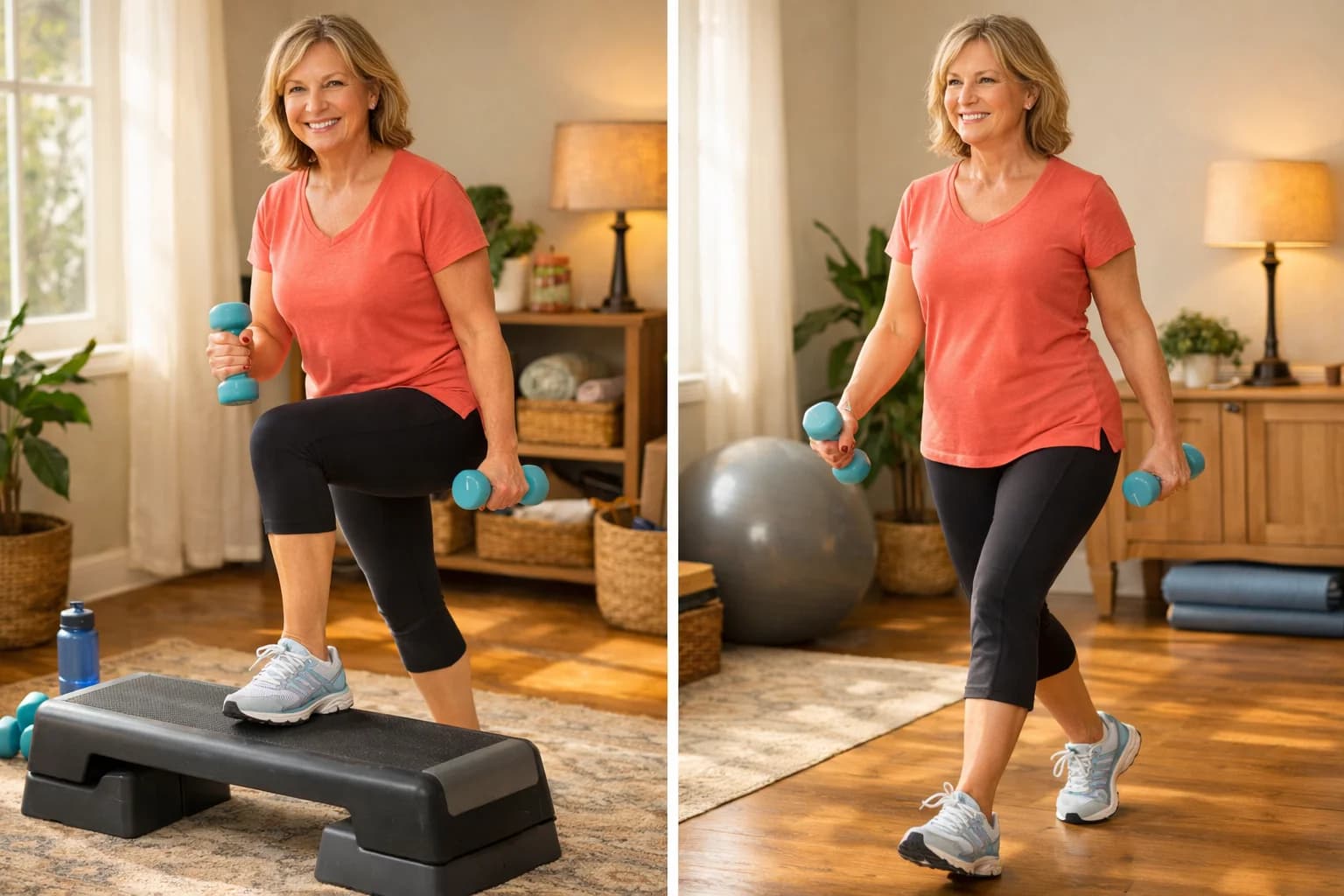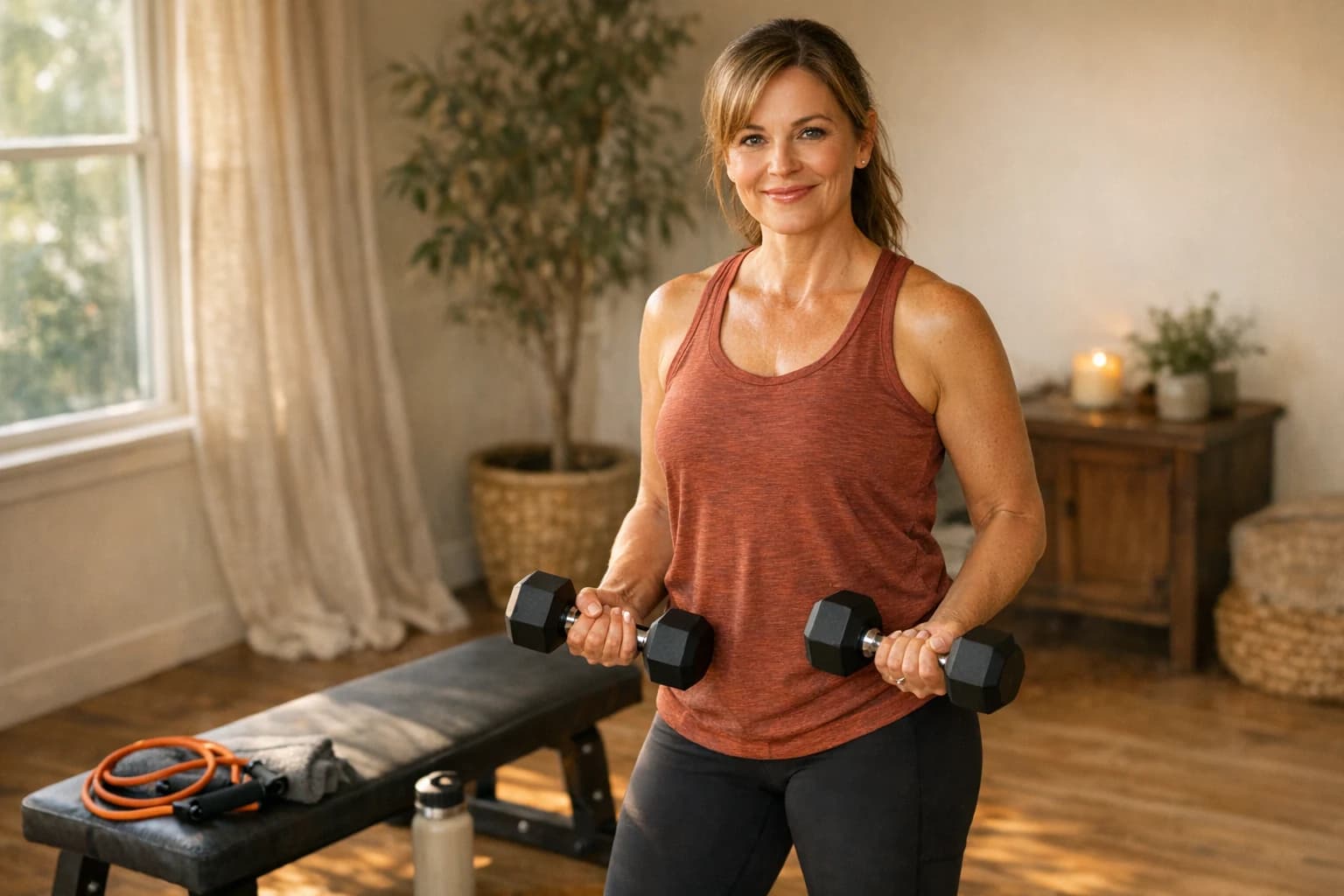
A lot of adults assume bad knees mean they should stop strength training. Usually, the opposite is closer to the truth. The right kind of strength training with bad knees over 50 can improve stability, reduce fear, help daily movement feel easier, and support long-term metabolic health. The problem is not always that people are moving. The problem is usually that they are doing the wrong exercises, too much too soon, or no strength work at all.
If your knees hurt, it makes sense to be cautious. Nobody wants to leave a workout feeling worse than when they walked in. But avoiding strength work altogether can make the situation harder. When your quads, glutes, hamstrings, calves, and hips get weaker, the knee often has to deal with more stress instead of less.
At Duluth Metabolic, we think about this in a bigger frame. Muscle protects function. Strength improves confidence. Better movement supports weight management, blood sugar control, and energy. If you already know you need a gentler starting point, it also helps to read low-impact workouts for beginners over 40, mobility exercises over 40 duluth mn, and functional training for beginners over 40.
Why strength training with bad knees over 50 matters
As we get older, we lose muscle if we do not actively keep it.
That matters for knee comfort because strong muscles act like support staff for the joint. Your knee is not supposed to do all the work alone. It depends on the rest of the system.
When people stop moving because of pain, a few things often happen:
- the quads weaken
- hips lose strength and control
- balance gets worse
- stair climbing gets harder
- walking tolerance drops
- weight gain becomes easier
- confidence falls fast
That is one reason knee pain can start changing daily life beyond the joint itself. People stop hiking, stop training, stop walking hills, and stop trusting their legs. Over time, that can feed musculoskeletal weakness, rising blood pressure, fatigue, and lower resilience.
What causes knee pain in adults over 50?
There is no single answer.
Some people have osteoarthritis. Some are dealing with old injuries, meniscus irritation, tendon pain, weak glutes, poor ankle mobility, or training mistakes. Some do too much impact work and not enough strength work. Others do nothing for months and then try to jump into squats, lunges, and stairs all at once.
That is why a good program starts with your actual situation, not a random online workout.
If your knee is hot, swollen, locking, giving way, or painful enough to change your gait, that needs medical evaluation. But many people with chronic “bad knees” can still train well once the plan is adjusted.
The goal is not zero sensation. The goal is better tolerance.
This is one of the most helpful mindset shifts.
A lot of adults think exercise only counts as safe if they feel absolutely nothing. Real life is messier than that. Mild discomfort does not always mean damage. At the same time, pushing through sharp pain is a bad plan.
A better standard is this: your workout should not create a major pain spike during the session or leave you significantly worse for the next day or two.
That means you start where your knees can succeed, then build from there.
Best principles for strength training with bad knees over 50
Start with movements you can control
Control matters more than intensity at first. That might mean a box squat instead of a deep squat, a supported split squat instead of a free-standing lunge, or step-ups to a low box instead of a tall bench.
Train the hips and glutes hard enough
Weak hips often show up as knee irritation. Glutes help control leg position and absorb force. If your knees are doing all the work, your training plan is missing something.
Use a smaller range of motion before a bigger one
You do not need to earn your workout by going all the way down. Partial squats, sit-to-stands, and short step-ups can be great starting tools.
Progress slowly
Your knees usually do not need a heroic week. They need consistent weeks.
Keep walking if you can tolerate it
Walking supports circulation, joint nutrition, mood, and metabolic health. For many adults, pairing strength work with regular walks works better than chasing intense cardio.
That is especially true if you are also working on lower blood pressure without medication or zone 2 training for beginners over 40.
Good exercises for strength training with bad knees over 50
The best exercises are the ones your knees tolerate while the surrounding muscles get stronger.
Sit-to-stands from a chair or box
This is one of the best beginner movements because it trains a squat pattern without asking for a deep range of motion. Use a taller surface at first if needed.
Supported squats
Hold onto a rail, TRX straps, or a sturdy post and sit back into the movement. Support lets you train the legs without dumping everything into the knees.
Step-ups to a low platform
Low step-ups build strength for daily life. Start low enough that you can stay controlled and avoid crashing down.
Romanian deadlifts
These shift more work into the hips and hamstrings. They can be a great choice for people who want leg work without a lot of knee irritation.
Glute bridges and hip thrusts
Strong glutes help everything. These are usually knee-friendly and easy to progress.
Hamstring curls
Machines, bands, or sliders can help strengthen the back of the leg, which supports the knee.
Calf raises
Your calves matter for walking, stairs, and force transfer. They get overlooked all the time.
Terminal knee extensions
These can help some people reconnect with the quads in a very tolerable range.
Carries
Farmer carries and suitcase carries build full-body strength, trunk control, and gait confidence without a lot of knee strain.
Exercises that are not always wrong, but may need modification
Deep squats
Deep squats are not automatically bad. They just may not be the right starting point.
Lunges
Lunges can be excellent later. Early on, they may need support, reduced depth, or a split squat setup.
Jumping and fast direction changes
These are usually not first-line choices for irritated knees over 50, especially if strength and stability are not there yet.
Long downhill sessions
Many adults tolerate uphill walking better than downhill descents. If hiking aggravates your knees, the descent may be the real issue.
A sample week of strength training with bad knees over 50
Here is a realistic example for someone rebuilding.
Day 1
- sit-to-stand, 3 sets
- Romanian deadlift, 3 sets
- supported step-up, 2 to 3 sets
- calf raise, 2 to 3 sets
- easy walk, 10 to 20 minutes
Day 2
- walk or bike at an easy pace
- light mobility
- gentle recovery work
Day 3
- supported squat, 3 sets
- glute bridge, 3 sets
- hamstring curl, 2 to 3 sets
- suitcase carry, 3 rounds
- easy walk
Day 4
- rest or an easy movement day
Day 5
Repeat the first or second session with slight progress if your knees tolerated the week well.
That progress could be a little more load, one extra set, a slightly lower box, or just cleaner reps. It does not need to be dramatic.
How body weight and metabolic health affect your knees
This part gets missed in a lot of knee articles.
Your knees do not live in isolation from the rest of your health. Poor sleep, chronic inflammation, insulin resistance, lower muscle mass, and weight gain can all affect how your joints feel and how well you recover.
That does not mean knee pain is your fault. It means there are more levers to pull.
People often do better when exercise is paired with work on anti-inflammatory foods for joint pain, what is metabolic health, and exercise as medicine. Better fuel plus better training often beats either one alone.
When to stop and get checked
Strength training with bad knees over 50 should feel manageable, not reckless.
Pause and get evaluated if you notice:
- swelling that keeps returning
- locking or catching
- the knee giving out
- pain that sharply worsens with exercise
- major loss of motion
- pain after injury that is not improving
The point is not to scare you. It is to separate ordinary training discomfort from something that needs a closer look.
FAQ about strength training with bad knees over 50
Can I strength train if I have arthritis in my knees?
Usually yes, and many people should. Strength training often helps reduce symptoms by improving support around the joint. The key is choosing tolerable exercises and progressing carefully.
Are squats bad for bad knees?
Not automatically. Squats may need to be modified by using a box, reducing depth, slowing the tempo, or adding support. Many adults can squat in some form even if they cannot tolerate deep or loaded squats yet.
What is the best exercise for bad knees over 50?
There is no single best exercise, but sit-to-stands, supported squats, glute bridges, Romanian deadlifts, step-ups, and walking are often strong starting points.
Should I avoid walking if my knees hurt?
Not necessarily. Many people feel better with appropriate walking. The dose matters. Flat, shorter walks may work better than long downhill routes or sudden mileage jumps.
How often should I strength train?
Two to three sessions per week is a good starting point for many adults. More is not always better when your knees are still adapting.
Stronger legs can mean a bigger life
A lot of adults over 50 are not trying to become gym people. They want to walk stairs without bracing, get off the floor without dreading it, carry groceries, travel, hike around Duluth, and trust their bodies again.
That is a worthy goal.
If your knees have made exercise feel confusing or intimidating, Duluth Metabolic can help you build a plan around your current ability, your pain patterns, and your bigger health goals. If you want help with strength, stability, and a realistic path forward, contact us.