If you are searching for an anti-inflammatory meal plan for arthritis, there is a good chance your body has been talking to you for a while. Maybe your hands feel stiff in the morning. Maybe your knees ache after a normal day. Maybe you are tired of hearing “that is just aging” when you know something feels off.
Food will not solve every kind of joint pain, but it can absolutely affect inflammation, energy, recovery, body composition, and how your joints feel from one week to the next. That is why a practical anti-inflammatory meal plan for arthritis can be so helpful. It gives you something real to do instead of just waiting and hoping your body settles down on its own.
A lot of top-ranking articles for this keyword follow the same pattern. They give you a seven-day plan, a list of anti-inflammatory foods, and broad reminders to eat more fish, vegetables, and olive oil. That is useful as far as it goes. The problem is that many of those articles are either very generic or built around meals that do not feel realistic for busy adults. This version is meant to be more grounded. If you want more background first, start with anti-inflammatory foods for joint pain, chronic inflammation, strength training with arthritis over 50 in Duluth MN, and why do my joints ache all the time.
What competitor meal plans usually do, and what they miss
The current top-ranking pages for this topic are pretty predictable.
Joint Pain Authority uses a Mediterranean-style weekly plan with a simple shopping-list approach. EatingWell leans into a seven-day rheumatoid arthritis plan with recipes and polished nutrition framing. Season Health adds dietitian language, background on rheumatoid arthritis, and a more clinical meal-plan structure.
Those pages do a few things well. They make the topic feel organized. They give people a starting point. They lean on foods that have decent evidence behind them.
Where they often fall short is daily life.
They do not always account for someone who is cooking for a family, grabbing lunch at work, living in northern Minnesota, or trying to support joint comfort without turning food into a second job. They also do not spend much time on the overlap between inflammation, blood sugar, body weight, muscle support, and recovery.
That overlap matters a lot.
What an anti-inflammatory meal plan for arthritis should actually accomplish
The goal is not perfection. The goal is fewer reasons for your body to stay irritated.
A helpful meal plan for arthritis usually does a few things.
It raises protein enough to support muscle and recovery. It brings in more colorful produce, healthy fats, and fiber. It cuts down the ultra-processed foods that tend to make overeating easier. It steadies blood sugar instead of sending it up and down all day. It also stays realistic enough that you can repeat it.
This matters because joint pain is rarely just about joints. It often travels with weight management struggles, poor sleep, stress, low activity, low muscle mass, and sometimes blood sugar issues that show up before someone ever gets a formal diagnosis.
If your joint pain comes with fatigue, puffy mornings, or the sense that your whole system feels inflamed, biomarker testing can help you look beyond “everything is normal.”
The foods that usually help most
You do not need a miracle food. You need a stronger weekly pattern.
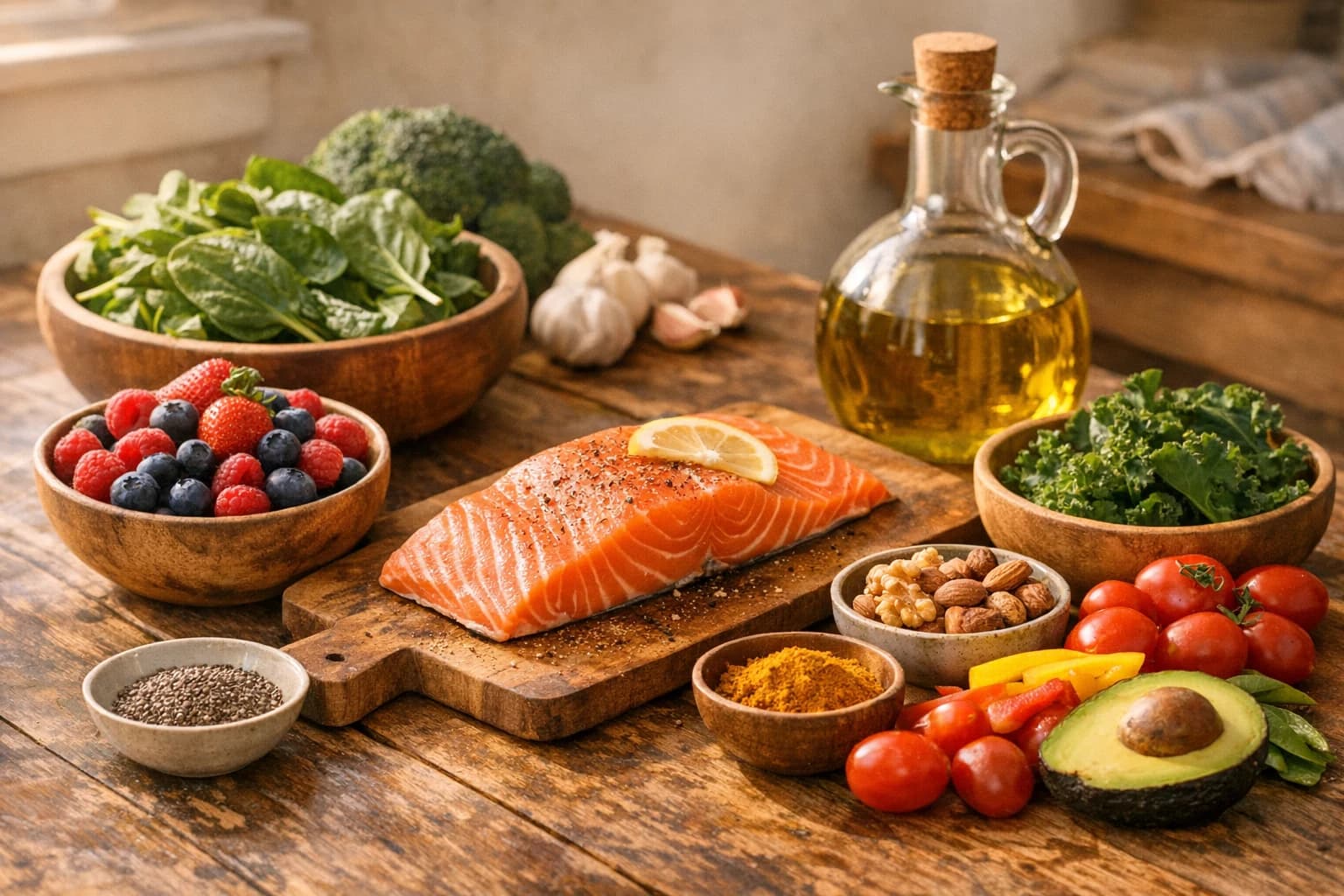
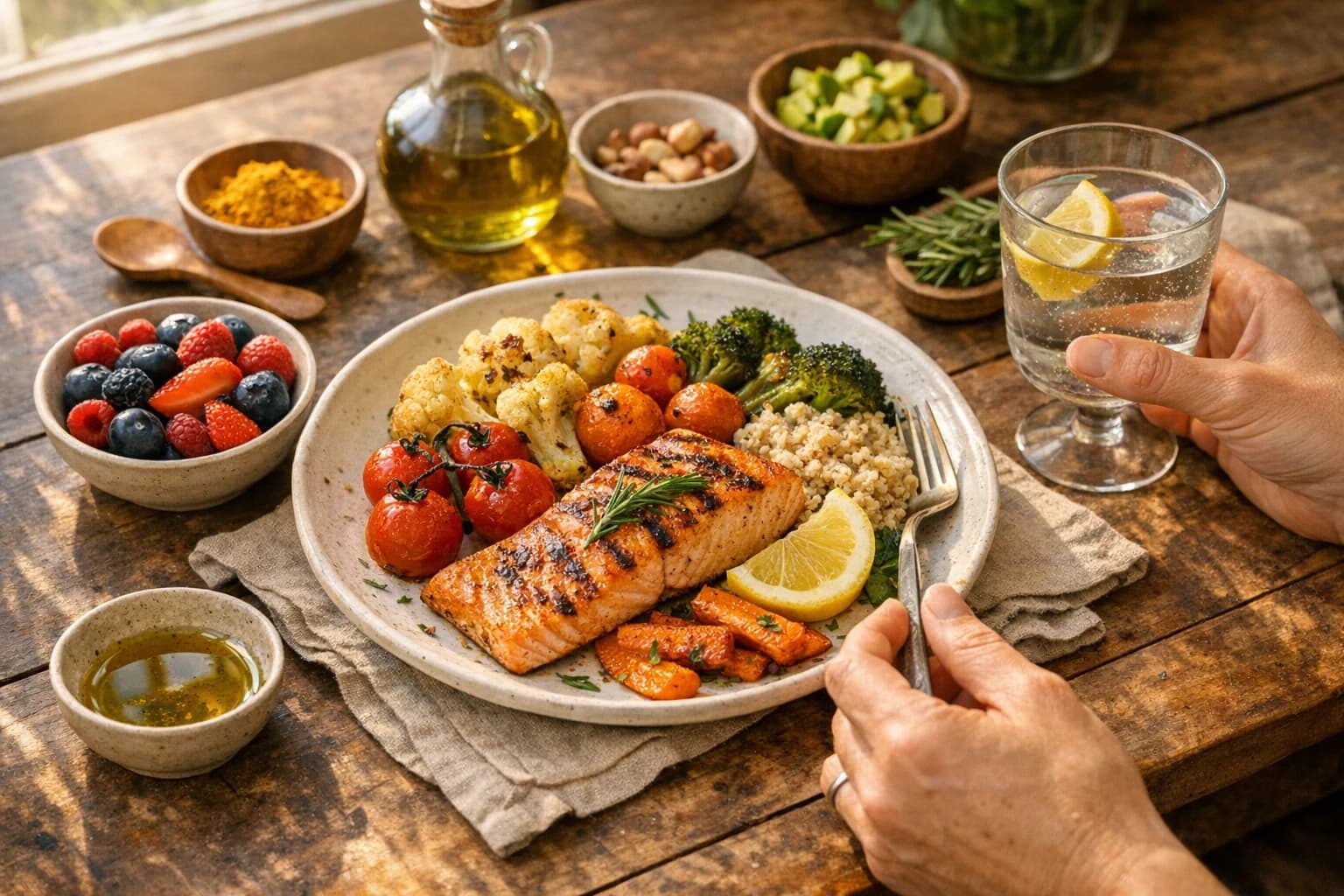
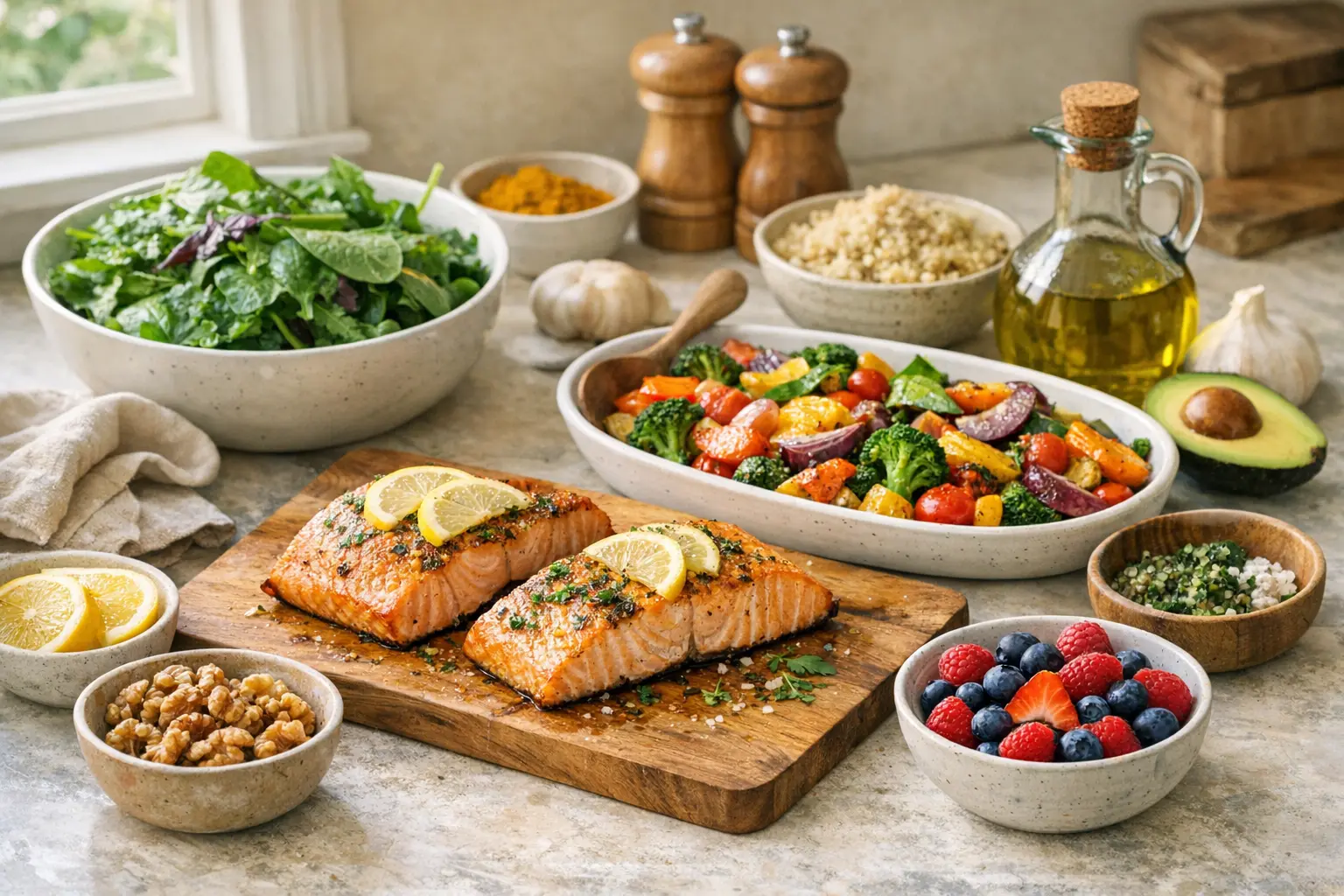
Most people do well when meals center around fish, eggs, Greek yogurt, chicken, berries, leafy greens, cruciferous vegetables, beans if tolerated, olive oil, nuts, seeds, herbs, spices, and less processed starches. Canned salmon, frozen vegetables, rotisserie chicken, soups, sheet-pan meals, and leftovers count.
A lot of arthritis diet articles overcomplicate this. The pattern is more important than the recipe collection.
Foods that often keep the cycle going
The usual problem foods are not surprising.
Sugary drinks, frequent desserts, fried fast food, heavily processed snacks, and meals that are mostly refined carbs can keep hunger, blood sugar, and inflammation feeling louder. Alcohol can also make recovery and sleep worse, which tends to show up in the joints too.
That does not mean you need to be strict forever. It means your baseline matters more than your exceptions.
A practical anti-inflammatory meal plan for arthritis
This sample week is meant to be useful, not fancy. Adjust portions to your appetite and goals. If certain foods bother your gut, swap them. If you need easier meals, simplify.
Day 1
Breakfast can be plain Greek yogurt with blueberries, walnuts, chia seeds, and cinnamon. This gives you protein, fiber, and a simple anti-inflammatory base without much work.
Lunch can be a salmon salad with mixed greens, cucumber, cherry tomatoes, pumpkin seeds, olive oil, and lemon. Add fruit on the side if you want a little more.
Dinner can be sheet-pan chicken thighs with broccoli, cauliflower, and roasted sweet potato. Use olive oil, garlic, and rosemary for flavor.
A snack could be apple slices with almond butter or cottage cheese with berries.
Day 2
Breakfast can be eggs scrambled with spinach and mushrooms, plus half an avocado.
Lunch can be leftover chicken over greens with olive oil dressing, or a quick grain bowl with chicken, roasted vegetables, and a moderate scoop of quinoa if that works well for you.
Dinner can be baked salmon with asparagus and a side of wild rice. That works especially well in Minnesota because it feels familiar and easy to repeat.
A snack could be carrots and hummus, or a handful of walnuts with a piece of fruit.
Day 3
Breakfast can be a protein smoothie with unsweetened milk, berries, spinach, chia, and protein powder or Greek yogurt.
Lunch can be turkey lettuce wraps with cucumber, bell pepper, and a side of soup.
Dinner can be turkey meatballs with sautéed zucchini, marinara, and roasted vegetables.
A snack could be plain yogurt with flax or hard-boiled eggs.
Day 4
Breakfast can be overnight oats if you tolerate oats well, made with chia, cinnamon, berries, and Greek yogurt for more protein.
Lunch can be tuna salad over greens or stuffed into mini peppers or lettuce cups.
Dinner can be a stir-fry with chicken or shrimp, broccoli, snap peas, cabbage, and ginger over cauliflower rice or a smaller serving of regular rice.
A snack could be celery with peanut butter or cottage cheese with cherries.
Day 5
Breakfast can be eggs, smoked salmon, and sliced tomatoes.
Lunch can be leftover stir-fry or a hearty salad with chicken, avocado, olives, and vegetables.
Dinner can be turkey chili with beans if tolerated, topped with avocado and served with a side salad.
A snack could be a pear with almonds.
Day 6
Breakfast can be cottage cheese with berries, hemp seeds, and cinnamon.
Lunch can be grilled chicken with roasted vegetables and a side salad.
Dinner can be burgers without the usual fast-food structure, served with roasted vegetables, slaw, or salad instead of automatically turning into fries and a bun-heavy meal.
A snack could be edamame, boiled eggs, or Greek yogurt.
Day 7
Breakfast can be a vegetable omelet with onions, peppers, mushrooms, and a side of fruit.
Lunch can be soup and a salad with chicken or salmon.
Dinner can be baked cod or trout with green beans, a big salad, and roasted potatoes or squash.
A snack could be berries and dark chocolate, or apple slices with walnuts.
Why this anti-inflammatory meal plan for arthritis tends to work better than random healthy eating
Structure matters.
When people are trying to eat “better,” they often bounce between being overly strict and completely winging it. That usually turns into low-protein breakfasts, random snack meals, takeout when they are tired, and too many moments where hunger makes the decision.
This kind of meal plan works better because it repeats a few useful building blocks.
Protein at each meal. Produce most of the day. Fats that help with satiety. Fewer giant sugar hits. Enough flexibility that real life can still happen.
It also supports more than arthritis. This pattern often helps high blood pressure, energy swings, recovery from exercise, and the general “I feel puffy and inflamed all the time” problem.
What to do if arthritis and gut symptoms show up together
This is common.
A lot of people dealing with joint pain are also bloated, constipated, or uncomfortable after meals. When that is happening, a meal plan copied from the internet may not land very well. Beans, huge salads, or certain grains may sound healthy but still leave you miserable.
That does not mean anti-inflammatory eating is not for you. It means your gut may need some attention too.
If that sounds familiar, read functional medicine for bloating in Duluth MN, gut health foods in Duluth MN, and why am I bloated after every meal.
What if you want lower-carb anti-inflammatory meals instead
That can work too.
A lot of people feel better with a lower-carb version of this plan, especially if blood sugar swings and cravings are part of the picture. In that case, build around protein, vegetables, olive oil, nuts, seeds, berries, yogurt, eggs, and fish, with a more intentional amount of rice, bread, dessert, and snack foods.
If you want ideas in that direction, anti-inflammatory diet in Duluth MN, low-carb eating in Duluth MN, and meal plan for insulin resistance are solid next reads.
FAQ about an anti-inflammatory meal plan for arthritis
What is the best diet for arthritis?
There is no single arthritis diet that works for everyone, but Mediterranean-style and whole-food anti-inflammatory patterns have the strongest research support. Many people do well with more fish, olive oil, vegetables, berries, nuts, seeds, and less ultra-processed food.
How long does it take to notice a difference?
Some people notice less puffiness or more stable energy within a couple of weeks. Joint changes often take longer. Four to six weeks of a steadier pattern usually tells you more than a few “good” days.
Should I avoid all sugar if I have arthritis?
You do not need perfection, but frequent sugary foods and drinks can make it harder to manage inflammation, hunger, and blood sugar. It helps to lower the overall load instead of treating every day like a special occasion.
Can this kind of meal plan help osteoarthritis too?
Yes, it can. Food will not reverse structural joint changes, but it can support inflammation, body weight, energy, and recovery, which all matter when you are trying to move better and hurt less.
What if I also need to lose weight?
That is common. An anti-inflammatory meal pattern often supports weight loss because it improves fullness and cuts down on the ultra-processed foods that are easy to overeat. If you need more support, nutrition coaching and accountability coaching can help.
Food will not do everything, but it can change a lot
If your joints feel stiff, achy, and older than the rest of you, it makes sense to want something practical. This is one of those places where a better weekly rhythm can actually matter.
You do not need a flawless kitchen routine. You need meals that lower the noise in your system and give your body more support.
If you want help building a plan around joint pain, inflammation, blood sugar, and real life, Duluth Metabolic can help. You can contact us to talk through what has been going on and what kind of support would fit best.