If you have been searching for an anti-inflammatory meal plan for menopause, there is a good chance you are not only trying to eat healthier. You are probably trying to feel like yourself again.
A lot can shift in midlife. Sleep gets lighter. Belly weight starts showing up faster. Recovery changes. Alcohol hits harder. Blood sugar swings feel bigger. Mood can feel less steady. Many women get told this is just aging and they should try to tolerate it.
That answer is not very helpful.
Food will not solve every menopause symptom by itself, but the right pattern can make a real difference. At Duluth Metabolic, we see this all the time. When meals support blood sugar, protein intake, inflammation control, and muscle retention, people often feel more stable, less snacky, and less inflamed. For extra context, it helps to read menopause metabolic health hormone optimization, foods for hormone balance over 40, and gut health menopause.
Why an anti-inflammatory meal plan for menopause helps
Menopause is not only about estrogen getting lower.
It often comes with changes in insulin sensitivity, sleep, body composition, appetite signals, and stress response. That is why women can feel like the same habits that worked at 32 suddenly do nothing at 48.
An anti-inflammatory meal plan for menopause helps because it tends to focus on the exact things midlife bodies often need more of:
- protein to support muscle and satiety
- fiber to support blood sugar and digestion
- color and variety for micronutrients and phytonutrients
- healthy fats for satisfaction and metabolic support
- steadier meals that reduce the crash-crave-repeat cycle
That does not mean the plan needs to be rigid. It means it needs to be built around real physiology instead of generic diet culture advice.
The goals of a good anti-inflammatory meal plan for menopause
Most women do not need a more extreme plan. They need a more useful one.
A helpful meal pattern during menopause usually aims to:
- reduce blood sugar spikes and energy crashes
- support muscle so metabolism does not drift downward
- lower the reliance on processed convenience food
- improve fullness after meals
- make digestion more predictable
- support heart and bone health over time
This is especially important for women dealing with hormone imbalance, weight management, or mood symptoms connected to the gut-brain connection and mood.
What to eat more often
The most helpful menopause nutrition advice is usually less glamorous than social media makes it sound.
It comes back to basics.
Protein at every meal
Protein matters more than many women realize. It helps with fullness, supports muscle mass, and usually makes blood sugar more stable.
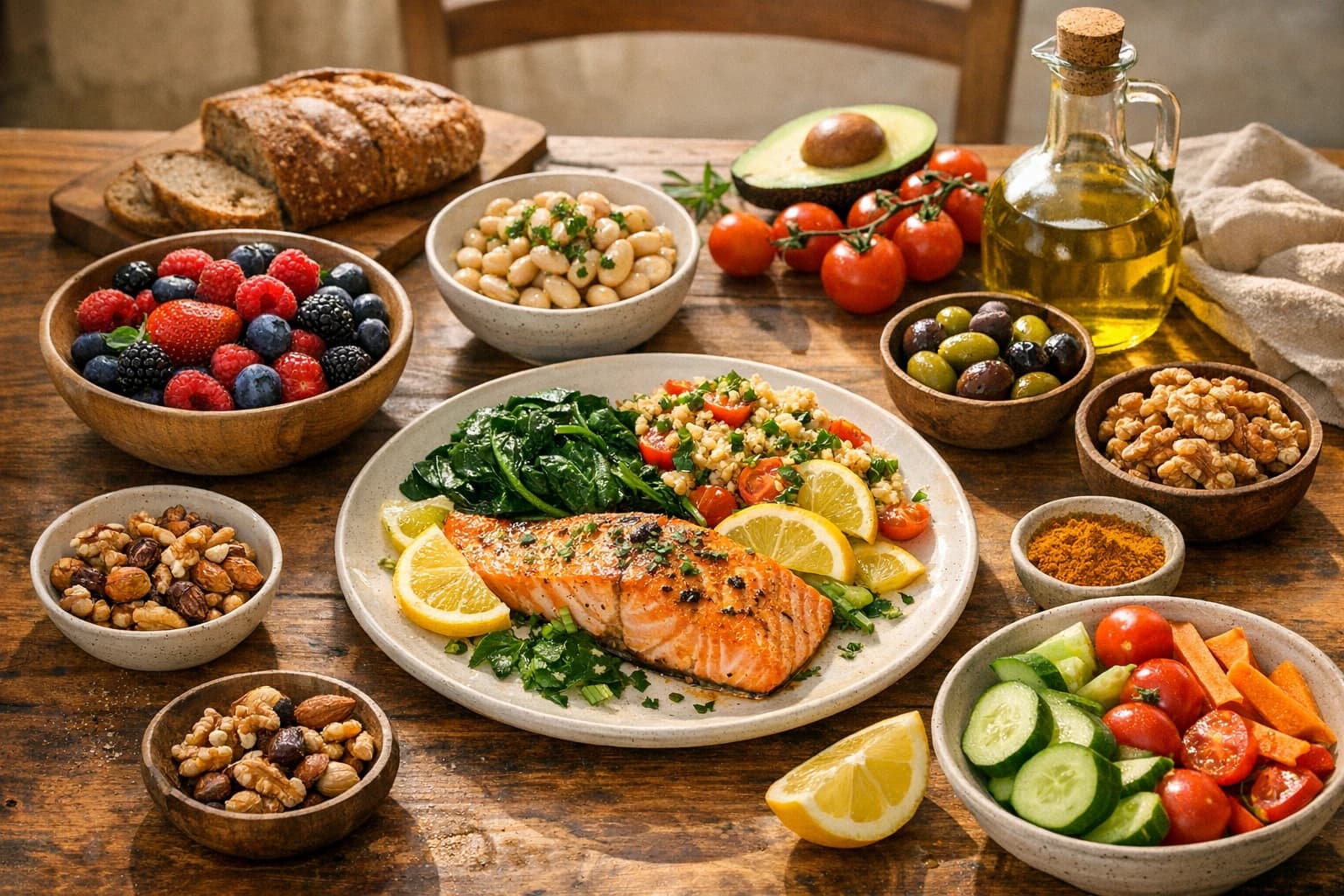
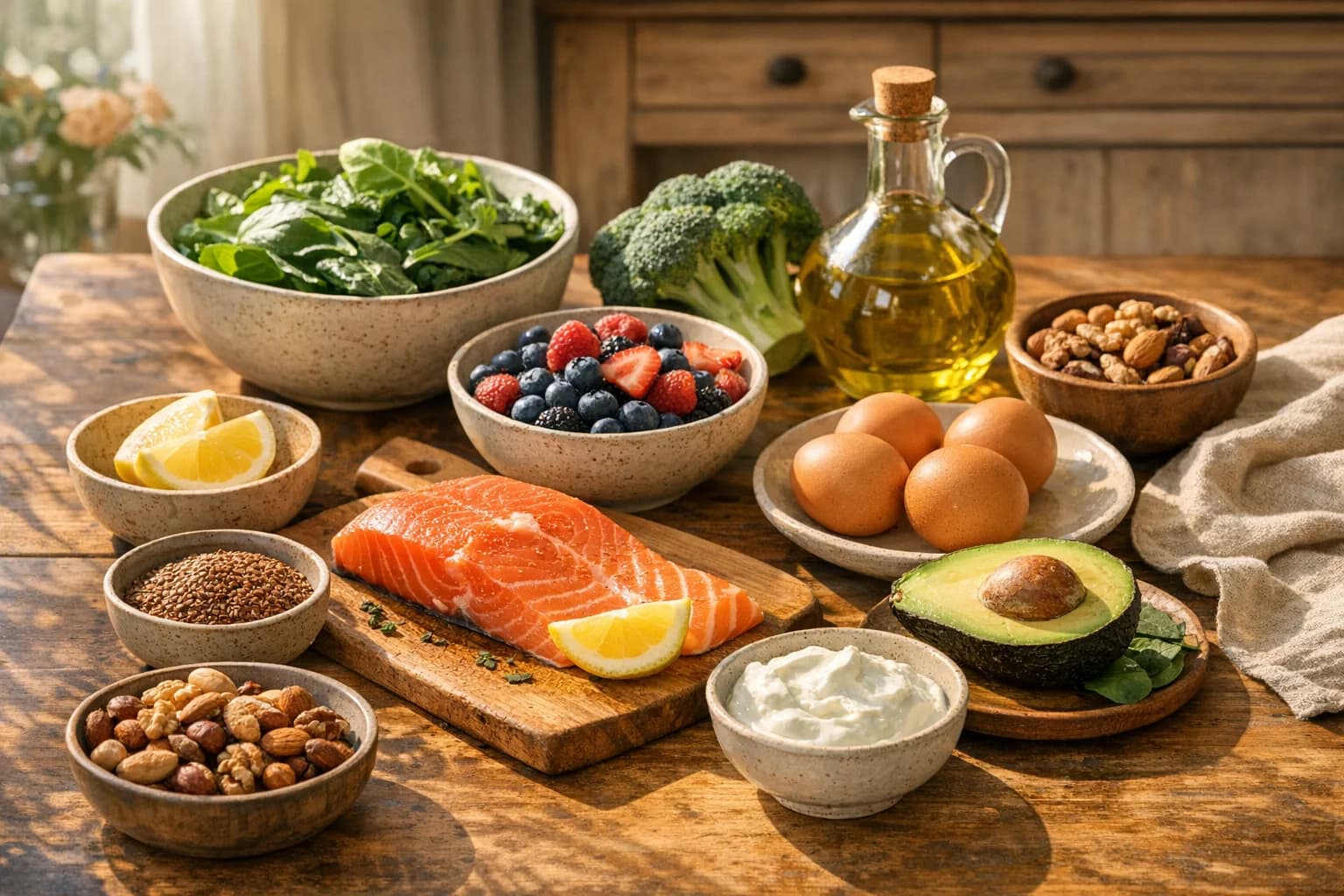
Good options include eggs, Greek yogurt, cottage cheese, chicken, salmon, tuna, turkey, tofu, tempeh, edamame, and well-tolerated beans or lentils.
If this is an area you know you underdo, protein requirements over 40 and protein after workout for women over 40 are useful next reads.
Fiber-rich produce
Vegetables, berries, apples, chia seeds, flax, and legumes can all help. Fiber supports gut health, fullness, and a slower glucose response.
Healthy fats
Olive oil, avocado, nuts, seeds, olives, and fatty fish help meals feel satisfying. When women slash fat and carbs at the same time, they often end up hungry and frustrated.
Anti-inflammatory flavor builders
Turmeric, ginger, garlic, cinnamon, herbs, lemon, and vinegars can make simple meals taste much better while supporting the overall anti-inflammatory pattern.
What to eat less often
This part matters too, but it is not about panic.
The foods that tend to make menopause symptoms harder are usually the ones that drive big glucose swings, poor sleep, water retention, or cravings:
- sugary drinks and regular dessert habits
- pastries, crackers, chips, and heavily processed snack foods
- meals that are mostly refined carbs and very little protein
- alcohol most nights of the week
- giant restaurant portions that leave you overfull and sleepy
For some women, highly processed foods also aggravate bloating, skin issues, or joint pain. If that is part of your picture, anti-inflammatory foods for menopause and anti-inflammatory diet in Duluth MN may help you connect the dots.
A practical anti-inflammatory meal plan for menopause
Here is a realistic week, not a fantasy meal prep spreadsheet.
Day 1
Breakfast: Greek yogurt with berries, chia seeds, walnuts, and cinnamon
Lunch: Salmon salad with greens, cucumber, olives, tomatoes, and olive oil vinaigrette
Dinner: Chicken thighs, roasted broccoli, and cauliflower mash
Snack if needed: Apple with almond butter
Day 2
Breakfast: Two eggs, sautéed greens, and cottage cheese
Lunch: Leftover chicken over a grain-light veggie bowl with tahini sauce
Dinner: Turkey chili with peppers, onions, tomatoes, and avocado
Snack if needed: Plain Greek yogurt or a handful of nuts
Day 3
Breakfast: Protein smoothie with unsweetened milk, berries, flax, spinach, and protein powder
Lunch: Tuna salad lettuce wraps with cut vegetables
Dinner: Salmon, green beans, and roasted radishes or sweet potato if tolerated well
Snack if needed: Edamame or cheese with cucumbers
Day 4
Breakfast: Cottage cheese bowl with berries, pumpkin seeds, and cinnamon
Lunch: Leftover chili and a side salad
Dinner: Stir-fry with shrimp or chicken, cabbage, mushrooms, peppers, and ginger-garlic sauce
Snack if needed: Hard-boiled eggs
Day 5
Breakfast: Veggie omelet with avocado
Lunch: Chicken salad bowl with mixed greens and olive oil dressing
Dinner: Burger bowl with sautéed onions, pickles, tomato, lettuce, and roasted vegetables
Snack if needed: Chia pudding or berries with whipped cottage cheese
Day 6
Breakfast: Overnight chia and Greek yogurt bowl
Lunch: Leftover burger bowl or soup with extra protein
Dinner: Sheet-pan salmon or chicken sausage with Brussels sprouts and cauliflower
Snack if needed: Dark chocolate and nuts if that works for you
Day 7
Breakfast: Eggs and smoked salmon with fruit
Lunch: Lentil or bean-based soup paired with chicken or eggs for extra protein
Dinner: Taco bowls with ground turkey, lettuce, salsa, avocado, and sautéed peppers
Snack if needed: Roasted chickpeas or a protein-forward snack plate
How to adapt an anti-inflammatory meal plan for menopause to real life
This is where most plans fall apart. They sound fine on paper and impossible in practice.
A few adjustments make them much more usable.
Repeat meals on purpose
You do not need seven completely different dinners. Rotating three or four dependable meals lowers stress and makes grocery shopping easier.
Build around protein first
When you are tired, start there. Ask yourself what the protein is, then fill in the rest.
Keep emergency food around
Midlife women are often juggling work, family, and unpredictable schedules. If you only have perfect-meal ingredients, you will end up ordering whatever is easiest. Keep backup options like Greek yogurt, eggs, tuna packets, chicken sausage, frozen vegetables, and simple soups.
Eat enough
Under-eating all day and overeating at night is common in women who are "trying to be good." It usually makes symptoms worse. Better breakfast and lunch structure often leads to better evenings.
Menopause, inflammation, and blood sugar are tightly connected
This part gets missed a lot.
Many women think their symptoms are purely hormonal when blood sugar instability is also part of the picture. If meals are heavy on refined carbs and light on protein, you may feel more irritable, foggy, hungry, and tired. Sleep can feel worse too.
That is one reason CGM monitoring can be surprisingly helpful in midlife. It gives women real information about how their body responds, rather than guessing. We also often pair nutrition changes with exercise therapy, because muscle is one of the best tools you have for improving glucose handling.
When to look deeper than food
An anti-inflammatory meal plan for menopause can help a lot, but sometimes it is not the whole answer.
If you are eating fairly well and still dealing with severe fatigue, major weight resistance, palpitations, poor sleep, or worsening mood, it may be worth looking at labs, thyroid markers, iron status, insulin resistance, or broader hormone patterns.
That is where biomarker testing and a more personalized review can matter. Articles like thyroid TSH not enough, high fasting insulin normal A1C, and labs normal but feel terrible often resonate with women in this phase.
FAQ about an anti-inflammatory meal plan for menopause
What is the best anti-inflammatory meal plan for menopause?
The best plan is one you can repeat. In most cases, that means meals built around protein, produce, healthy fats, and steadier carbs, rather than extreme restriction.
Can an anti-inflammatory meal plan help with menopause weight gain?
It can help by improving fullness, supporting muscle, and reducing blood sugar swings that can drive overeating. It is often more effective than low-calorie grazing or skipping meals.
Do I need to cut out all carbs during menopause?
No. Many women do better with a more balanced, blood-sugar-friendly approach rather than trying to eliminate every carb. The bigger issue is usually processed carbs without enough protein or fiber.
What foods make menopause inflammation worse?
Common culprits include sugary drinks, pastries, heavily processed snacks, frequent alcohol, and meals that spike blood sugar and leave you hungry again soon after.
Should I follow the same plan if I also have insulin resistance?
The overall pattern is often similar, but the details may matter more. Women with insulin resistance may benefit from more structured protein intake, tighter meal timing, and individualized support.
If menopause has made your body feel unfamiliar, you do not need to figure it out alone. Duluth Metabolic can help you connect food, symptoms, blood sugar, and hormones into a plan that makes sense for your real life. If you want help, contact us.