Looking for anti-inflammatory foods for menopause usually starts with something simple. You feel puffier than you used to. Your joints ache for no clear reason. Sleep feels lighter. Weight settles around the middle. You eat the way you always have, but your body responds differently.
That shift is real.
During menopause and the years leading up to it, hormone changes can affect insulin sensitivity, body composition, sleep, mood, appetite, and inflammation. That does not mean food needs to become stressful. It does mean nutrition may need to get more intentional.
At Duluth Metabolic, we like practical changes that lower friction. That might mean building better breakfasts, improving protein intake, reducing ultra-processed foods, and using meals to support steadier blood sugar. If this topic is already hitting home, you may also want to read signs your hormones are off, perimenopause weight gain and insulin resistance, and foods for hormone balance over 40.
Why inflammation feels different during menopause
Inflammation is not always dramatic. Often it feels like accumulation.
You recover slower. You wake up stiff. Your rings fit tighter. Cravings get louder when sleep gets worse. Blood sugar gets less forgiving. That is part of why anti-inflammatory foods for menopause matter. They help address the background environment your body is living in every day.
Estrogen helps influence insulin sensitivity, vascular health, and body fat distribution. As estrogen changes, some women notice more blood sugar swings, more belly fat, and more joint discomfort. Poor sleep and chronic stress can add to the problem.
This is one reason menopause support should not focus only on calories. Metabolic health matters here too. Our pages on hormone therapy and insulin resistance in menopause, cgm and menopause blood sugar, and sleep and metabolic health connect the dots.
What anti-inflammatory eating actually means
It is easy to hear “anti-inflammatory” and imagine a long list of banned foods. That is not how we approach it.
Anti-inflammatory eating usually means more foods that support stable blood sugar, gut health, nutrient density, and recovery, while pulling back on foods that drive more cravings and more volatility.
For most women in menopause, that looks like:
- enough protein at each meal
- more colorful produce
- omega-3 rich foods
- high-fiber carbohydrates in portions that work for your body
- fewer sugary drinks and ultra-processed snacks
- meals that keep you full instead of chasing energy all day
The best anti-inflammatory foods for menopause
Fatty fish
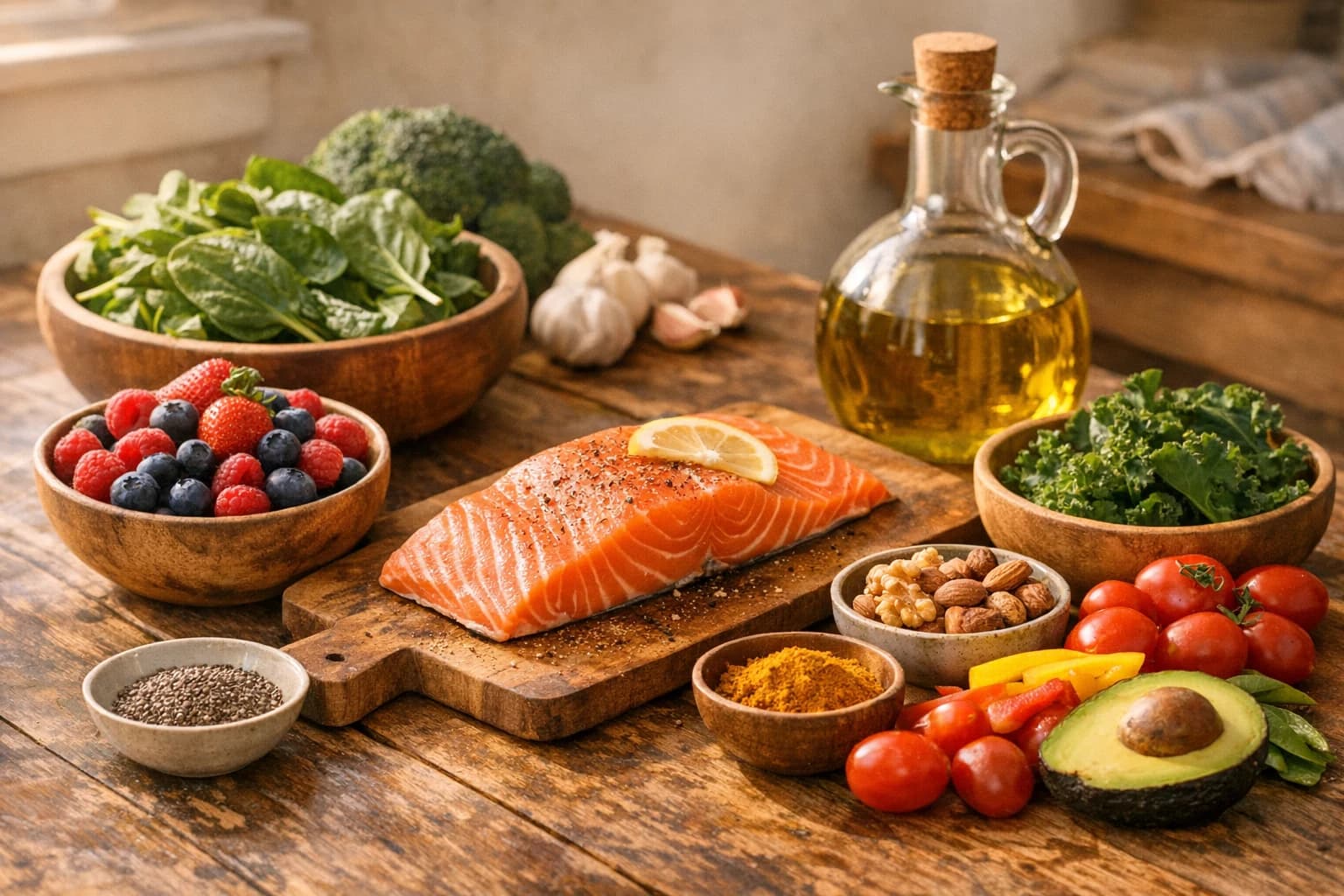
Salmon, sardines, trout, and mackerel provide omega-3 fats that can support cardiovascular health and help offset the low-grade inflammation many women notice in midlife. Fish also gives you protein, which helps with muscle retention and fullness.
That matters, because muscle becomes more important with age for blood sugar control, strength, and long-term independence.
Berries and deeply colored fruit
Berries offer fiber and polyphenols without the blood sugar punch of many desserts and snack foods. They are easy to add to Greek yogurt, cottage cheese, or a blood sugar friendlier breakfast.
If you want more meal ideas, anti-inflammatory breakfast ideas in Duluth is a helpful place to start.
Leafy greens and cruciferous vegetables
Spinach, kale, arugula, broccoli, cauliflower, Brussels sprouts, and cabbage offer fiber, minerals, and compounds that support overall health. They also make meals bigger without making them blood sugar chaotic.
For women working on high blood pressure or weight management, this matters a lot.
Olive oil, avocado, nuts, and seeds
These foods help with satiety and meal balance. They are not magic, but they do help meals feel more satisfying and less likely to trigger a rebound snack hunt an hour later.
Seeds like chia and flax can be especially useful for fiber. Walnuts and almonds are simple options for snacks or breakfast add-ins.
Fermented and gut-supportive foods
Yogurt with live cultures, kefir, sauerkraut, kimchi, and other fermented foods can support gut health. That does not mean everyone needs a giant probiotic protocol. It just means your digestive system and your hormones do not live in separate worlds.
If bloating, cravings, or irregular digestion are part of your picture, see gut health foods in Duluth and gut-brain connection and mood.
Beans, lentils, and intact whole-food carbs
Some women feel best with lower-carb eating. Others do well with moderate portions of fiber-rich carbs. Beans, lentils, quinoa, and oats can work very differently from pastries, crackers, and sweetened cereal.
The question is not whether a food is trendy. The question is whether it leaves you steady.
Protein-rich staples
Eggs, Greek yogurt, cottage cheese, chicken, turkey, fish, tofu, and lean beef can all fit. Protein helps preserve muscle and often improves energy stability. That is especially important in menopause, when low protein intake can quietly worsen body composition and recovery.
Protein requirements over 40 goes deeper on this.
Foods that often make symptoms harder
Again, this is not about perfection. It is about pattern recognition.
Many women notice they feel worse with:
- sugary drinks
- grazing on snack foods all day
- heavy alcohol intake
- large refined-carb meals without protein
- desserts as a routine late-night habit
- highly processed foods that are easy to overeat
These foods can increase cravings, worsen sleep, intensify hot-flash triggers for some people, and make weight changes feel more confusing.
How to build anti-inflammatory foods for menopause into a real day of eating
This does not need to be elaborate.
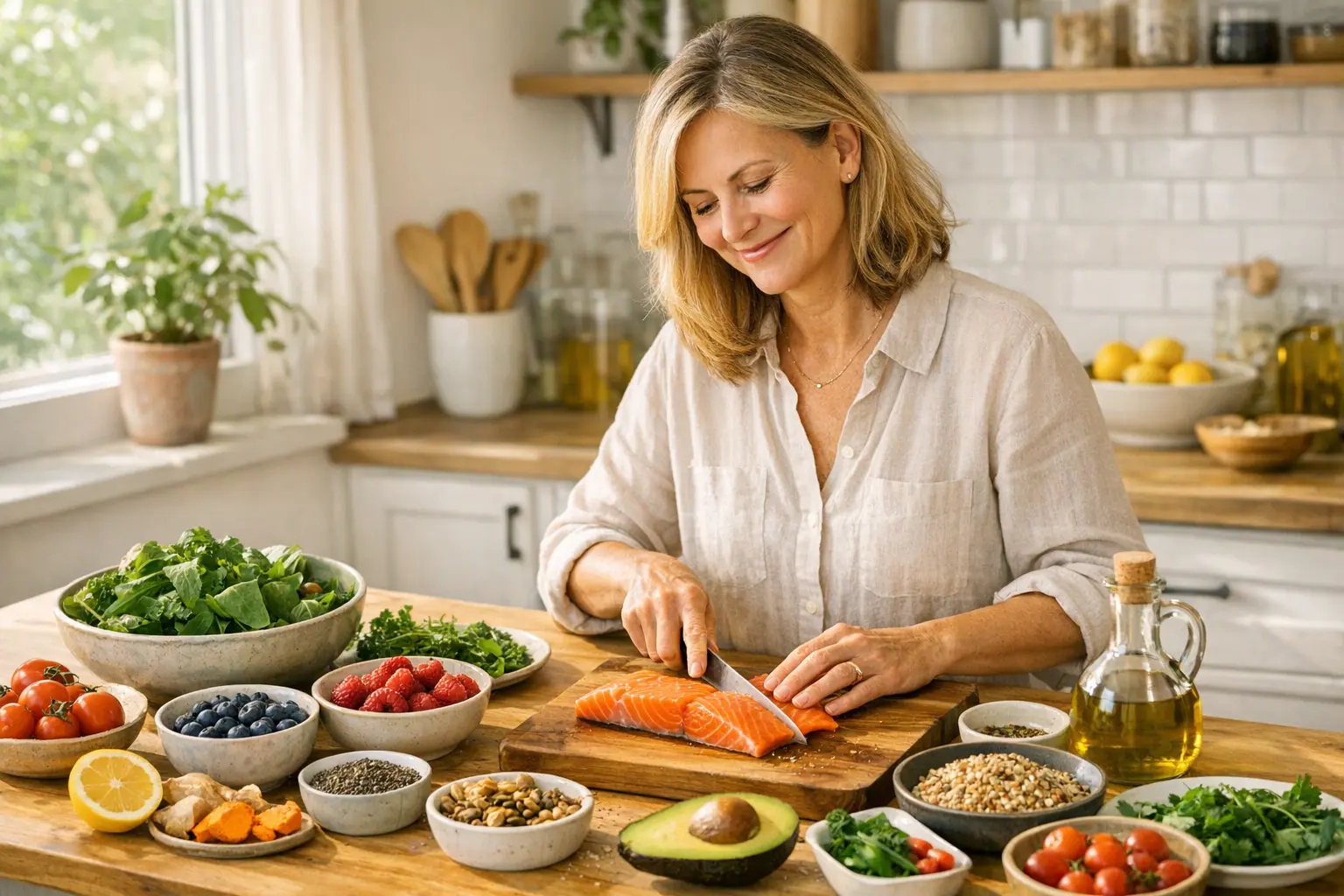
Breakfast might be Greek yogurt, berries, chia seeds, and walnuts. Or eggs with vegetables and a side of fruit.
Lunch could be a large salad with salmon or chicken, olive-oil dressing, extra vegetables, and a moderate portion of quinoa or beans if that works for you.
Dinner might be roasted vegetables, a protein source, and a starch portion chosen on purpose rather than by default.
A snack, if needed, could be cottage cheese, nuts, hard-boiled eggs, or vegetables with hummus.
The common thread is stability. Less chasing. Less crashing. Less white-knuckling through the afternoon.
How anti-inflammatory foods for menopause can support common symptoms
Food will not solve every hormone symptom, but it can move a lot.
Women often notice progress in:
Energy
Steadier meals can reduce afternoon crashes and late-night overeating.
Appetite
More protein and fiber can make hunger feel more predictable.
Joint stiffness
Less processed food and better recovery habits may help some women feel less achy.
Blood sugar swings
This is a huge one. Menopause and insulin resistance often overlap more than people realize.
Weight around the middle
No food burns belly fat on command, but meals that support blood sugar and fullness usually make body-composition changes more realistic.
If that is your struggle, visceral fat in women over 40 and weight management are worth reading next.
Do you need to go fully low carb?
Sometimes yes, often no.
Some women feel noticeably better with a lower-carb approach, especially if they have strong blood sugar swings, prediabetes, or significant cravings. Others do well with moderate portions of slower-digesting carbs inside a well-structured meal.
This is where personalized care matters. The right plan depends on symptoms, labs, body composition, sleep, activity, and what you can actually maintain.
That is why nutrition coaching and biomarker testing can be more useful than copying a menopause meal plan from social media.
Menopause nutrition and strength training belong together
Food matters more when it supports something.
One of the most important things women in midlife can do is pair better nutrition with strength training and regular movement. That combination helps support muscle, bone density, insulin sensitivity, and resilience.
If you are dealing with osteoporosis risk or just want to feel stronger, read building bone density after 50 and strength training for women over 40 in Duluth.
FAQ
What are the best anti-inflammatory foods for menopause?
Fatty fish, berries, leafy greens, cruciferous vegetables, olive oil, nuts, seeds, fermented foods, and protein-rich whole foods are some of the most useful staples.
Can anti-inflammatory foods help with hot flashes?
They may help indirectly by improving blood sugar stability, reducing alcohol and ultra-processed foods, and supporting sleep and overall metabolic health. They are not a guaranteed hot-flash cure.
Is menopause weight gain always a hormone problem?
Hormones matter, but so do sleep, stress, muscle loss, blood sugar, and eating patterns. Usually it is a combination.
Should I avoid all carbs during menopause?
Not necessarily. Many women do best by improving carb quality, portion size, and meal balance rather than cutting out all carbohydrates.
The bottom line
The best anti-inflammatory foods for menopause are the ones that help your body feel more stable, more nourished, and less inflamed in daily life. That usually means more protein, more fiber, better fats, more real food, and fewer meals that send you into cravings or crashes.
You do not need a punishing reset. You need a pattern that works in real life.
If menopause has made your body feel unfamiliar and you want help putting the pieces together, contact Duluth Metabolic. We can help you build a plan around your hormones, blood sugar, symptoms, and goals instead of handing you generic advice.