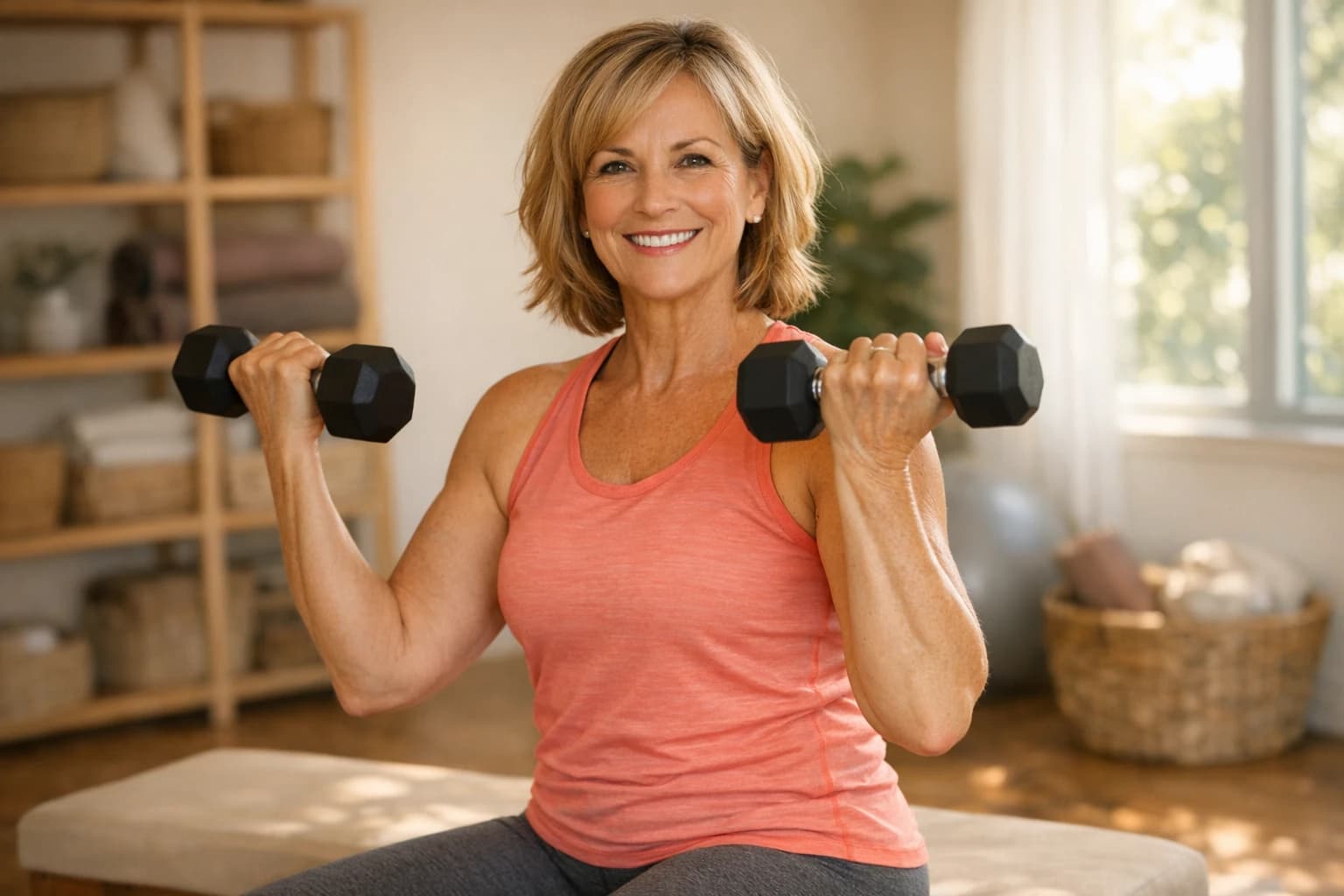
If you have been looking for balance exercises for beginners over 50, there is a good chance you are not trying to become an athlete. You just want to feel more stable.
Maybe you notice yourself grabbing the railing more often. Maybe getting dressed standing up feels a little shakier than it used to. Maybe one uneven sidewalk, one icy parking lot, or one near-slip made you realize your confidence is not what it was.
That matters.
Balance is one of those things people do not think much about until it starts to feel less automatic. Then it quietly affects everything. Walking. Stairs. Carrying groceries. Hiking. Getting up off the floor. Even how relaxed you feel in your own body.
The good news is that balance can improve.
At Duluth Metabolic, we like to remind people that balance is not a gift some people get and some do not. It is a trainable skill. It is influenced by strength, mobility, coordination, vision, reaction time, and how much you move in daily life. If you want more context, it helps to read functional training over 50 for beginners, chair strength training over 50, and mobility exercises over 40 in Duluth MN.
Why balance gets harder after 50
A lot of people assume worsening balance is just age. That is only part of the story.
What usually happens is more layered than that. Muscle mass tends to decline. Joint stiffness creeps in. People spend more time sitting. Feet get weaker. Hips stop doing their share. Reaction time slows a little. Vision changes can matter too. If someone has pain, fatigue, fear of falling, or low confidence, they often move less, which makes the whole system less responsive.
That cycle can sneak up on you.
The good news is that beginner balance work does not need to be dramatic to help. In fact, the best place to start is usually calm, boring, repeatable work. That is what helps your body trust itself again.
What the top-ranking balance articles usually get right, and what they miss
A lot of the top results for this topic use the same basic template. They list moves like single-leg stands, heel-to-toe walking, chair squats, and side leg raises. That is solid as far as it goes.
The gap is that many of them stop at the exercise list.
They do not explain why someone feels unsteady in the first place. They do not help people decide how much challenge is enough. They do not connect balance to strength, blood pressure, confidence, walking, bone health, or daily function. They also tend to write for “seniors” in a way that feels more fragile than many fifty-something adults want.
You do not need that framing.
If you are over 50 and just getting started, a better approach is to train balance like part of real-life movement, not like a punishment for getting older.
What actually improves balance
Balance gets better when you improve a few things together.
Leg and hip strength matter because your body needs enough force to catch itself and control position changes.
Foot and ankle control matter because that is your first line of communication with the ground.
Core control matters because wobbling is harder to correct if the trunk is not doing much.
Mobility matters because stiff ankles and hips make balance work harder than it should.
Practice matters because your nervous system learns through repetition.
This is why balance work pairs so well with exercise therapy. If someone only practices standing on one foot but never improves strength, walking mechanics, and confidence, progress tends to stall.
A safe starting rule for beginners
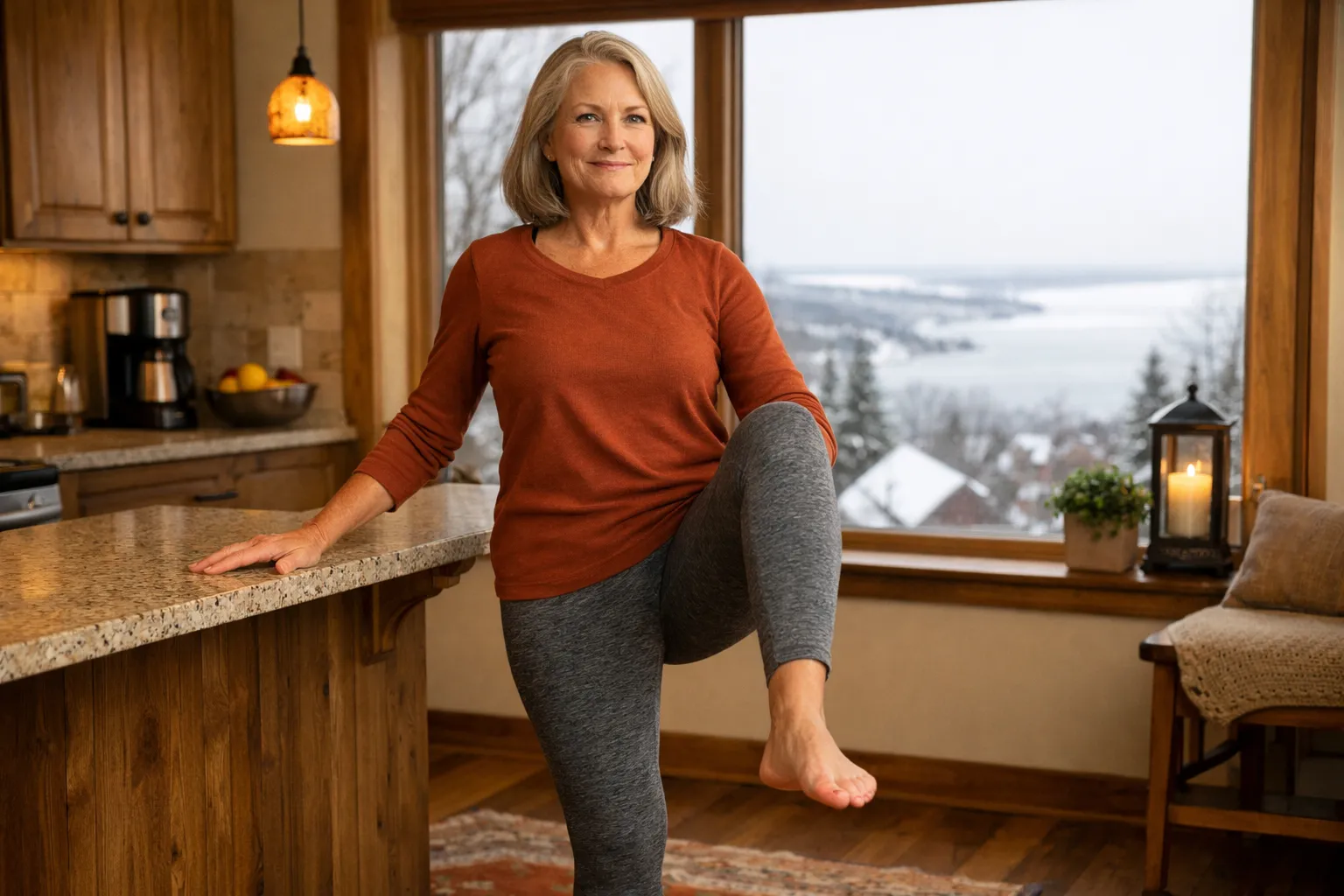
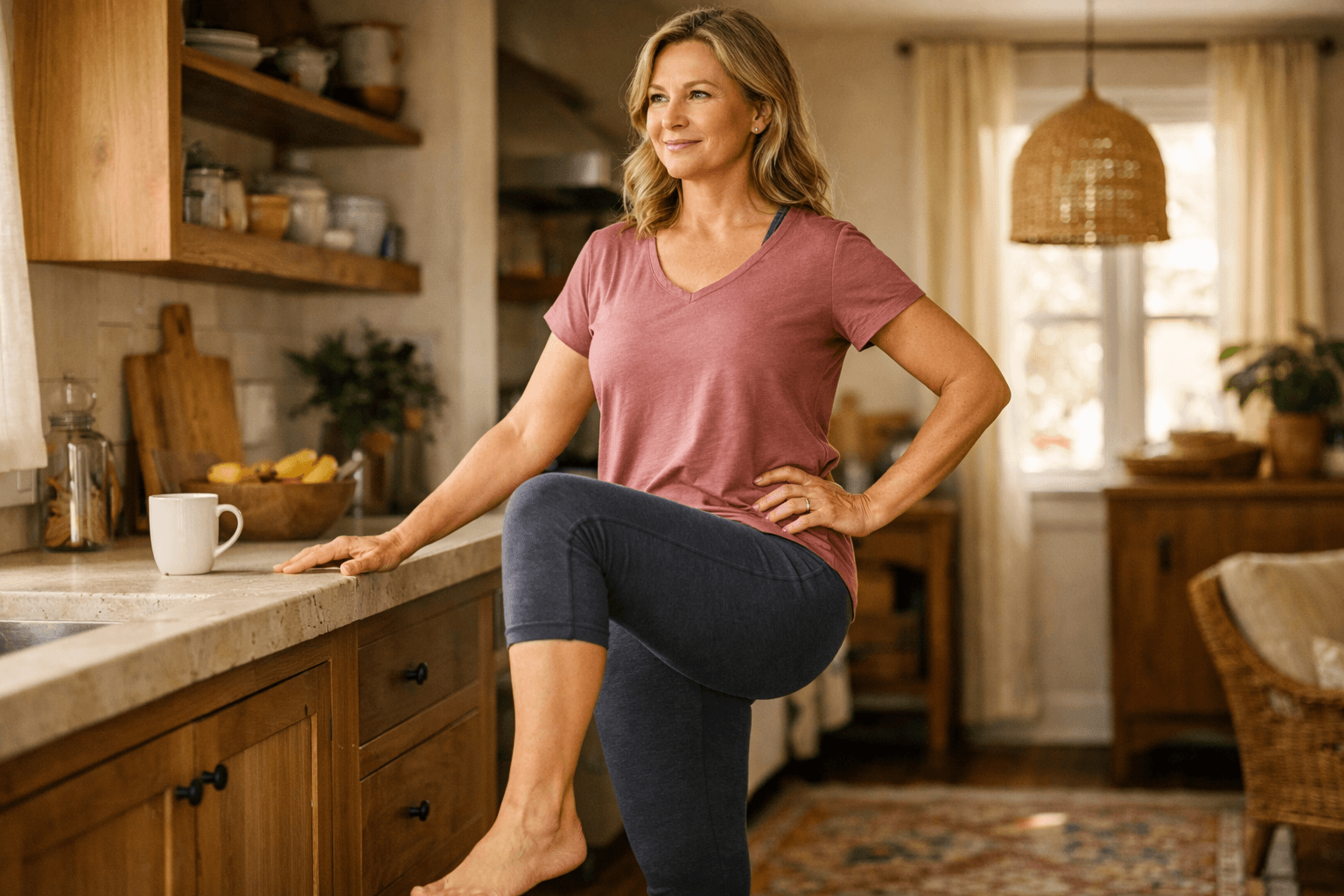
If you are nervous about falling, start every balance drill near something solid.
A kitchen counter works. The back of a heavy chair works. A hallway wall works. You want support close enough that you can touch it quickly, but not so much that you lean on it the whole time.
The goal is challenge, not panic.
You should feel like you are working, maybe a little wobbly, but still in control. If an exercise makes you feel unsafe, it is too advanced right now.
The best balance exercises for beginners over 50
Here are the movements we like most because they are simple, practical, and easy to scale.
1. Feet-together stand
Stand tall with your feet close together while lightly hovering your hands near a counter.
Hold for 20 to 30 seconds.
This sounds easy until you try it without shifting all over the place. It is a good first step because it teaches you to find midline control without asking too much.
2. Split stance hold
Place one foot slightly in front of the other, about as if you stopped mid-walk.
Hold for 20 to 30 seconds, then switch sides.
This starts teaching your body how to manage a narrower base of support, which matters in walking and stairs.
3. Single-leg stand with fingertip support
Stand on one leg while keeping one or two fingers on a counter if needed.
Aim for 10 to 20 seconds per side.
This is one of the classic balance exercises for beginners over 50 for a reason. It quickly shows which side feels less stable, and it builds control over time.
4. Heel-to-toe walk
Walk slowly in a straight line, placing the heel of one foot just in front of the toes of the other.
Take 8 to 12 slow steps.
If that feels too hard, leave a little space between the feet at first.
5. Sit-to-stand from a chair
Sit on a chair, lean slightly forward, and stand up without using your hands if possible. Then sit back down with control.
This is not a pure balance drill, but it may be the most useful exercise in this whole article because it builds the leg strength that supports balance everywhere else.
6. Side leg raise
Hold onto a support and lift one leg out to the side without leaning your torso away.
Do 8 to 12 reps per side.
This helps the hip muscles that keep you steady when you walk, step, and change direction.
7. Marching in place
Stand tall and slowly lift one knee, then the other, like a controlled march.
This teaches weight shift, trunk control, and confidence on one leg at a time.
8. Step-up to a low step
If you have a safe low step, step up and back down with control.
This is useful once the basics feel manageable because it brings balance into a movement pattern that shows up in real life.
A beginner weekly plan
You do not need an hour a day.
A realistic starting point is 10 to 15 minutes, three or four times per week. You can even tack it onto another short workout or do it while dinner is in the oven.
A simple week might look like this:
- Day 1: feet-together stand, split stance, sit-to-stand, side leg raise
- Day 2: walking or mobility only
- Day 3: single-leg stand, heel-to-toe walk, marching in place, sit-to-stand
- Day 4: rest or an easy walk
- Day 5: repeat the exercises that feel most useful
That is enough to start building skill.
If you already walk regularly, add a few minutes of balance work before or after your walk. It pairs well with walking routine for beginners over 50 and spring walking plan in Duluth MN.
How to progress without overdoing it
People often make one of two mistakes.
They either stay too easy forever, or they jump too fast into eyes-closed drills, unstable surfaces, or exercises they saw online that look impressive but are not necessary.
A better progression is simple.
First, reduce hand support.
Then increase hold time.
Then narrow your stance a little more.
Then add gentle head turns, slower tempo, or controlled reaching.
You can also progress by integrating balance into normal strength work. Carrying one dumbbell while walking, stepping onto a box, or doing controlled split squats can all help once your foundation improves.
That is part of why strength training over 60 in Duluth MN and building bone density after 50 matter here too. Stronger tissue supports steadier movement.
What if you are afraid of falling?
That fear is understandable.
And it can become its own problem, because when people stop moving, their world shrinks fast.
If that is you, start embarrassingly small. Hold the counter. Do ten seconds, not thirty. Repeat the easiest drills until your body stops treating them like a threat.
Confidence usually comes back through evidence.
You practice. You wobble less. You notice stairs feel better. You catch yourself sooner. You stop bracing for every little shift.
That is real progress, even if it does not look dramatic.
When balance problems may need more than exercise alone
Sometimes poor balance is not just deconditioning.
Medication side effects, significant blood pressure changes, vertigo, neuropathy, vision issues, major joint pain, neurological symptoms, and severe fatigue can all affect steadiness. If you feel dizzy, faint, numb, or suddenly much more unstable, that deserves medical attention.
We also see people whose balance is affected by broader metabolic issues. Low muscle mass, poor recovery, chronic inflammation, poor sleep, and under-fueled eating can all make movement feel worse than it should. If that sounds familiar, biomarker testing and a more complete plan may help.
Balance training is about more than fall prevention
Fall prevention matters, of course.
But most people over 50 are not motivated by a pamphlet about falls. They are motivated by wanting to keep doing normal life without feeling old before their time.
They want to hike without second-guessing every rock. They want to get off the floor easily. They want to carry laundry downstairs, move confidently in winter, and stay active without feeling fragile.
That is why balance work is really about freedom.
It supports hiking, lifting, walking, confidence, and independence. It also connects closely with osteoporosis, musculoskeletal weakness, and long-term function.
FAQ about balance exercises for beginners over 50
How often should I do balance exercises?
Three to four short sessions per week is a great starting point. Even 10 minutes at a time can help if you stay consistent.
How long does it take to notice improvement?
Many people notice a difference in confidence and steadiness within a few weeks. Bigger changes usually come with steady practice over a couple of months.
Are balance boards or unstable gadgets necessary?
No. Most beginners do better with basic floor-based movements and good support. Fancy equipment is not the priority.
Should I do balance work every day?
You can do light practice daily if it feels good, but most people do well with several focused sessions each week plus regular walking and strength work.
What if one side is much worse than the other?
That is common. Spend a little extra time on the weaker side, but keep things controlled and safe.
Start simple and keep it real
You do not need a complicated anti-aging routine. You need a few movements that help you trust your body again.
That may be a single-leg stand at the kitchen counter. It may be chair stands, step-ups, and better walking mechanics. Over time, those basics add up to steadier movement and more confidence.
If you want help building a plan that fits your age, strength, pain level, and goals, Duluth Metabolic can help. We use exercise therapy, practical coaching, and a root-cause approach to help adults move better for the long haul. If you are ready for support, reach out through /contact.