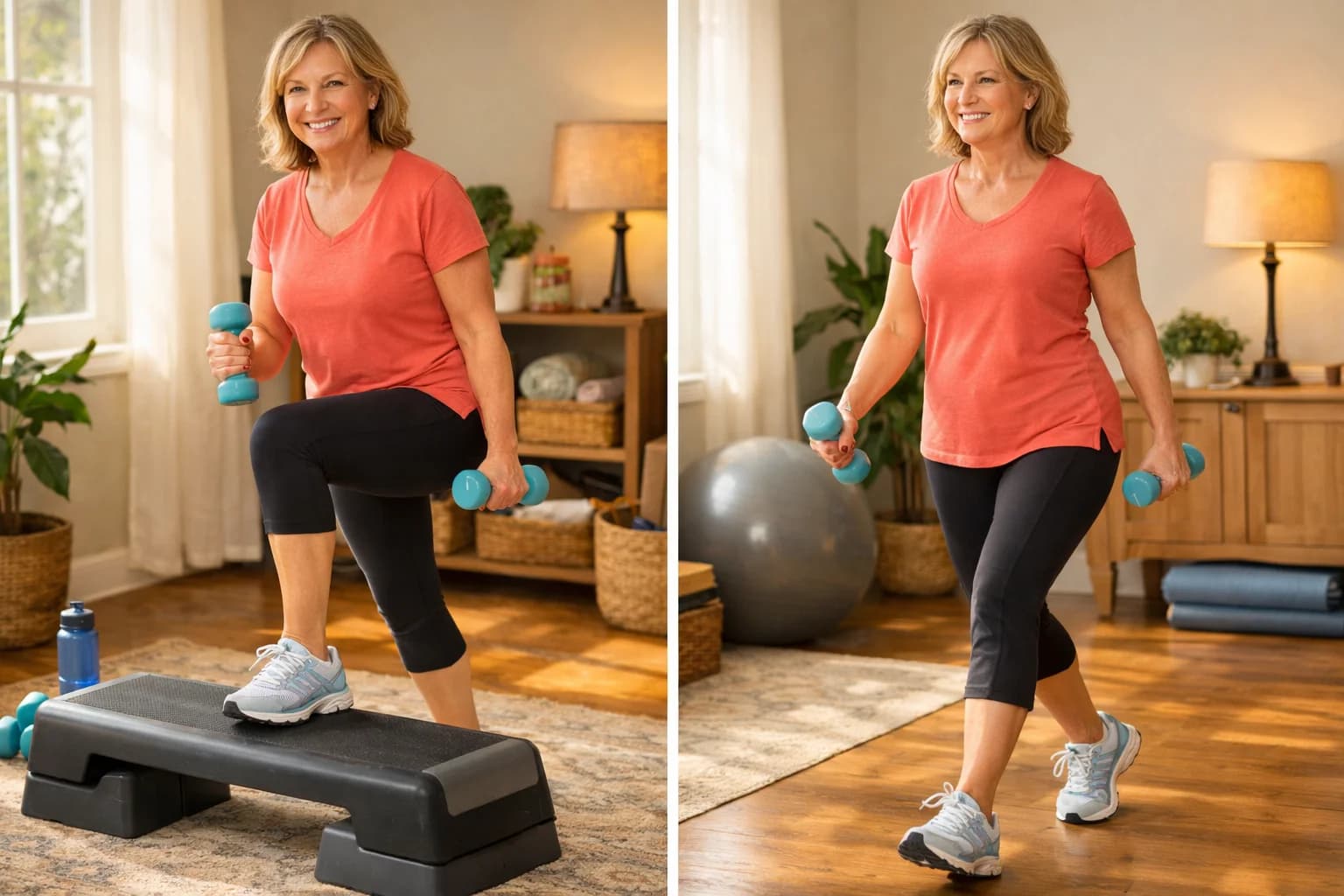
Starting functional training over 50 for beginners can feel weirdly intimidating. A lot of fitness content either talks to experienced lifters or treats adults over 50 like they should be grateful for a chair and a soup can. Neither one is especially helpful.
Most people in this stage of life want something more normal. They want to get stronger, move better, protect their joints, and keep doing everyday things without feeling fragile. They want enough energy for work, grandkids, yard projects, travel, hiking, and life in general. They do not need a hardcore identity overhaul. They need training that makes real life easier.
That is where functional training fits. At Duluth Metabolic, we think exercise should support the body you actually live in. It should help you stand up from the floor, carry groceries, climb stairs, get off the dock, shovel snow, and stay independent. If you are newer to this whole picture, it also helps to read exercise as medicine, functional fitness over 50 in Duluth MN, and building bone density after 50.
What functional training over 50 for beginners really means
Functional training is just strength and movement practice that carries over into real life.
Instead of chasing exercises because they look impressive, you focus on movement patterns your body actually uses. Things like squatting, hinging, pushing, pulling, carrying, stepping, rotating, and balancing. Those patterns show up when you sit down, stand up, lift a bag of mulch, put something overhead, or catch yourself on uneven ground.
That does not mean every workout has to look fancy or athletic. In fact, most good beginner functional training over 50 programs are pretty simple. The magic is not in weird exercises. It is in choosing movements that matter and doing them consistently.
Why functional training matters more after 50
After 50, a lot of adults notice the same shift. They are not just less fit than they used to be. They feel stiffer, weaker, slower to recover, and less confident doing basic physical tasks.
Some of that comes from normal aging. Some comes from less muscle mass, less balance practice, long workdays, old injuries, stress, poor sleep, or just years of not training in a way that supports daily life.
This matters because muscle is not just for appearance. It supports blood sugar control, joint stability, bone health, and independence. It is one reason movement is such a big part of long-term weight management, high blood pressure, and healthy aging.
If strength has been slipping and you feel less steady than you used to, that is not a cue to back away from exercise forever. It is a cue to train smarter.
The biggest mistake people make with functional training over 50 for beginners
They think they need to be in shape before they start.
You do not.
You need a reasonable starting point, enough patience to build slowly, and a program that respects your current capacity. That is it.
Another common mistake is trying to jump straight into random circuits from social media. Too much volume, too much speed, too much impact, too soon. Then something flares up and the whole idea of exercise gets blamed.
A better approach is boring in the best way. Learn a few core patterns. Practice them well. Add a little load over time. Walk a lot. Recover. Repeat.
The core movement patterns to train
When we think about functional training over 50 for beginners, these are the patterns that usually matter most.
Squat
This shows up every time you sit down and stand up. Goblet squats, box squats, sit-to-stands, and supported squats all help build leg strength, balance, and confidence.
Hinge
Hinging is how you bend and lift without turning every task into a back gamble. Deadlift variations, hip hinges with a dowel, and kettlebell lifts teach your hips to do more of the work.
Push
Pushing matters for getting off the floor, getting out of bed, pushing doors, and upper-body strength in general. Wall pushups, incline pushups, and dumbbell presses are all useful.
Pull
Rows, band pulls, and assisted pull movements support posture, shoulder health, and carrying strength. Pulling is the part many adults neglect, especially if most of life happens at a desk.
Carry
Carrying is one of the most functional things you can train. Farmer carries, suitcase carries, and loaded walks teach your body to stabilize while moving.
Step and balance work
Step-ups, split squats, and single-leg balance practice help with stairs, hiking, uneven ground, and fall prevention. This is huge in a place like Duluth where sidewalks, trails, and winter surfaces are not always forgiving.
A simple weekly plan for functional training over 50 for beginners
The internet loves extreme plans. Most beginners do not need that.
A practical starting place is two or three strength sessions per week, plus regular walking and a little mobility work. Each session can stay focused on the basics.
A beginner session might include:
- a squat or sit-to-stand variation
- a hinge variation
- an upper-body push
- an upper-body pull
- a carry or balance drill
- a short cooldown or mobility block
That is enough to create real progress.
If you are brand new, two weekly sessions may be plenty. If you already walk a lot and recover well, three sessions can work. The goal is leaving enough room to stay consistent. Our guides on beginner strength training over 50 in Duluth MN, strength training over 60 in Duluth MN, and zone 2 training for beginners over 40 can help you round out the week.
Functional training over 50 for beginners if you have bad knees or an old injury
This is where people get nervous, and reasonably so.
Old knee pain, shoulder irritation, back stiffness, or fear after a previous injury can make strength training feel risky. But avoiding all challenge forever usually makes things worse. The better move is to modify the pattern, shorten the range, reduce the load, and build back gradually.
For example, if a squat hurts, you might start with a higher box. If overhead pressing bothers your shoulder, you might use an incline press or landmine pattern instead. If hinging is scary, you start with bodyweight and learn the position first.
Pain matters, but it does not always mean stop everything. It usually means the program needs a better entry point.
That is one reason exercise therapy can be so useful. A lot of adults do much better when someone helps them match the movement to the body they have right now instead of the one they had at 32.
Why functional training helps metabolic health too
People often think of strength training as a bone or muscle conversation, but it is also a metabolic one.
Muscle tissue helps with glucose disposal. Strength training supports insulin sensitivity. It can improve body composition without forcing you into endless cardio. It also tends to make people feel more capable, which spills over into sleep, food choices, and day-to-day activity.
That matters if you are trying to support diabetes, body composition, energy, or blood pressure. It also matters for people dealing with musculoskeletal weakness or osteoporosis, where strength is not optional if the goal is staying independent.
What equipment do you actually need
Less than you think.
A beginner functional training over 50 plan can start with bodyweight, a resistance band, a kettlebell or dumbbells, and something sturdy to hold onto when needed. You do not need a giant machine circuit to get stronger.
Some people like training at home because it feels easier to start. Others do better in a coached setting because they want feedback and accountability. Both can work. The best setup is the one you will stick with.
Signs your program is working
The scale may or may not move right away. That is not the only measure.
A good functional training program often shows up first in everyday wins:
- stairs feel easier
- you stand up without thinking about it
- your balance improves
- your back gets less cranky
- carrying groceries feels normal again
- you feel more confident on trails, snow, or uneven ground
- your energy is better after workouts instead of worse
Those changes matter. They are often the early signs that the body is becoming more resilient.
FAQ about functional training over 50 for beginners
Is functional training safe after 50?
Usually yes, especially when you start at the right level and progress gradually. If you have known medical issues, recent surgery, major pain, or big concerns, it is smart to get individualized guidance first.
How many days a week should I do functional training?
For most beginners, two or three days per week is enough. That gives you time to recover while still building momentum.
Is walking enough on its own?
Walking is excellent, but it does not fully replace strength work. Most adults over 50 benefit from both. Walking supports cardiovascular health and recovery. Strength training helps preserve muscle, balance, bone support, and real-world function.
What if I feel too stiff to start?
That is actually a common reason to begin. You may need a gentler starting point, a short warmup, and a little patience, but stiffness is not a sign that movement is off-limits.
Do I need heavy weights?
Not at first. Beginners can make solid progress with bodyweight, bands, light dumbbells, and gradually increasing resistance. The key is appropriate challenge, not ego lifting.
You are allowed to train for the life you want
A lot of adults over 50 have been told, directly or indirectly, to expect decline and be careful. Some caution makes sense. But shrinking your life to avoid effort is not a great long-term plan.
The point of functional training over 50 for beginners is not to prove anything. It is to build a body that can keep up with your life.
If you want help starting safely and making exercise fit your energy, joint history, and health goals, contact Duluth Metabolic. We can help you build a strength plan that feels realistic and lasts.