If you are searching for fall prevention exercises over 60, there is a good chance you are not trying to become an athlete. You just want to feel steady again. You want to get up from a chair without using both hands, walk outside without feeling tentative, and move through winter, stairs, parking lots, and uneven ground with a little more confidence.
That matters in Duluth. Ice, snow, hills, trail edges, wet leaves, and even thick boots can challenge balance fast. But fall prevention is not only about the weather. It is also about strength, reaction time, joint control, and keeping your body ready for normal life.
The good news is that the best fall prevention exercises over 60 are usually simple. They are not flashy. They build the kind of strength and balance that help you catch yourself, stay upright, and keep doing the things you want to do.
If this is already on your mind, you may also want to read balance exercises for beginners over 50, strength training over 60 in Duluth MN, building bone density after 50, and winter walking in Duluth MN.
Why fall prevention exercises over 60 matter so much
A lot of adults think balance problems show up suddenly. Usually they creep in.
Maybe you start using the railing more. Maybe you move slower on curbs. Maybe getting dressed standing up feels less automatic. Maybe you avoid walking outside when conditions are bad, not because you are lazy, but because your body no longer feels trustworthy.
That is where targeted exercise helps.
Good fall prevention training improves more than balance. It can help with:
- leg strength
- hip stability
- ankle control
- posture
- confidence when changing direction
- the ability to react when you trip or slip
It also supports long-term independence. This overlaps with osteoporosis, musculoskeletal weakness, and exercise therapy in Duluth MN.
What actually causes people to feel unsteady
Balance is not one thing. It is a team effort.
Your eyes, inner ear, feet, ankles, hips, trunk, and nervous system all have to work together. When strength drops or joints get stiff, the whole system gets less reliable.
Common reasons people start feeling less stable include:
- loss of leg and hip strength
- reduced ankle mobility or foot awareness
- less physical activity over time
- pain that changes the way you move
- fear of falling, which leads to even less movement
- medication side effects or fatigue
- low confidence on stairs, uneven ground, or winter surfaces
That is why fall prevention exercises over 60 should include both strength and balance. Standing on one leg alone is not enough if your legs are weak and your hips cannot help you recover.
The best fall prevention exercises over 60 start with strength
People often assume balance training means wobbling on one foot. But for most adults over 60, the first step is getting stronger.
Chair stands
This is one of the best places to start.
Sit in a sturdy chair. Place your feet under you. Lean forward slightly and stand up with control. Sit back down slowly.
If needed, use your hands at first. Over time, try to do more of the work through your legs.
Chair stands build the kind of real-world strength you use all day, getting up from the toilet, getting out of the car, standing from the couch, and rising after tying your shoes.
Step-ups
Use a low stair or sturdy platform. Step up with one foot, bring the other up if needed, then step down slowly.
This helps with stair confidence, leg strength, and coordination. Start with a low height and hold onto a rail or counter if needed.
Supported mini squats
Hold onto a counter or chair back. Bend your hips and knees slightly as if you are about to sit. Then stand tall again.
This strengthens the hips and thighs without needing a deep squat.
Heel raises
Stand tall and hold onto support. Rise onto your toes, pause, then lower down slowly.
This improves calf strength and ankle control, which matter more than people realize when you need to catch yourself quickly.
Balance moves that work well after strength is in place
Tandem stance
Stand near a counter. Put one foot directly in front of the other, heel to toe, and hold that position.
This challenges balance in a safe, controlled way. Switch which foot is in front.
Single-leg stand with support nearby
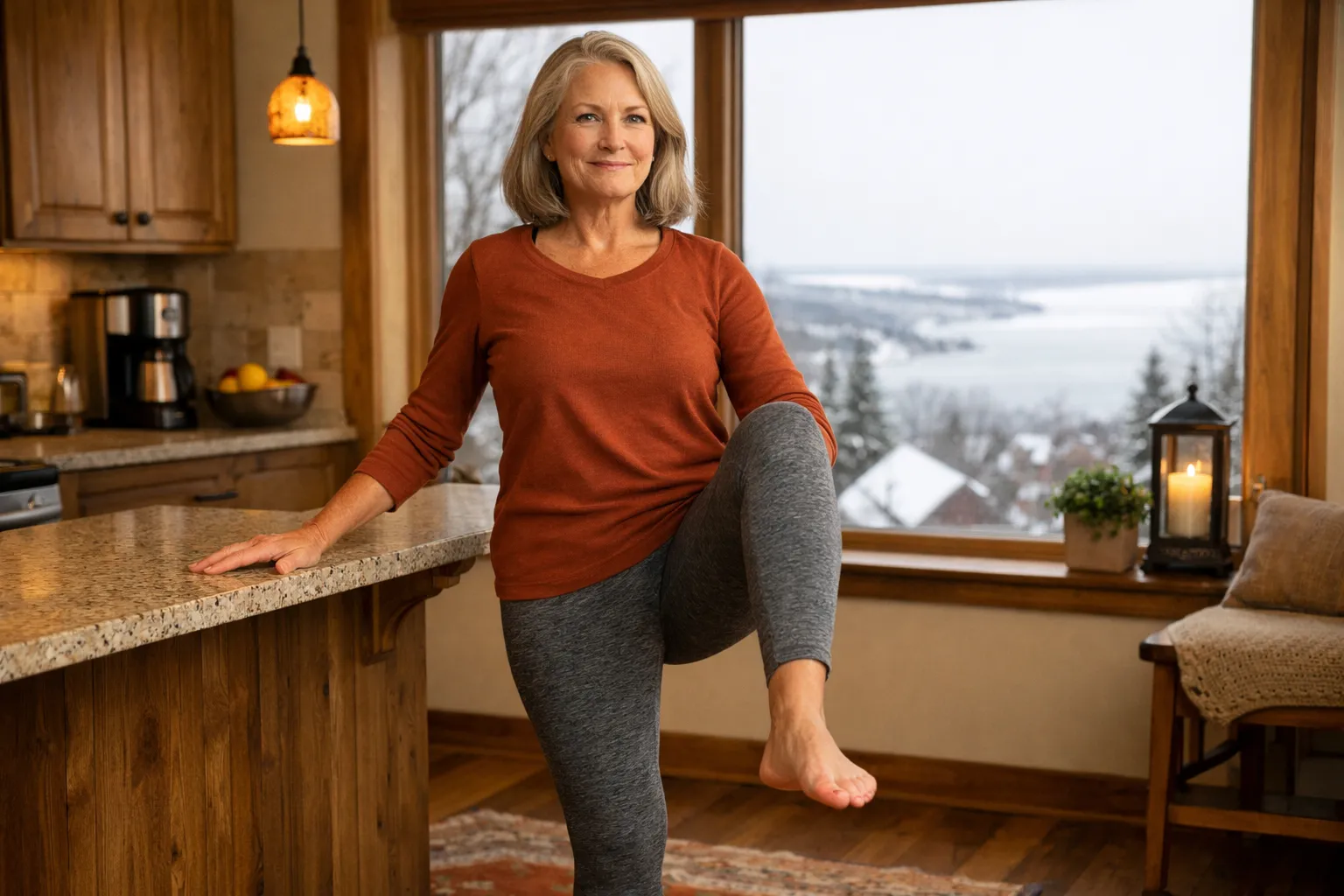
Stand next to a counter or chair. Lift one foot just slightly off the floor and hold for a few seconds.
You do not need to force a long hold. Short, confident reps are fine.
Side steps
Step sideways in one direction for several steps, then come back the other way.
This is a great choice because many falls happen when people have to catch themselves side to side, not just forward.
Marching in place
Slow marching helps with weight shifting and single-leg control without demanding too much at once.
It is also a good option for people who feel nervous doing formal balance drills.
Fall prevention exercises over 60 should also train real life movement
This is the part many routines miss.
Most people do not fall while standing perfectly still in a quiet room. They lose balance while turning, reaching, stepping around something, walking on uneven ground, or moving when tired.
That is why functional movement matters.
Carrying light weight while walking
Walking with a light bag or hand weight can help build coordination and trunk control.
Reaching drills
Stand safely and practice reaching one arm forward, to the side, and slightly overhead while keeping your balance.
Turning practice
Many people feel unsteady when they pivot. Slow turning drills, done safely, help retrain that skill.
Getting up and down from the floor, if appropriate
Not everyone needs this right away, but it is a valuable long-term skill if it is safe for you to practice with support.
These kinds of movements fit well with functional training over 50 for beginners, chair strength training over 50, and standing core exercises over 50.
A simple weekly plan for fall prevention exercises over 60
You do not need long workouts every day.
A simple week might look like this:
Two or three days of strength work, chair stands, mini squats, step-ups, heel raises.
Three to five short balance sessions, tandem stance, marching, side steps, single-leg balance near support.
Most days, some kind of walking.
The point is consistency. Five to fifteen focused minutes done regularly often works better than waiting for the perfect hour.
If you are just starting, walking routine for beginners over 50 and low-impact workouts for beginners over 40 can help ease you in.
How winter changes the conversation in Duluth
Local context matters.
In Duluth, balance confidence is not just about indoor movement. It is about getting through parking lots, icy driveways, snowy sidewalks, and slushy store entrances without feeling like one bad step could ruin your month.
That means your plan may need a few extras:
- stronger calves and hips for walking in boots
- better single-leg control for stepping over snowbanks and ruts
- enough endurance that you do not get sloppy when tired
- practical strategies like shorter steps, traction aids, and walking where surfaces are cleared
If winter makes you stay inside more, you may also like indoor walking in Duluth MN, mobility exercises over 40 in Duluth MN, and recovery guide Duluth.
What if you already had a fall or feel afraid of falling
Then start smaller, not never.
Fear of falling is real. It can make people stiffen up, move less naturally, and avoid the exact movement practice that would help. If you have already fallen, it is understandable to feel cautious.
You do not have to jump into a class or do advanced drills. Start with safe basics near a counter, kitchen island, or sturdy chair. Work on getting stronger first. Build proof that your body can do more than you think.
If pain, fatigue, or deconditioning are part of the picture, exercise therapy can help tailor a plan to what you can actually do now.
Fall prevention exercises over 60 also support bone and metabolic health
This kind of training is not only about avoiding falls.
Stronger legs, more muscle, and regular walking support blood sugar, mood, circulation, bone health, and energy too. That makes fall prevention work especially valuable for people dealing with high blood pressure, chronic fatigue, or low confidence around movement.
It also pairs naturally with strength training for osteopenia over 50, morning strength routine over 40, and workout recovery over 40.
When it makes sense to get guidance
You do not have to figure this out alone.
Extra guidance is a good idea if:
- you have already fallen in the past year
- you feel dizzy or highly unsteady
- you avoid stairs or curbs because of fear
- knee, hip, or back pain changes how you move
- you know you need strength work but do not know where to start
Support can help you progress safely instead of staying stuck at the same cautious level forever.
FAQ about fall prevention exercises over 60
What are the best fall prevention exercises over 60?
The best exercises usually include chair stands, heel raises, step-ups, tandem stance, side steps, and supported single-leg balance. A good plan includes both strength and balance.
How often should I do fall prevention exercises?
Most people do well with short balance practice most days and strength training two or three times per week.
Can walking help prevent falls?
Yes, but walking alone is usually not enough. It helps most when combined with strength and balance work.
What if I am nervous about falling while exercising?
Start near sturdy support. Use a chair, railing, or counter. Go smaller and slower than you think you need to. Confidence builds from repetition.
Do fall prevention exercises help in winter?
Absolutely. Better leg strength, ankle control, and balance can make icy conditions much less intimidating, especially in a place like Duluth.
Staying steady is something you can train
Feeling unsteady does not mean you are done being active. It usually means your body needs a smarter kind of practice.
With the right plan, many adults over 60 can build strength, improve balance, and feel more confident moving through daily life and Duluth winters. If you want help building that kind of plan, Duluth Metabolic is here for you. Reach out through contact and let’s talk about what support would help most.