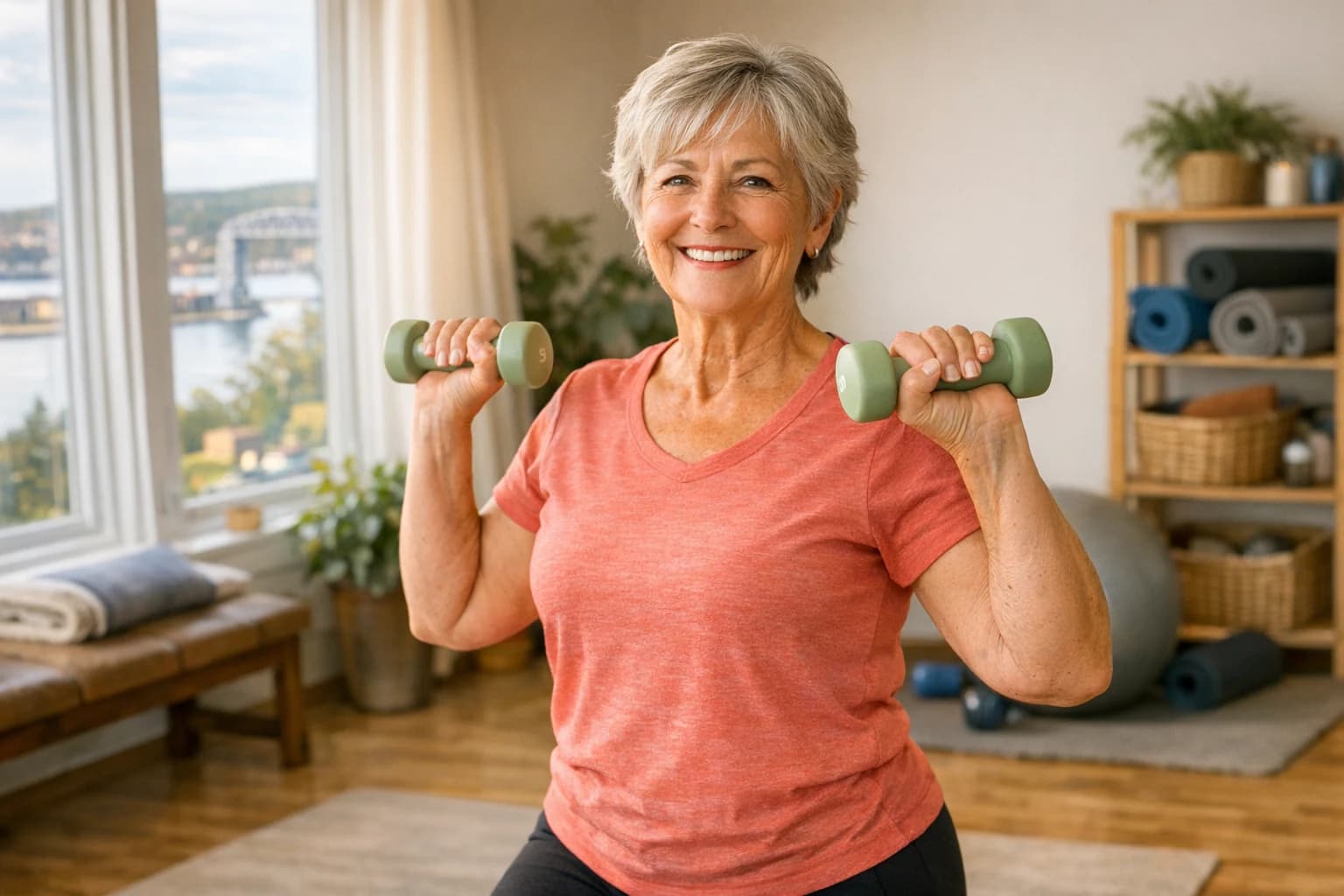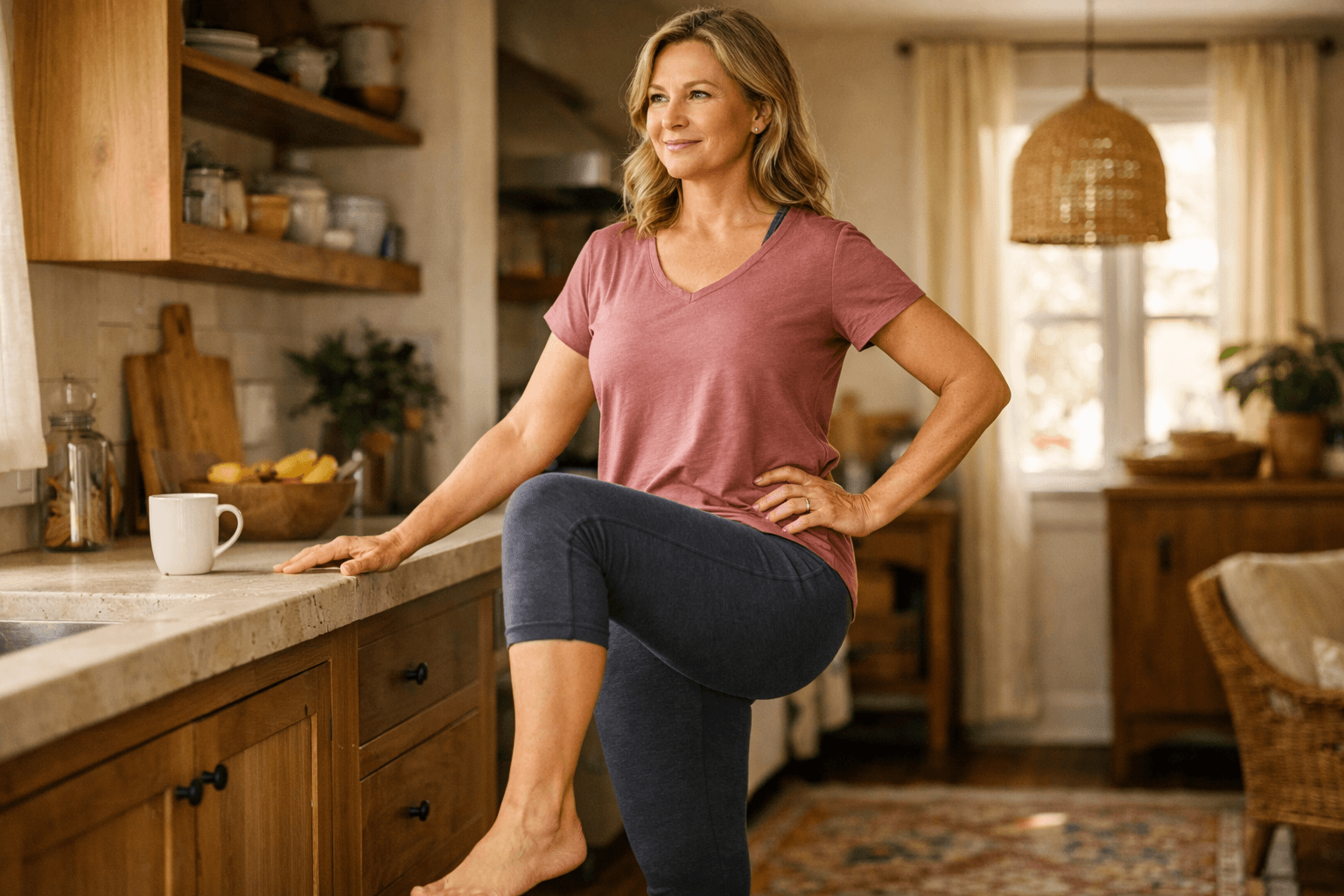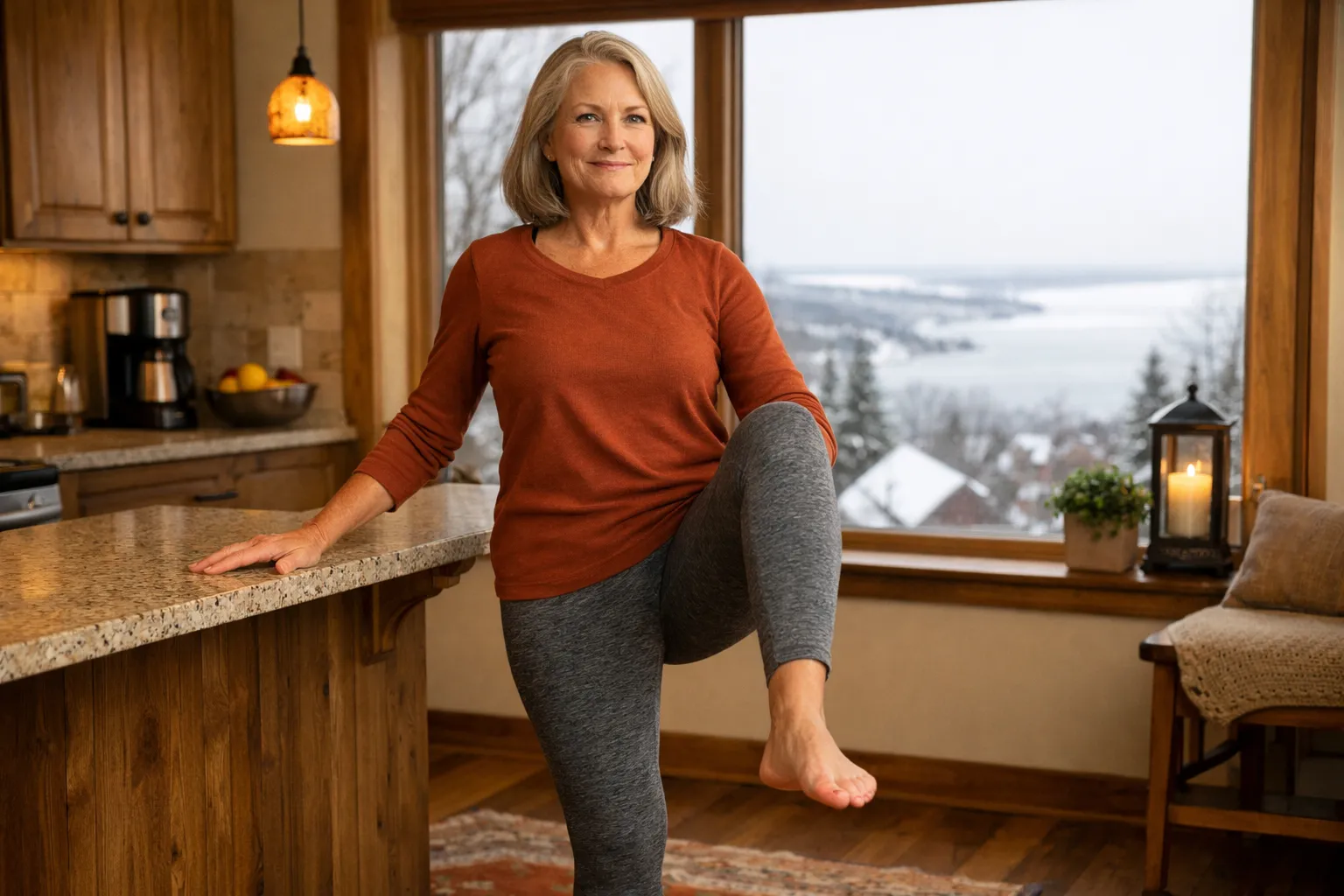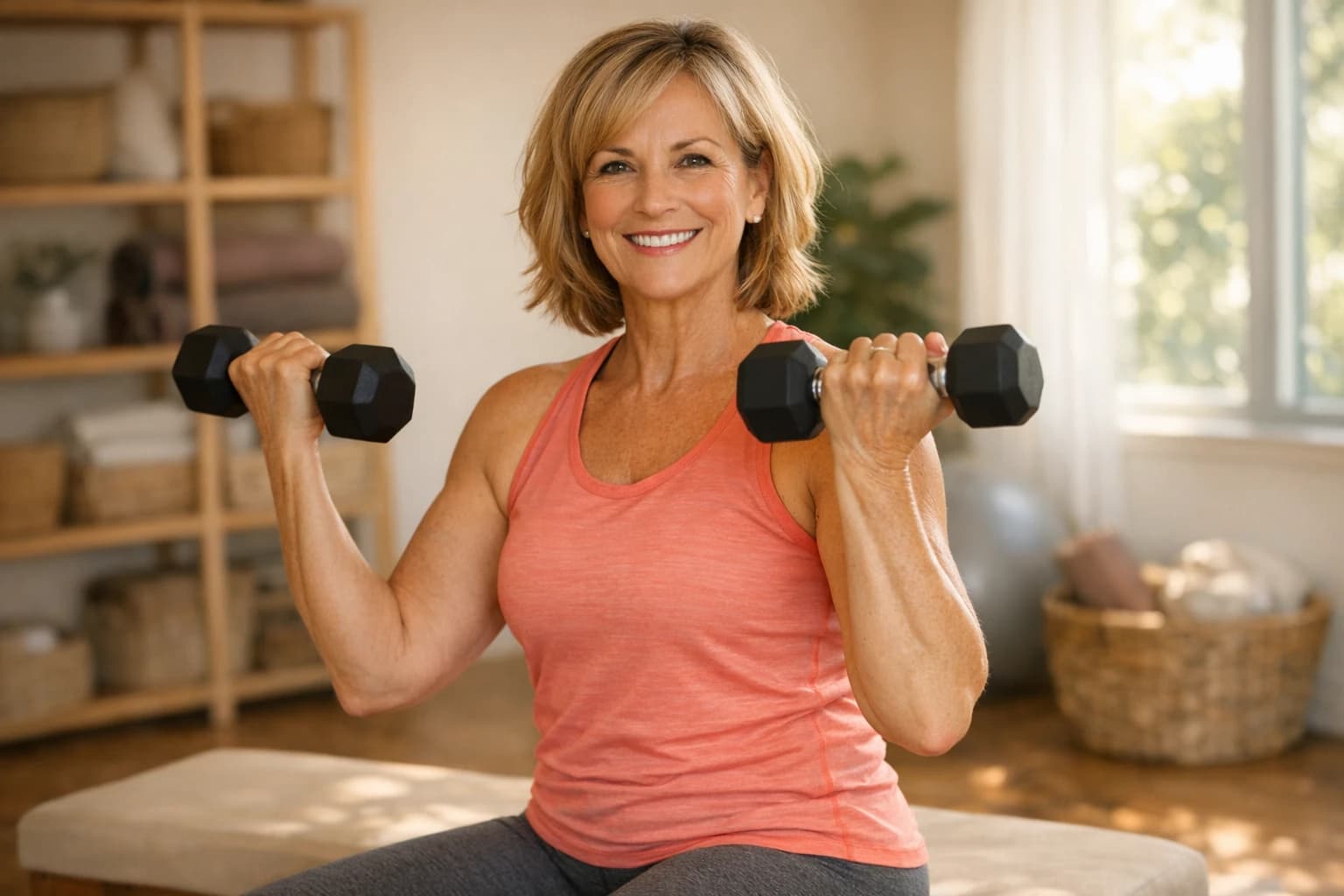
If you are looking up strength training for osteopenia over 50, there is a decent chance you got a scan result that made things feel real. Maybe you were told your bones are thinning. Maybe you saw the word osteopenia and immediately started wondering what you should stop doing. Maybe you want to get stronger but you are worried about doing the wrong exercise and making things worse.
That reaction makes sense.
A lot of people hear osteopenia and assume they need to get fragile. In reality, the right kind of strength training is one of the best things you can do for your bones, muscles, balance, and long-term independence. The goal is not to train recklessly. The goal is to load your body enough to help it adapt.
If you are starting from scratch, it also helps to read building bone density after 50, balance exercises for beginners over 50, and functional training over 50 for beginners.
Why strength training for osteopenia over 50 matters so much
Bones respond to demand.
When you place safe, progressive load on your body, your muscles pull on bone. That mechanical stress is part of how the body gets the message that stronger tissue is still needed. That is a big reason walking, resistance training, and impact that matches your ability are often recommended for bone health.
Strength training also helps with more than bone density.
It can improve posture, leg strength, grip strength, confidence on stairs, balance, and your ability to catch yourself if you trip. That matters because fracture risk is not only about bone density. It is also about falling in the first place.
For many adults, this kind of training also supports musculoskeletal weakness, high blood pressure, and overall energy.
What osteopenia actually means
Osteopenia means bone density is lower than ideal, but not as low as osteoporosis. Think of it as a warning light, not a final sentence.
It tells you bone loss is happening and that now is a smart time to do something about it.
That something usually includes movement, protein, adequate nutrition, sleep, and looking at bigger drivers if needed. For some people that may include medication decisions with their medical team. But even when medication is part of the picture, strength training still matters.
What kind of strength training helps bone health
The best strength training for osteopenia over 50 usually includes three pieces.
Resistance exercises
These are exercises where your muscles work against load. That load can come from dumbbells, kettlebells, machines, resistance bands, or your own body weight.
Examples include:
- squats to a box or bench
- step-ups
- deadlift patterns
- rows
- overhead presses when appropriate
- carries
- sit-to-stand drills
The point is not to collect trendy exercises. The point is to choose movements you can do with good form and then progress gradually.
Weight-bearing movement
Weight-bearing means your bones are supporting you while you move. Walking, stair climbing, hiking, and standing exercise all count. These may not replace strength training, but they work well alongside it.
If you want a gentle starting point, walking routine for beginners over 50 and summer walking plan in Duluth MN can help.
Balance and posture work
Training balance is not fluff. It lowers fall risk and helps people move with more confidence. Bone health plans that ignore balance are missing something important.
That is why exercises like split-stance holds, supported single-leg balance, heel-to-toe walking, and posture work belong in the conversation too.
What many people get wrong about strength training for osteopenia over 50
Some people go too hard too fast. Others avoid resistance training entirely because they are scared.
Neither extreme is helpful.
Mistake one: only doing tiny pink-dumbbell workouts forever
Very light exercise can be a good starting point, but bones and muscles usually need progressive challenge. If the load never increases, your body has less reason to adapt.
Mistake two: jumping into high-intensity lifts with no coaching
You do not need to prove anything. Heavy loading can be useful for some people, but technique, history, pain, and confidence all matter. A rushed online program is not the same as a thoughtful progression.
Mistake three: forgetting nutrition
Exercise helps. So do protein, minerals, vitamin D status, and overall health. If recovery is poor or nutrition is weak, progress gets harder.
That is where nutrition coaching can support the work you are already doing in the gym or at home.
How to start strength training for osteopenia over 50 safely
The safest place to start is usually with movement patterns that build confidence and control.
Start with the basics
Think sit to stand, step up, row, carry, hinge, and press. These are useful because they train the exact things you need in daily life.
A beginner session might include:
- sit-to-stand from a bench
- supported split squat or step-up
- dumbbell or band row
- hip hinge drill with a kettlebell or light dumbbell
- wall push-up or incline push-up
- farmer carry
That may not sound flashy. Good. It is supposed to be useful.
Use a level that feels challenging but controlled
You should feel like you are working. You should not feel panicked, twisted, or on the edge of losing form.
A lot of adults do well starting with two or three sessions per week. That leaves enough recovery time while still creating momentum.
Progress slowly on purpose
You do not need giant jumps in weight. Sometimes better form, one more rep, a steadier tempo, or a slightly heavier dumbbell is enough.
This is one reason exercise therapy can be so helpful. A tailored starting point makes it easier to keep going.
Exercises that often work well
The exact program depends on your fracture risk, movement history, pain, and confidence level, but these categories are often useful.
Lower-body strength
Squats to a chair, step-ups, split squats, and deadlift variations help train the hips and legs. That matters for bone loading and for real-life function.
Upper-body pulling and pushing
Rows, chest-supported pulls, wall push-ups, incline push-ups, and overhead pressing variations can improve upper-body strength and posture.
Core and trunk stability
For bone health, core work is usually more about bracing, posture, and control than endless crunches. Carries, bird dogs, and anti-rotation drills are often more practical.
Carries
Farmer carries are underrated. They build grip strength, posture, trunk strength, and confidence moving under load.
Movements that may need more caution
This part matters because people often get vague advice like do not bend or twist, then end up afraid of normal life.
Caution does not mean fear. It means being thoughtful.
If you have advanced osteoporosis, vertebral fractures, significant pain, or major balance issues, certain loaded flexion or twisting movements may not be right for you yet. High-impact exercise may also need to be scaled.
That does not mean no training. It means the program should match your current situation.
Why strength training helps more than bone density
A lot of adults start this because they want better scan results. Fair enough. But the everyday benefits often show up first.
People feel steadier getting out of a chair. They carry groceries more easily. Their back feels less cranky. They trust their body more.
That confidence is a big deal.
Training can also support mood and energy, especially if you have felt yourself getting less capable year by year. If fatigue has been part of the picture, chronic fatigue and low activity can become a loop. Strength work helps break it.
Bone health is not just an exercise problem
If you are doing the work and still worried about progress, it may be worth looking at the bigger picture.
Bone health can be influenced by menopause, low protein intake, under-eating, poor sleep, chronic inflammation, thyroid issues, certain medications, and nutrient gaps. Sometimes people are told to just take calcium and walk more when the picture is more complicated than that.
That is where biomarker testing and a fuller evaluation can help. You may need a better look at vitamin D, thyroid function, recovery, hormone shifts, or other metabolic factors that affect tissue quality and strength.
A realistic weekly plan for beginners
A simple week might look like this:
- two or three strength sessions
- walks on several days
- a short balance routine most days
- one or two mobility sessions to keep you moving well
It does not need to be perfect. It needs to be repeatable.
If you live in northern Minnesota, this is also a good place to think seasonally. Winter often cuts down on casual movement. That makes deliberate strength work even more valuable.
FAQ about strength training for osteopenia over 50
Is strength training safe if I have osteopenia?
Usually, yes. In many cases it is one of the most helpful things you can do. The key is matching the exercises and load to your current ability and medical history.
Should I avoid weights completely if my bones are thinning?
No. Avoiding load completely is usually not the answer. Safe progressive resistance is often part of the solution.
How often should I strength train with osteopenia?
Many adults do well with two or three sessions per week. Enough challenge helps, but so does recovery.
What is better for osteopenia, walking or strength training?
Both help, but they do different jobs. Walking supports weight-bearing activity. Strength training gives your muscles and bones a stronger progressive signal.
The bottom line
The best strength training for osteopenia over 50 is not random, punishing, or fear-based. It is progressive, practical, and built around helping you stay strong enough for real life.
If you want help building a plan that fits your body, your scan results, and your current fitness level, Duluth Metabolic can help. Reach out through contact if you want support that connects bone health, strength, nutrition, and long-term resilience.