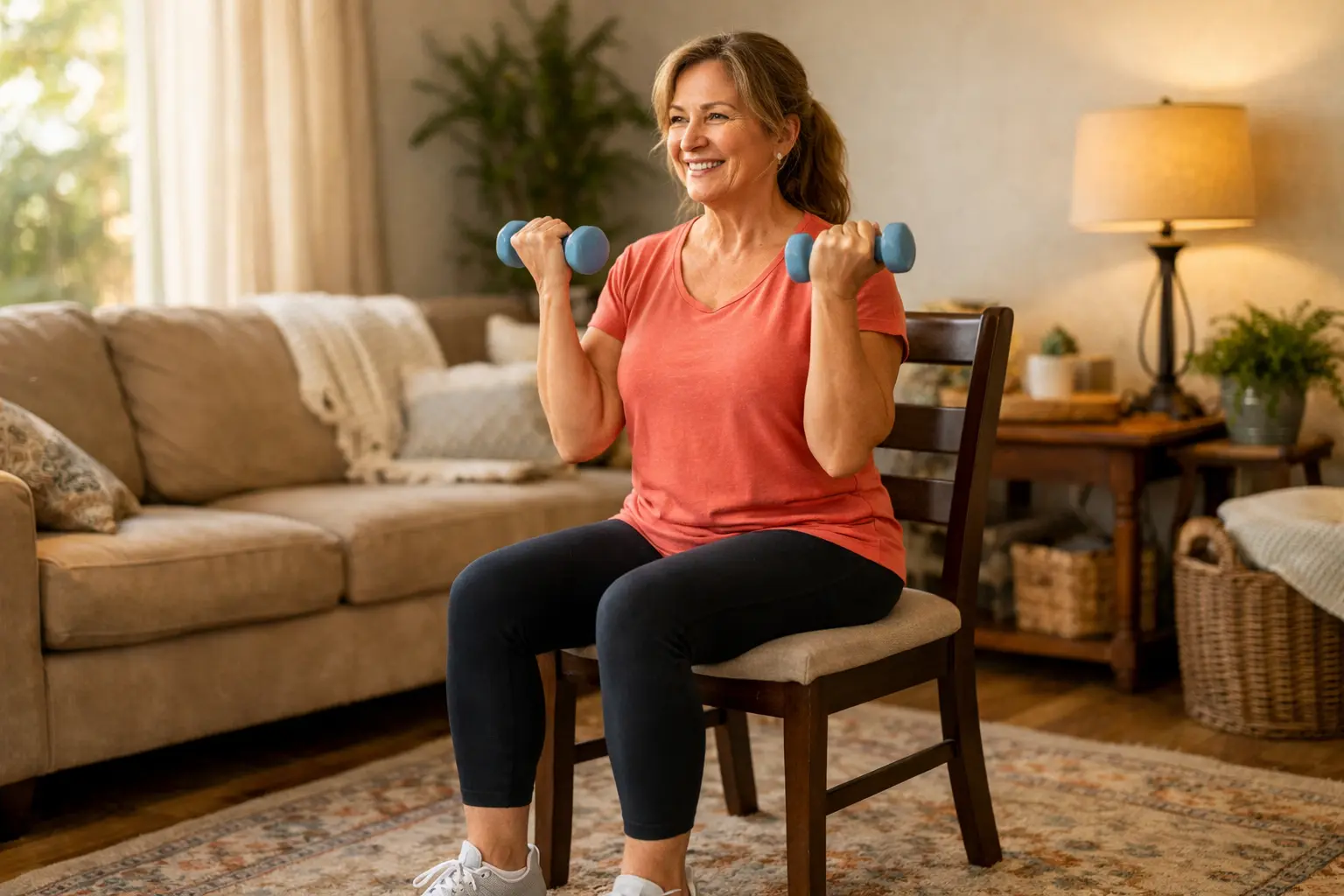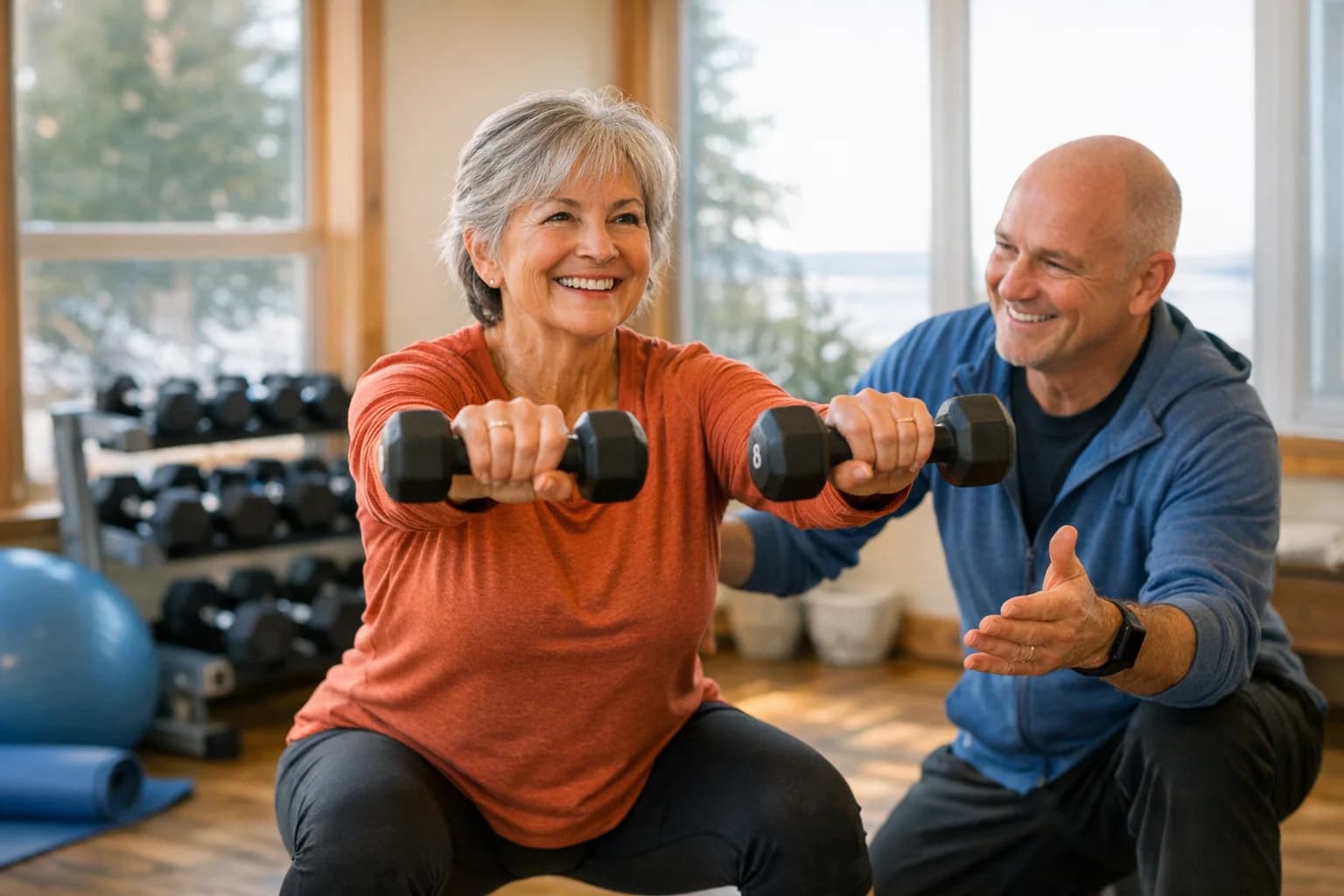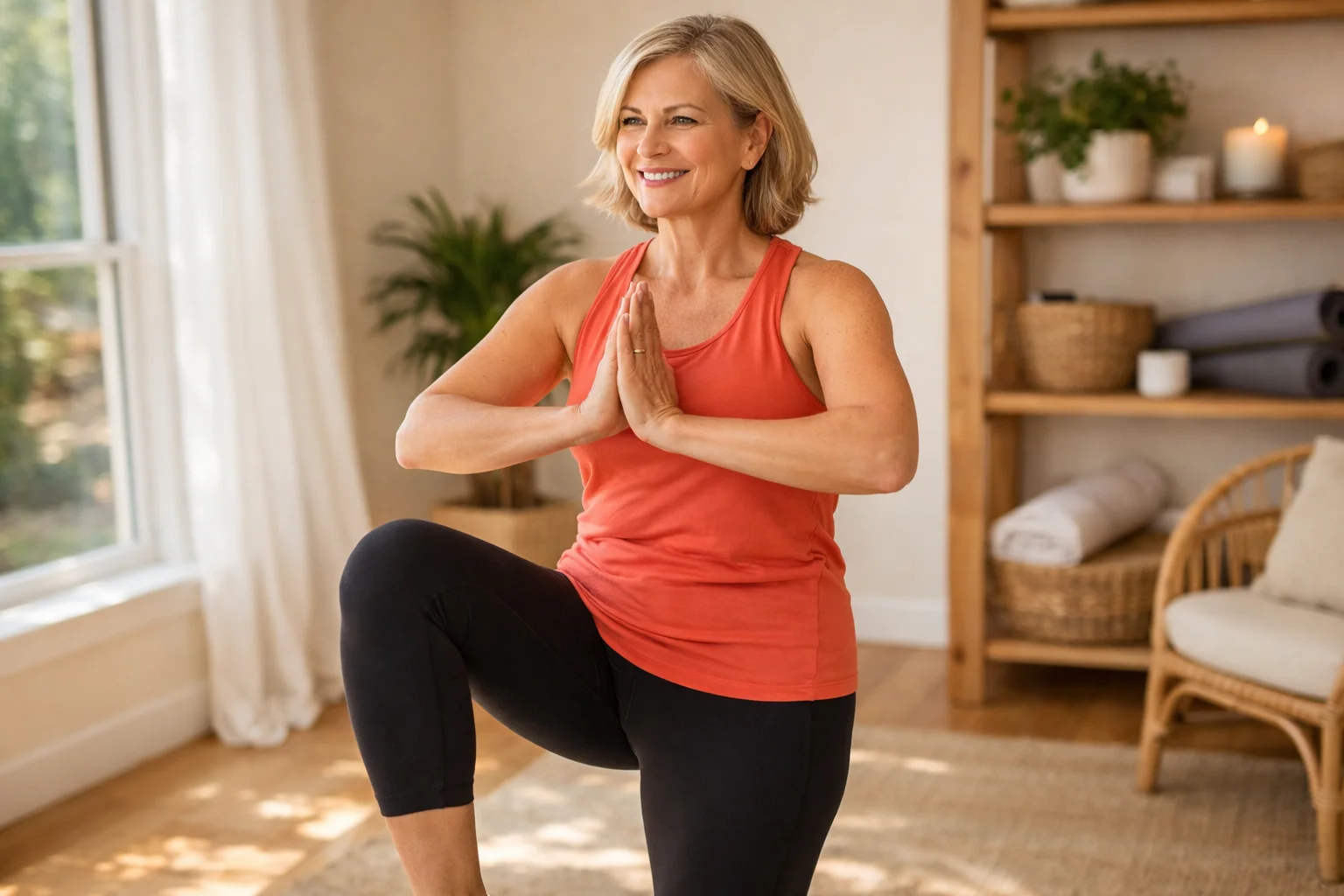
If you are looking for standing core exercises over 50, there is a good chance you are not chasing abs for the beach. You probably want your body to feel steadier. You want less back irritation, better balance, more confidence getting around, and a kind of strength that actually helps in normal life.
That is exactly where standing core work shines.
A lot of top-ranking articles on this topic do one of two things. They either give you random ab moves with flashy headlines, or they turn everything into floor work that many adults do not enjoy, do not tolerate well, or simply do not want to keep doing. The better opportunity is a plan that feels more functional, more realistic, and easier to repeat.
That is what this guide is for.
At Duluth Metabolic, we care about core strength because it is tied to much more than appearance. It affects posture, gait, stability, lifting, stairs, balance, and how confident people feel moving through the day. If you want more support beyond this article, it also helps to read chair strength training over 50, functional training over 50 for beginners, and strength training with bad knees over 50.
Why standing core exercises over 50 make so much sense
Your core is not just your abs.
It is the whole muscular system that helps stabilize your trunk and transfer force between your upper and lower body. That includes your abdominals, obliques, back muscles, glutes, hips, and the deeper stabilizers that keep you upright and controlled when you walk, bend, twist, carry, and reach.
That is why standing core exercises over 50 can be so useful. They train the core in the positions where people actually live.
You are usually not getting groceries while lying on your back. You are not climbing stairs in a crunch position. You are not loading laundry, catching your balance, or getting out of the car from a mat on the floor.
Standing work can help with:
- balance and stability
- posture and trunk control
- lower back support
- safer rotation and better coordination
- confidence for daily movement
- a smoother bridge into broader strength training
For adults dealing with musculoskeletal weakness, osteoporosis, or the deconditioning that often shows up with chronic fatigue, that kind of function matters.
What competitor articles get right, and where they stop short
Some of the better-performing articles in search results do make a useful point. They explain that standing core work can improve balance, reduce strain from repetitive crunching, and feel more accessible for older adults.
That part is true.
Where many of them fall short is structure. They tend to offer a list of moves without explaining how to choose them, how many to do, how hard they should feel, or how to build a routine that carries over into real strength.
Some also lean too far into “senior fitness” language that makes everything sound fragile. Many adults over 50 do need modifications, but they also need real training.
So instead of treating this as gentle movement only, this guide treats standing core work like what it is supposed to be: a functional strength tool.
What makes a standing core exercise actually useful
A useful standing core movement usually does at least one of these things:
- teaches you to resist unwanted motion
- improves control while your limbs move
- links your hips, rib cage, and trunk together
- helps you transfer force without wobbling or collapsing
- improves balance while keeping you breathing normally
That is why the best moves are often less dramatic than people expect. Slow, controlled exercises done well usually beat aggressive twisting and momentum-driven reps.
Standing core exercises over 50 should start with posture and bracing
Before you worry about special exercises, get the setup right.
Stand tall without trying to be stiff. Let your ribs stack over your hips. Keep a soft bend in your knees. Feel your feet on the floor. Then gently brace your midsection like you are preparing for someone to poke you in the stomach.
Not a huge hard squeeze. Just enough to create support.
A lot of adults either do nothing here or overdo it. The goal is steady tension you can breathe with.
Five standing core exercises over 50 that work well
Standing march
This is simple, but it is not nothing.
Standing marches teach you to stabilize on one leg while the other leg moves, which is a huge part of walking, stairs, and balance. Stand tall and slowly bring one knee toward hip height without leaning back or drifting side to side. Pause, lower with control, and switch.
If balance feels shaky, keep a hand near a wall or countertop.
Standing core exercises over 50 should include anti-rotation work
Anti-rotation is one of the most useful forms of core training because it teaches your trunk to resist twisting when force is trying to pull you off line.
A banded press, often called a Pallof press, is a great example. Stand sideways to a resistance band anchored at chest height. Hold the band at your chest, press it straight out, and resist the urge to rotate. Bring it back slowly.
This builds deep trunk control in a way that looks a lot like real-life stability.
Suitcase carry or offset hold
Holding one weight on one side of your body sounds simple, but it lights up the side-body and deeper trunk muscles fast.
Carry a dumbbell, kettlebell, or even a heavy grocery bag on one side while staying tall and level. If walking is too much at first, just hold it in place for time.
This is one of the best examples of how standing core exercises over 50 can look very practical and still work hard.
Standing oblique knee drive
This move helps train controlled rotation and side-body strength without throwing your back around.
Stand tall, bring one knee up toward the opposite elbow, and rotate only as much as you can control without collapsing forward. Move slowly. Pause briefly. Return to center. Repeat on both sides.
The goal is control, not speed.
Squat with overhead reach
A supported bodyweight squat paired with a controlled overhead reach teaches the core to stabilize while the arms move and the body changes levels.
Sit your hips back as if you are sitting into a chair, stand up, and then reach overhead without arching through the lower back. If needed, use a chair for reference or support.
This is a great bridge movement because it ties lower-body strength to trunk control.
Wall plank or incline plank hold
If getting on the floor is a barrier, a wall or counter plank can still train the whole front side of the body.
Place your forearms or hands on a wall, countertop, or sturdy surface. Walk your feet back until your body forms a long line. Brace your core, squeeze your glutes lightly, and hold while breathing.
This is often a much better starting point than dropping straight into floor planks that people cannot maintain well.
How to turn standing core exercises over 50 into a real routine
You do not need a huge workout.
A strong beginner routine might include four or five movements, done two or three times per week, with a focus on quality. For example:
- standing march for 8 to 10 reps per side
- anti-rotation press for 8 to 12 reps per side
- suitcase hold or carry for 20 to 40 seconds per side
- standing oblique knee drive for 8 to 10 reps per side
- wall plank hold for 20 to 30 seconds
Start with one or two rounds. Over time, add a round, a little resistance, or a little time under tension.
That is enough for a lot of people to begin feeling real change.
Common mistakes with standing core exercises over 50
The biggest mistake is chasing intensity before control.
People start swinging, twisting too far, holding their breath, or moving so fast that the core never has to do its job. That usually turns core work into sloppy cardio.
Other common mistakes include:
- leaning backward during knee raises
- arching the back during overhead movements
- using heavy resistance too soon
- treating every move like a speed challenge
- skipping rest and form cues because the exercises look easy
If you feel a standing move mostly in your neck, lower back, or hip flexors, slow down and clean up the position.
When standing core work is better than floor work
For many adults, standing core exercises are easier to stick with because they remove friction.
You do not need to get down to the floor. You do not need a mat. You do not need to build your whole workout around ab work. You can add a few movements to the start or end of a strength session, or use them as a short standalone routine on lower-energy days.
That makes them especially useful for people who want movement to feel doable again.
They also work well if you are already building strength with beginner strength training over 50 in Duluth, MN, walking routine for beginners over 50, or strength training over 60 in Duluth, MN.
When you should be careful
Standing core work is often approachable, but it is still exercise.
If you have severe osteoporosis, recent surgery, significant dizziness, uncontrolled pain, or a history of falls, it is worth getting more individualized guidance. The same goes if certain motions trigger sharp back pain or you feel unstable the whole time.
That does not always mean stop forever. It may mean you need a smarter starting point.
This is where exercise therapy can be especially helpful. Good programming should meet you where you are and still move you forward.
FAQ about standing core exercises over 50
Are standing core exercises over 50 effective?
Yes. They can be very effective for improving balance, trunk control, posture, and functional strength, especially when done with control and progression.
Are standing core exercises safer than crunches?
For many adults, yes. Standing exercises often place less repeated stress on the neck and lower back, and they train the core in more functional positions. That said, form still matters.
How often should I do standing core exercises over 50?
Two to three focused sessions per week works well for many people. Some lighter bracing and balance work can also be done more often if it feels good.
What if I cannot balance well yet?
Use support. A wall, countertop, or sturdy chair can make a big difference. You are not cheating. You are giving yourself a stable place to build from.
Stronger balance starts with better control
The point of standing core exercises over 50 is not to collect ab exercises. It is to build a body that feels more capable in everyday life.
You want to move with less wobble. You want to bend, carry, reach, and walk with more confidence. You want your training to help real life feel easier.
That is exactly what good standing core work can do.
If you want help building a personalized plan for strength, balance, energy, and long-term function, contact Duluth Metabolic. We can help you put exercise into a bigger plan that actually fits your body and your life.