If you are interested in strength training with joint pain for beginners over 40, you may feel stuck in a frustrating spot.
You know movement is supposed to help. You also know your knees, shoulders, hips, or hands do not always cooperate.
Maybe you have tried to work out before and paid for it the next day. Maybe you keep hearing that strength training is important, but most beginner advice seems written for people whose joints feel brand new. After enough stop-and-start attempts, many adults end up believing they either have to push through pain or avoid lifting altogether.
Neither option is very good.
At Duluth Metabolic, we see this a lot. Adults over 40 are often not afraid of work. They are afraid of getting hurt, flaring an old problem, or confirming that their body cannot handle exercise anymore. The good news is that strength training with joint pain for beginners over 40 can absolutely be done well. In many cases, it is one of the best things you can do.
If you want the bigger picture too, it helps to read strength training with back pain over 40, functional training for beginners over 40, and exercise therapy in Duluth MN.
Why strength training matters when your joints hurt
A lot of people assume painful joints need less strength work.
Usually they need smarter strength work.
When muscles get weaker, joints end up doing more of the work. Knees take more stress because hips and glutes are not helping enough. Shoulders get irritated because the upper back is not doing its job. Low back tension increases because the trunk and legs have lost capacity. Over time, normal life starts feeling harder than it should.
That is why avoiding all resistance training often backfires.
Done well, strength training helps by building support around the joints, improving balance, giving you more confidence with daily tasks, and making you more resilient when life gets physical.
Joint pain does not automatically mean you should stop training
This part matters.
Pain is information. It is not always a stop sign.
There is a difference between a movement feeling unfamiliar, muscles getting tired, or a mildly sore joint calming back down within a day, versus sharp pain, unstable pain, or a flare that keeps escalating. Learning that difference helps people stop treating every sensation like damage.
If a workout leaves you wrecked for three days, that is not proof you cannot train. It is usually proof the starting dose was wrong.
The best starting point is lower than your ego wants
Most beginners over 40 with joint pain do better when they start easier than they think they need to.
That can feel weird, especially if you used to be athletic or still think of yourself as someone who should be able to do more.
But the goal is not to impress yourself on day one. The goal is to create sessions you can repeat.
That usually means:
- fewer exercises
- lighter weights
- slower reps
- more control
- a little discomfort maybe, but no wild flare afterward
Consistency beats hero workouts every time.
Strength training with joint pain for beginners over 40 should focus on patterns first
You do not need a fancy split program right away.
You need movement patterns that help you rebuild capacity without beating up the joints that already feel sensitive.
Good early patterns often include:
- squat or sit-to-stand variations
- hinging patterns like deadlift setup drills or light Romanian deadlifts
- rows and supported pulling work
- presses that do not irritate the shoulders
- carries
- step-ups
- glute bridges
- core work that teaches bracing and control
That list is not exciting. It works.
Use joint-friendly exercise variations instead of quitting the pattern
This is where many people get unstuck.
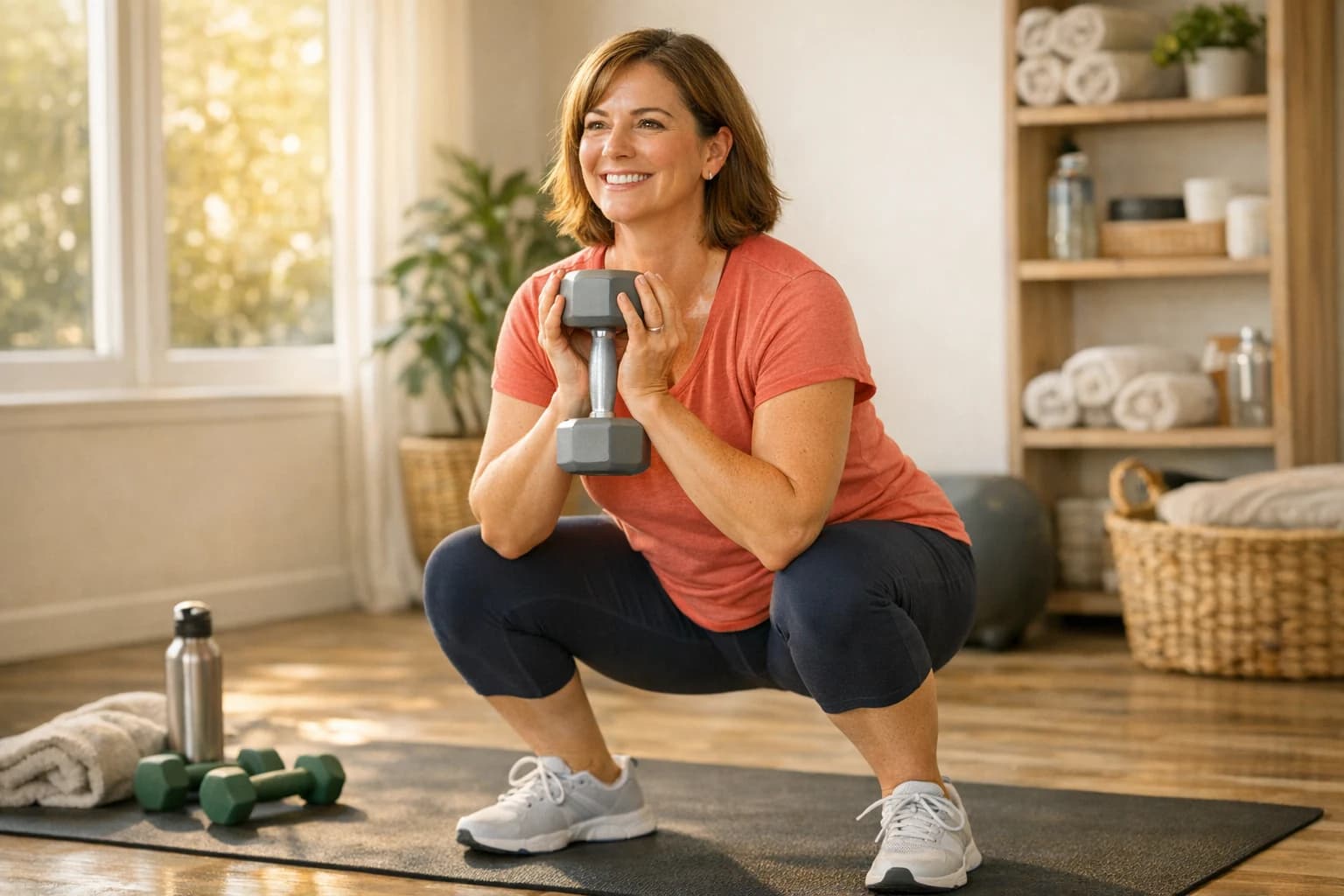
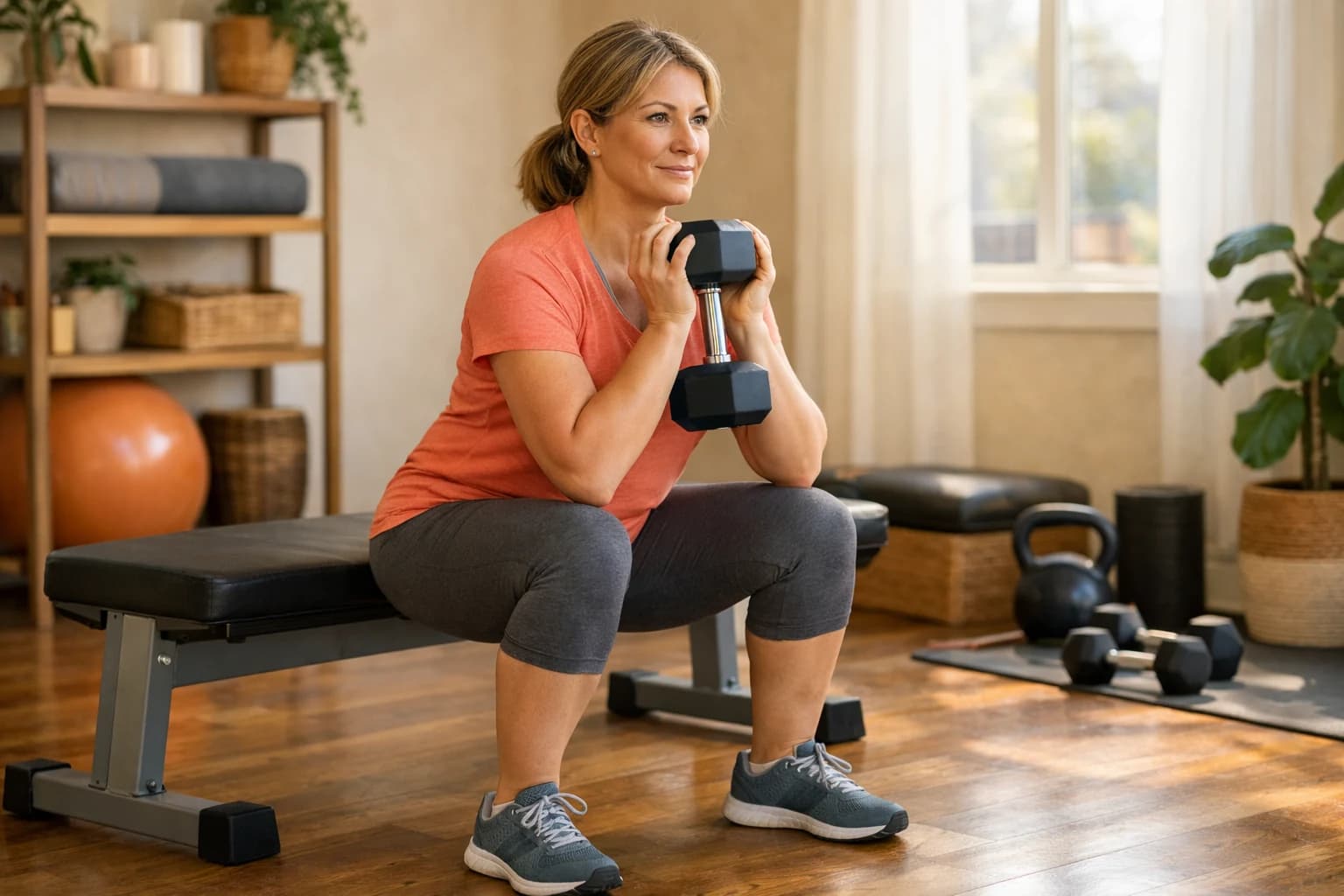
If a deep squat hurts your knees, that does not mean squatting is banned forever. It may mean you use a box squat, hold onto a support, reduce depth, or slow the movement down.
If push-ups bother your wrists or shoulders, wall push-ups or incline push-ups may be fine.
If overhead pressing feels sketchy, a landmine press, dumbbell floor press, or machine press may feel much better.
If lunges feel awful, step-ups or split squats with support may work.
The movement pattern usually matters more than the exact exercise.
The most helpful exercises are often the least dramatic ones
People with joint pain sometimes think they need special rehab forever or, on the other end, that they need to grind through brutal workouts to get results.
Usually the sweet spot is simple work done consistently.
Sit-to-stands and squats to a box
These build leg strength, confidence, and control without forcing you into a range of motion your knees or hips hate.
Glute bridges and hip hinges
These help the hips do more so the knees and low back do less.
Rows and upper-back work
A stronger upper back can make a huge difference for posture, shoulders, and overall movement quality.
Carries
Farmer carries and suitcase carries build grip, trunk stability, and full-body confidence in a very practical way.
Step-ups
These help with stairs, hiking, balance, and leg strength, and they are easy to scale.
If hiking or outdoor activity is one of your goals, train for hiking in Duluth MN and hiking training over 40 in Duluth MN are good next reads.
Tempo and range of motion matter more than people think
You do not always need a different exercise. Sometimes you need a different speed.
Slowing a rep down often improves control, reduces joint irritation, and helps you feel which muscles are actually supposed to be working. Shortening the range of motion for a while can do the same thing.
That is not cheating. That is training.
A partial squat you can do well is more useful than a full squat you dread and avoid.
Your weekly plan does not need to be complicated
For most beginners over 40 with joint pain, two or three full-body sessions per week is plenty.
That may be enough to start building strength without overwhelming recovery.
A week might look like this:
- two strength sessions focused on major movement patterns
- walking on most days
- a little mobility work where you are truly stiff
- one or two easier recovery days instead of trying to be all-out seven days a week
This is also why walking and strength training plan for beginners over 40 and 10-minute morning mobility routine over 40 pair so well with strength work.
Recovery habits decide whether training feels helpful or punishing
If your joints are already sensitive, bad recovery shows up fast.
That includes poor sleep, under-eating protein, not drinking enough water, long stretches of sitting, and weekend workouts that are much harder than anything you did during the week.
This is where strength training stops being just a gym problem.
Protein matters. Sleep matters. Stress matters. Blood sugar swings matter. Walking matters.
For some adults, protein requirements over 40 and anti-inflammatory foods for back pain help as much as changing the exercise selection.
Strength training with joint pain for beginners over 40 should still challenge you
Being joint-friendly is not the same thing as being pointless.
You should still feel like you worked.
The difference is that the work should feel productive, not punishing. You want muscles doing the job, joints tolerating the session, and enough recovery left that you can come back in a couple days and do it again.
If every workout turns into a test of pain tolerance, the plan is off.
When to adjust and when to keep going
A little post-workout soreness is normal, especially if you are new.
A helpful rule of thumb is this: if symptoms settle within a day, stay mild, and do not change how you move through the day, you are probably in a workable zone. If pain spikes sharply, changes your gait, makes a joint feel unstable, or keeps getting worse for days, pull back and adjust.
That adjustment may mean less load, fewer reps, a shorter range of motion, or a different variation.
It does not usually mean quitting altogether.
FAQ about strength training with joint pain for beginners over 40
Is it safe to lift weights if I have arthritis or sore joints?
Often, yes. Many people with joint pain do very well with resistance training when the exercises are chosen well and the starting dose is reasonable. Stronger muscles often make painful joints feel better supported.
What if my knees hurt when I squat?
Try changing the variation before abandoning the pattern. Box squats, supported squats, shallower depth, slower reps, or step-ups may feel much better while still building strength.
Should I avoid pain completely when I train?
Not always. Mild discomfort does not automatically mean harm. The bigger question is whether symptoms stay manageable and settle back down, or whether they spike and keep escalating.
What is the best workout split for beginners over 40 with joint pain?
For many people, two or three full-body strength sessions each week works better than a body-part split. It is simpler, easier to recover from, and easier to stick with.
You are not too broken to get stronger
If you have been avoiding exercise because your joints feel unreliable, that fear makes sense. It just should not get the final vote.
A smart plan for strength training with joint pain for beginners over 40 can help you rebuild support, move with more confidence, and stop treating every flare like proof that your best years are behind you.
If you want help building a plan that fits your body and your current starting point, contact Duluth Metabolic.