If you are looking for strength training for hikers over 40, you probably want something more useful than a generic leg-day list.
You want to hike without your knees talking back the whole way down. You want to feel steadier on roots, rocks, and uneven trails. You want to climb a long hill without feeling like your heart and legs are having separate emergencies.
That is exactly where good strength work helps.
For adults over 40, hiking fitness is not just about cardio. It is about leg strength, hip stability, core control, balance, and enough muscular endurance to keep moving when the trail gets steep or your pack gets annoying. Around Duluth, that matters even more. Hills, stairs, rocky sections, and changing weather can expose weak links fast.
At Duluth Metabolic, we like strength training for hikers over 40 because it gives exercise a clear real-life purpose. You are not training for a mirror. You are training to move well outdoors, recover better, and keep doing the things you enjoy.
If that is your goal, it also helps to read train for hiking duluth mn, hiking training over 40 duluth mn, and functional training for metabolic health.
Why strength training for hikers over 40 matters
A lot of people assume hiking itself is enough training for hiking.
Sometimes that is true for easy terrain and short outings. But once you want more distance, more elevation, more stability, or fewer aches, hiking alone often stops being enough.
After 40, muscle mass and recovery usually do not stay on autopilot. Balance can get less automatic. Old ankle sprains, cranky knees, stiff hips, and low back tension start to matter more. That does not mean your body is done. It means preparation matters more.
The right strength training for hikers over 40 helps you:
- climb hills with less struggle
- handle descents with better control
- stay steadier on uneven ground
- reduce overuse stress on knees and hips
- carry a day pack more comfortably
- recover faster between hikes and workouts
For people dealing with musculoskeletal weakness, chronic fatigue, or osteoporosis, this kind of training can do far more than random cardio alone.
What hiking actually demands from your body
Hiking looks simple until the trail gets real.
You need single-leg strength every time you step up, step down, or catch yourself on uneven ground. You need glute strength to power climbs. You need quad strength and eccentric control for descents. You need calves and ankles that can handle constant terrain changes. You need a core that keeps your trunk stable when your lower body is doing the messy work.
You also need work capacity.
A hiker may not need a one-rep max squat, but they do need enough strength endurance to repeat good movement for an hour, two hours, or a full day.
That is why the best training for hikers does not chase random gym fatigue. It builds movement patterns that carry over to the trail.
The best strength training for hikers over 40 focuses on a few key patterns
You do not need twenty exercises.
You need a handful that cover the right jobs.
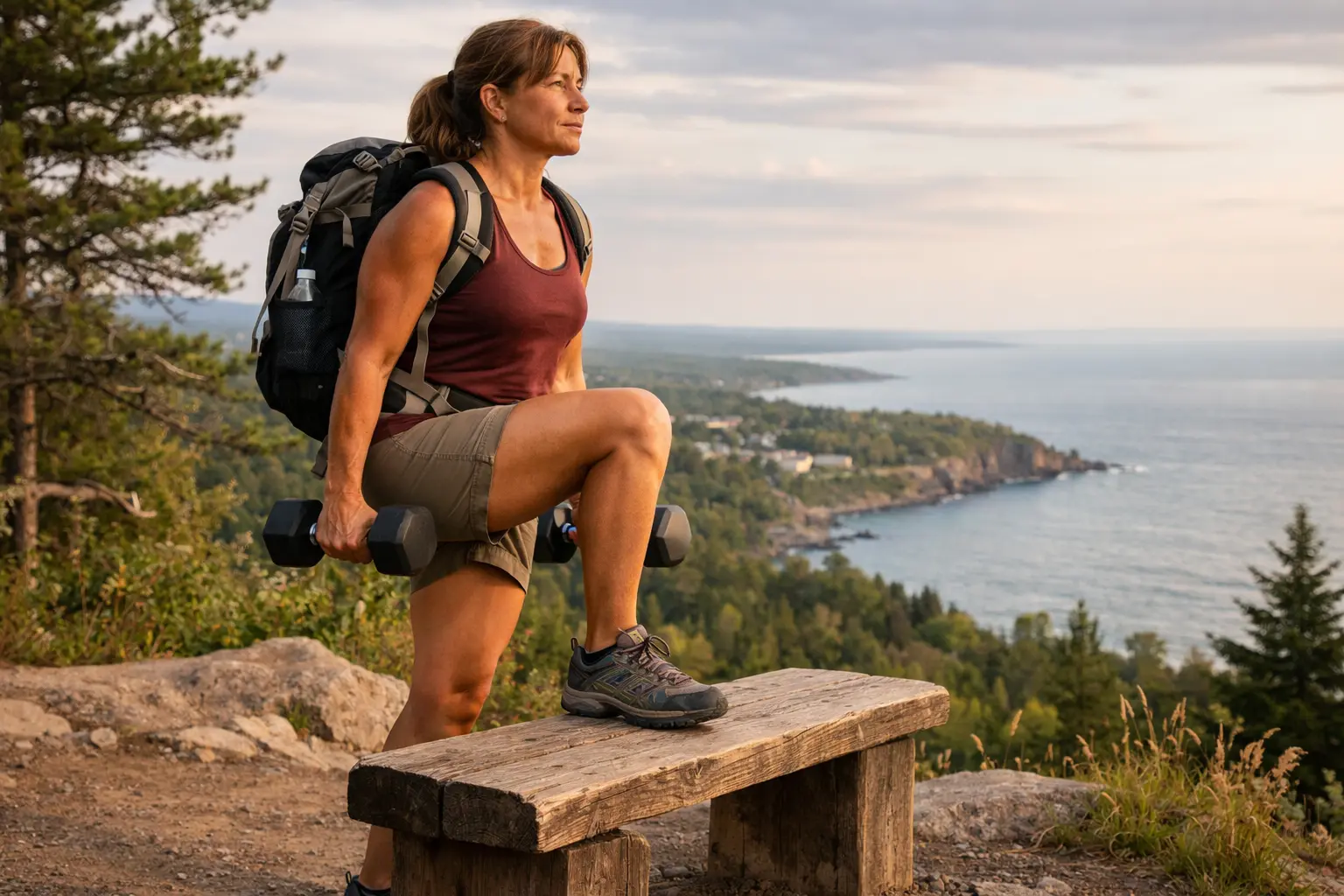
Step-up patterns
Step-ups are one of the most useful exercises for hikers because they directly train uphill mechanics. They build quads, glutes, and balance without needing complicated equipment.
They also let you scale the challenge. Lower box for beginners. Higher box or added dumbbells as you get stronger.
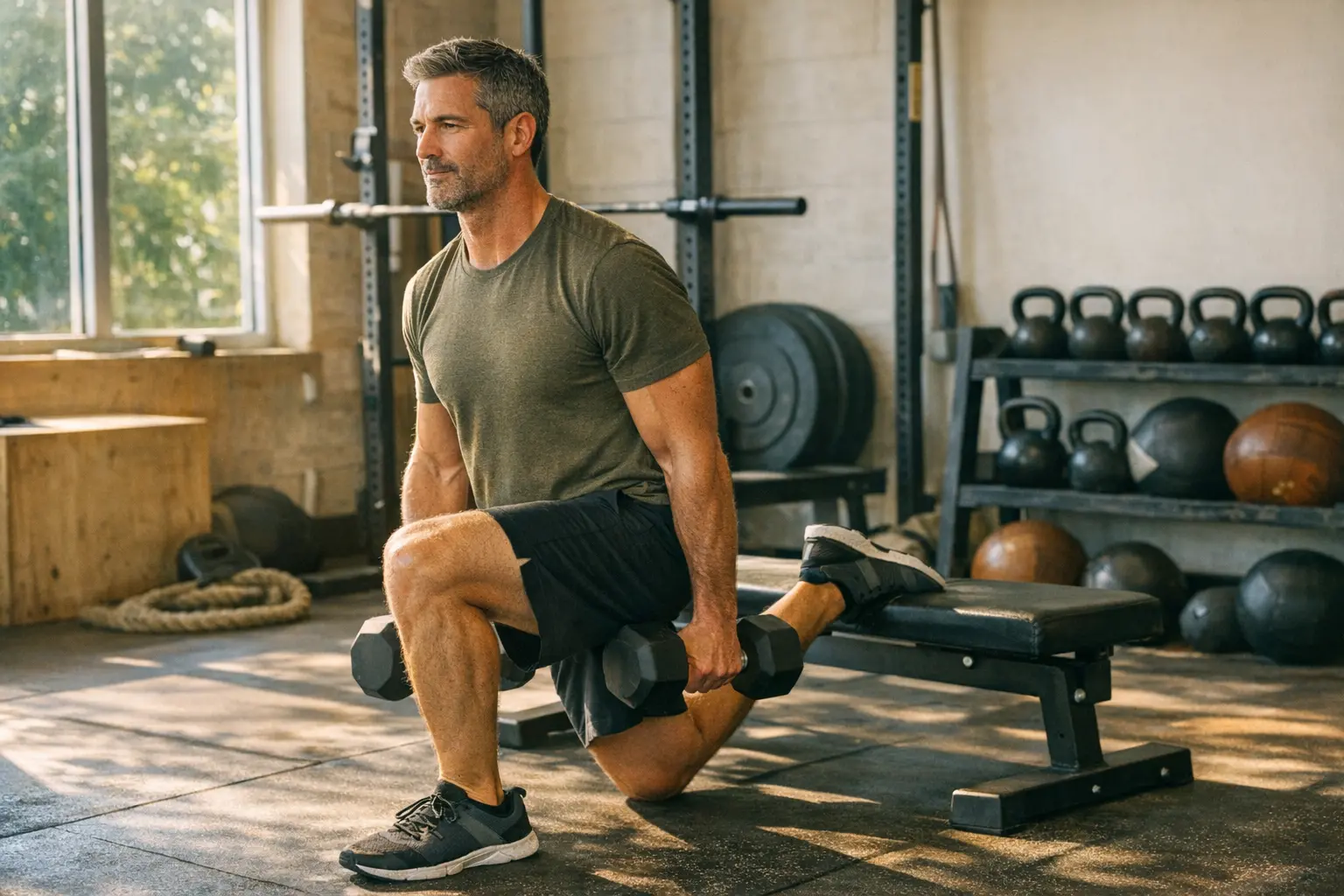
Split squats and lunges
These train single-leg strength and control, which matters a lot for hiking. Reverse lunges are often a nice place to start because they are usually easier on the knees than forward lunges.
Hinge patterns
Romanian deadlifts, hip hinges, and similar movements build glutes and hamstrings. Those muscles matter for climbing, posture, and protecting your back when you are carrying a pack.
Carries
Farmer carries are one of the best underused exercises for hikers. They train grip, posture, core stability, and the ability to keep moving under load. That is a pretty direct trail skill.
Calf and ankle work
Your ankles and calves quietly do a ton of trail work. Calf raises, controlled step-downs, and balance drills can improve both durability and confidence.
Core stability
You do not need circus-core training. You need enough trunk stability to resist wobbling, twisting, and collapsing as you hike. Dead bugs, planks, carries, and controlled anti-rotation work go a long way.
A practical strength training plan for hikers over 40
Most busy adults do well with two or three strength sessions per week.
That is enough to move the needle without turning your schedule into a full-time project.
Day 1: lower body strength and control
Start with:
- step-ups, 3 sets of 8 to 10 per side
- reverse lunges or split squats, 3 sets of 6 to 8 per side
- Romanian deadlifts, 3 sets of 8 to 10
- calf raises, 2 to 3 sets of 12 to 15
- farmer carries, 3 rounds of 30 to 60 seconds
Day 2: upper body and trunk support
Hiking is leg-heavy, but upper body and trunk still matter, especially if you use trekking poles or carry a pack.
Try:
- dumbbell rows, 3 sets of 8 to 10
- incline push-ups or dumbbell presses, 3 sets of 8 to 10
- overhead carry or suitcase carry, 3 rounds
- dead bugs or planks, 2 to 3 sets
- light mobility for hips and thoracic spine
Day 3: optional endurance-strength blend
If you want a third session, keep it moderate.
A simple circuit works well:
- step-downs
- bodyweight squats or goblet squats
- glute bridges
- band rows
- carries
- easy walking or incline treadmill work
This day should leave you feeling practiced, not crushed.
For many adults, that kind of structure works better than hard bootcamp-style sessions. You can also pair it with 20-minute workouts for busy adults over 40 if time is tight.
How to train for Duluth trails specifically
Duluth hiking has its own flavor.
The city gives you steep climbs, lake-influenced weather, stairs, roots, wet rock, and enough elevation changes to humble people who only train on flat ground.
That means strength training for hikers over 40 in Duluth should include:
More single-leg work
A lot of trail instability shows up one leg at a time. Step-ups, split squats, and step-downs deserve a big role.
More downhill control
Going up is hard. Going down is where many knees get angry. Slow step-downs, split squats, and eccentric quad work help a lot here.
Balance under fatigue
You do not just need balance when fresh. You need it when your legs are tired. That is why simple finishers like loaded carries or balance drills after leg work can be helpful.
A realistic aerobic base
Strength matters, but you still need lungs. Brisk walks, hill repeats, stair sessions, and zone 2 work support the kind of trail stamina many hikers are actually missing. Zone 2 training for beginners over 40 can help with that side of the equation.
Common mistakes hikers over 40 make in the gym
One mistake is skipping strength work and only walking more.
Walking is great. Hiking is great. But if every uphill section exposes weak glutes or every downhill section hurts your knees, more walking alone may not fix the problem.
Another mistake is chasing soreness instead of function.
If a workout makes you so wrecked that it ruins the next several days, that is not smart hiking prep. Good training should build capacity, not just prove you suffered.
Another common problem is ignoring recovery. Adults over 40 usually do better with consistent moderate progress than occasional hero days followed by soreness and frustration.
That is one reason we like exercise therapy for people who want a plan that matches their actual body instead of a generic template.
What if you have knee pain, back pain, or low confidence?
You do not need to wait until everything feels perfect before getting stronger.
In fact, a lot of people feel better because they start training the areas that have been underprepared.
If your knees are touchy, start with lower step heights, reverse lunges, sit-to-stands, and glute work.
If your back gets irritated, focus on hinge form, core stability, carries, and gradual loading instead of jumping into fast or sloppy movements.
If balance feels shaky, begin with supported single-leg work and controlled tempo before trying anything fancy.
That is also where biomarker testing can sometimes matter more than people expect. If fatigue, slow recovery, low muscle function, or persistent aches are tied to nutrient issues, inflammation, sleep problems, or blood sugar swings, the training plan is only part of the picture.
Nutrition matters more than many hikers realize
You cannot out-train poor recovery.
If you want better results from strength training for hikers over 40, make sure your body has the basics it needs:
- enough protein to support muscle repair
- regular meals instead of under-eating all day
- hydration, especially in warmer months
- carbs placed where they actually support activity
- recovery meals after longer efforts
This is especially important for adults who say they feel flat, weak, or ravenous after hiking. What to eat before hiking Duluth MN and what to eat after hiking Duluth MN are good follow-up reads.
A sample week for hikers over 40
A simple week could look like this:
- Monday: strength session
- Tuesday: easy walk or mobility
- Wednesday: strength session
- Thursday: hill walk or zone 2 cardio
- Friday: recovery walk or off day
- Saturday: hike
- Sunday: optional short strength or mobility session
That is enough structure to improve without making fitness feel like a second job.
If you want more direction, accountability coaching can help people stay consistent through weather changes, work stress, and the usual life interruptions.
FAQ about strength training for hikers over 40
How many days a week should hikers over 40 strength train?
Two days per week is often enough to make real progress. Three can work well if recovery, schedule, and stress are in a good place.
What are the best exercises for hiking hills?
Step-ups, split squats, Romanian deadlifts, carries, and calf work are some of the most useful. They build the leg and trunk strength needed for climbs and descents.
Can strength training help with downhill knee pain?
Yes, especially when it improves quad strength, glute strength, and eccentric control. Step-downs and split squats are often helpful when used appropriately.
Is hiking itself enough exercise after 40?
It can be part of a solid routine, but many adults benefit from separate strength work to improve resilience, balance, and performance on the trail.
What if I am a beginner?
Start simple. Bodyweight step-ups, sit-to-stands, carries, and short walking sessions can build a strong base. You do not need advanced exercises to get good results.
The goal is not to survive hikes, it is to enjoy them
The best strength training for hikers over 40 helps you show up to the trail with more confidence, more control, and less wear and tear afterward.
That matters whether you want to enjoy local Duluth trails, keep up with friends and family, or simply feel stronger in a body that still has a lot of living to do.
If you want help building a hiking-friendly plan that matches your current fitness, pain history, and metabolic health goals, Duluth Metabolic can help. Contact us to learn more about exercise therapy, nutrition support, and a more personalized path forward.