If you are searching for anti-inflammatory soup recipes, there is a good chance you want food that feels calming, simple, and worth making again. Maybe your digestion has been off. Maybe your joints feel achy. Maybe your blood sugar is all over the place and you want meals that leave you steady instead of stuffed or sleepy.
Soup can be a great fit for that.
A good soup is warm, easy to digest, flexible, and surprisingly useful for meal prep. It can help you get more vegetables, protein, herbs, and fiber into the week without making every meal feel like a project. If you are working on diabetes, high blood pressure, chronic fatigue, or weight management, the way you build soup matters more than whether it sounds trendy.
If this is your lane, it also helps to read anti-inflammatory foods for gut health, anti-inflammatory meal prep for busy adults, budget anti-inflammatory meals, and anti-inflammatory dinner for weight loss.
What the top-ranking anti-inflammatory soup recipes usually focus on
The current search results tend to split into two camps.
EatingWell surfaces roundup-style freezer soups. Nyssa's Kitchen leans into a turmeric chicken soup with vegetables, broth, and coconut milk. Dani's Healthy Eats uses a creamy carrot, ginger, cauliflower, and squash soup angle with a strong seasonal comfort vibe.
Those articles do a good job with flavor and recipe inspiration. What they usually do not do is help people think through soup as part of metabolic health. Many recipes are light on protein. Some lean heavily on blended vegetables without much staying power. Others talk about anti-inflammatory ingredients without saying how to build a soup that actually keeps you full or supports steadier blood sugar.
That is the gap this article is meant to fill.
What makes a soup anti-inflammatory in real life
Anti-inflammatory does not mean perfect.
It usually means the soup is built around whole-food ingredients that tend to reduce some of the day-to-day load on the body. Think vegetables, beans, lentils, quality protein, olive oil, herbs, spices, and broth instead of a long list of ultra-processed add-ins.
A soup tends to work better when it includes:
- protein so it actually counts as a meal
- fiber from vegetables, beans, or lentils
- flavorful herbs and spices like ginger, garlic, turmeric, rosemary, or parsley
- enough fat to make it satisfying
- a carb load that makes sense for your body and your day
That last part matters. A soup can be full of healthy ingredients and still leave you scavenging the kitchen later if it has no protein and almost no staying power.
Why soup is such a good fit for gut health and blood sugar goals
Soup slows people down.
It is warm. It is hydrating. It is easier to batch cook. It also makes vegetables more approachable for people who do not love giant salads or raw produce all day.
For people with digestive issues, cooked ingredients can sometimes feel gentler than cold, crunchy meals. For people trying to improve blood sugar, soups can be a useful way to build a meal around protein and fiber instead of bread alone. For people who are tired, soup is one of the few things that can feel nourishing without being heavy.
That is one reason soup pairs well with meal prep for blood sugar control, gut health meal plan for beginners, and low-carb meal prep for busy adults.
Anti-inflammatory soup recipes work best when you use a simple formula
You do not need ten separate shopping lists. A basic framework works.
Start with aromatics
Onion, garlic, leeks, shallots, celery, carrots, or ginger create the base. This is where a lot of flavor begins.
Add vegetables with a purpose
Leafy greens, zucchini, mushrooms, cauliflower, broccoli, cabbage, carrots, squash, and tomatoes all work well depending on the style of soup.
Include a real protein source
Chicken, turkey, salmon, white beans, lentils, shredded beef, ground turkey, tofu, or Greek yogurt swirled in later can all help the soup feel like dinner instead of an appetizer.
Use broth, herbs, and spices generously
This is where soup goes from bland to repeatable. Turmeric, black pepper, ginger, dill, rosemary, thyme, cumin, smoked paprika, parsley, and lemon can do a lot of work.
Choose the starch level on purpose
Some soups are better with beans or lentils. Some work with a modest amount of rice or potatoes. Some feel best as lower-carb soups built around protein and vegetables. The right call depends on your appetite, activity level, and how your body responds.
7 anti-inflammatory soup recipes and templates worth repeating
These are not chefy. That is the point.
1. Turmeric chicken vegetable soup
This is one of the easiest anti-inflammatory soup recipes to keep in the rotation.
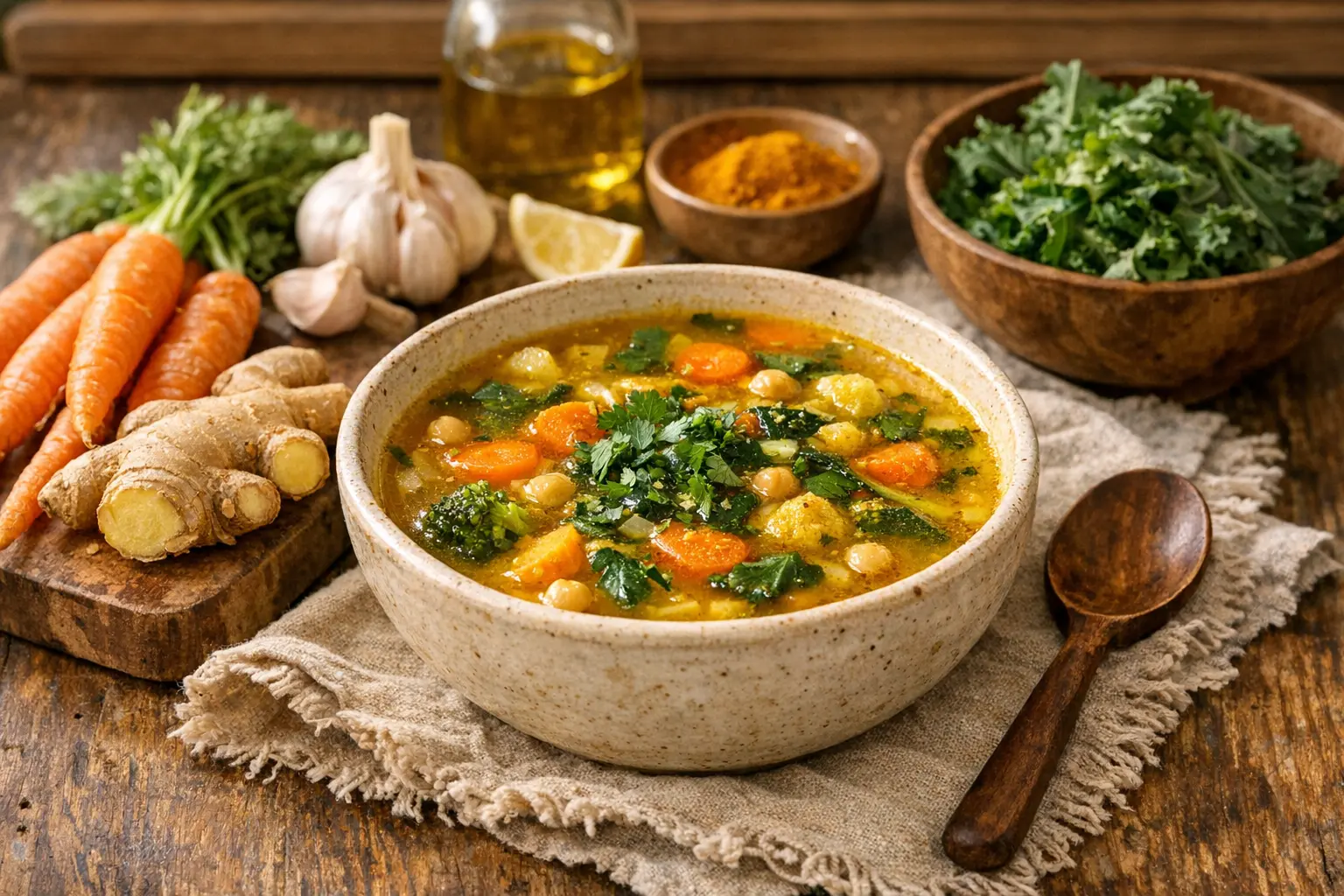
Use onion, garlic, carrots, celery, shredded chicken, broth, turmeric, black pepper, parsley, and a handful of greens. If you want it creamier, add a little coconut milk. If you want more staying power, add white beans.
Why it works:
- protein from the chicken
- colorful vegetables
- turmeric and garlic for flavor
- flexible enough for meal prep
This is a great place to start if you want a soup that feels comforting without being heavy.
2. Ginger carrot cauliflower soup with protein on the side
A blended soup can still work well, but it needs some backup.
Roast or simmer carrots, cauliflower, onion, ginger, and broth, then blend until smooth. Add olive oil or coconut milk for texture. To make it a real meal, pair it with shredded chicken, turkey meatballs, hard-boiled eggs, or a side of plain Greek yogurt and seeds.
That is the piece many recipe roundups miss. A blended vegetable soup can be lovely, but it usually needs protein to keep you satisfied.
3. Lentil and spinach anti-inflammatory soup
If you tolerate legumes well, this is one of the most practical soups around.
Cook onion, garlic, carrots, lentils, diced tomatoes, broth, cumin, turmeric, and spinach. Add lemon at the end. Lentils bring fiber and plant protein, which can make this a more balanced meal than a lot of soup options.
If you are trying to improve fullness and meal rhythm, this type of soup often works better than lighter broth-only options.
4. White bean chicken soup with rosemary and kale
This is a strong weeknight soup because it tastes hearty without needing a heavy cream base.
Use shredded chicken, white beans, onions, garlic, kale, broth, rosemary, and a squeeze of lemon. Add olive oil to finish.
The mix of protein, fiber, and broth makes this especially good for colder months or stressful weeks when you want something easy to reheat.
5. Salmon and vegetable chowder without the heavy crash
A lot of chowders taste great and then leave people needing a nap.
A lighter version can still be rich enough to satisfy. Build it with onion, celery, potatoes in a moderate amount, salmon, broth, dill, and a little milk or coconut milk. Keep the potatoes supportive, not dominant.
This type of soup can fit well if you are trying to eat more omega-3-rich meals. It also pairs nicely with ideas from anti-inflammatory foods for high blood pressure and best foods for fatigue.
6. Turkey zucchini meatball soup
If you want something that feels substantial, this is a great move.
Make simple turkey meatballs with herbs, simmer them in broth with zucchini, carrots, spinach, and onion, and finish with fresh parsley. You can add white beans if you want more fiber.
This is an especially nice anti-inflammatory soup recipe for people who do better with a higher-protein dinner.
7. Simple gut-friendly soup for rough digestion days
When your stomach is irritated, simpler is often better.
Use broth, shredded chicken, cooked carrots, zucchini, ginger, rice in a small amount if tolerated, and soft greens. Keep the seasoning gentle. This can be a good reset meal after travel, stress, or a run of heavier eating.
If digestion is a major issue for you, gut health after antibiotics, gut health morning routine, and why am I bloated after every meal are useful follow-ups.
Ingredients that help anti-inflammatory soup recipes work harder for you
A few ingredients do a lot of heavy lifting.
Ginger
Ginger adds warmth and can be especially nice in soups when digestion feels sluggish or unsettled.
Garlic and onions
These build flavor and can make simple soups feel much more satisfying.
Turmeric with black pepper
Turmeric gets talked about constantly, but in soup it is genuinely practical. Use enough to notice it, not so much that the whole pot tastes dusty.
Olive oil
A drizzle at the end can improve flavor and make the soup feel more complete.
Greens and herbs
Spinach, kale, parsley, dill, and cilantro help soups feel fresher and more nutrient-dense.
Common mistakes with anti-inflammatory soup recipes
Making the soup mostly liquid and calling it dinner
If your soup has almost no protein and very little fiber, it may be comforting but it probably will not keep you full.
Relying on ultra-processed add-ins
Creamy packaged soups, salty bases, and highly processed toppings can pull the meal away from what you were aiming for.
Going too hard on ingredients your gut does not tolerate
Even healthy foods can backfire if your digestion is touchy. Raw garlic, huge amounts of beans, or overly spicy soup may not be the right call for every person.
Eating soup with a giant pile of bread because the soup is not enough on its own
Sometimes the bread is not the problem. Sometimes the soup just needed more protein.
FAQ about anti-inflammatory soup recipes
Are anti-inflammatory soup recipes good for weight loss?
They can be. Soups that include protein, vegetables, and fiber often help people feel full on fewer impulsive calories. The key is making the soup substantial enough to count as a meal.
Can soup help with blood sugar control?
Yes, especially when the soup is built around protein and fiber instead of mostly noodles or potatoes. CGM monitoring can be useful if you want to see which soups actually leave you steady.
What is the best anti-inflammatory soup for gut health?
There is no single best one. Many people do well with simpler brothy soups, cooked vegetables, gentle seasoning, and enough protein. Your tolerance matters.
Can I freeze anti-inflammatory soup recipes?
Usually yes. Chicken vegetable soup, lentil soup, turkey meatball soup, and bean-based soups often freeze well.
Anti-inflammatory soup recipes should make your week easier
The best soup is not the one with the most wellness buzzwords. It is the one you will actually make, eat, and feel good after.
That may be a turmeric chicken soup on Sunday, a lentil soup for lunches, or a gut-friendly broth-based soup when your body needs a quieter day. Done well, soup can support energy, digestion, fullness, and a steadier week overall.
If you want help building meals that work for your body instead of fighting it, Duluth Metabolic can help with nutrition coaching, practical support, and a more personalized plan. If you are ready for that kind of help, contact us.