If you have ever finished a meal and felt sleepy, shaky, extra hungry, or weirdly wired an hour later, there is a good chance your blood sugar had something to do with it.
Most people think the only way to fix that is to cut carbs hard, count every gram, or overhaul their entire diet. Sometimes that helps. But sometimes a smaller change can make a meal work better right away.
One of the most practical tools is meal order for blood sugar control.
That phrase sounds technical, but the idea is simple. The order you eat your food can change how quickly glucose hits your bloodstream and how dramatic the spike feels afterward. For many people, especially those dealing with diabetes, insulin resistance, energy crashes, or weight management frustration, that can be a genuinely useful shift.
At Duluth Metabolic, we like this strategy because it is practical. It does not require a perfect pantry, a complicated meal plan, or a separate menu from the rest of your family. It just asks you to eat the same meal a little differently.
If you want more context on how food patterns affect metabolism, it also helps to read what is metabolic health, meal timing for blood sugar control, high-fiber foods for blood sugar control, and protein for blood sugar control.
What meal order for blood sugar control means
Meal order is sometimes called meal sequencing or carbs-last eating.
The basic idea is this:
You start with fiber-rich vegetables when you have them. Then you eat protein and fats. Carbs come later instead of first.
So instead of eating the bread basket first, then finishing your salad, then getting to the chicken, you flip it around. You eat the salad and protein first. The bread, potatoes, rice, pasta, or dessert comes later in the meal.
That may sound too simple to matter, but there is good reason it can help.
Why meal order can affect blood sugar
Carbohydrates digest more quickly than protein, fat, and fiber.
When a meal starts with fast-digesting carbs by themselves, glucose can rise quickly. Your body responds with insulin to move that glucose out of the bloodstream. For some people, that response is smooth. For others, especially people with insulin resistance or early blood sugar dysregulation, the pattern can feel rough.
They get the spike, then the crash. Or the post-meal slump. Or the cravings that show up again too soon.
Starting with vegetables, protein, and fat slows the pace of the meal. Fiber changes stomach emptying. Protein and fat add a buffer. Carbs still count, but they arrive into a different metabolic environment than if they were eaten first on an empty stomach.
That can mean a smaller spike, steadier energy, and less of that roller-coaster feeling after meals.
What the research shows about meal order for blood sugar control
This is not just wellness folklore.
Several studies have looked at what happens when people eat the same foods in different orders. A Cornell and Weill Cornell research line found that eating vegetables and protein before carbohydrates led to lower post-meal glucose and insulin excursions than eating carbohydrates first. A more recent Diabetes Care report on carbohydrates-last meal order found better time-in-range and lower glycemic variability in people with type 2 diabetes. Other review and consumer-health articles have helped popularize the concept, but many of them stop at the headline and never get practical.
That is where people get stuck.
Knowing that meal order matters is one thing. Knowing how to use it in your own kitchen, at a restaurant, or in a chaotic workday is another.
The simplest version of meal order for blood sugar control
If you want a short version, this is the one to remember.
Eat vegetables first when they are part of the meal.
Then eat protein and fats.
Eat starches and sweeter foods later.
That can look like:
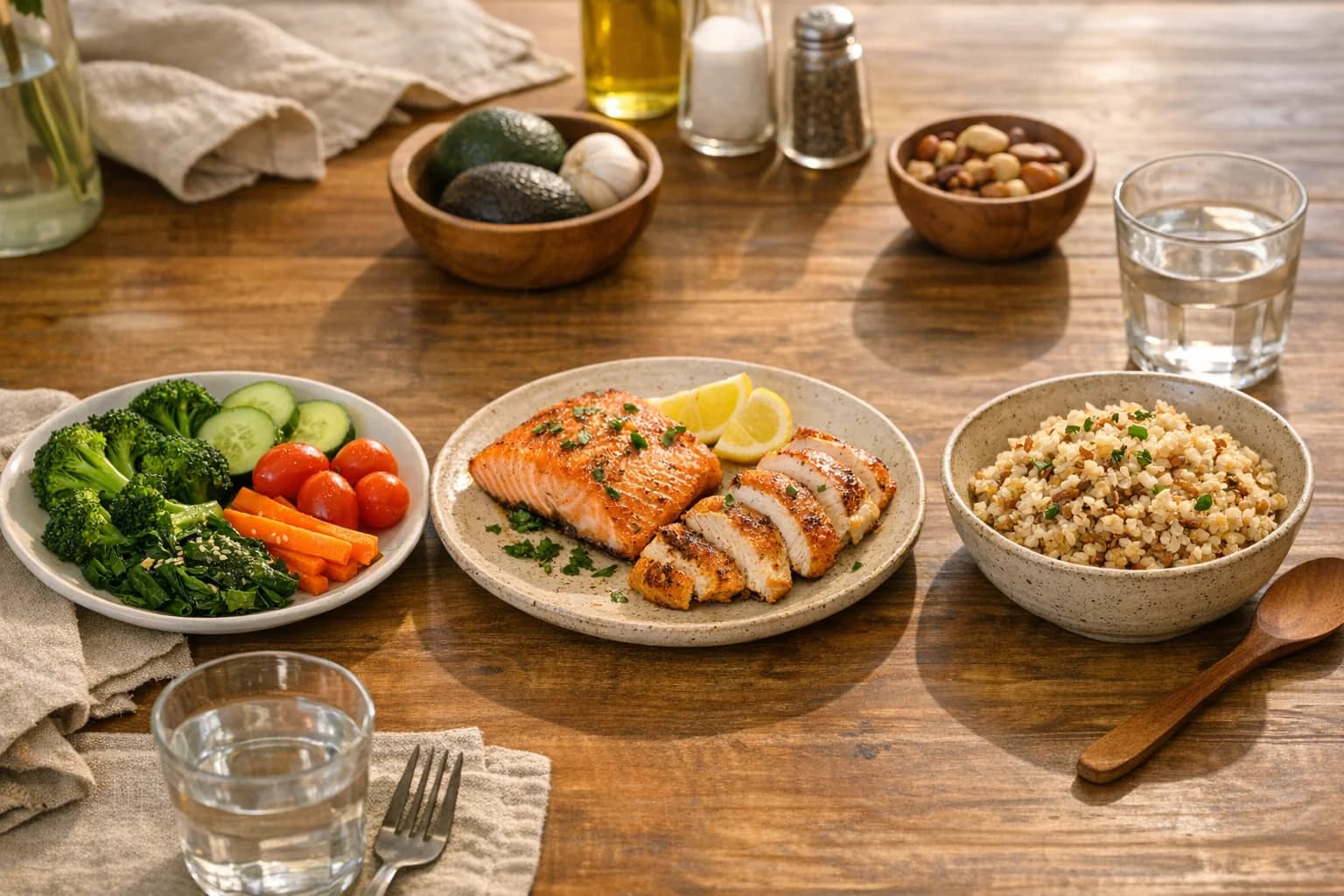
- salad first, chicken next, rice last
- broccoli first, salmon next, potatoes last
- burger patty and side salad first, fries later
- eggs first, toast later
- Greek yogurt and nuts first, fruit after
You do not need to do this perfectly every time to notice a difference.
Meal order for blood sugar control at breakfast
Breakfast is one of the best places to test this because the difference can be obvious.
A lot of people start the day with toast, a pastry, juice, cereal, or oatmeal by itself. Even foods that sound healthy can hit hard if there is not much protein or fiber around them.
A better sequencing approach might look like:
- eggs first, toast after
- Greek yogurt first, granola and fruit after
- a protein smoothie before the banana or muffin
- sausage or eggs with breakfast potatoes eaten later
That does not mean oatmeal is bad. It means oatmeal may work better when it follows protein instead of showing up alone.
If breakfast is your trouble zone, blood sugar-friendly breakfast ideas, best fruits for blood sugar control, and why is my blood sugar high in the morning are good next reads.
Meal order for blood sugar control at lunch and dinner
Lunch and dinner tend to be easier because meals often already include multiple components.
If you have a bowl with chicken, rice, vegetables, and sauce, do not stir it all together and attack the rice first. Start with the vegetables and protein. Then work into the rice.
If you are at a restaurant and bread lands on the table first, that is the moment this strategy matters most. You do not need to refuse the bread. Just wait until you have had some of the actual meal.
If you are eating pasta, have the salad and protein first. If taco night includes meat, peppers, beans, rice, tortillas, and guac, start with the protein and vegetables before chasing the chips or rice.
Those small changes are often easier than trying to white-knuckle portion control after the carb-heavy part already hit.
Does meal order let you eat whatever you want?
No. It helps, but it is not magic.
Meal order for blood sugar control can improve the way a meal lands, but it does not erase the amount of carbohydrate, total calories, sleep debt, stress load, or inactivity in the rest of life.
If a meal is huge, very sugary, and low in protein, sequencing may soften the blow a little, but it will not turn dessert into a blood sugar health food.
This is best used as one helpful lever, not as an excuse to ignore the bigger pattern.
Who may benefit most from meal order for blood sugar control
This strategy is often worth trying if you:
- feel sleepy or foggy after meals
- have prediabetes or type 2 diabetes
- see large swings on a continuous glucose monitor
- get hungry again soon after eating
- are working on insulin resistance
- want a lower-friction place to start with nutrition
It can also help people who feel overwhelmed by food changes. Some patients are not ready to rebuild their whole diet in one week. Starting with meal order gives them a concrete win right away.
That can build momentum for bigger shifts later.
What meal order looks like in real life
Real meals are messy. That is okay.
Sometimes dinner is a one-pot meal. Sometimes lunch is a sandwich at your desk. Sometimes your kid hands you half a granola bar in the car and that is all you have for a while.
So keep this strategy loose enough to survive real life.
If your meal is mixed together, you can still prioritize the parts with protein or vegetables first. If you have a sandwich and chips, eat the sandwich first and the chips later. If you are eating pizza, maybe start with a side salad or some chicken first if the option exists.
Perfection is not the point. Better sequencing is the point.
Meal order and CGM data
This is where things get interesting.
A lot of people do not fully believe a strategy like this until they see it on a monitor. Then they eat the same meal two different ways and watch what happens.
Sometimes the difference is modest. Sometimes it is dramatic.
That is one reason CGM monitoring can be so helpful. It turns food advice from theory into feedback. You stop wondering whether your lunch is fine and start seeing how your body actually responds.
For some patients, meal order becomes one of the easiest ways to improve time-in-range without feeling like they are living on restriction.
Meal order works even better with a few other habits
If you want better blood sugar without making life miserable, pair meal sequencing with a few basics:
- build meals around protein more often
- include fiber when you can
- walk after meals when it fits
- avoid showing up to meals ravenous
- sleep enough to give insulin sensitivity a fighting chance
These habits stack well. In fact, many people find that walk after meals for blood sugar, exercise snacks for blood sugar, and best time of day to exercise for blood sugar control make meal-order changes work even better.
Common mistakes people make with meal sequencing
One common mistake is turning it into another rigid rule set.
If meal order becomes stressful, you are missing the point. It is a tool, not a personality.
Another mistake is using it while still under-eating protein all day. If your meals are mostly starch with tiny bits of protein, sequencing can only do so much.
The third mistake is expecting it to fix everything. If your blood sugar is running high all day, sleep is terrible, stress is through the roof, and activity is minimal, you probably need a bigger plan than meal order alone.
That is where nutrition coaching, fasting protocols, and a more complete metabolic workup can help.
FAQ about meal order for blood sugar control
What is the best meal order for blood sugar control?
A simple pattern is vegetables first, then protein and fats, then carbohydrates later in the meal.
Does meal order really lower blood sugar?
For many people, it can reduce the size of the post-meal glucose spike and improve how steady they feel after eating. The effect varies from person to person.
Do I have to stop eating carbs?
No. This strategy is useful precisely because it does not require you to remove carbs entirely. It changes how you eat them, not just whether you eat them.
What if my meal is all mixed together?
Do your best. Prioritize bites with protein, vegetables, or fiber first when possible. You do not need a perfect plated meal to use the concept.
Is meal sequencing enough to reverse insulin resistance?
Usually not by itself. It is one helpful tool. Insulin resistance usually improves best with a broader plan that includes food quality, muscle-building activity, sleep, stress support, and sometimes more detailed monitoring.
If you want help understanding how your meals are affecting your energy and blood sugar, contact Duluth Metabolic. We can help you use CGM monitoring, nutrition coaching, and a more personalized plan that fits real life.