If you want an at-home workout plan for beginners over 40, there is a good chance you are not looking for a hardcore challenge. You are looking for a way to get moving without blowing up your knees, rearranging your whole schedule, or pretending you love the gym when you really do not.
That is a smart place to start.
For a lot of adults over 40, home workouts are not a backup plan. They are the plan that actually happens. They remove the drive time, the intimidation, the wasted half hour, and the feeling that exercise has to be an event. When the plan is realistic, consistency gets a lot easier.
At Duluth Metabolic, we like home training because it can build real strength, better energy, and better metabolic health when it focuses on the basics. If you want related reads, start with functional training for beginners over 40, 20-minute workouts for busy adults over 40, and bodyweight workouts for beginners over 40.
Why home workouts work so well after 40
The biggest reason is simple. People do them.
You do not need the perfect gym membership, the perfect outfit, or the perfect confidence level. You need a plan that fits around work, family, weather, soreness, and life.
For adults over 40, a good home plan can help with:
- preserving muscle
- improving insulin sensitivity
- supporting bone density
- reducing aches that come from too much sitting
- improving confidence with movement again
That matters whether your goal is better energy, fat loss, better blood sugar, or just feeling physically capable again. It is especially relevant for people dealing with weight management, musculoskeletal weakness, osteoporosis, or chronic fatigue.
What beginners over 40 need most
A lot of online workout content misses the point. It is either too easy to matter or too aggressive to sustain.
What works better is a plan built around a few movement patterns:
- squat or sit-to-stand
- hinge
- push
- pull
- carry or brace
- walking or simple conditioning
That is the stuff that translates to real life. Getting up from the floor. Climbing stairs. Carrying groceries. Moving with less stiffness. Feeling stronger instead of fragile.
What you need at home
You can do a lot with very little.
A good beginner setup is:
- a sturdy chair or bench
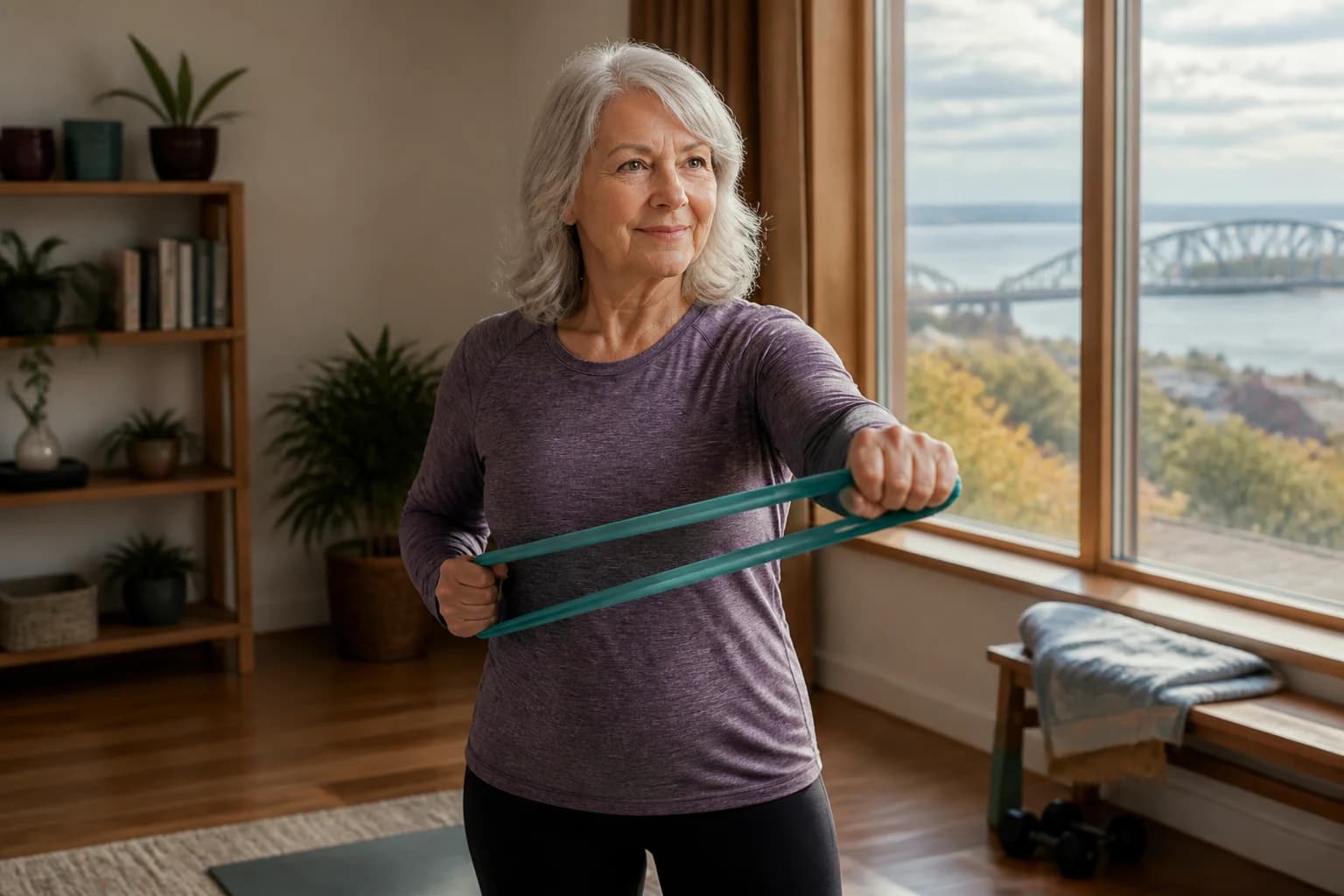
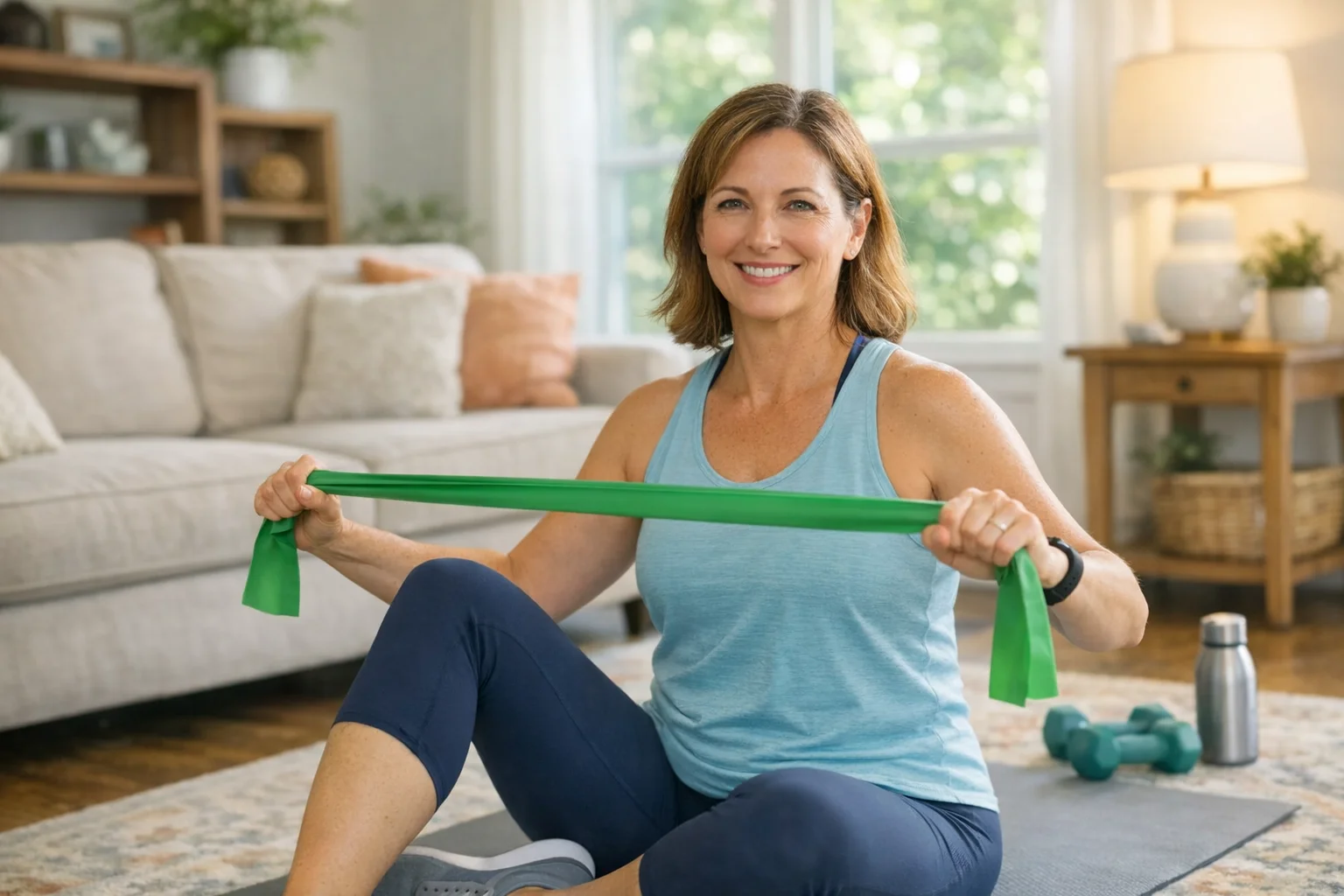
- a resistance band
- one or two dumbbells or kettlebells if available
- enough floor space to move safely
If you do not have weights yet, that is fine. Start with body weight and tempo. Slowing down a squat or push-up variation can make simple work challenging fast.
For more equipment-light options, see resistance band workouts for beginners over 40 and mobility exercises over 40 in Duluth.
A realistic at-home workout plan for beginners over 40
This is a weekly template, not a punishment schedule.
Day 1: Full-body strength
Start with 5 minutes of easy warm-up. March in place, do arm circles, hip circles, and a few bodyweight sit-to-stands.
Then do 2 to 3 rounds of:
- chair squat or bodyweight squat, 8 to 12 reps
- incline push-up on a counter or bench, 6 to 10 reps
- band row or one-arm dumbbell row, 8 to 12 reps per side
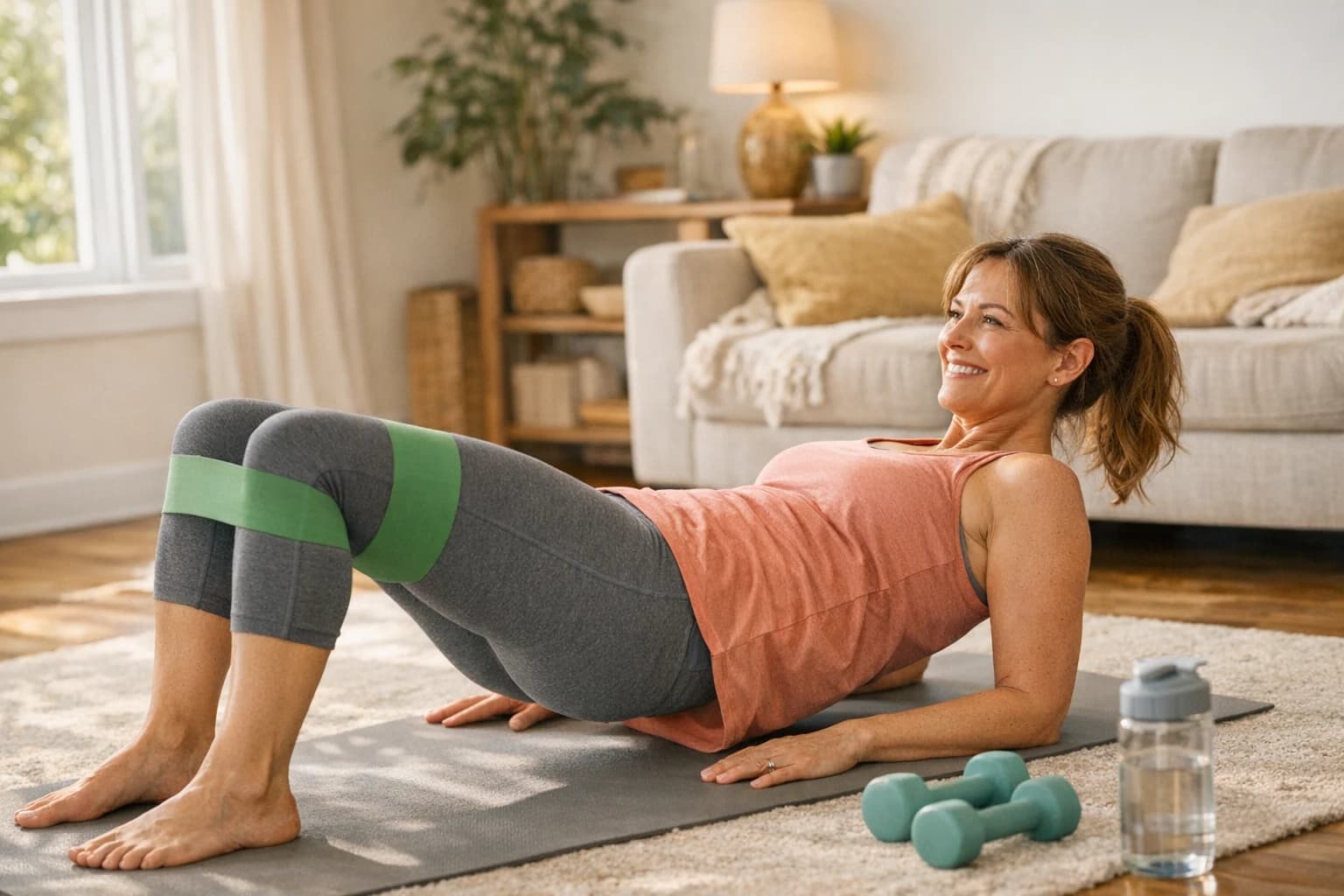
- glute bridge, 10 to 15 reps
- front plank or elevated plank, 20 to 30 seconds
Rest as needed. This should feel like work, not panic.
Day 2: Walking plus mobility
Go for a 20 to 30 minute walk at an easy to moderate pace. Then spend 8 to 10 minutes on ankle mobility, thoracic rotation, hip flexor stretching, and gentle hamstring work.
This is not a throwaway day. Recovery and movement quality matter.
Day 3: Full-body strength again
Repeat the same structure with slightly different exercises:
- split squat to support or reverse lunge, 6 to 10 reps per side
- dumbbell floor press or incline push-up, 8 to 12 reps
- band pull-apart or row, 10 to 15 reps
- hip hinge or Romanian deadlift with light weight, 8 to 12 reps
- dead bug or suitcase carry, 20 to 30 seconds
If you are sore, keep the effort reasonable. If you feel good, add one round or a little load.
Day 4: Optional recovery or rest
This can be a walk, gentle stretching, or a complete day off. Beginners often improve faster when they stop trying to prove something every day.
Day 5: Short conditioning plus strength basics
Do a 15 to 20 minute circuit at a sustainable pace:
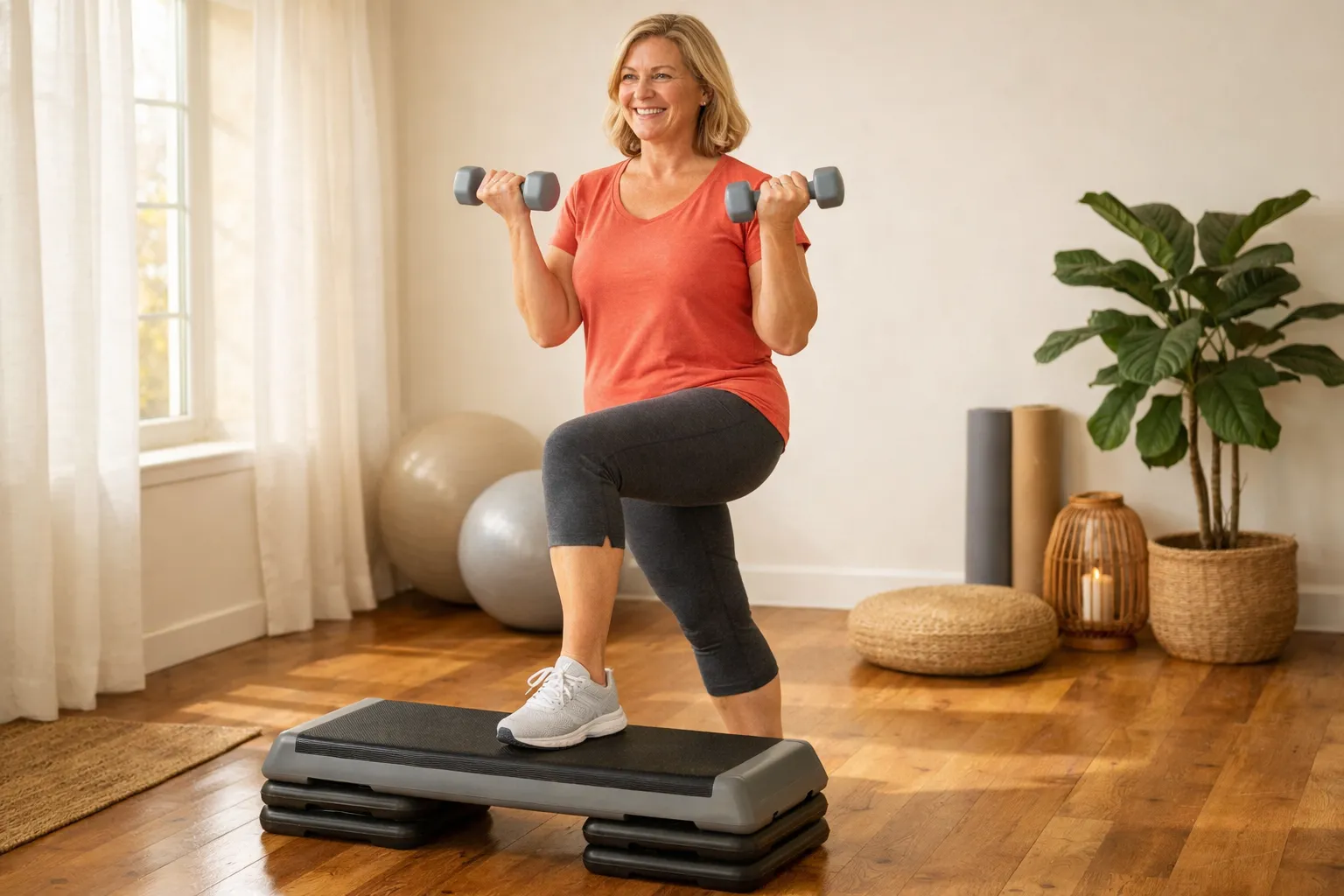
- step-ups or sit-to-stands, 8 to 10 reps
- wall push-ups, 8 to 12 reps
- band row, 10 to 12 reps
- farmer carry or hold, 20 to 30 seconds
- marching in place, 30 to 45 seconds
Move steadily. Breathe. Finish feeling better than when you started.
Day 6: Longer walk, easy bike, or outdoor movement
If the weather in Duluth is decent, this is a great day for an outdoor walk, easy hike, or bike ride. If not, an indoor walk still counts.
Day 7: Rest
Take the day off or do gentle mobility only.
How hard should these workouts feel?
Hard enough that you know you trained, easy enough that you can come back in two days and do it again.
That balance matters.
A lot of beginners over 40 make one of two mistakes. They either stay so comfortable that nothing changes, or they go too hard and need a week to recover. Neither one is ideal.
A useful target is finishing a set feeling like you had 2 or 3 good reps left. That is plenty for building strength safely at the beginning.
How to progress without getting hurt
Progress does not have to mean turning every workout into a test.
You can progress by:
- adding 1 or 2 reps
- slowing the lowering phase of an exercise
- adding another round
- using slightly more resistance
- making the movement a little more challenging
That kind of quiet progression works extremely well.
If you want a deeper look at how strength supports metabolism, read strength training for insulin resistance.
Common problems with an at-home workout plan for beginners over 40
“I have no motivation at home.”
That is common. Reduce friction. Lay out the band. Keep the weights visible. Start with ten minutes. Motivation often shows up after movement starts, not before.
“I am too stiff to work out.”
Usually that is a reason to begin gently, not a reason to wait forever. Stiffness often improves with regular movement.
“I need to lose weight before I can exercise.”
No. Exercise can be part of how you improve energy, insulin sensitivity, and confidence right now.
“I am worried about my knees or back.”
That does not mean you should avoid all strength work. It means the plan should meet you where you are. Supported squats, hip hinges, step-ups, and smart exercise selection go a long way.
When home workouts are enough and when you may need more help
Home workouts are enough for a lot of people to make real progress.
They are especially good when you need a low-barrier way to rebuild consistency.
But you may benefit from more support if:
- pain keeps showing up during basic movements
- fatigue is severe enough that even gentle training wipes you out
- you do better with accountability
- you are not sure how to progress
- your metabolism feels like it is fighting you despite your effort
That is where exercise therapy, accountability coaching, and nutrition coaching can make a big difference.
FAQ about an at-home workout plan for beginners over 40
Can I really build strength at home after 40?
Yes. You do not need a fancy gym to get stronger. You need progressive resistance, enough consistency, and exercises that fit your current ability.
How many days per week should I work out at home?
For most beginners, 2 to 3 strength sessions per week plus walking or mobility is a great start.
How long should home workouts be?
Twenty to thirty minutes is enough for many people, especially at the beginning. More is not automatically better.
What if I only have body weight?
That is fine. Bodyweight squats, incline push-ups, bridges, step-ups, planks, and walking can go a long way.
What if I am exhausted all the time?
Start small. Sometimes fatigue improves with smart movement, but severe fatigue can also point to deeper metabolic or hormonal issues. That is worth looking into instead of forcing harder workouts.
The bottom line
A good at-home workout plan for beginners over 40 should feel doable, not dramatic. The goal is to build strength, movement confidence, and momentum you can actually keep.
If you want help creating a plan that fits your energy, your schedule, and your health goals, contact Duluth Metabolic. We can help you put together a realistic starting point and keep it moving in the right direction.