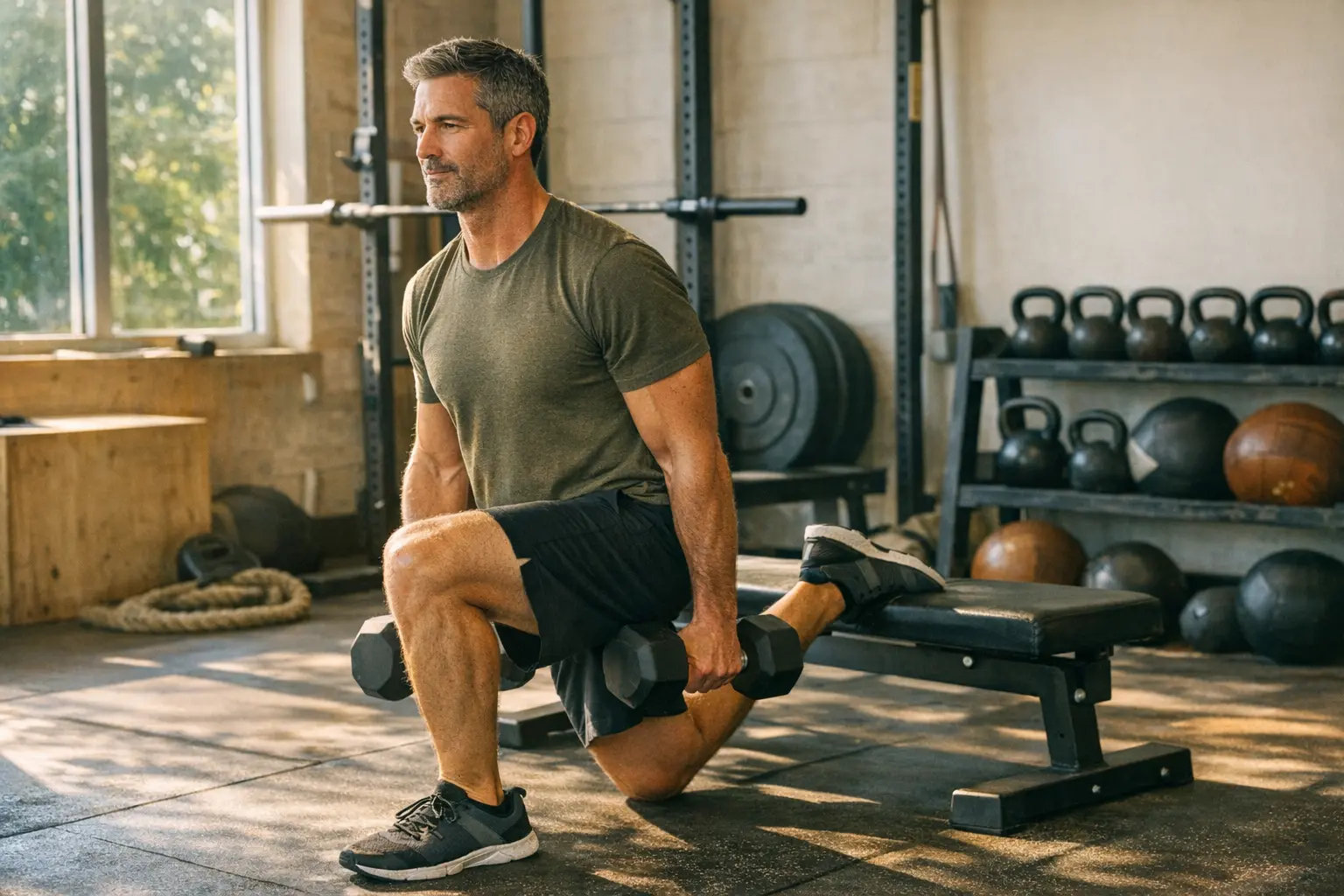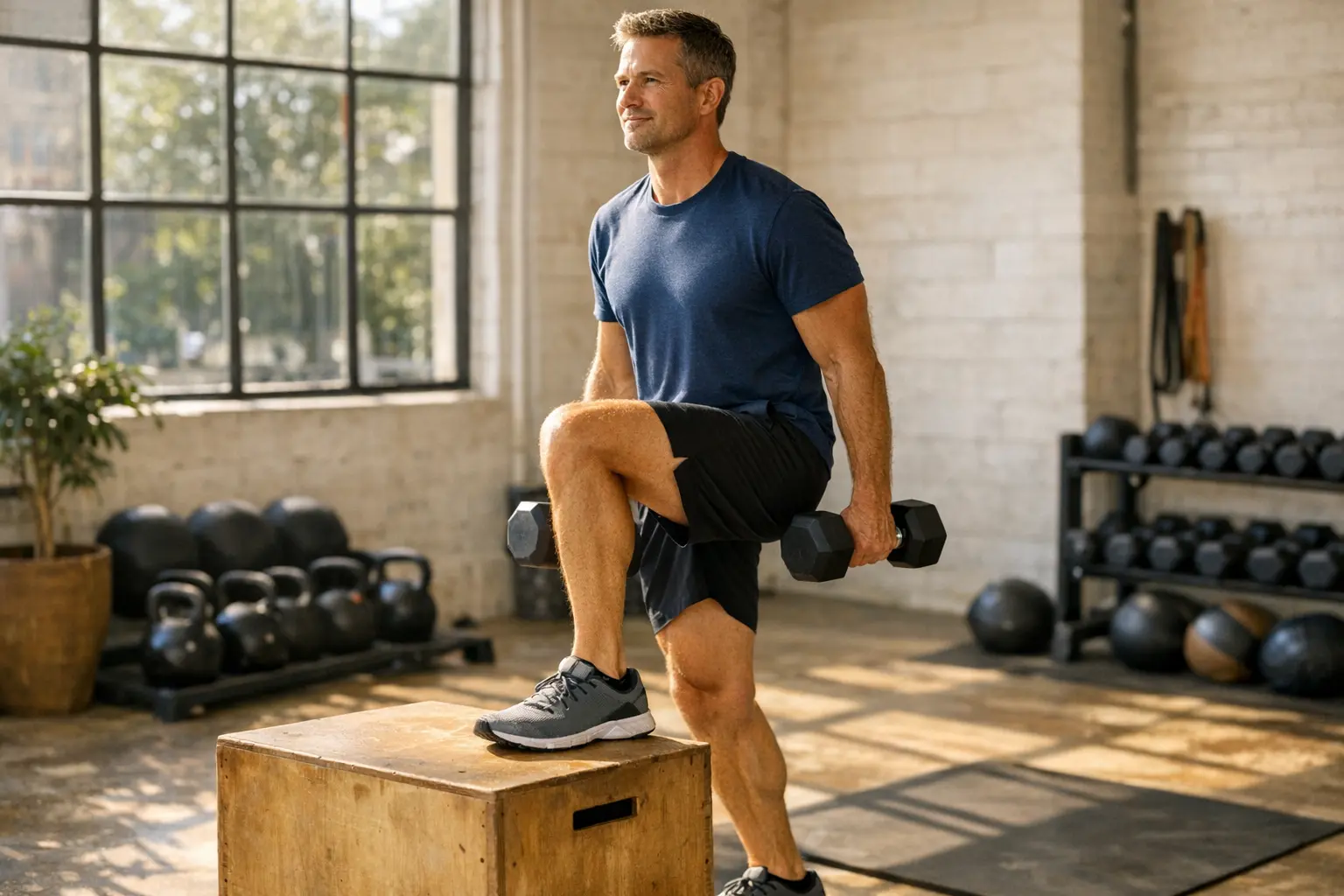
A good bodyweight workout for beginners over 40 should help you feel stronger in real life, not leave you wrecked for three days and wondering if exercise is worth it.
A lot of adults hit this stage with mixed feelings about working out. You may want more energy, better blood sugar, less stiffness, or help with weight loss. You may also have old injuries, sore knees, a busy schedule, and a nervous system that does not love all-out bootcamp energy anymore.
That does not mean you are behind. It means you need a plan that fits your body now.
At Duluth Metabolic, we like bodyweight training because it lowers the barrier to starting. You can train at home, in a hotel room, in the basement before work, or in the living room while dinner is in the oven. And if you do it well, it can improve strength, balance, mobility, and metabolic health at the same time.
If you are building a bigger routine, you may also like functional training for beginners over 40, beginner strength training over 50 in Duluth, MN, low-impact workouts for beginners over 40, and 20-minute workouts for busy adults over 40.
Why bodyweight training makes sense after 40
After 40, a lot of people do better with exercise that is simple, repeatable, and joint-friendly.
That matters because the real problem usually is not finding the perfect workout. It is finding something you can keep doing.
A bodyweight routine can help you:
- rebuild strength if you have been inconsistent
- improve balance and coordination
- increase muscle without needing a full gym
- support blood sugar control by using large muscle groups
- make stairs, hiking, lifting groceries, and getting off the floor feel easier
This kind of training can be especially useful if you are dealing with musculoskeletal weakness, chronic fatigue, or early concerns about osteoporosis. It is also a helpful starting place for people working on weight management, because more muscle and better movement quality usually make everything else easier.
What a bodyweight workout for beginners over 40 should include
A solid bodyweight workout for beginners over 40 is not a random pile of exercises from social media. It should train a few basic movement patterns your body uses every day.
Those patterns include:
- squatting
- hinging
- pushing
- pulling or pull-substitutes
- bracing your core
- balancing on one leg
The truth is that bodyweight training has one blind spot. Pulling exercises are harder to do without equipment. You can still build around that by using doorway rows, a sturdy countertop row, a towel row, or by pairing your home plan with some resistance-band work later on.
For most beginners, the main goal is not exhaustion. The goal is learning how to move well enough that your body starts trusting exercise again.
The six best bodyweight moves to start with
You do not need twenty exercises. You need a few good ones done consistently.
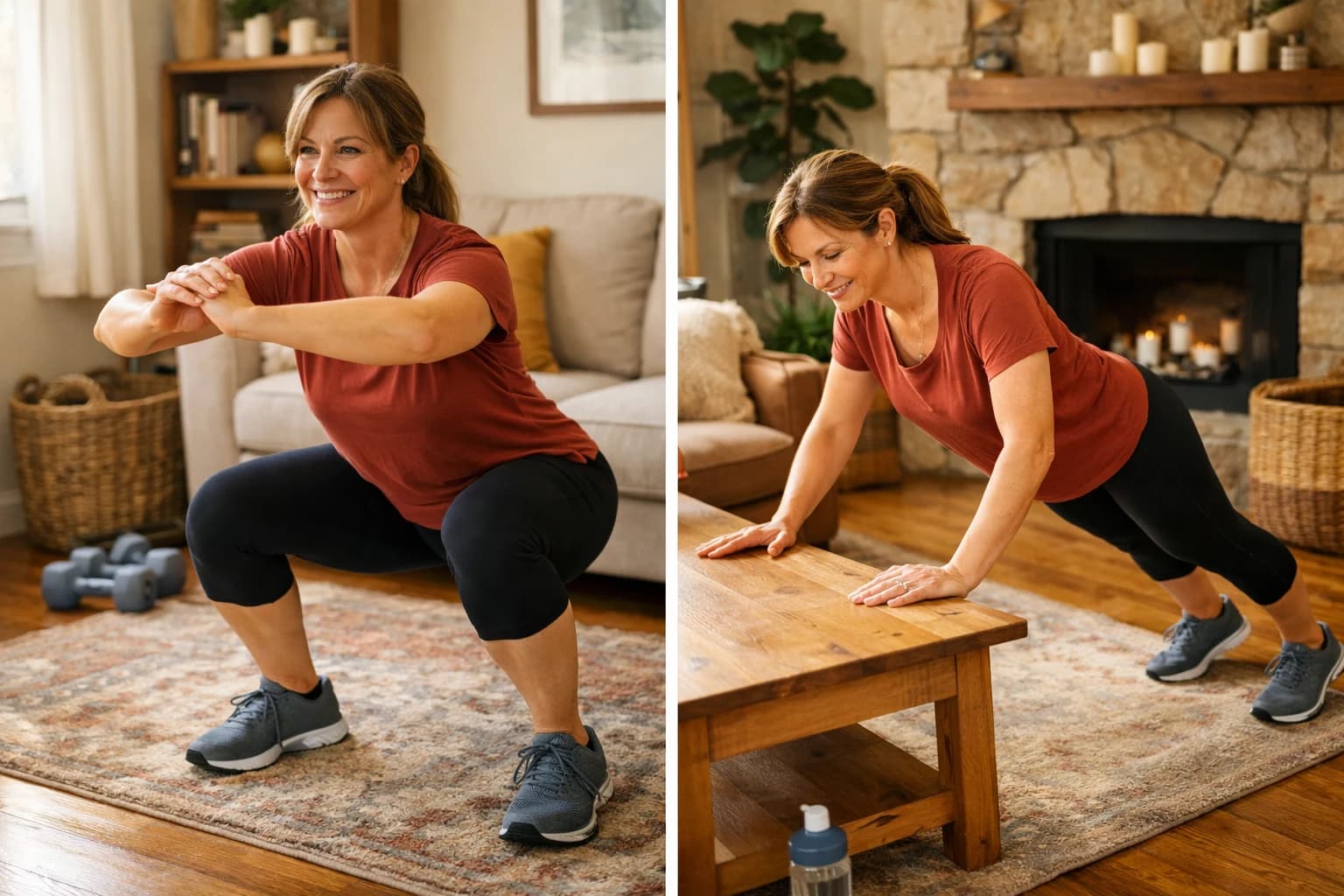
1. Box squat or chair squat
This teaches you how to sit back, control your knees, and use your hips.
Sit to a chair or bench, lightly touch it, then stand back up. If needed, use your hands for a little help at first.
2. Incline push-up
A push-up against a wall, counter, or bench is a great upper-body starting point. It trains your chest, shoulders, arms, and core without forcing floor push-ups before you are ready.
3. Glute bridge
A lot of busy adults spend too much time sitting. Glute bridges help wake up the backside of your body and can improve hip strength and low-back comfort.
4. Split-stance hinge
This teaches hip movement and balance. Think of it as a gentle deadlift pattern without a heavy load.
5. Step-up
A low step-up builds leg strength, balance, and everyday confidence. It also carries over well to hiking, stairs, and winter footing.
6. Front plank or elevated plank
Core training should help you resist collapse, not just feel a burn. A plank teaches you to brace and breathe while staying stable.
A beginner bodyweight workout for beginners over 40
Here is a simple full-body routine you can do two or three times per week.
Warm-up for 5 minutes
Start with:
- 30 seconds of marching in place
- 8 sit-to-stands
- 8 wall push-ups
- 8 hip hinges
- 20 seconds of gentle arm circles
- 20 seconds of ankle rolls per side
You are not trying to get tired. You are trying to feel less stiff.
Main workout
Do 2 to 3 rounds.
- Chair squat or box squat, 8 to 10 reps
- Incline push-up, 6 to 10 reps
- Glute bridge, 10 to 12 reps
- Step-up, 6 to 8 reps per side
- Split-stance hinge, 8 reps per side
- Front plank or elevated plank, 15 to 25 seconds
Rest 30 to 60 seconds between exercises if needed. Rest a little longer between rounds if your breathing feels rushed.
If that already feels like enough, good. That means you found your starting line.
How hard should this feel?
This is where many beginners get tripped up.
If you finish the workout and feel like you barely worked, you may need a little more challenge next time. If you finish and feel destroyed, you probably did too much.
A good target is this: you should feel like you could maybe do 2 more reps on most sets.
That leaves room for recovery, which matters more after 40. Better recovery means better consistency. Better consistency means better results.
This is the same reason we often guide people toward exercise as medicine and exercise therapy instead of random hard workouts. When training fits your body, you are much more likely to keep going.
How to progress your bodyweight workout for beginners over 40
A bodyweight workout for beginners over 40 only works long term if it becomes gradually harder in manageable ways.
You do not have to make giant jumps.
Try one of these progressions:
- add 1 or 2 reps per set
- add one extra round
- lower the height on your incline push-up
- use a slightly higher step-up
- add a 2-second pause at the hardest part of the movement
- slow the lowering phase
That is enough.
Progress is not supposed to look dramatic. It is supposed to be sustainable.
If you like more structure, pair this with zone 2 training for beginners over 40 on non-strength days. That mix works especially well for energy, blood sugar, and general conditioning.
Common mistakes beginners over 40 make
Most people do not fail because they are lazy. They fail because they start with the wrong expectations.
Doing too much on day one
You are not proving a point. You are building trust with your body.
Jumping straight to floor exercises
There is nothing magical about starting on the floor. Wall and bench variations count.
Ignoring pain signals
Mild effort is fine. Sharp pain, pinching, or unstable joints are not something to push through.
Treating soreness like success
Being sore is not proof that a workout was good. Progress shows up in better function, better endurance, and more confidence.
Never adjusting for sleep, stress, or energy
If you slept terribly, are under heavy stress, or feel run down, scale the workout down instead of skipping movement entirely. A smaller session still counts.
That matters even more if you are also dealing with anxiety and depression, hormone imbalance, or blood sugar swings that affect recovery. Sometimes the right move is not more willpower. It is better programming and nutrition coaching.
Can bodyweight workouts help with blood sugar and weight loss?
Yes, especially if you do them consistently.
Strength work helps your muscles use glucose better. More muscle activity can improve insulin sensitivity, especially when combined with walking, better sleep, and food choices that keep you fuller longer.
That does not mean bodyweight training alone solves everything. But it can become one of the most practical tools in your week.
If blood sugar has been a struggle, read strength training for insulin resistance, walk after meals for blood sugar, and what is metabolic health. If you want more personalized feedback, CGM monitoring can show how your body responds to workouts, meals, stress, and sleep in real time.
What if you have bad knees, low energy, or feel out of shape?
You can still start.
You may just need more modifications.
Some good options:
- squat to a taller chair
- wall push-ups instead of counter or floor push-ups
- glute bridges instead of lunges
- shorter plank holds
- supported step-ups with a railing or wall nearby
- fewer rounds with slower pacing
If your knees are a concern, strength training with bad knees over 50 is a good next read. If energy is the bigger issue, why am I always tired and labs normal but feel terrible may help you think more clearly about what is holding you back.
A sample weekly plan
If you are not sure how this fits into a real week, start here:
- Monday, bodyweight workout
- Tuesday, 20 to 30 minute walk
- Wednesday, bodyweight workout
- Thursday, mobility or recovery walk
- Friday, bodyweight workout or shorter version
- Saturday, easy outdoor activity, hike, yard work, or bike ride
- Sunday, rest
That is enough for many people to build momentum.
You do not need an athlete schedule. You need a life-friendly one.
FAQ
How many times a week should I do a bodyweight workout for beginners over 40?
Two to three days per week is a great place to start. That gives you enough practice to improve without crushing recovery.
Can I build muscle with bodyweight training after 40?
Yes. Beginners can absolutely build strength and muscle with bodyweight work, especially when they train consistently and progress the movements over time.
How long should each workout take?
About 20 to 35 minutes is plenty for most beginners. A shorter session you can repeat beats a long session you dread.
Should I do cardio too?
Usually yes. Walking, biking, rowing, or other easy conditioning on non-strength days can support heart health, recovery, and blood sugar control.
What if I cannot do a regular push-up?
That is normal. Start with a wall, counter, or bench. There is no prize for skipping the easier version and getting stuck.
A better way to start
Starting small can feel almost too simple, but that is often the point.
The best bodyweight workout for beginners over 40 is the one that helps you come back again next week with a little more strength, a little less fear, and a little more momentum.
If you want help building a plan that matches your energy, joints, recovery, and metabolic goals, Duluth Metabolic can help. Whether you need exercise therapy, accountability coaching, or a broader look at fatigue, blood sugar, and body composition, we will meet you where you are.
If you are ready for that kind of support, contact us.