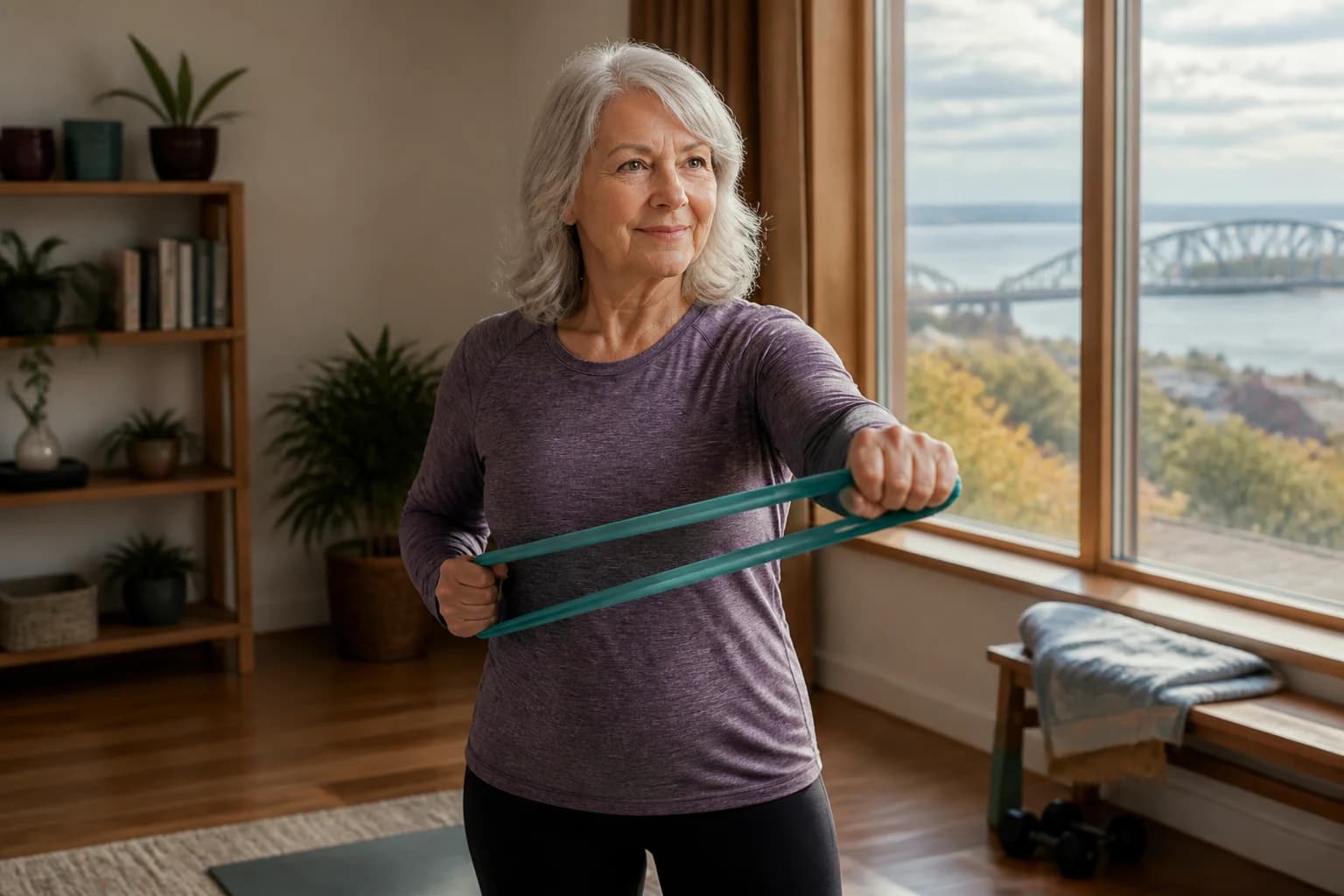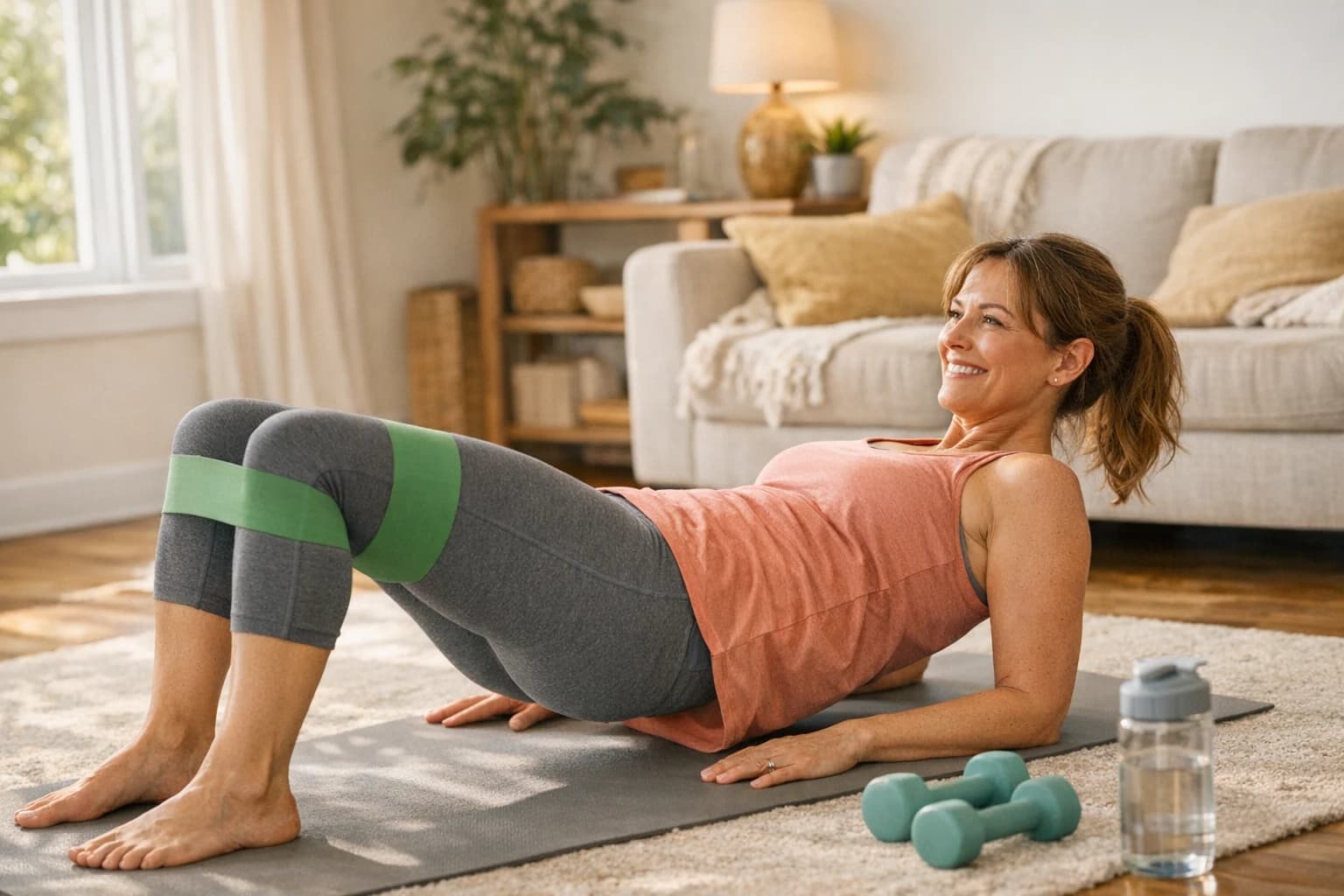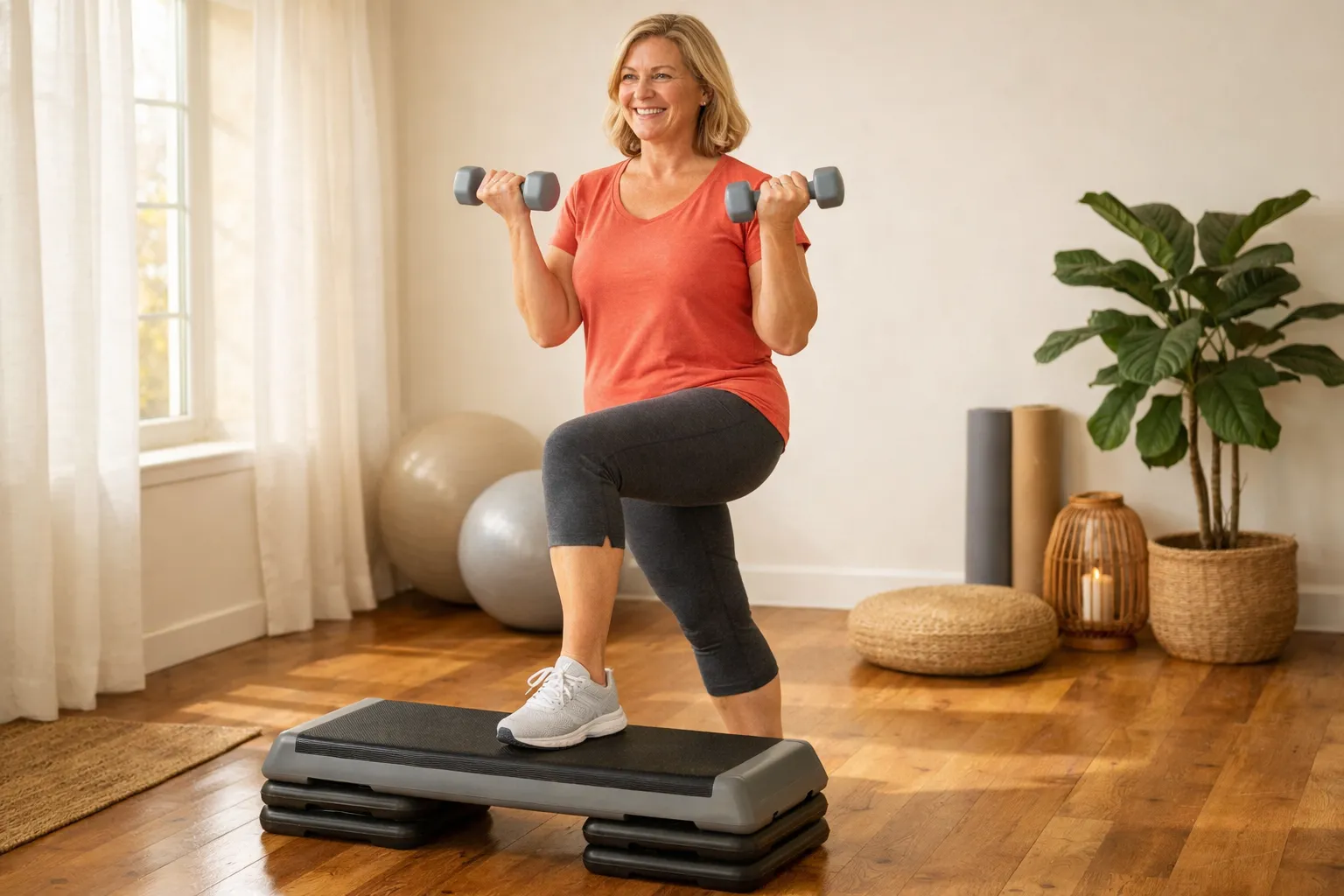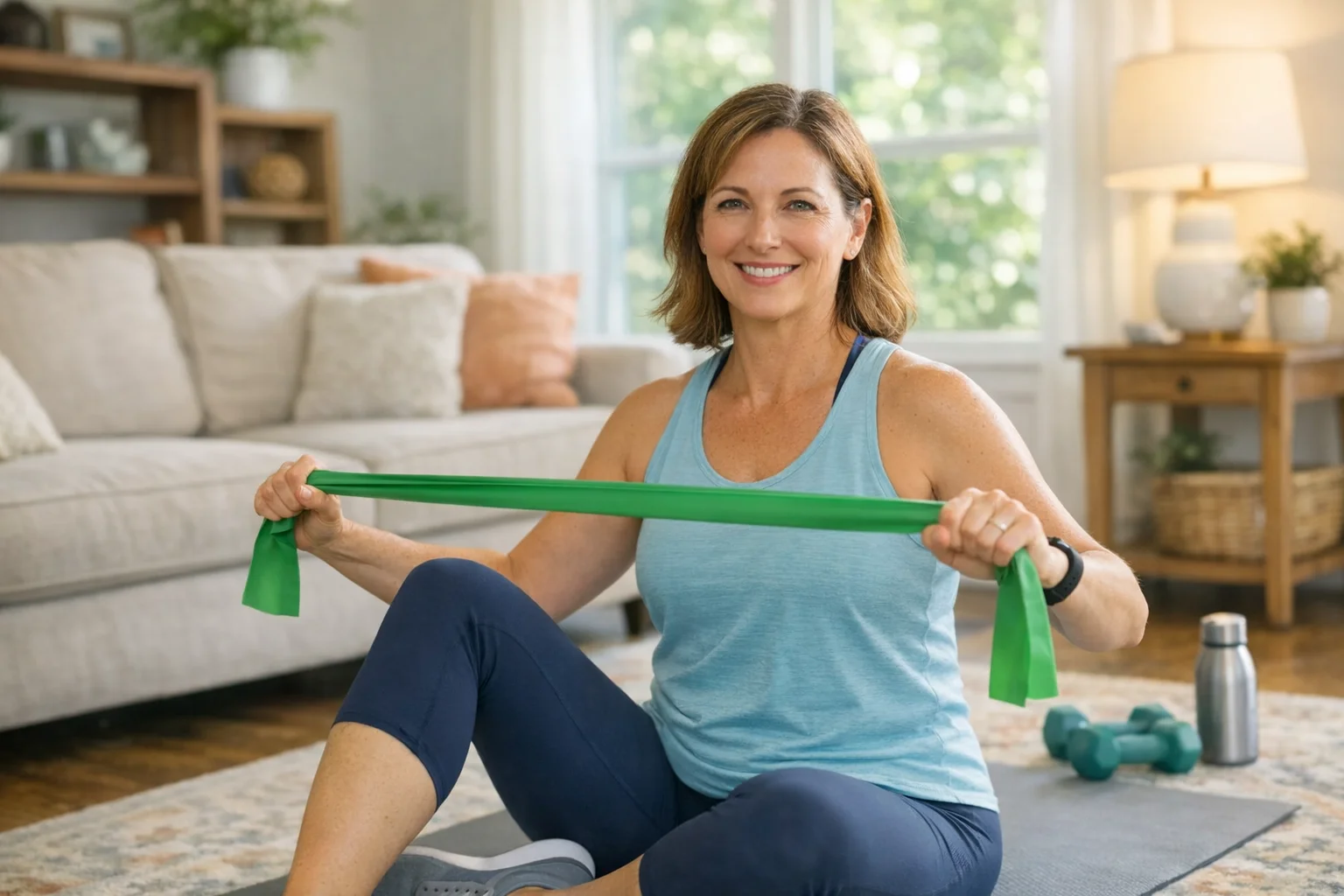
A lot of adults want to get stronger, but they do not want to get wrecked doing it. They want something simple, affordable, and realistic enough to repeat next week. That is why a resistance band workout for beginners over 40 can be such a good place to start.
Resistance bands are not a gimmick. They can help you build strength, improve stability, and make exercise feel less intimidating, especially if you are starting at home, working around joint irritation, or trying to rebuild consistency after a long break.
At Duluth Metabolic, we care about this because muscle matters. Strength supports blood sugar control, energy, balance, bone health, and long-term function. For many adults over 40, the best workout is the one that fits real life and feels safe enough to keep doing.
If you want related reads, start with functional training for beginners over 40, 20-minute workouts for busy adults over 40, and low-impact workouts for beginners over 40.
Why resistance bands work so well after 40
One reason bands work well is that they lower the barrier to starting.
You do not need a gym membership. You do not need a whole rack of weights. You do not need to feel comfortable in a crowded fitness space. You can train at home with a small amount of equipment and still get useful results.
Bands also have a few practical advantages:
- they are joint-friendly for many people
- they travel easily
- they let beginners practice movement patterns with manageable resistance
- they make it easy to train pulling movements at home
- they can help people build confidence before graduating to heavier loading
That matters if you are recovering from a long stretch of inactivity, dealing with musculoskeletal weakness, or trying to rebuild strength without overdoing it.
What a resistance band workout for beginners over 40 should include
A good beginner plan should train basic movement patterns, not random exercises.
Squat or sit-to-stand pattern
This helps with getting up from chairs, stairs, hiking, and daily life. Bands can add tension around the knees or resistance through the hands depending on the setup.
Row or pulling pattern
This is one of the biggest advantages of bands. Most people sit too much and do not have enough pulling strength. Rows and pull-aparts can help build the upper back and improve posture awareness.
Pressing pattern
A chest press or overhead press can help train upper-body pushing strength. Start light and controlled.
Hip hinge or glute pattern
Deadlift variations, glute bridges, and banded hinges help strengthen the back side of the body, which matters for back health, posture, and power.
Core stability
You do not need endless crunches. Carry-style drills, planks, dead bugs, and anti-rotation work often do more for real-life function.
The gear you actually need
You do not need a giant equipment order.
A simple starter setup might include:
- one light loop band
- one medium loop band
- one longer resistance band with handles or plain ends
- a door anchor if you want more exercise options
- a sturdy chair or bench
Start lighter than you think. Form matters more than ego.
A simple resistance band workout for beginners over 40
Here is a practical full-body session you can do two or three times per week.
Warm-up for 3 to 5 minutes
March in place, walk around the house, do shoulder rolls, easy bodyweight squats to a chair, and gentle hip hinges.
Main workout
Perform 2 to 3 rounds. Rest 30 to 60 seconds between exercises as needed.
1. Banded squat to chair
Do 8 to 12 reps.
Sit back to a chair and stand up with control. If using a loop band above the knees, gently press the knees outward to keep good alignment.
2. Seated or standing band row
Do 8 to 12 reps.
Pull the band toward your ribs and squeeze your shoulder blades together. Do not yank with your neck.
3. Band chest press
Do 8 to 12 reps.
Press forward with control. Keep ribs down and avoid turning it into a low-back arch.
4. Glute bridge with band above knees
Do 10 to 15 reps.
Pause at the top and feel your glutes doing the work.
5. Band pull-apart
Do 10 to 15 reps.
This helps train the upper back and shoulder stabilizers, especially useful for desk-bound adults.
6. Dead bug or plank variation
Do 20 to 30 seconds.
Keep it simple. A strong trunk supports everything else.
That is a real workout. It covers major patterns. It is approachable. And it does not require punishing yourself.
How to progress without getting hurt
A lot of adults over 40 get stuck in one of two traps. They either never progress at all, or they progress too aggressively and end up sore, discouraged, or irritated.
A better plan is steady, boring progress.
You can progress by:
- adding a few reps
- adding one more round
- using a slightly thicker band
- slowing the lowering phase
- improving range of motion
- reducing rest a little
You do not need to change everything at once.
How often should you do a resistance band workout for beginners over 40?
Two to three strength sessions per week is a strong place to start.
That could look like Monday, Wednesday, and Friday, with walking, mobility work, or easy activity on the other days. If that feels like too much, start with two days.
Consistency matters more than having the "perfect" split.
If you are also trying to support blood sugar, pair strength work with regular walking. Zone 2 training for beginners over 40 and walk after meals for blood sugar can complement strength work really well.
Common mistakes to avoid
Choosing too much resistance
If your form falls apart immediately, the band is too heavy or the setup is too challenging.
Treating bands like they are not real strength work
Bands count. If you move with intent, control the reps, and keep progressing, they can absolutely help you build strength.
Skipping lower body work
A lot of beginners focus on arms because it feels easier. But lower-body strength matters for metabolism, function, and bone support.
Turning every session into cardio
Bands can be used fast, but beginners often benefit more from controlled strength reps than from frantic circuits.
Ignoring recovery
Adults over 40 often need to respect sleep, protein, hydration, and rest if they want training to feel good.
Why this matters for metabolic health
Strength training is not only about appearance.
Muscle helps your body handle glucose better. It improves insulin sensitivity. It supports better function as you age. It also helps protect against the muscle loss that can show up with dieting, inactivity, chronic stress, and some weight-loss medications.
That is why movement is part of the bigger conversation at Duluth Metabolic. We connect exercise to exercise as medicine, strength training for insulin resistance, and building bone density after 50.
What if you have pain, fatigue, or feel very deconditioned?
Start smaller.
If you are dealing with chronic fatigue, fear of injury, old joint issues, or a long exercise gap, it makes sense to modify the plan. That might mean:
- one round instead of three
- fewer exercises
- chair-supported versions
- more rest between movements
- shorter sessions more often
The goal is not to prove toughness. The goal is to make your body trust movement again.
This is also where exercise therapy and accountability coaching can help. A lot of adults do better when someone helps them scale the plan correctly.
A sample beginner week
Here is one simple way to use bands over a week.
Monday
Full-body band workout, 2 rounds, followed by a 10-minute easy walk.
Tuesday
Mobility work or easy walking.
Wednesday
Full-body band workout, 2 to 3 rounds.
Thursday
Rest or light movement.
Friday
Full-body band workout plus a few extra minutes of walking.
Weekend
Outdoor movement, errands, yard work, hiking, or recovery.
That kind of plan tends to work better than an all-gas-no-brakes approach.
FAQ about a resistance band workout for beginners over 40
Can resistance bands really build strength?
Yes. They may not replace every barbell movement forever, but they are absolutely useful for building strength, especially for beginners and home exercisers.
Are resistance bands safer than weights?
Not automatically, but many people find them more approachable and joint-friendly. Good technique still matters.
How long should each session be?
A beginner session can be effective in 20 to 30 minutes. You do not need marathon workouts.
Should beginners over 40 train every day?
Most people do better with two to three strength days and light movement on other days.
What if I feel embarrassed starting small?
Starting small is smart. The adults who make progress are usually the ones who start with what they can recover from and then build.
Start where you are and let it count
A good resistance band workout for beginners over 40 is not flashy. It is repeatable.
It helps you build strength without turning exercise into a giant production. It gives you a way to train at home, improve confidence, and support the kind of muscle and movement quality that matter more with age.
If you want help building an exercise plan that matches your body, energy, and goals, Duluth Metabolic can help. We take a practical approach to movement, strength, and metabolic health. When you are ready to talk, contact us.