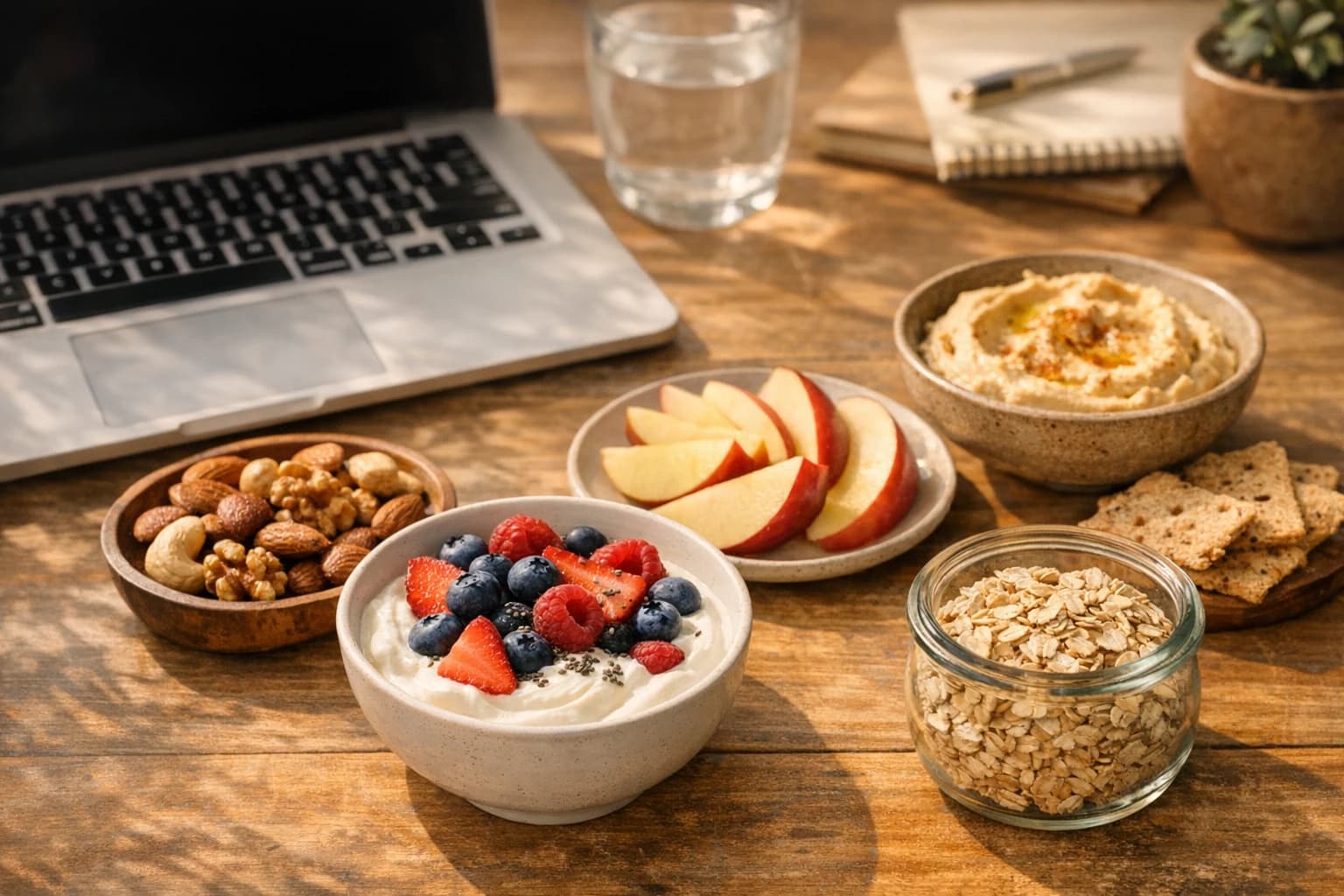
If you are looking for gut-healthy lunch ideas for work, you probably are not trying to win a meal-prep contest.
You want a lunch that does not leave you bloated, desperate for sugar at 3 p.m., or mentally checked out for the rest of the day.
That is a different goal than a lot of internet lunch content seems to understand. Plenty of articles give pretty bowls and complicated ingredient lists. Real work lunches need to survive a rushed morning, a crowded office fridge, a commute, and the fact that you may only have fifteen minutes to eat.
At Duluth Metabolic, we care more about repeatable structure than perfect recipes. A good lunch should support digestion, keep energy steadier, and help you feel like a functional adult through the afternoon. If you want related reading, start with gut health habits for busy adults, gut health meal plan for beginners, meal prep for blood sugar control, and why do I crash after lunch.
Why gut-healthy lunch ideas for work matter more than people think
Lunch has a huge effect on the second half of the day.
When lunch is mostly refined carbs, not enough protein, and whatever was easiest to grab at the last second, the result is often predictable. You feel full for a minute, tired soon after, hungry again by mid-afternoon, and more likely to overeat later.
For people with digestive issues, the problem can be even more obvious.
A poorly built lunch can mean bloating, reflux, urgency, constipation, brain fog, or that heavy sleepy feeling that makes the workday drag. Over time, people start assuming they just have bad digestion or low energy. Sometimes the bigger issue is that their daily meals are not working for their gut or their blood sugar.
A better lunch can help with:
- more stable afternoon energy
- fewer cravings after work
- less bloating and discomfort
- better bowel regularity
- better focus
- a calmer appetite at dinner
That matters if you are working on diabetes, weight management, or fatigue that seems to flare after meals.
What makes a lunch gut-friendly in real life
A gut-friendly lunch does not need to be expensive or trendy.
Usually it works because it covers a few basics consistently.
Protein first
Protein makes lunch more satisfying and helps keep blood sugar from swinging as hard afterward. Chicken, turkey, salmon, tuna, eggs, Greek yogurt, cottage cheese, tofu, edamame, lentils, and leftover meat can all work.
Fiber that your body actually tolerates
Fiber matters for the microbiome and for fullness, but that does not mean the biggest raw salad on earth is always the answer. Some people do better with cooked vegetables, fruit, beans, oats, quinoa, potatoes, rice, chia, flax, or slaw mixes than they do with a mountain of raw greens.
Fat for staying power
Olive oil, avocado, nuts, seeds, olives, tahini, pesto, cheese, or a yogurt-based dressing can help meals feel complete instead of flimsy.
Foods that do not punish you later
This part is individual. Some people do great with beans and cruciferous vegetables. Some need a gentler starting point. A lunch can be technically healthy and still be wrong for your body on a workday.
That is why pattern tracking matters more than food rules.
The biggest mistake with work lunches
Most people under-build lunch.
They either bring something too small because they are trying to be good, or they grab convenience food that is fast but not balanced. Then by late afternoon they are hunting for caffeine, sweets, or handfuls of whatever is around.
That is not a willpower problem. It is a lunch problem.
A gut-healthy lunch ideas for work approach should give you enough food to feel done eating. That usually means a decent protein serving, a fiber source, and enough total calories that your body does not go looking for compensation later.
Gut-healthy lunch ideas for work that are actually practical
You do not need endless variety. You need a handful of lunches you can rotate.
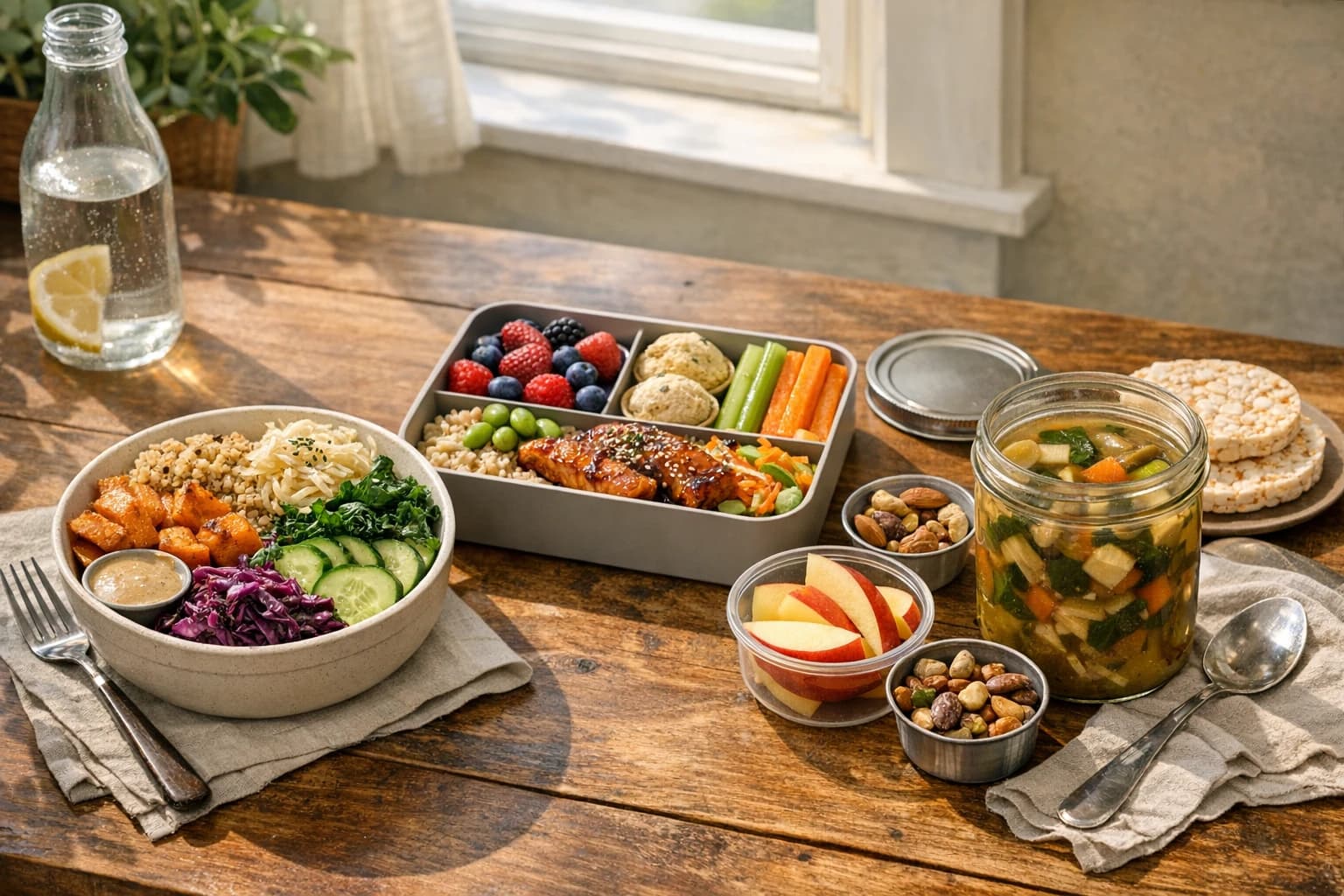
1. Grain bowl with protein, cooked vegetables, and a simple sauce
This works well because it is easy to batch.
Start with rice, quinoa, or potatoes if you tolerate them well. Add chicken, salmon, tofu, or turkey. Then add roasted vegetables, sautéed greens, cucumbers, shredded carrots, or slaw. Finish with olive oil, tahini sauce, pesto, or a yogurt-based dressing.
Why it works:
- warm or cold versions both hold up
- you can adjust fiber level based on tolerance
- it keeps you fuller than a salad with no substance
- it is easier on many people than a heavy sandwich and chips
If you struggle with blood sugar dips after lunch, this kind of bowl often works better than a grab-and-go bakery lunch. Meal timing for blood sugar control and walk after meals blood sugar can help there too.
2. Gut-friendly bento box
This is one of the easiest options for people who get bored.
Use a divided container and include things like:
- turkey roll-ups or chicken
- hard-boiled eggs
- berries or grapes
- cucumber, carrots, or bell peppers
- hummus or guacamole
- crackers you tolerate well
- olives or a small cheese portion
- a spoonful of sauerkraut if fermented foods work for you
This approach makes it easier to combine protein, fiber, and variety without cooking a full recipe.
3. Mason jar salad that does not leave you starving
Jar salads only work if they are built like a real meal.
That means beans, chicken, tuna, boiled eggs, or another solid protein source. Add crunchy vegetables, maybe some cooked grains, seeds, and dressing at the bottom. Keep greens on top so they stay fresh.
If you usually feel bloated from giant raw salads, make the raw portion smaller and use more cooked or easier-to-digest ingredients.
4. Leftovers that were packed on purpose
This is underrated.
Dinner leftovers often make better lunches than dedicated lunch recipes. Chili, taco bowls, grilled chicken with potatoes, salmon with rice, soup, stir fry, or meatballs with roasted vegetables can all work beautifully.
The key is packing them intentionally instead of scraping random leftovers into a container at midnight.
5. Soup plus a side with protein
Soup is great for people who want something gentler on digestion.
A lentil soup, chicken vegetable soup, blended soup with added chicken, or a bone-broth-based soup can work well. Just make sure it is not your entire meal if it is low in protein. Add Greek yogurt, boiled eggs, a turkey wrap, cottage cheese, or leftovers on the side.
6. Wraps that are built for energy, not just convenience
Wraps can work well if they are not mostly tortilla.
Try turkey with hummus and crunchy vegetables, salmon salad with greens, grilled chicken with slaw, or tofu with peanut sauce and cabbage. If wraps make you sleepy, try using a smaller wrap and adding more filling.
7. Cottage cheese or Greek yogurt lunch plate
For some people, especially on hectic days, a cold lunch plate is easier than meal prep.
Pair cottage cheese or Greek yogurt with fruit, nuts, seeds, chopped vegetables, and maybe a side of smoked salmon, turkey, or a boiled egg. This can work well if you tolerate dairy and want a high-protein option with almost no prep.
How to make gut-healthy lunch ideas for work easier to stick with
The best lunch plan is boring in a good way.
It should be simple enough to repeat when work is busy.
Helpful shortcuts include:
- use pre-cooked proteins a few days a week
- buy slaw mixes and frozen vegetables instead of pretending you will always prep from scratch
- keep two reliable sauces on hand
- build lunch from the same template instead of chasing new recipes every week
- prep just enough for two or three days if a full week feels overwhelming
A lot of people fail at lunch because they think the plan needs to be creative. It usually needs to be easier.
If bloating is the main issue, start gentler
When people hear gut health, they often pile on fiber all at once.
That can backfire.
If you are already bloated, constipated, or uncomfortable after meals, going from almost no fiber to giant bean salads and raw cruciferous vegetables may make you feel worse at first. A better starting point may be:
- cooked vegetables instead of all raw vegetables
- oats, rice, potatoes, or quinoa for a gentler carb source
- yogurt or kefir if tolerated
- moderate portions of beans instead of huge portions
- one fermented food at a time instead of five
If bloating happens after almost every meal, it may be worth reading why am I bloated after every meal, functional medicine for constipation, or functional medicine for IBS.
Blood sugar and gut health often overlap
This is a big one for busy adults.
Many lunch problems are both digestive and metabolic. A lunch that spikes blood sugar hard can leave you tired, hungry, and inflamed-feeling, even if you would not use those exact words.
That is why some people do better when they increase protein at lunch, reduce the liquid sugar in coffee drinks, or stop relying on a sandwich and chips as the default meal.
If you suspect blood sugar plays a role in your afternoon crashes, cgm monitoring can give you useful feedback. You may also want to read brain fog after eating and blood sugar friendly lunch ideas.
Easy combinations to keep on repeat
Here are a few simple formulas that cover the basics:
- chicken, rice, roasted vegetables, olive oil dressing
- turkey wrap, slaw, fruit, and hummus
- Greek yogurt, berries, chia, nuts, and a boiled egg
- lentil soup plus cottage cheese and sliced vegetables
- tuna bowl with potatoes, green beans, olives, and lemon vinaigrette
- leftovers from a protein-forward dinner and a side of fruit
- bento box with eggs, turkey, crunchy vegetables, crackers, and berries
Notice that none of these require perfection. They just have structure.
What to do if you eat out for lunch most days
You can still use the same principles.
Look for meals built around protein first. Add vegetables or fruit where you can. Be careful with lunches that are mostly bread, fries, pastries, or sweet drinks. If restaurant lunches are part of your routine, healthy lunch Duluth MN, blood sugar friendly restaurants Duluth MN, and healthy coffee shops Duluth MN can help.
FAQ
What is a gut-healthy lunch?
A gut-healthy lunch is one that supports digestion and steady energy. It usually includes protein, fiber, some healthy fat, and foods that your body tolerates well.
What should I eat for lunch if I get bloated easily?
Start with simpler meals. Cooked vegetables, rice or potatoes, moderate fiber, and easy proteins often work better than huge raw salads or very heavy restaurant meals.
Can a bad lunch cause afternoon brain fog?
Yes. A lunch that is too low in protein, too high in refined carbs, or hard for you to digest can lead to fatigue, brain fog, and cravings later.
Are fermented foods necessary at lunch?
No. They can help some people, but they are not mandatory. If they work for you, small amounts of yogurt, kefir, sauerkraut, or kimchi can be useful additions.
What if I do not have time to cook lunch every day?
Use templates instead of recipes. Leftovers, grain bowls, wraps, soups, and bento-style lunches are often easier to repeat than trying to cook a brand-new meal daily.
The bottom line
The best gut-healthy lunch ideas for work are the ones you can actually keep using when life is busy.
You do not need a fragile wellness lunch that falls apart by Tuesday. You need meals that support digestion, keep your energy steadier, and help you get through the afternoon without bloating, crashing, or scavenging for sugar.
If you want help figuring out which foods, meal patterns, and blood sugar strategies work best for your body, Duluth Metabolic can help. Reach out through /contact.