If the gym feels intimidating, dumbbells feel a little too abrupt, or your body needs a gentler starting point, a resistance band workout for beginners over 50 can be a really solid move. Bands are simple, portable, joint-friendlier than many people expect, and effective enough to build real strength when you use them consistently.
That matters in a place like Duluth, where routines shift with weather, schedules, and seasons. Some weeks you are active outside. Some weeks the wind off the lake makes staying home look smart. A band workout gives you something you can do in a spare room, at the gym, or in a quick 20-minute block without needing a big setup.
At Duluth Metabolic, we like resistance bands because they lower the barrier to getting started. And when people actually get started, they usually feel better faster. If you want more support around that bigger picture, also read beginner strength training over 50 in Duluth, MN, chair strength training over 50, and fall prevention exercises over 60 in Duluth, MN.
Why a resistance band workout for beginners over 50 works so well
A lot of beginners do not need a harder plan. They need a more usable one.
Bands help because they are approachable. You can control the tension, move slowly, and learn positions without loading the body heavily right away. That is helpful if your knees are touchy, your shoulders feel stiff, or you are getting back into exercise after a long break.
A good resistance band workout for beginners over 50 can help with:
- leg and hip strength
- posture and upper-back support
- balance and coordination
- confidence with movement
- daily function like stairs, carrying groceries, and getting up from chairs
It can also support weight management, musculoskeletal weakness, and better blood sugar handling when paired with regular walking and enough protein.
What kind of band should you use
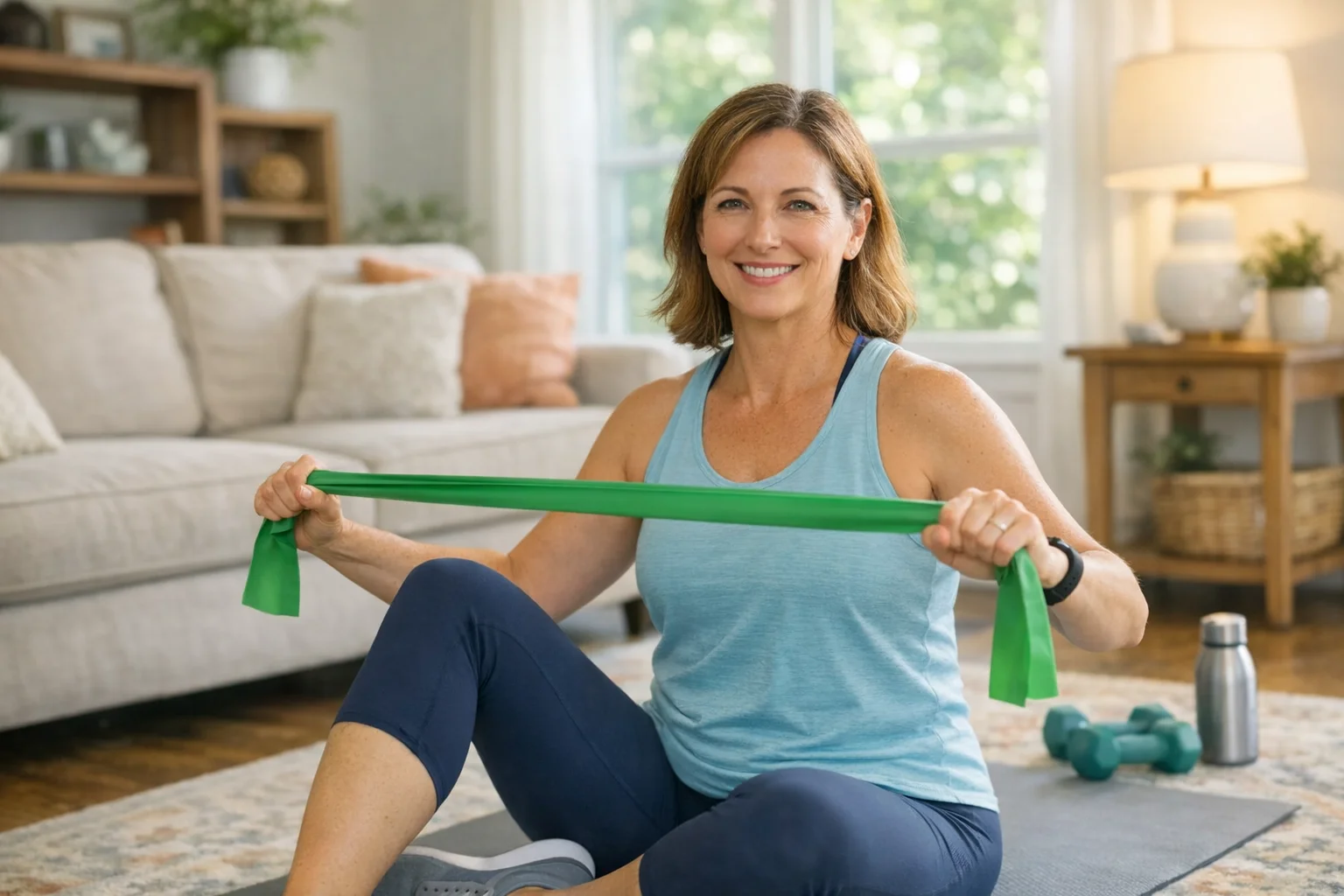
For most beginners, a long loop band or a handled resistance band works well.
Mini bands are fine too, especially for glute work, but they can feel limiting if they are your only tool. A longer band gives you more exercise options for pulling, pressing, hinging, and lower-body work.
Start lighter than your ego wants. A band that lets you move with control is more useful than one that turns every rep into a wrestling match.
If you are brand new, you do not need a whole wall of equipment. One light band and one medium band is enough to begin.
A resistance band workout for beginners over 50 should train movement patterns
The best beginner plans are not random arm flapping.
They are built around a few patterns your body uses in real life:
- squat or sit-to-stand
- hinge
- row or pull
- press
- core stability
- balance
That is true whether you use bands, dumbbells, machines, or bodyweight. The tool matters less than the pattern.
A simple resistance band workout for beginners over 50
Do this workout two or three times per week. Move slowly. Rest as needed. Start with one or two sets of each exercise. Over time, build toward two or three sets.
1. Band-assisted sit-to-stand
Sit on a chair with the band anchored lightly in front of you if that helps balance, or simply hold the band for light counter-tension. Stand up with control, then sit back down.
Aim for 8 to 10 reps.
This helps build lower-body strength in a very real-life way. If getting out of chairs feels harder than it used to, start here.
2. Resistance band row
Anchor the band in front of you at chest height. Hold one end in each hand and pull the elbows back, squeezing through the upper back.
Aim for 8 to 12 reps.
Rows are great for posture, shoulder support, and the rounded-forward feeling that comes from driving, desk work, and too much sitting.
3. Resistance band chest press
If you can anchor the band behind you safely, press forward from chest level with steady control. If that setup feels awkward, a wall push-up can substitute.
Aim for 8 to 10 reps.
This helps with pushing strength for everyday life, and it pairs nicely with rowing work so the upper body feels more balanced.
4. Resistance band deadlift or hinge
Stand on the band and hold the ends. Push the hips back, keep the spine long, then stand up by driving through the hips.
Aim for 8 to 10 reps.
This teaches the glutes and hamstrings to do more of the work, which is useful for protecting the back and building real lower-body strength.
5. Overhead press or angled press
Press the band overhead if your shoulders tolerate it well. If not, use an angled press forward and up, or choose a landmine-style substitute if you have access to gym equipment.
Aim for 6 to 10 reps.
The goal is not to jam through shoulder pain. The goal is steady, controlled pressing.
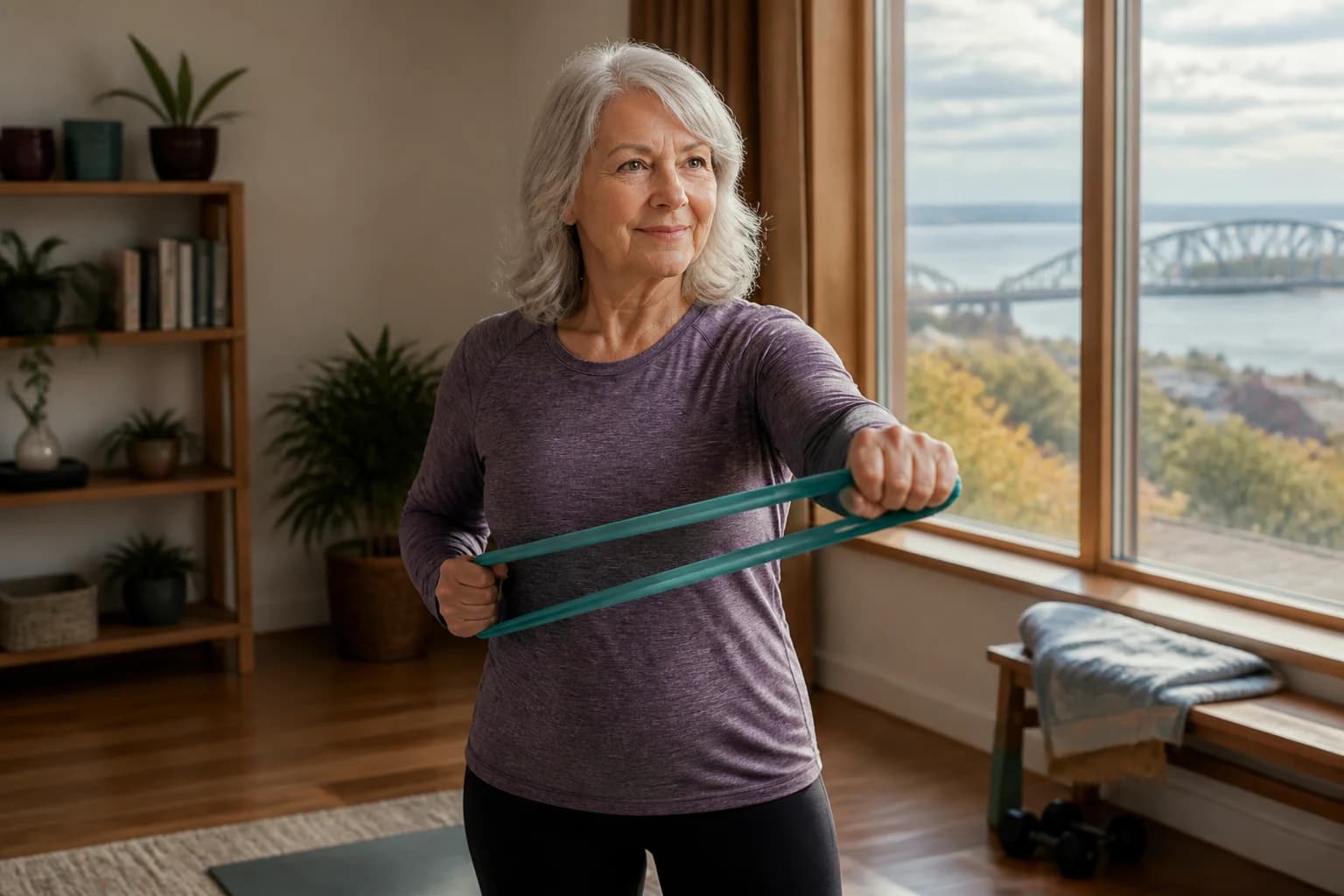
6. Pallof press or band anti-rotation hold
Anchor the band to your side. Press it straight out from your chest and resist the urge to twist.
Aim for 6 to 8 slow reps per side or 15 to 20 seconds of holding.
This is excellent for trunk stability and balance without turning core work into a neck-straining mess.
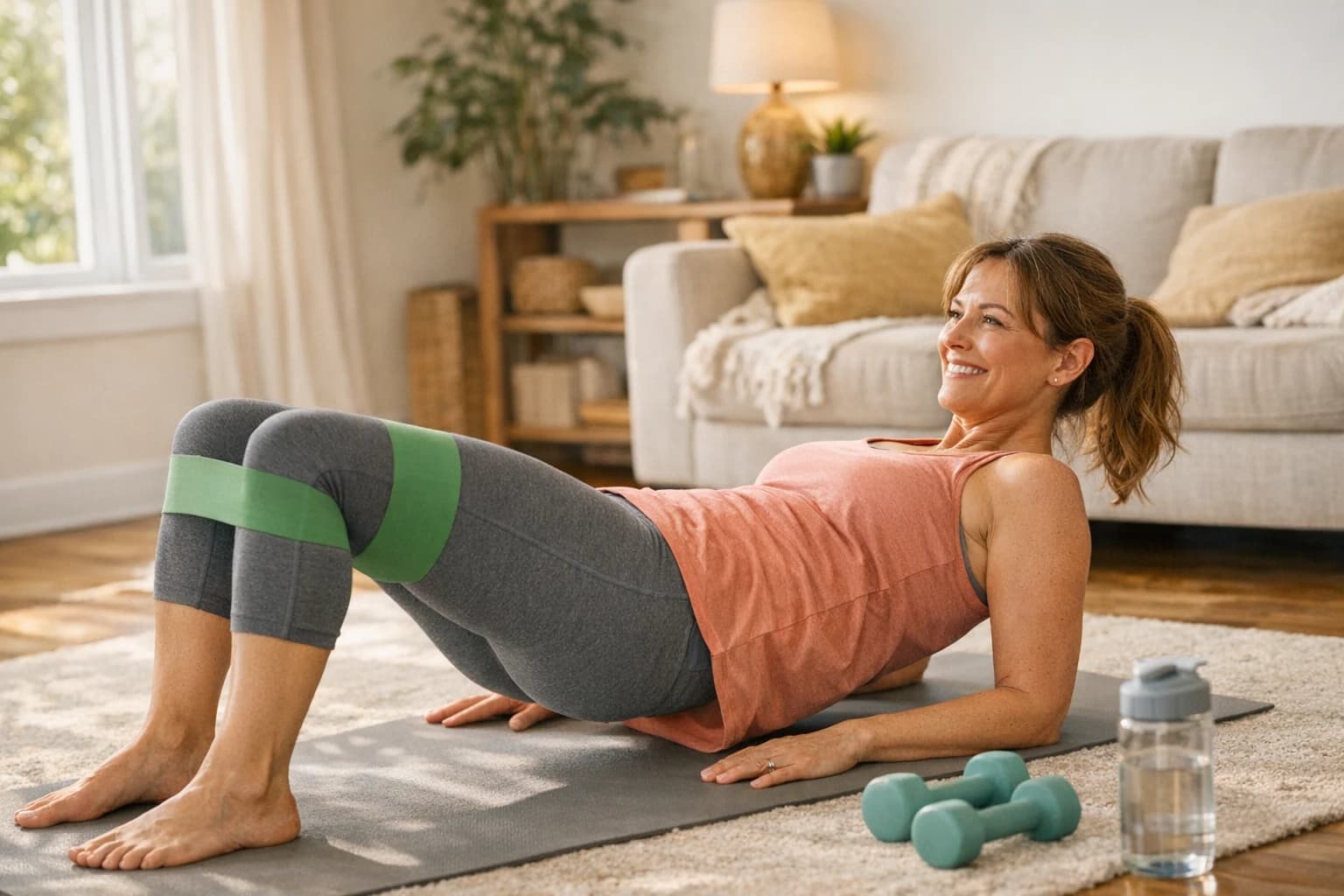
7. Lateral band walk or supported march
Use a mini band around the legs for small side steps, or do a slow supported march holding onto a counter if balance feels shaky.
Aim for 20 to 30 seconds.
This adds hip strength and control that often helps with walking confidence.
How hard should a resistance band workout for beginners over 50 feel
Challenging, but not chaotic.
The last couple reps should require attention, but your form should still look steady. You should not feel like the band is yanking you around. If it is, the tension is too high or the setup needs work.
A good rule is to finish most sets feeling like you could still do one or two more strong reps. That gives you enough work to improve without turning recovery into a problem.
A resistance band workout for beginners over 50 still needs progression
Bands only work if you keep moving forward with them.
That can mean:
- using a thicker band
- adding a few reps
- adding a set
- slowing the lowering phase
- improving range of motion and control
Progress is not always dramatic. Sometimes the win is standing from a chair more easily, feeling steadier on stairs, or getting through a week with less stiffness.
That still counts.
What if you have knee pain, back pain, or low confidence
Then make the plan smaller, not nonexistent.
Shorter ranges of motion, supported positions, chair versions, and slower reps are all fair game. If a full squat feels rough, do a sit-to-stand. If overhead pressing feels sketchy, use a chest press or row. If balance is a concern, train near a wall, counter, or rack.
This is one reason exercise therapy in Duluth, MN can help. The right progression makes exercise feel possible again instead of risky.
Why this kind of workout helps metabolic health too
A lot of people think bands are just rehab tools.
They are useful for much more than that. Resistance work helps keep and build muscle, and muscle matters for long-term metabolic health. It supports glucose use, daily energy, and the ability to stay active as you age.
That is why band training can fit nicely alongside walking for insulin resistance in Duluth, MN, indoor walking for blood sugar control in Duluth, MN, and strength training for diabetes beginners.
What to pair with your resistance band workout for beginners over 50
The best add-on is usually walking.
Walking helps recovery, circulation, blood sugar, and consistency. So does protein. So does sleep. So does not trying to do everything at once.
If you want a very practical weekly rhythm, try this:
- two or three resistance band sessions
- walking most days, even if short
- one short mobility session or morning stretch routine
- enough protein at breakfast and lunch to support recovery
That is not flashy. It is effective.
Resistance band workout for beginners over 50 in Duluth, MN and winter reality
This is one reason the band setup works so well locally.
When sidewalks are slick, the air hurts your face, or you do not feel like driving across town for a short session, bands make it easier to stay consistent. They give you a bridge between fully sedentary and fully geared-up. That bridge matters more than people realize.
Consistency beats intensity most of the time, especially for beginners.
FAQ
Are resistance bands good for beginners over 50?
Yes. They are one of the easiest ways to start resistance training because they are simple, scalable, and easier on joints than many people expect.
Can resistance bands build strength after 50?
Absolutely. They may not replace every gym tool forever, but they can build real strength, especially for beginners.
How many days a week should I do a resistance band workout for beginners over 50?
Two to three days per week works well for most people, with walking or light movement on other days.
What if I have arthritis or bad knees?
Use smaller ranges of motion, supported positions, and slower reps. A good plan can usually be adapted.
Is a resistance band workout enough for weight loss?
It can help, especially when paired with walking, better nutrition, and consistent recovery habits. Exercise works best as part of a bigger metabolic plan.
If you want help building a resistance band workout for beginners over 50 that fits your body and your life in Duluth, contact Duluth Metabolic. We can help you build a realistic plan that supports strength, confidence, and long-term health.