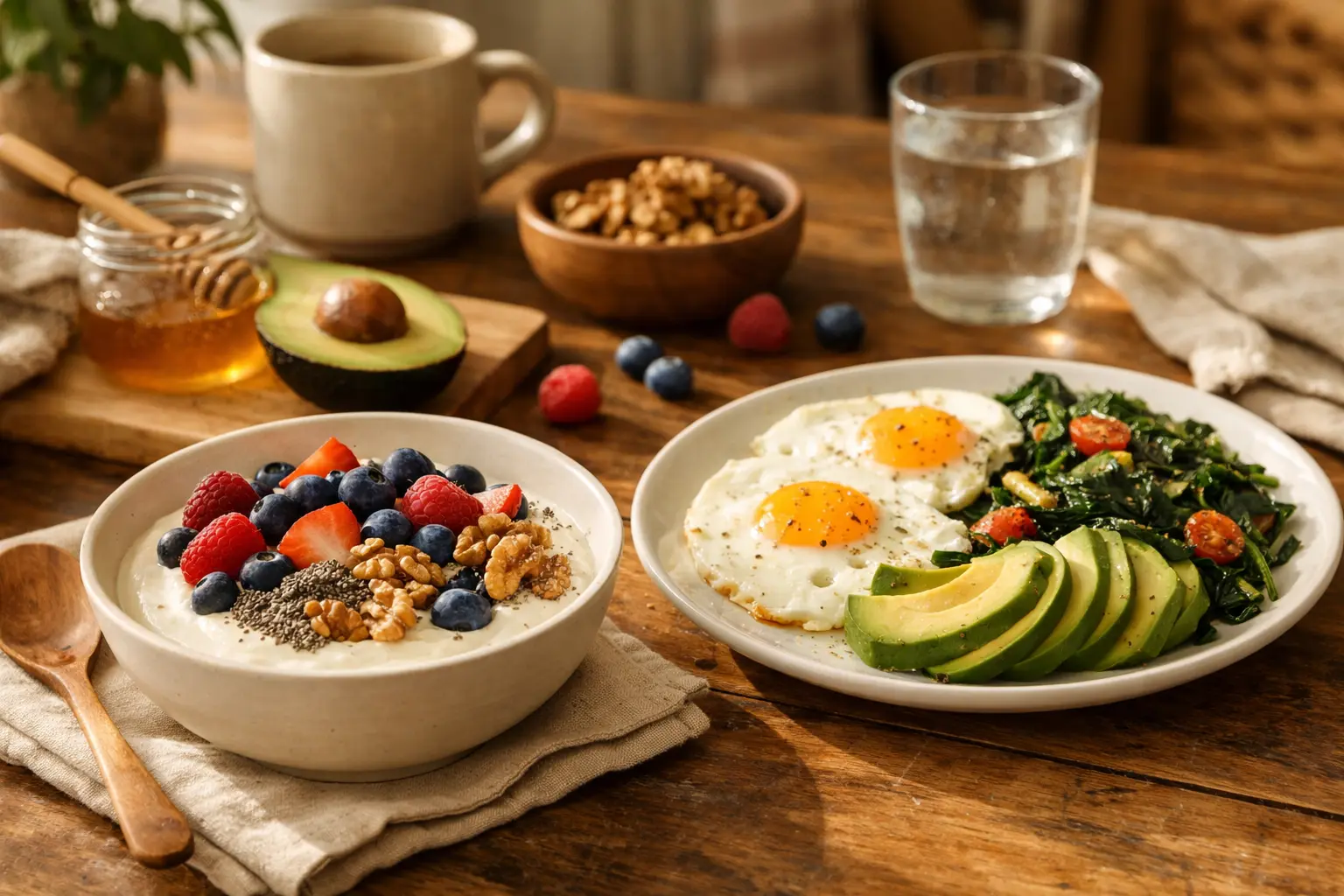
If you are searching for an anti-inflammatory breakfast for menopause, there is a good chance your mornings have gotten less predictable.
Maybe you wake up tired even after sleeping. Maybe coffee on an empty stomach leaves you shaky. Maybe breakfast looks healthy on paper, but an hour later you are hungry again, irritable, or already thinking about sugar.
That is common in perimenopause and menopause. Hormone shifts can change appetite, blood sugar response, sleep quality, recovery, and the way your body handles stress. Breakfast does not fix everything, but it can make the whole day feel easier.
A smart menopause breakfast usually does a few things well. It gives you enough protein, keeps added sugar under control, includes fiber, and brings in foods that support lower inflammation overall. If you have already read foods for hormone balance over 40, high-protein breakfast for menopause, or blood sugar-friendly breakfast ideas, this is the next layer.
Why an anti-inflammatory breakfast for menopause can help
Menopause is not a disease, but it is a real metabolic transition.
As estrogen changes, many women notice more belly fat, less muscle, less stable energy, worse sleep, and a stronger reaction to skipped meals or high-sugar meals. That can show up as brain fog, cravings, mood swings, or feeling puffy for no obvious reason.
Inflammation is part of that picture for a lot of women, especially when poor sleep, stress, low muscle mass, and blood sugar swings all pile on at once.
A better breakfast can help by:
- reducing the fast blood sugar rise that often leads to a crash later
- supporting fullness so you are not grazing all morning
- giving your body amino acids to protect muscle
- adding fiber and healthy fats that slow digestion
- bringing in anti-inflammatory foods like berries, olive oil, chia, flax, walnuts, greens, salmon, and plain yogurt
That matters for women dealing with weight management, hormone imbalance, diabetes, or the tired-and-wired feeling that often overlaps with anxiety and depression.
What most menopause breakfasts get wrong
The problem is usually not that breakfast is too big. It is that breakfast is too empty.
A muffin and coffee. Toast and fruit. Oatmeal with honey but almost no protein. A smoothie that is mostly banana and juice. Granola that is really dessert wearing a health halo.
Those breakfasts can look normal, but they often hit hard and fade fast.
If your breakfast is mostly quick carbs, your body may race through it. You feel good for a bit, then you get hungry, foggy, snacky, or edgy. Many women blame themselves when that happens. More often, the meal just was not built to hold them.
If that pattern sounds familiar, articles like why do carbs make me tired, why do I crash after lunch, and food noise and blood sugar may sound very familiar too.
What to include in an anti-inflammatory breakfast for menopause
The best breakfast for menopause is not one magical recipe. It is a simple formula you can repeat.
Start with protein first
Protein is usually the anchor.
Many women in midlife need more protein than they think, especially if they want better satiety, better recovery, and less muscle loss over time. Protein also helps calm down the roller coaster that comes from a carb-heavy breakfast.
Good breakfast protein options include:
- eggs
- Greek yogurt or skyr
- cottage cheese
- smoked salmon or leftover salmon
- turkey sausage or chicken sausage
- tofu or tempeh
- protein powder with a short ingredient list
Aiming for roughly 25 to 35 grams at breakfast is a practical starting point for many adults, especially if hunger and cravings are an issue.
Add fiber that actually slows the meal down
Fiber helps, but it works best when it is part of a balanced meal.
Berries, chia seeds, flaxseed, vegetables, oats, nuts, and seeds all help add staying power. They also support gut health, which matters more than people realize during menopause. If digestion has felt off, it is worth reading gut health menopause, gut health morning routine, and anti-inflammatory foods for gut health.
Use healthy fats without turning breakfast into a fat bomb
Healthy fats help with fullness and flavor, but too much can leave some people sluggish.
Think avocado, walnuts, chia, flax, pumpkin seeds, olive oil, or nut butter. Enough to round out the meal is good. More is not always better.
Keep sugar low enough that your energy stays steady
This is where a lot of breakfasts quietly fall apart.
Even healthy foods can become a sugar bomb when the whole meal is fruit, granola, juice, sweetened yogurt, or a coffee drink that acts like dessert. A blood sugar-friendly breakfast does not have to be extremely low carb, but it should not be built around sugar.
Best anti-inflammatory breakfast ideas for menopause
Here are practical options that work in real life.
Greek yogurt bowl that actually fills you up
Start with plain Greek yogurt. Add berries, chia or ground flax, walnuts, and maybe a scoop of protein powder if you need more staying power.
Why it works:
- high protein
- probiotics for gut support
- fiber from berries and seeds
- anti-inflammatory fats from walnuts and flax
What to watch out for: sweetened yogurt, giant honey pours, or granola-heavy bowls that end up being more sugar than protein.
Eggs and vegetables with fruit on the side
This can be simple. Scrambled eggs with spinach, mushrooms, and a little feta. Add berries or half an apple on the side if you want some carbohydrate without overdoing it.
Why it works:
- strong protein base
- vegetables early in the day
- easier blood sugar response than toast-only breakfasts
This is a good fit if you already know blood sugar-friendly breakfast restaurants in Duluth MN are hard to navigate and you want a home option that feels reliable.
Cottage cheese bowl with berries, cinnamon, and pumpkin seeds
Cottage cheese is underrated. It is easy, high in protein, and pairs well with savory or sweet flavors.
Add berries, cinnamon, pumpkin seeds, and a spoonful of ground flax. If you want more volume, add sliced cucumber on the side or a hard-boiled egg.
Chia pudding with added protein
Chia pudding alone is often too light. Chia pudding with protein is much better.
Use unsweetened milk, chia seeds, and either Greek yogurt or protein powder. Top with berries and a few chopped nuts.
This works well for women who want something ready in the fridge, especially if mornings feel rushed.
Savory oats with eggs
Oatmeal does not have to be sweet.
Try steel-cut or old-fashioned oats topped with eggs, wilted greens, olive oil, and hemp hearts. You still get fiber, but the savory format makes it easier to avoid turning breakfast into dessert.
Leftovers for breakfast
This sounds boring until it solves your problem.
Leftover salmon, roasted vegetables, chicken, turkey burger, or a grain-and-protein bowl can make a better breakfast than most classic breakfast foods. If you do well with lower carb mornings, this approach can be especially helpful.
The foods that tend to work best in menopause
If you want to keep the anti-inflammatory part simple, these foods show up again and again for a reason:
- berries
- leafy greens
- flaxseed and chia seeds
- walnuts
- plain Greek yogurt
- eggs
- salmon
- avocado
- olive oil
- unsweetened fermented foods when they fit
- oats in portions that match your blood sugar response
These choices line up well with the same patterns discussed in anti-inflammatory foods for menopause, anti-inflammatory diet for Hashimoto's, and best foods for fatigue.
What to avoid if breakfast keeps making you feel worse
Some foods are not off-limits forever. They are just common reasons breakfast backfires.
Watch for:
- sweet coffee drinks without enough real food
- pastries marketed as breakfast
- instant oatmeal with brown sugar and dried fruit but little protein
- smoothies made mostly from juice, banana, and sweetened yogurt
- toast or bagels eaten alone
- granola bowls that are mostly crunchy sugar
If you eat these foods and feel totally fine, great. But if your pattern is crash, cravings, and belly hunger by 10 a.m., breakfast is a strong place to experiment.
How to make an anti-inflammatory breakfast for menopause fit a busy schedule
You do not need a perfect Pinterest morning.
You need a short list of meals you can repeat.
A good system might look like this:
- two easy workday breakfasts
- one higher-protein weekend breakfast
- one emergency backup in the fridge or freezer
Examples:
- Greek yogurt, berries, chia, walnuts
- egg muffins with fruit
- cottage cheese bowl and hard-boiled eggs
- protein smoothie with spinach, flax, and unsweetened milk
- leftovers from dinner
If consistency is the hard part, meal prep for blood sugar control, anti-inflammatory meal prep for busy adults, and low-carb meal prep for busy adults can help make breakfast easier without turning food into a full-time job.
When breakfast should be more personalized
Sometimes the right breakfast is not obvious.
If you are dealing with severe cravings, hot flashes, poor sleep, rising A1c, reactive hunger, or weight gain that no longer responds the way it used to, it may help to go beyond generic nutrition advice.
This is where nutrition coaching, CGM monitoring, and biomarker testing can be useful. A CGM can show whether your "healthy" breakfast is working for your body or quietly setting up the next crash. Lab testing can help if symptoms overlap with thyroid issues, insulin resistance, iron issues, or other root causes.
That is especially important if you have also noticed symptoms covered in perimenopause weight gain and insulin resistance, high fasting insulin with normal A1c, or signs your hormones are off.
FAQ about anti-inflammatory breakfast for menopause
What is the best anti-inflammatory breakfast for menopause?
The best anti-inflammatory breakfast for menopause is usually one with enough protein, fiber, and healthy fat to keep blood sugar steady. Eggs with vegetables, Greek yogurt with berries and seeds, or a protein-forward smoothie are common good options.
Should breakfast be low carb during menopause?
Not always. Some women do better with a lower-carb breakfast, while others do well with moderate carbs if the meal includes enough protein and fiber. The bigger issue is usually avoiding a breakfast that is mostly sugar or refined starch.
Can breakfast help with menopause belly fat?
Breakfast alone will not target belly fat, but it can help with appetite control, cravings, and blood sugar swings that make fat loss harder. A higher-protein, anti-inflammatory breakfast can support a bigger plan.
Is oatmeal good or bad for menopause?
Oatmeal can work well if you build it carefully. Plain oats with protein, seeds, and berries are very different from instant sugary oatmeal eaten by itself.
What if I am not hungry in the morning?
That is common, especially if sleep is poor or dinner is late. You do not have to force a huge breakfast. Starting with something small but protein-rich, like Greek yogurt, a protein smoothie, or eggs, is often enough.
A better breakfast can make the rest of the day easier
If menopause has made your body feel less predictable, breakfast is one of the easiest places to start getting traction again.
You do not need to eat perfectly. You do need a breakfast that helps you feel steady instead of scattered.
If you want help figuring out which foods actually work for your body, Duluth Metabolic can help with nutrition coaching, CGM monitoring, and a root-cause approach to hormones, energy, and metabolic health. When you are ready, reach out through /contact.