If you are looking up anti-inflammatory foods for knee pain, there is a good chance you are tired of feeling every stair, squat, and walk across the parking lot.
Knee pain changes ordinary life fast. It makes exercise harder to start, easier to avoid, and more frustrating to return to. Then that drop in movement can feed weight gain, stiffness, weaker muscles, and even more knee pain.
That cycle is real. It is also one reason food matters.
Food will not repair every knee problem. It will not replace a proper diagnosis if you are dealing with arthritis, a meniscus issue, tendinopathy, an old injury, or plain wear and tear. But the way you eat can affect inflammation, body weight, blood sugar, recovery, and how supported your joints feel day to day.
That is why anti-inflammatory foods for knee pain are worth talking about in a practical way instead of as another miracle-food listicle.
If you want more context around the bigger picture, it helps to read anti-inflammatory foods for joint pain, chronic inflammation, strength training with bad knees over 50, and strength training with joint pain for beginners over 40.
Can anti-inflammatory foods for knee pain actually help?
They can help, but usually not in the dramatic way the internet promises.
The top-ranking content for this topic tends to fall into two buckets. One is the broad wellness list, like Verywell Health's joint health article, which gives readers a long food roundup but stays fairly generic. The other is the orthopedic version, like Dr. Jonathan Negus and Aayush Hospitals, which does a better job clarifying that diet supports care but does not fix structural knee problems.
The gap is practical guidance for everyday adults. Many people do not need one more list of berries, turmeric, and salmon. They need help building meals that lower the overall inflammatory load of the week while also supporting body composition, muscle, and blood sugar.
That is where a better approach helps.
Why knee pain and inflammation often feed each other
Not all knee pain is inflammatory, but inflammation often makes knee pain feel worse.
A cranky joint usually does not love:
- high-sugar eating patterns
- steady weight gain
- poor sleep
- long stretches of inactivity
- low protein intake
- heavy intake of ultra-processed food
When those patterns pile up, people often feel more swollen, more stiff, slower to recover, and less eager to move. Then the knee gets less support from the muscles around it.
That matters because knee comfort is not only about cartilage. It is also about what kind of load the joint is carrying and how strong the rest of the system is.
If you are dealing with weight management or low energy that has made movement inconsistent, nutrition and strengthening often need to improve together.
The best anti-inflammatory foods for knee pain
The goal is not to create a perfect anti-inflammatory menu overnight. The goal is to get more foods into your routine that support a calmer, better-fueled body.
Fatty fish
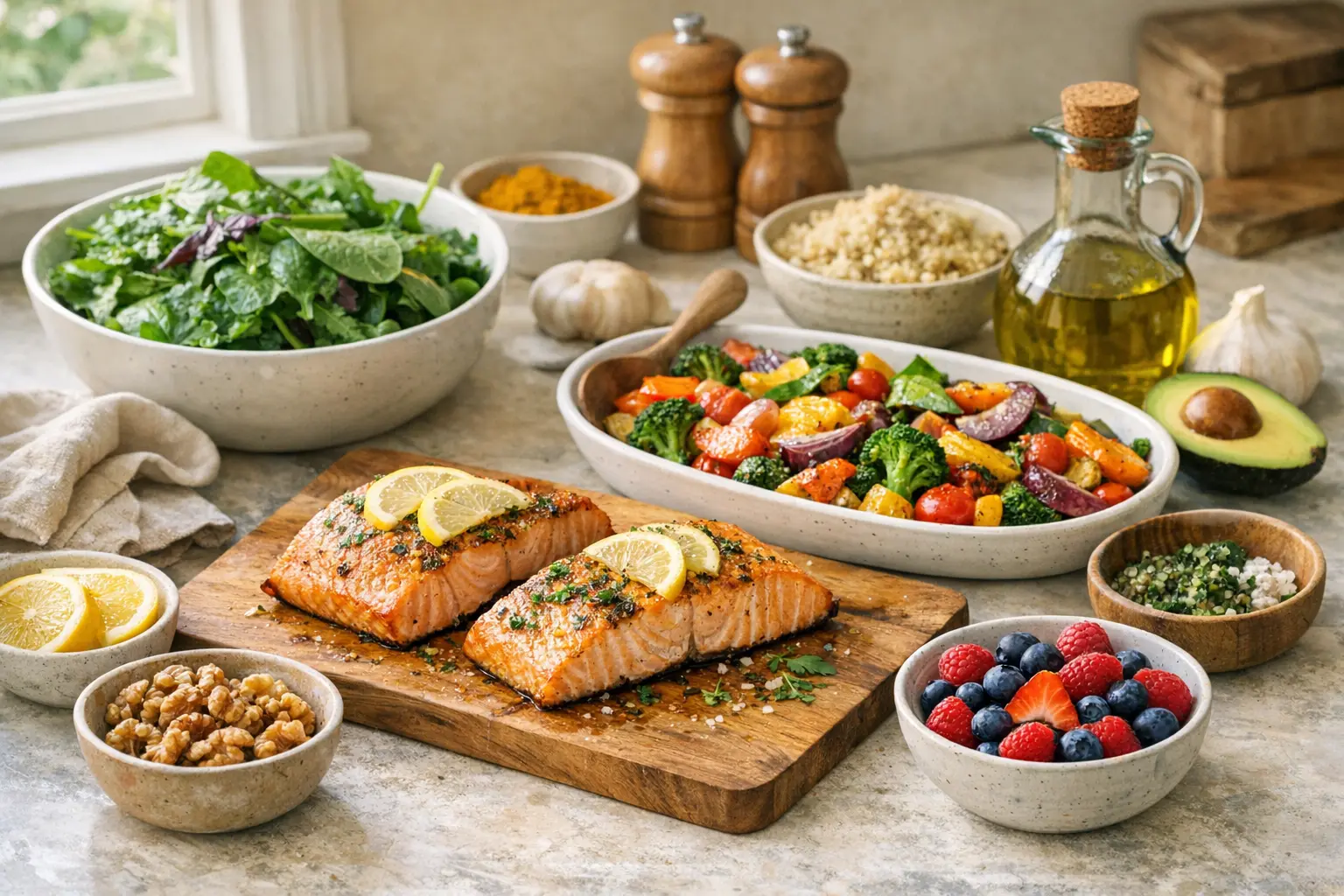
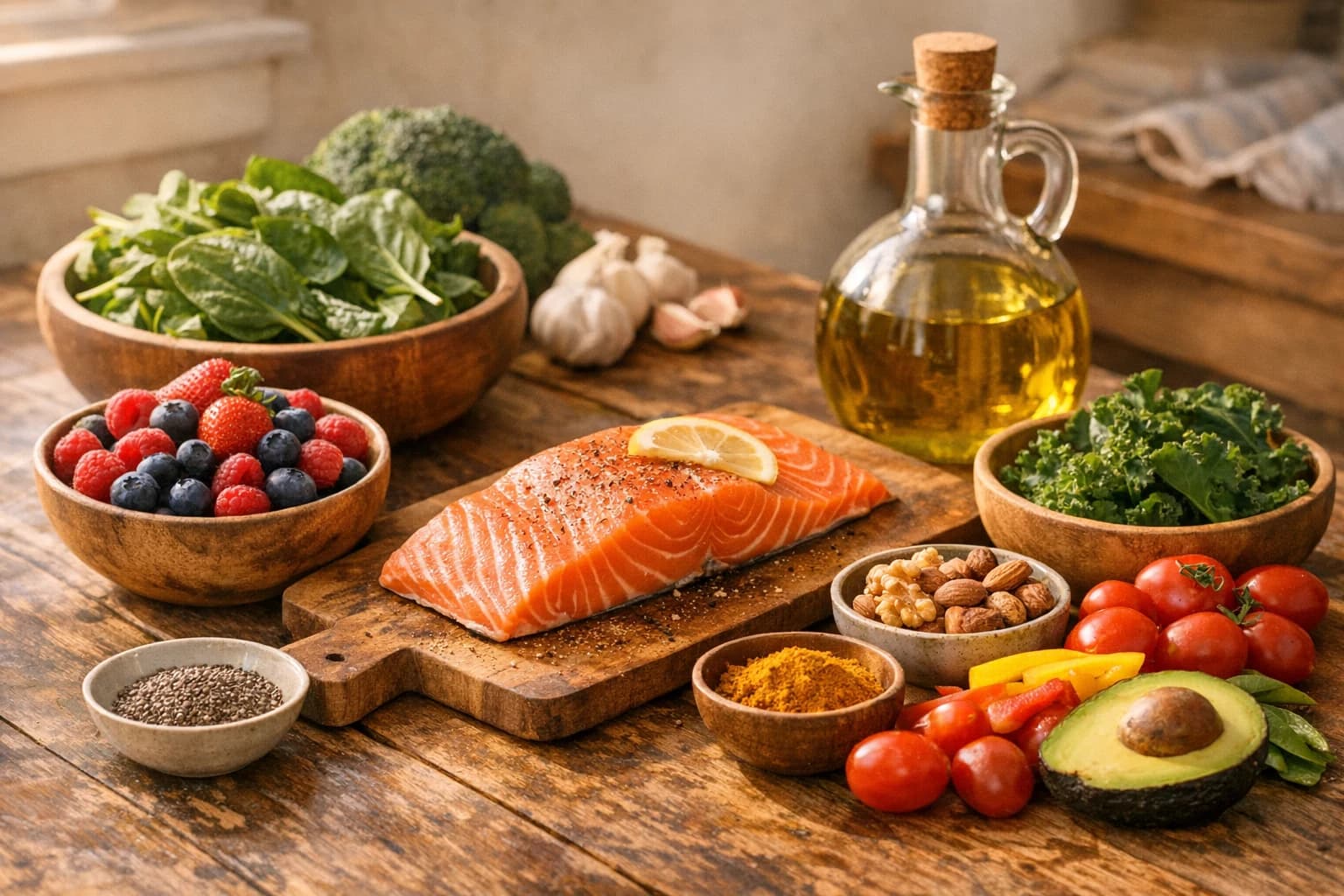
Salmon, sardines, trout, mackerel, and herring show up in almost every article on anti-inflammatory foods for knee pain for a reason. Omega-3 fats may help support a lower-inflammatory pattern overall, especially if most of your current fats come from restaurant food or packaged snacks.
If fish sounds expensive or unrealistic, canned salmon, canned sardines, or frozen fillets still count. Practical food is better than ideal food you never buy.
Berries and cherries
Blueberries, strawberries, raspberries, and tart cherries get attention because they contain plant compounds tied to a healthier inflammatory response. They are also easy to use in real life.
You can add them to Greek yogurt, cottage cheese, smoothies, oatmeal, or keep frozen bags on hand so the food actually shows up when you need it.
Leafy greens and colorful vegetables
Spinach, kale, broccoli, cabbage, cauliflower, carrots, bell peppers, Brussels sprouts, and similar vegetables help because they improve the overall quality of the meal. They bring fiber, vitamins, minerals, and plant compounds that support recovery and metabolic health.
If salads are not your thing, that is fine. Soups, roasted pans of vegetables, frozen blends, and sautéed vegetables all work.
Olive oil, avocado, nuts, and seeds
These foods make it easier to build meals that are satisfying without leaning on ultra-processed convenience food. Extra virgin olive oil is a solid default fat. Walnuts, chia seeds, flax, almonds, pumpkin seeds, and avocado can round out meals and snacks without much effort.
Beans and lentils if your gut handles them well
Beans and lentils can be helpful because they combine fiber with minerals and steadier energy. They can support appetite control and make it easier to eat fewer highly processed foods.
That said, some people feel bloated or uncomfortable with legumes, especially if gut health is already off. If that is you, forcing them is not the answer. Gut health foods in Duluth MN and why am I bloated after every meal may help you sort that out.
Herbs and spices
Turmeric, ginger, garlic, cinnamon, rosemary, and oregano are helpful supporting players. They are not magic, but they are an easy way to flavor food without relying on sugary sauces or heavily processed condiments.
Anti-inflammatory foods for knee pain need enough protein too
This part gets missed all the time.
If your knees hurt, you do not only need less inflammation. You also need enough muscle to help support the joint.
That is why protein matters so much. Adults who under-eat protein often lose muscle, recover poorly, and feel more fragile during normal activity. Then the knee ends up taking more of the strain.
A better anti-inflammatory pattern usually includes regular protein from foods like:
- eggs
- Greek yogurt or cottage cheese
- chicken or turkey
- fish
- lean beef in sensible portions
- tofu or tempeh
- protein-rich soups or bowls
If this has been a blind spot, protein requirements over 40 and protein for blood sugar control are good next reads.
Foods that often keep knee pain worse
Most people already know the general answer here. The hard part is seeing the full pattern.
Foods and habits that commonly keep inflammation higher include:
- sugary drinks and coffee-shop calories
- desserts becoming a nightly routine
- chips, crackers, and packaged snacks becoming default meals
- frequent fried food
- refined carbs dominating the plate without much protein
- too much alcohol, especially when sleep is already poor
These foods are not a moral failure. They are just easy to overdo, and the overall pattern can leave you feeling heavier, puffier, and more inflamed.
A lot of adults notice the biggest improvement not from removing one food forever, but from changing what their normal week is built around.
A better way to eat when your knees hurt
Thinking in single ingredients is usually too small.
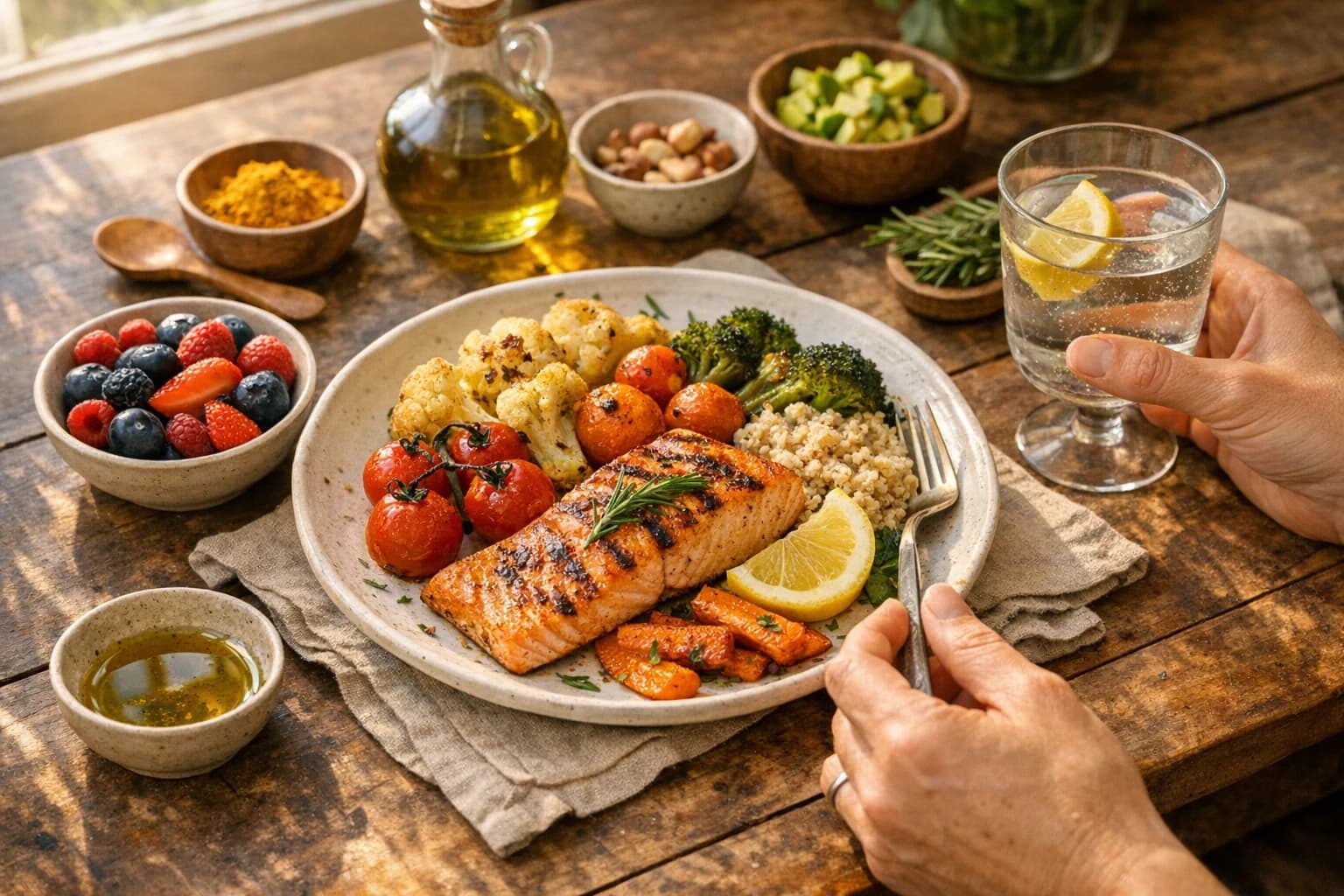
A more useful approach is to build meals that work better across the whole day. That usually means:
- protein first
- one or two plant foods
- a healthy fat
- a carb portion that fits your activity level
That might look like salmon, potatoes, and roasted vegetables. Or eggs with spinach and berries. Or a turkey bowl with rice, cabbage slaw, avocado, and salsa. Or Greek yogurt with cherries, walnuts, and chia.
Meals like that tend to help with fullness, energy, and blood sugar while also improving the nutrient quality of the week.
If blood sugar swings are part of your bigger picture, anti-inflammatory foods for blood sugar control, high fasting insulin with normal A1C, and CGM monitoring may help connect the dots.
Weight matters, but not in a shame-based way
This conversation can feel loaded, but it is still worth saying plainly.
If the body is carrying more load, the knees usually feel it.
That does not mean knee pain is your fault. It means knee pain and body composition often influence each other. Pain makes movement harder. Less movement makes weight management harder. More load can make the knees feel worse.
That is one reason an anti-inflammatory way of eating can help beyond inflammation alone. Better meals often make it easier to reduce cravings, eat enough protein, support muscle, and slowly change the amount of force your knees handle every day.
If that is part of your story, exercise as medicine, how to start working out when overweight, and functional fitness for weight loss over 40 can help.
Knee pain usually improves faster when food and movement work together
A lot of adults make one of two mistakes.
They either try to exercise through pain without changing anything else, or they focus only on food and hope movement can wait until the knee magically feels better.
Usually the better answer is both.
Smarter food choices can help support recovery and weight management. Appropriate strength work helps support the joint itself. That may mean starting with sit-to-stands, glute work, walking, step-ups, or guided lower-body training instead of jumping into impact-heavy workouts.
If you need ideas, chair strength training over 50, low-impact workouts for beginners over 40, and exercise therapy in Duluth MN are good places to start.
Anti-inflammatory foods for knee pain in real Duluth life
The best plan is the one you can do during a normal week in northern Minnesota.
That might mean:
- frozen salmon instead of fresh
- berries from the freezer section half the year
- soups, chilis, and sheet-pan meals in colder months
- simple packed lunches instead of restaurant runs every day
- repeat breakfasts that keep mornings easy
You do not need a wellness retreat kitchen. You need a grocery pattern that makes better choices easier.
That is also why anti-inflammatory eating should feel flexible. Summer meals in Duluth may include grilled fish, salads, and farmers market produce. Winter may lean more on roasted vegetables, slow-cooker meals, and freezer staples. Both can work.
FAQ about anti-inflammatory foods for knee pain
What are the best anti-inflammatory foods for knee pain?
Fatty fish, berries, colorful vegetables, olive oil, nuts, seeds, and protein-rich whole foods are some of the strongest building blocks. The full meal pattern matters more than any one food.
Can food cure knee arthritis?
No. Food can support lower inflammation, better recovery, and healthier body composition, but it does not repair structural damage on its own.
Is turmeric enough to help knee pain?
Turmeric may be a useful addition, but it is not the whole answer. Most people do better focusing on the overall pattern of their meals.
Should I avoid carbs if my knees hurt?
Not necessarily. Many people do well with balanced meals that include protein, vegetables, healthy fats, and a reasonable carb portion. The bigger problem is usually ultra-processed or highly refined carb-heavy eating.
What if knee pain keeps me from exercising?
You may still benefit from gentler movement and strength work that meets you where you are. Food and exercise therapy often work better together than either one alone.
If every step feels harder than it should, it is worth looking deeper
The point of using anti-inflammatory foods for knee pain is not to create a perfect diet.
It is to give your body fewer reasons to stay inflamed and less supported.
When food gets better, many adults notice less stiffness, better recovery, steadier energy, and an easier time returning to movement. That may not solve everything, but it can change the direction of the problem.
If you are tired of guessing whether your knee pain is tied to inflammation, body composition, muscle loss, blood sugar, or poor recovery, Duluth Metabolic can help you look at the bigger picture. When you are ready, contact us to start the conversation.